Executive Takeaways
- Unified Multi-Model Orchestration: Dell Technologies has officially bypassed hyperscaler-exclusive ecosystem lock-in, integrating enterprise deployments of OpenAI’s ChatGPT enterprise runtime, Google Cloud’s Gemini, and xAI’s Grok into a unified, on-premises "AI Factory" platform.
- The Video World Model Frontier: Moving beyond tokenized text and static diffusion, the breakthrough core relies on on-premises Video World Models (VWMs), empowering industrial robotics, spatio-temporal physical simulations, and real-time operational video intelligence without latency or data-leakage vulnerabilities.
- Aggressive Enterprise Cloud Repatriation: Driven by spiraling API tollbooths, unpredictable token-billing dynamics, and strict cross-border regulatory compliance regimes, the platform promises a reduction in enterprise inference Total Cost of Ownership (TCO) of up to 41.8% over standard three-year amortization cycles.
- Structural Capital Allocation Shift: Tier-1 CIOs and institutional capital are shifting CapEx away from pure-play hyperscaler infrastructure leases toward balance-sheet-accretive, sovereign private compute nodes powered by high-density liquid-cooled hardware architectures.
The Datacenter Coup: Michael Dell’s Sovereign Infrastructure Gambit
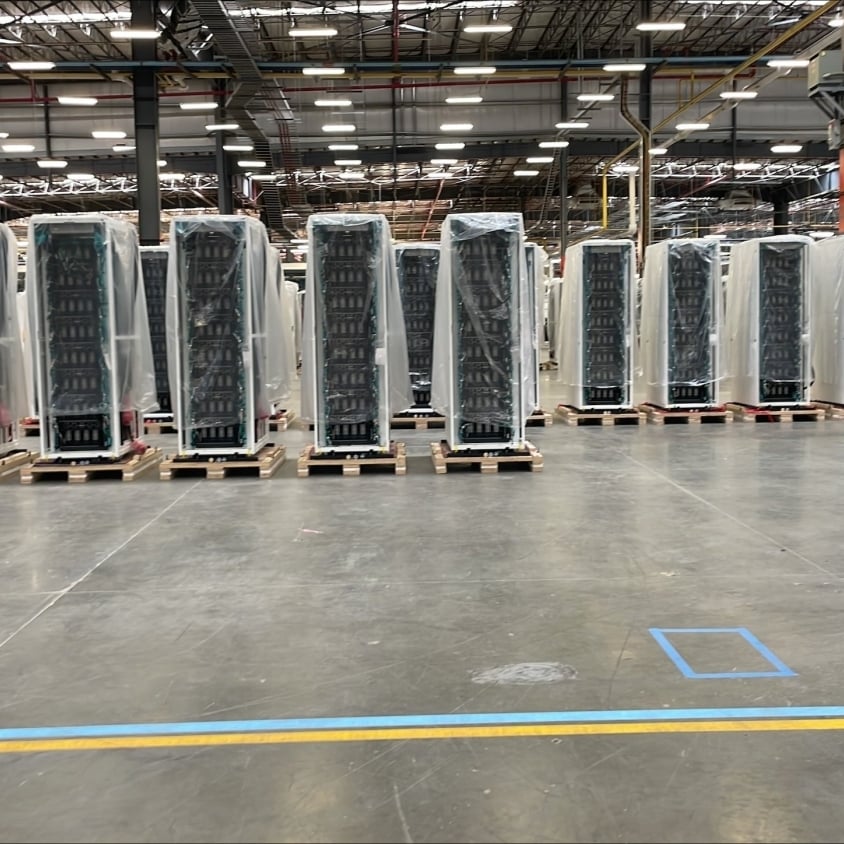
In what Wall Street analysts and enterprise technology strategists are characterizing as a watershed moment for high-performance computing, Dell Technologies has formally introduced an on-premises enterprise hardware architecture capable of orchestrating OpenAI’s specialized private enterprise stack, Google’s Gemini infrastructure runtime, and xAI’s Grok within a single turnkey system. Termed the Next-Generation Dell AI Factory, the platform signals a deliberate strategic maneuver to wrest control of high-margin corporate AI workloads away from the centralized hyperscale public clouds—Amazon Web Services (AWS), Microsoft Azure, and Google Cloud Platform (GCP)—and return them to sovereign corporate server rooms.
For three years, the corporate enterprise AI narrative was dominated by centralized cloud providers monetizing access to proprietary large language models (LLMs) via managed API endpoints. However, that status quo has encountered a structural ceiling: unsustainable data egress fees, multi-tenant cybersecurity risks, unpredictable token-based operational expenditures (OpEx), and regulatory friction stemming from the European Union’s AI Act and strict SEC data custody guidelines. Dell’s aggressive intervention offers an alternate operational architecture: containerized, high-throughput on-premises clusters co-engineered with Nvidia and specialized model licensors, engineered to run the world's three leading commercial model families side by side behind corporate firewalls.
The catalytic breakthrough enabling this convergence is not merely raw compute consolidation, but the integration of localized Video World Models (VWMs). By integrating physical-world spatio-temporal reasoning directly into private hardware clusters, Dell is shifting enterprise AI from reactive probabilistic text generation to predictive, physical simulation—unlocking transformative automation capabilities for advanced manufacturing, biopharmaceutical research, autonomous logistics, and critical infrastructure defense.
Deconstructing the Architecture: Multi-Model Coexistence in a Single Appliance
Running heterogeneous frontier models on a singular physical architecture historically presented severe orchestration challenges. The computational profiles, model parallelisms, and memory bandwidth requirements of OpenAI’s dense transformer architectures differ substantially from Google Gemini’s natively multimodal Mixture-of-Experts (MoE) topologies and Grok’s high-throughput reasoning mechanics.
Dell engineers resolved these structural frictions through a decoupled, high-bandwidth compute architecture built around its flagship PowerEdge XE-series server ecosystems, underpinned by next-generation liquid-cooled architectures and high-speed PCIe Gen 6/CXL interconnect fabrics. Operating atop Dell's proprietary Enterprise AI Orchestrator (EAIO), the system dynamically routes inference requests across model boundaries depending on task classification, latency thresholds, and sensitivity parameters:
- Deterministic Multi-Model Routing: Inquiries requiring deep real-time external grounding and raw unstructured sentiment parsing route natively through local Grok container instances.
- Cross-Modal Analytical Synthesis: Long-context document interpretation, multimodal visual-audio correlations, and cross-enterprise semantic searches are dispatched dynamically to the localized Gemini enterprise engine.
- Complex Logic and Orchestrated Automation: Advanced cognitive agent reasoning, structured code synthesis, and mission-critical conversational workflows are directed to on-premises, dedicated ChatGPT-derived enterprise cores.
Crucially, Dell’s hardware architecture provides hardware-isolated secure enclaves (Confidential Computing environments). This prevents cross-model contamination and eliminates the catastrophic risk of proprietary trade secrets or non-public material information (MNPI) bleeding into broader baseline model-training cycles—a parameter that has historically constrained Tier-1 investment banks, defense contractors, and healthcare conglomerates from unleashing frontier models at scale.
The Technological Vanguard: Physical AI and Localized Video World Models
While the coexistence of three leading model frameworks solves enterprise workflow fragmentation, the definitive technical differentiator in Dell’s platform is the native acceleration of Video World Models. Until now, enterprise multimodal implementations were largely limited to static frame evaluation or short synthetic video generation. World models, conversely, simulate physical environments, predicting causal actions, fluid dynamics, mechanical tolerances, and spatial consequences within real-time visual streams.
By housing high-frame-rate computer vision ingest pipelines directly alongside model execution nodes, Dell's on-premise infrastructure processes real-time industrial video feeds at the edge without cloud transport latency. In automotive factories, pharmaceutical cleanrooms, and automated logistics hubs, these video world models observe physical assembly lines, continuously simulate potential mechanical errors milliseconds before they materialize, and dispatch corrective instructions to robotic actuators with deterministic sub-5-millisecond latencies.
Transporting gigabytes per second of raw, uncompressed 8K industrial video to public cloud infrastructure introduces untenable network latency and enterprise-crippling egress bills. By running these massive video world models on bare-metal private clusters equipped with high-density GPU/NPU fabrics and high-bandwidth flash storage matrices, Dell effectively neutralizes the primary operational bottleneck of physical AI deployment.
Financial Architecture: TCO, CapEx Repatriation, and Valuation Multiples
From the perspective of capital allocation, Dell’s strategy addresses a growing revolt among Chief Financial Officers. Over the trailing 24 months, reliance on public cloud AI instances transitioned from an agile experimentation phase into an aggressive margin-compression dynamic. Uncapped inference API token billing models have eroded corporate margins, forcing technology finance committees to re-evaluate classical depreciation benefits associated with capitalized hardware assets.
| Evaluation Parameter | Hyperscaler Public Cloud (Multi-Cloud Leased Stack) | Dell On-Premises Multi-Model AI Factory | Enterprise Impact & Variance |
|---|---|---|---|
| 3-Year Inferred TCO (High-Load Enterprise) | $38.4 Million (Dynamic token billing + cross-cloud routing) | $22.3 Million (Amortized appliance CapEx + power/cooling) | 41.9% Cost Reduction via on-premise repatriation |
| Data Egress & API Transmission Fees | $0.02 – $0.09 per Gigabyte + tokenized query tariffs | Zero marginal data transit costs post-installation | Eliminates unbudgeted OpEx volatility |
| Inference Latency (Edge Video / Industrial World Models) | 85ms – 250ms (Subject to WAN bandwidth & routing) | < 8ms (Direct bare-metal CXL/NVLink interconnect) | Enables real-time deterministic robotics control |
| Model Interoperability | Fragmented across proprietary ecosystems (AWS/Azure/GCP) | Unified Orchestration Engine (ChatGPT, Gemini, Grok) | Mitigates vendor lock-in risk across sovereign nodes |
| Regulatory & Data Sovereignty Posture | Shared-responsibility model; multi-tenant compliance exposure | Air-gapped Confidential Compute; absolute data custody | Immediate alignment with EU AI Act, HIPAA, and SEC mandates |
By packaging multi-model deployments into an amortizable capital expenditure, corporate balance sheets can treat computing infrastructure as depreciable property, plant, and equipment (PP&E). This transition enhances EBITDA margins by scrubbing erratic cloud operational costs from income statements. The structural financial predictability offered by Dell is anticipated to spur a wave of IT hardware budget expansion, altering enterprise infrastructure multiples across the entire technology sector.
Industry & Market Implications: Structural Winners and Losers
The Strategic Winners
- Dell Technologies (NYSE: DELL): Dell positions itself as the indispensable sovereign orchestrator of enterprise AI, successfully converting low-margin commodity box-building into high-margin recurring integration, systems architecture, and specialized deployment services.
- Silicon and Interconnect Providers: Tier-1 chipmakers like Nvidia and Broadcom benefit immensely. As on-premises datacenters aggressively retrofit for liquid cooling and dense multi-GPU compute fabrics, specialized networking silicon and high-bandwidth switches see unprecedented demand outside hyperscaler procurement cycles.
- Enterprise Risk Officers & CIOs: Corporate leadership regains absolute custody of proprietary IP and customer data, neutralizing the risk of compliance litigation while breaking the unilateral pricing power held by cloud hyperscale cartels.
The Strategic Casualties
- Hyperscale Cloud Providers (IaaS/PaaS): Amazon Web Services, Microsoft Azure, and Google Cloud face an immediate deceleration in high-margin enterprise data ingestion. As corporate clients repatriate high-volume analytical and physical AI inference, hyperscalers risk demotion to secondary storage archives and burst-capacity providers.
- Fragmented Multi-Cloud Aggregators: Niche software startups whose entire enterprise value was built on thin wrappers providing cross-cloud model routing face rapid obsolescence as Dell integrates hardware-level multi-model arbitration directly into the foundational compute fabric.
Frequently Asked Questions (People Also Ask)
How can Dell run proprietary models like ChatGPT, Gemini, and Grok on-premises without cloud dependencies?
Dell has architected specialized enterprise runtime appliances that utilize containerized, sovereign model packages and dedicated localized weights licensed directly from the respective frontier AI providers (OpenAI, Google Cloud, and xAI). These enterprise runtimes operate within hardware-isolated confidential computing partitions on high-density Dell PowerEdge clusters, decoupling active model execution from external public cloud infrastructure while maintaining cryptographic security and federated synchronization pathways for periodic baseline weight updates.
What are "Video World Models" and why do they require on-premises deployment?
Unlike standard generative AI models that generate or analyze text and static images, Video World Models (VWMs) construct internal representations of three-dimensional physical environments and spatio-temporal dynamics. They predict how real-world physical objects move, interact, and react to external forces over time. Because these systems process high-resolution, uncompressed video feeds from factories, autonomous systems, and medical diagnostics with deterministic sub-millisecond latencies, running them locally avoids prohibitive network latency and high cloud data egress fees.
What financial metrics justify repatriating AI workloads from public clouds to on-premises architectures?
The primary economic catalyst is the stabilization of inference Total Cost of Ownership (TCO). While the public cloud is optimal for bursty, experimental development, running multi-billion-token operational workloads at continuous scale triggers punitive API fees, networking tariffs, and dynamic capacity costs. An on-premises capital expenditure (CapEx) model enables predictable multi-year asset depreciation schedules, reduces marginal cost per million tokens to near zero post-deployment, and generates average 3-year TCO savings exceeding 40% for compute-intensive enterprise workloads.
Does this development compromise enterprise regulatory compliance?
It significantly enhances it. Centralized public cloud platforms expose multinational corporations to jurisdictional data sovereignty conflicts, cross-border transmission breaches, and multi-tenant security liabilities. Dell’s architecture is engineered specifically to ensure compliance with the European Union AI Act, Basel III financial risk management protocols, HIPAA healthcare mandates, and the SEC’s cybersecurity disclosures by keeping zero-trust cryptographic enclaves strictly within localized, air-gapped physical boundaries.
Future Outlook: The Sovereign Enterprise and the Post-Cloud Era
The paradigm shift engineered by Dell represents a watershed structural reorganization of enterprise IT topology. Over the 2026–2028 macroeconomic cycle, the narrative of unilateral migration to the public cloud has officially reached its counter-reformation. As edge-deployed video world models redefine industrial physical automation, compute must inevitably be located where physical work occurs.
The next critical frontier will occur in the silicon interconnect layer. As Dell rolls out subsequent iterations of its multi-model appliance—incorporating next-generation high-bandwidth optical interconnects and fully autonomous neural compiler layers—the competitive pressure shifts directly to enterprise software providers. Those who build models requiring dedicated public cloud tethering will find themselves structurally isolated from the most lucrative, privacy-critical enterprise customers on Earth. Sovereign computing has arrived, and corporate balance sheets are reorganizing around private silicon factories.