
Executive Takeaways
- Structural Capital Shift: Recent empirical analyses from premier policy institutes, including Bruegel, indicate that the global surge in long-term bond yields is fundamentally driven by a structural renaissance in investment demand and unprecedented sovereign debt issuance.
- Institutional Stability: Contrary to catastrophic market narratives, current yield curve steepening is not primarily fueled by a systemic breakdown in US monetary, fiscal, or financial institutions, but rather by real-economy capital absorption.
- Valuation Multiples Under Pressure: Corporate balance sheets, enterprise ROI calculations, and global equity valuation multiples are undergoing aggressive repricing as the era of ultra-low discount rates decisively closes.
- Asset Allocation Overhaul: Institutional portfolio managers must execute immediate risk mitigation and liquidity recalibrations to navigate rising term premiums and shifting capital allocation frameworks.
For more than a decade, institutional asset allocators, corporate treasurers, and central bankers operated under a comforting macroeconomic illusion: the permanence of suppressed long-term interest rates. That paradigm has shattered. Across global capital markets, sovereign yield curves have undergone a profound, secular realignment. The upward trajectory of benchmark yields is no longer a localized US phenomenon or a transient post-pandemic artifact; it is a synchronized global macro shift reshaping the mechanics of debt sustainability, corporate finance, and cross-border capital flows.
To decode this structural pivot, financial markets have turned to rigorous empirical frameworks. Landmark research published by the Brussels-based economic think tank Bruegel provides vital clarity on the underlying mechanics. Far from being driven by runaway inflation expectations or institutional degradation within the Federal Reserve or the US Treasury, the global rise in long-term interest rates is fundamentally rooted in a historic convergence of soaring investment demand and relentless public sector supply. This comprehensive investigative report unpacks the root catalysts, evaluates the quantifiable market impacts, and assesses what this new monetary epoch demands of corporate leadership and institutional investors.
The Catalytic Forces: Investment Demand Meets Sovereign Supply
For years following the 2008 global financial crisis and the subsequent COVID-19 pandemic shock, long-term bond yields languished near historic lows. This era was characterized by a global savings glut, sluggish capital expenditure, and aggressive quantitative easing (QE) programs that systematically compressed term premiums. Today, that architecture has inverted.
According to Bruegel’s analytical models, the primary engines propelling long-term yields upward are dual-pronged:
- Unprecedented Investment Demand: The global economy is undergoing a capital-intensive structural transformation. Massive outlays are pouring into green energy transitions, advanced semiconductor manufacturing, artificial intelligence cloud compute architecture, and critical supply chain reshoring. These industrial policies—exemplified by the US CHIPS Act and Europe's Green Deal industrial plan—require deep, long-duration capital commitments, bidding up the economy-wide real interest rate.
- Surging Sovereign Debt Supply: Chronic fiscal deficits across advanced economies have unleashed an unceasing wave of government bond issuance. As central banks transition from quantitative easing to quantitative tightening (QT)—actively shrinking their balance sheets—private markets and international investors are forced to absorb colossal tranches of sovereign debt. This supply shock requires higher compensation for duration risk, driving up term premiums.
Crucially, recent research isolates these fundamental supply-demand dynamics from narratives forecasting a systemic institutional collapse. While market commentators frequently point to political dysfunction in Washington or ballooning US national debt as the sole culprit for surging yields, economic data reveals a more globalized, structural reality. Sovereign debt expansion is occurring concurrently across the Eurozone, the United Kingdom, and Japan, signaling that global capital scarcity—not institutional failure—is the primary driver.
Verified Data & Metrics Breakdown
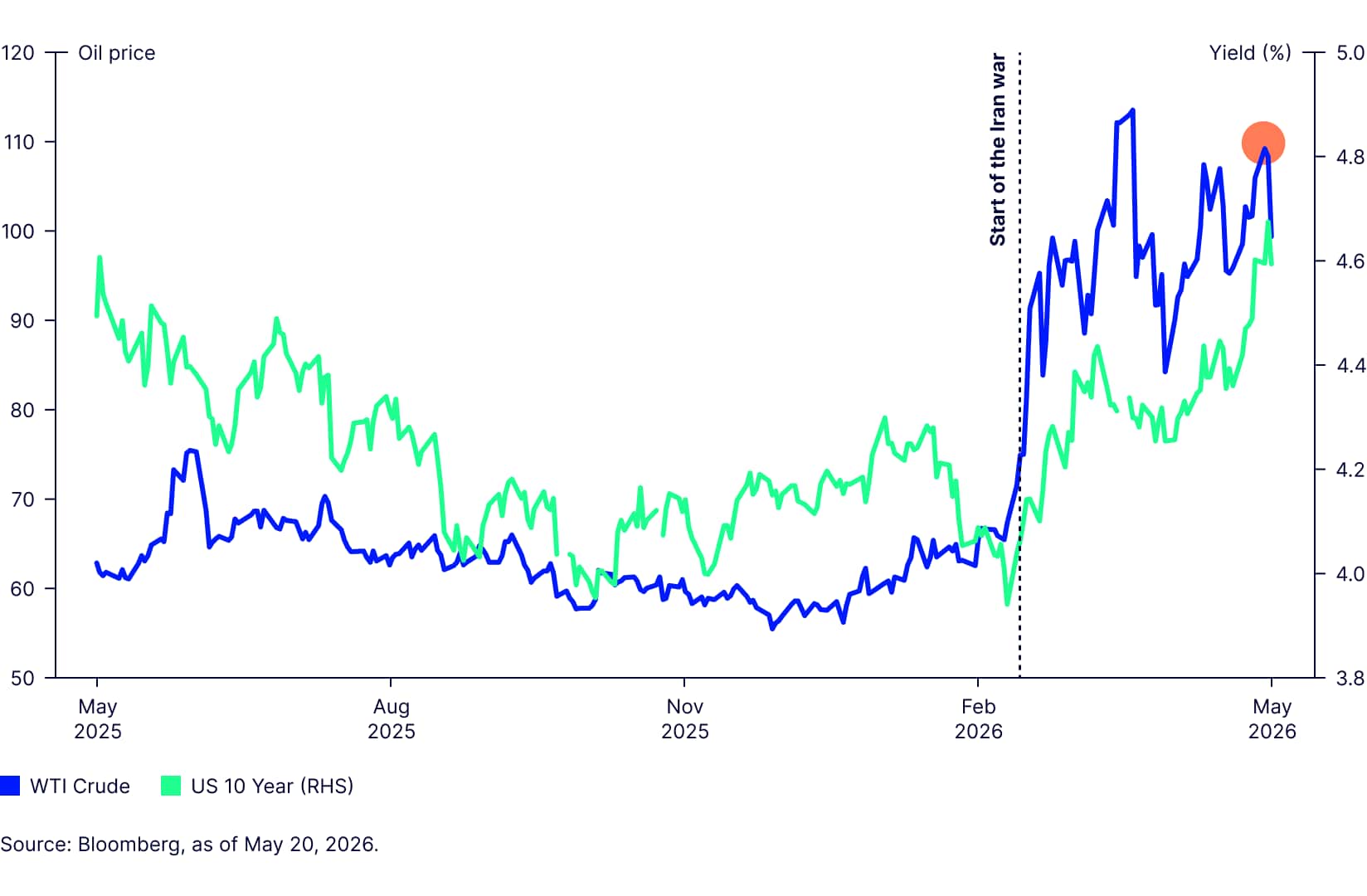
To contextualize the magnitude of this structural shift, the following matrix contrasts the pre-pandemic low-yield regime with the current macroeconomic landscape:
| Economic Indicator / Metric | 2015–2019 Regime (Low-Rate Era) | Current Macro Environment | Structural Impact |
|---|---|---|---|
| US 10-Year Treasury Yield | 1.50% – 2.50% | Elevated, stabilizing at higher structural baselines | Higher cost of capital for mortgages and corporate debt |
| Global Sovereign Supply | Absorbed heavily by Central Bank QE | Quantitative Tightening (QT); private market absorption | Expanded term premiums and duration risk compensation |
| Investment Demand Drivers | Subdued post-crisis capex; software-heavy focus | Physical infrastructure, green transition, AI compute | Intense competition for global savings pool |
| Corporate Valuation Multiples | P/E expansion driven by ultra-low discount rates | Compression of multiples; focus on free cash flow | Rethinking enterprise ROI and capital allocation |
Industry & Market Implications: Who Wins, Who Loses
The transition to a higher long-term interest rate regime acts as an economic sorting mechanism, aggressively separating resilient enterprises from over-leveraged business models. Understanding this divergence is critical for executive decision-making and portfolio risk mitigation.
The Winners: Net Interest Margin Beneficiaries and Cash-Rich Balance Sheets
Financial institutions with robust deposit franchises and conservative liquidity profiles—particularly select global banks and insurance companies—benefit from higher reinvestment yields on fixed-income portfolios. Furthermore, multinational corporations sitting on massive piles of cash reserves are generating substantial interest income that was unavailable during the zero-interest-rate policy (ZIRP) era. Infrastructure asset managers and industrial firms tied directly to green energy and digital transformation are also securing strong pricing power, supported by secular government backing.
The Losers: High-Beta Growth, Leveraged Real Estate, and Debt-Dependent Startups
Conversely, sectors that relied on cheap, abundant debt to fuel speculative expansion are facing severe headwinds. Commercial real estate (CRE) continues to grapple with painful property valuation adjustments as refinancing walls hit maturing loans at drastically higher interest rates. Similarly, early-stage technology startups and capital-intensive biotech firms are experiencing a painful contraction in venture capital funding, forcing a hyper-focus on immediate profitability over top-line growth.
From a corporate finance perspective, internal hurdle rates and enterprise ROI thresholds are undergoing radical revisions. CFOs can no longer justify marginal projects using artificially low discount rates. Every capital allocation decision is subjected to rigorous scrutiny to ensure projects can clear the elevated hurdle of risk-free benchmark rates plus a mandatory corporate risk premium.
Frequently Asked Questions (People Also Ask)
1. Are rising long-term interest rates caused by inflation or structural factors?
While inflation shocks initially triggered central bank rate hikes, current Bruegel and economic analyses show that the persistence of high long-term yields is primarily structural. It is being driven by strong global investment demand for the green transition and technological infrastructure, combined with heavy sovereign bond supply as central banks enact quantitative tightening.
2. How does the global rise in bond yields impact corporate valuation multiples?
Higher bond yields increase the discount rate applied to future corporate cash flows in discounted cash flow (DCF) models. As the discount rate rises, the present value of future earnings declines, leading directly to the compression of equity valuation multiples, particularly for high-growth, long-duration technology stocks.
3. Is a breakdown in US fiscal or monetary institutions driving the bond market sell-off?
Although political polarization and rising US debt levels attract frequent media attention, empirical evidence indicates that sovereign yield increases are a global phenomenon affecting Europe, the UK, and other advanced economies. This confirms that broad economic supply-demand imbalances in global capital markets are the primary root cause.
4. What risk mitigation strategies should institutional portfolio managers adopt?
Institutional investors are increasingly focusing on portfolio diversification, shortening duration profiles to manage interest rate sensitivity, prioritizing companies with pristine balance sheets and strong free cash flow generation, and hedging against ongoing term premium volatility through sophisticated derivatives and alternative asset classes.
Future Outlook: What Comes Next and Key Milestones to Watch
As global capital markets adapt to this structural realignment, market participants must abandon the hope of returning to pre-pandemic financial repression. The era of artificially suppressed interest rates has officially closed, replaced by a more demanding economic environment where capital commands a legitimate, market-clearing price.
Looking ahead over the next 12 to 24 months, executives and investors must closely monitor several critical milestones:
- Central Bank Balance Sheet Trajectories: Track the pace and depth of quantitative tightening (QT) by the Federal Reserve, the European Central Bank, and the Bank of England to gauge ongoing private market absorption capacity.
- Sovereign Debt Auction Dynamics: Pay meticulous attention to bid-to-cover ratios and primary dealer take-up during major US Treasury and Eurozone sovereign debt refunding auctions. Weak demand signals rising term premiums.
- Fiscal Policy Adjustments: Monitor legislative debates surrounding deficit reduction and entitlement reforms in major industrialized economies, as fiscal discipline remains the ultimate anchor for long-term bond vigilantes.
- Corporate Refinancing Walls: Evaluate corporate credit spreads and default rates as high-yield and investment-grade borrowers are forced to refinance legacy debt at markedly higher coupon rates.
Ultimately, this high-rate environment is not a temporary market malfunction; it is the new baseline for global finance. Organizations that successfully recalibrate their capital allocation frameworks, optimize cloud compute and enterprise architecture for efficiency, and execute disciplined risk mitigation will thrive in this disciplined monetary order. Those that cling to the ghost of ZIRP risk obsolescence.