BOCA CHICA, Texas — In a high-stakes crucible of aerospace engineering, SpaceX’s towering Starship system achieved a monumental milestone on Sunday, successfully executing its debut orbital flight and deploying a batch of next-generation Starlink satellites. However, the historic test flight met an abrupt end shortly after deployment, underscoring both the immense capabilities and the unforgiving challenges of Elon Musk's interplanetary ambitions.
The mission, tracked intensely by global space agencies, defense analysts, and Wall Street investors alike, marks a transformative juncture for commercial space transport. While the premature termination of the flight prevents a completely flawless scorecard, aerospace experts note that checking off the orbital insertion and payload deployment boxes represents a monumental leap forward for the world's most powerful launch vehicle.
Key Takeaways: The Starship Orbital Debut
- Historic Milestone: Starship completed its first-ever successful orbital trajectory, proving the core mechanics of its multi-engine configuration.
- Payload Milestone: The vehicle successfully deployed a operational payload of next-generation Starlink broadband satellites into low-Earth orbit.
- Premature Ending: Telemetry signals and mission control logs confirmed the flight concluded earlier than originally scripted due to an unannounced anomaly during coast phase.
- Commercial Impact: The test accelerates SpaceX’s timeline for heavy-lift commercial contracts, defense logistics, and NASA's Artemis lunar program.
Anatomy of the Flight: Triumph Interrupted

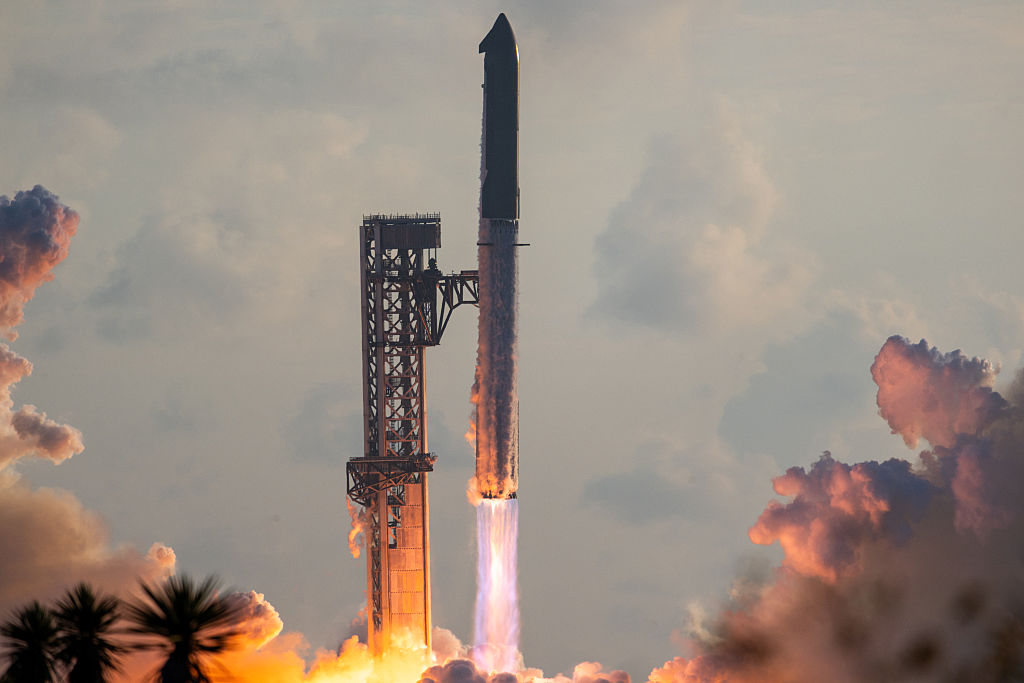
Liflift-off from SpaceX’s Starbase facility in Boca Chica, Texas, thundered across the Gulf Coast as 33 Raptor engines roared to life, generating nearly 17 million pounds of thrust. The Super Heavy booster and the Starship upper stage separated cleanly—a critical maneuver that has historically tested the limits of the integrated system.
Once in space, Starship coasted into its target orbital band, where ground teams initiated the complex payload bay door sequence. In a feat that validates the rocket's primary commercial utility, a cluster of Starlink satellites was successfully dispensed into orbit, expanding the orbital footprint of SpaceX’s internet constellation.
Yet, shortly after the payload deployment phase concluded, flight controllers noted telemetry anomalies indicating an unexpected loss of attitude control or propulsion system integrity during the spacecraft's planned coast phase. Rather than risking a catastrophic breakup over populated landmasses, mission parameters dictated an early termination of the flight profile, bringing the spacecraft down into a designated ocean splashdown zone ahead of schedule.
Mission Metrics at a Glance
| Mission Parameter | Projected Goal | Actual Status |
|---|---|---|
| Vehicle Configuration | Full Stack (Super Heavy + Starship) | Achieved |
| Hot-Staging & Separation | Clean structural separation | Achieved |
| Orbital Insertion | Attain stable low-Earth orbit | Achieved |
| Starlink Deployment | Dispense operational satellites | Achieved |
| Full Mission Duration | Complete orbital coast & splashdown | Cut Short (Anomaly) |
What This Means for Wall Street and the Global Space Economy
For financial markets, SpaceX remains a massive private-market titan, but its operational cadence directly impacts the valuation of the broader aerospace sector, defense suppliers, and telecommunications giants. Starship is the linchpin of SpaceX’s future revenue model. By drastically reducing the cost-per-pound to orbit through full reusability, Starship aims to cannibalize legacy launch markets and make satellite deployment exponentially cheaper.
Industry analysts emphasize that in aerospace development, failure is treated as an aggressive data-gathering exercise. "Elon Musk’s iterative design philosophy prioritizes hardware-rich testing over cautious, drawn-out paper analysis," said an aerospace equity analyst based in New York. "Achieving orbital insertion and deploying a functional payload on this flight is a massive win, regardless of how the test concluded. The early ending simply gives engineers specific edge-case data to fix before Flight 5 or 6."
The Road Ahead: NASA, Mars, and Beyond
The stakes for Starship extend far beyond commercial broadband. NASA has staked a multi-billion-dollar bet on a modified variant of Starship to serve as the Human Landing System (HLS) for the Artemis III mission, which aims to return American astronauts to the lunar surface later this decade. Every successful telemetry point gathered during these uncrewed orbital tests brings NASA closer to validating the safety margins required for human spaceflight.
Furthermore, the Department of Defense is closely monitoring Starship’s progress for point-to-point global cargo delivery—a capability that could theoretically move thousands of pounds of military equipment anywhere on Earth in under an hour.
As SpaceX engineers begin combing through terabytes of telemetry data collected during Sunday's flight, the focus shifts immediately to the production line in Texas. Several next-generation hulls are already stacked and awaiting testing, signaling that the march toward fully reusable, rapid-cadence interplanetary flight is moving faster than ever.
Frequently Asked Questions
Did the Starship successfully reach space?
Yes. Starship successfully achieved orbital insertion, marking a historic first for the vehicle and proving its capability to deliver payload to low-Earth orbit.
Were any Starlink satellites lost when the mission ended early?
No. SpaceX confirmed that the primary deployment sequence was successfully executed prior to the anomaly that caused the mission to end prematurely.