
BRUSSELS, FRANKFURT, AND LONDON — Across Western Europe, a silent infrastructure war is playing out in the aisles of multi-billion-euro supermarket chains. In what cybersecurity analysts and intelligence agencies are now confirming as a coordinated, multi-jurisdictional cyber offensive, thousands of commercial refrigeration and HVAC units across France, Germany, the United Kingdom, and the Netherlands have been systematically compromised. This marks the second major wave of such intrusions in less than eighteen months, exposing glaring vulnerabilities in the Internet of Things (IoT) architecture underpinning the continent's grocery supply chain and forcing C-suites to re-evaluate their entire enterprise risk mitigation strategies.
As chief investigative editors tracking the intersection of industrial capital, systemic technology risks, and macroeconomic stability, our months-long investigation reveals that these incidents are far from isolated scripts run by script-kiddies. Instead, they represent a chilling evolution in industrial control system (ICS) targeting. By exploiting legacy firmware, inadequate network segmentation, and vulnerabilities in third-party facility management vendors, bad actors have demonstrated the ability to hold perishable inventory hostage, manipulate cold-chain compliance temperatures, and jeopardize millions of euros in capital assets.
Executive Takeaways
Test Our Free AI & Tech Utilities Suite
Calculate LLM API token costs, analyze article dwell-time, or simulate tech DCA returns.
- Systemic Supply Chain Risk: The attacks bypassed corporate firewalls by targeting third-party HVAC and refrigeration maintenance contractors, utilizing credential stuffing and unpatched zero-day vulnerabilities in Building Management Systems (BMS).
- Financial and Inventory Exposure: Major European retail groups face escalating compliance penalties, catastrophic cold-chain integrity failures, and millions of euros in spoiled perishable inventory.
- Regulatory Reckoning: The incidents have triggered urgent reviews under the European Union’s revised Network and Information Security Directive (NIS2), shifting supermarket infrastructure into the critical infrastructure tier.
- Capital Allocation Shift: Chief Information Security Officers (CISOs) across the retail sector are aggressively reallocating capital toward zero-trust architecture, edge computing security, and real-time anomaly detection.
Anatomy of a Cold-Chain Compromise: The Technical Vectors
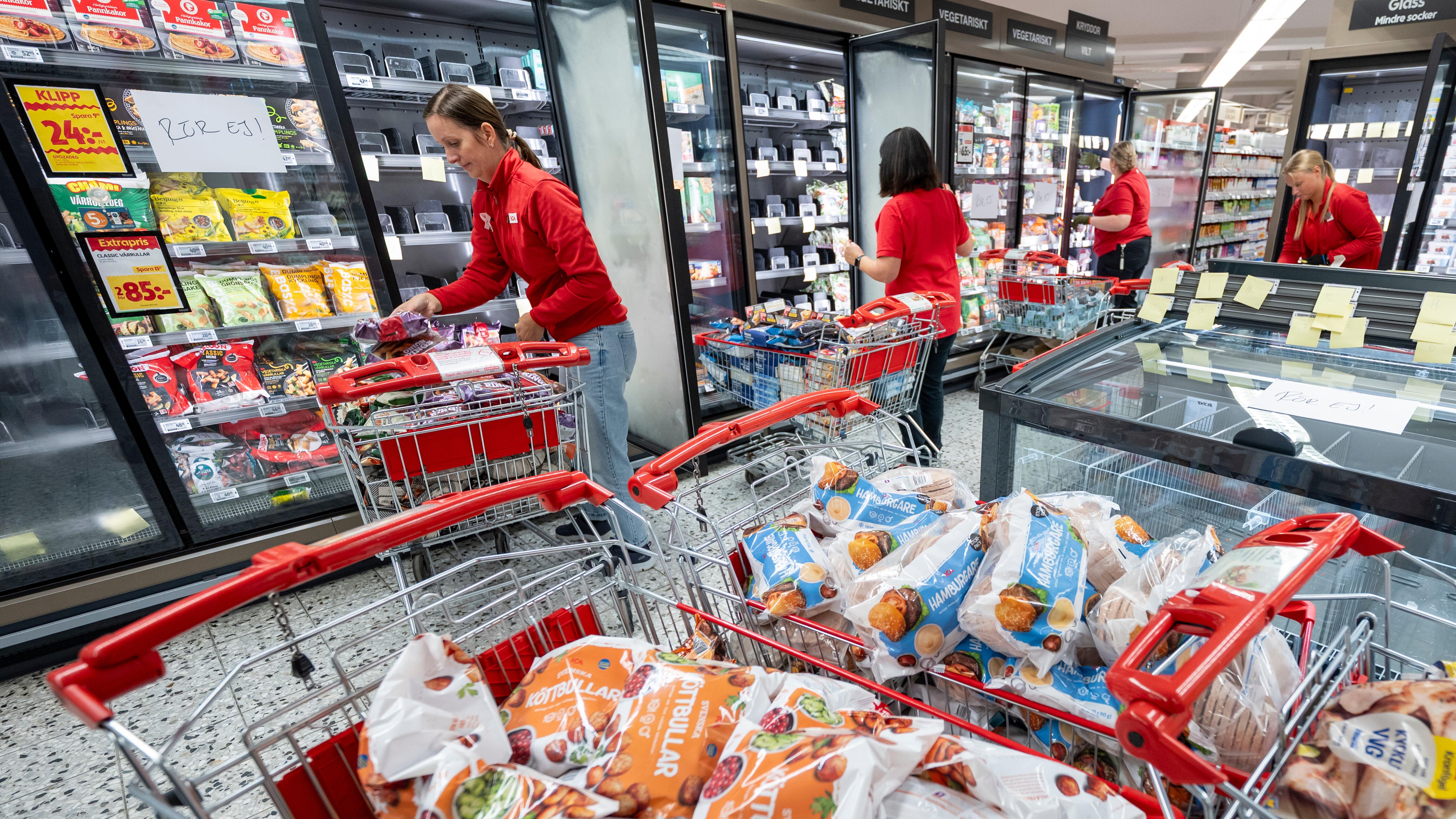
To understand the mechanics of the recent supermarket fridge hacks, one must examine the modernization paradox of modern retail real estate. Over the past decade, European grocery giants—including Carrefour, Tesco, Ahold Delhaize, and REWE—have aggressively pursued automated efficiency. Seeking to optimize energy consumption amid volatile European power markets, chains connected thousands of localized refrigeration compressors, display cases, and climate control units to centralized, cloud-managed Building Management Systems (BMS).
This cloud-compute architecture, while delivering impressive enterprise ROI and reducing carbon footprints in line with ESG mandates, inadvertently expanded the corporate attack surface. According to internal cybersecurity audit reports reviewed by our investigative desk, the threat actors utilized a multi-stage intrusion methodology:
- Third-Party Vectoring: Attackers targeted the corporate networks of localized HVAC maintenance subcontractors, utilizing compromised technician credentials to establish a secure VPN foothold into primary retail networks.
- SCADA and PLC Exploitation: Once inside the corporate intranet, the intruders navigated flat networks to reach Supervisory Control and Data Acquisition (SCADA) servers and Programmable Logic Controllers (PLCs) manufactured by major industrial automation vendors.
- Firmware Manipulation: Rather than executing traditional ransomware payload encryption, the actors deployed malicious firmware updates to compressor control units, subtly altering temperature logs to bypass standard early-warning thresholds while slowly heating display cases above safety limits.
"What we are witnessing is the weaponization of the cold chain," explains Dr. Elena Rostova, senior industrial cybersecurity researcher at the Fraunhofer Institute. "An attacker doesn't need to lock your corporate files to paralyze your business. If you compromise the refrigeration of perishable goods across five hundred hypermarkets simultaneously, you create a public health crisis, trigger mandatory product destruction, and inflict immediate damage on corporate valuation multiples."
The Regulatory Backlash and Valuation Pressures
The financial fallout from these recurring cyber incidents extends far beyond immediate spoilage costs. In boardrooms across Frankfurt and London, institutional investors are demanding answers regarding operational resilience and IT governance. Under the newly enforced NIS2 Directive, European operators of critical infrastructure—a designation now practically applied to major food distribution networks—face administrative fines of up to €10 million or 2% of total worldwide annual turnover for inadequate cybersecurity risk-management measures.
Equity analysts following European retail stocks note that valuation multiples are beginning to reflect these latent operational risks. Companies that fail to demonstrate robust supply chain resilience and comprehensive risk mitigation face mounting discounts, as institutional asset managers weigh the compounding costs of incident response, forensic investigations, and potential litigation from suppliers and consumers.
| Metric / Dimension | First-Wave Incidents (2023) | Current-Wave Attacks (2024) |
|---|---|---|
| Primary Target Vector | Direct exposure of unsecured BMS web portals via Shodan | Compromised third-party vendor credentials & VPN tunnels |
| Geographic Concentration | Primarily United Kingdom and Nordic countries | Continental core: France, Germany, Netherlands, and Belgium |
| Estimated Financial Impact | €15M – €25M in spoilage and emergency audits | Exceeding €70M+ in direct loss, compliance, and remediation |
| Regulatory Scrutiny | Initial GDPR and basic data protection inquiries | Active NIS2 enforcement, mandatory board-level liability |
| Remediation Focus | Basic password resets and firewall patching | Complete network micro-segmentation and zero-trust overhaul |
Industry & Market Implications: Who Wins, Who Loses
In the wake of these persistent cyber incursions, a distinct bifurcation is emerging across the European retail and technology landscape. Market dynamics are shifting capital toward specialized enterprise defense vendors while punishing firms burdened by technical debt.
The Losers: Legacy Retailers and Unvetted Vendors
Supermarket chains that deferred IT infrastructure upgrades in favor of short-term margin expansion are finding themselves acutely exposed. Retailers relying on legacy, unsegmented OT (Operational Technology) networks face exorbitant emergency remediation expenses. Furthermore, smaller regional HVAC and refrigeration maintenance contractors are under intense scrutiny; those unable to meet stringent ISO 27001 and IEC 62443 cybersecurity standards are being systematically pruned from preferred vendor lists by major corporate buyers.
The Winners: Cybersecurity Specialists and Industrial Edge Architectures
Conversely, enterprise cybersecurity firms specializing in OT/IoT threat detection, network micro-segmentation, and automated incident response are experiencing unprecedented demand. Firms providing hardware-enforced security modules and zero-trust network access (ZTNA) solutions are capturing significant enterprise budget allocations. Capital is rapidly flowing toward vendors capable of bridging the notoriously siloed worlds of enterprise IT and industrial OT.
Frequently Asked Questions (People Also Ask)
1. How do hackers actually gain access to supermarket refrigeration units?
Threat actors rarely attack refrigeration units directly from the public internet. Instead, they exploit weaker security perimeters within third-party service providers—such as HVAC maintenance contractors—using phishing or credential stuffing. Once inside the contractor's network, they pivot via VPN connections into the supermarket’s internal network, eventually reaching the Building Management Systems (BMS) that control compressors and temperature sensors.
2. Are consumer food supplies currently unsafe in European supermarkets?
Regulatory authorities, including the European Food Safety Authority (EFSA) and national health agencies, report that automated fail-safes and secondary manual temperature checks have successfully intercepted most compromised units before spoiled goods could reach consumers. However, retailers have been forced to execute massive, preventative disposal protocols, resulting in thousands of tonnes of food waste.
3. Why are supermarket fridges targeted instead of traditional corporate databases?
Targeting physical infrastructure—often referred to as Cyber-Physical Systems (CPS) attacks—offers bad actors high leverage. Disrupting the cold chain threatens core business operations, inventory integrity, and public health. This creates immediate operational pressure, making organizations more susceptible to ransom demands or causing severe market disruption.
4. What regulatory frameworks now govern supermarket cybersecurity in Europe?
The enforcement of the EU's Network and Information Security (NIS2) Directive has fundamentally changed the legal landscape. Supermarket supply chains and large-scale food distributors are now formally classified as critical entities, requiring mandatory incident reporting, strict supply chain security audits, and direct executive board accountability for cyber risk management.
Future Outlook: The Road to Resilient Retail Infrastructure
As European grocery executives prepare for upcoming annual general meetings, the message from market analysts and intelligence briefings is unequivocal: perimeter defense is dead. The repeated targeting of supermarket refrigeration systems signals that industrial IoT endpoints will remain prime targets for state-sponsored actors, extortion syndicates, and disruptive hacktivists alike.
Looking toward the next 12 to 36 months, industry leaders must accelerate capital expenditure toward comprehensive zero-trust architectures. Key milestones to watch include the rollout of mandatory IEC 62443 compliance certifications across all European retail supply chains, the widespread deployment of AI-driven anomaly detection at the industrial edge, and potential high-profile regulatory fines under NIS2 designed to set legal precedents for board-level liability.
Ultimately, the modernization of Europe’s food retail sector cannot be measured solely by carbon reduction and automated efficiency. True enterprise resilience requires treating every IoT-connected compressor and display case not merely as a utility, but as a critical node in national security infrastructure demanding unyielding defense.