Executive Takeaways
- Frontier-AI Restructuring: On August 10, 2026, OpenAI fundamentally expanded its flagship "Daybreak" cyber defense initiative, moving from experimental containment to operational enterprise deployment.
- The GPT-5.6-Cyber Paradigm: The launch introduces specialized model weights tuned for autonomous threat detection, drastically compressing the defensive response lifecycle against advanced persistent threats (APTs).
- Capital & Infrastructure Pressure: Enterprise boards face accelerating capital expenditure cycles as the cyber defense window narrows, forcing immediate reallocations toward cognitive security architecture.
- Regulatory & Compliance Shifts: Global risk mitigation frameworks are shifting from retroactive auditing to real-time, AI-native verification, altering corporate valuation multiples for non-compliant vendors.
The arithmetic of global cybersecurity has broken down. For decades, the asymmetry of digital warfare favored the attacker: a nation-state actor or organized ransomware syndicate needed only a single zero-day vulnerability to breach a corporate perimeter, while defenders were forced to secure millions of lines of code across sprawling, hybrid cloud-compute architectures. On August 10, 2026, that equation underwent a violent structural correction. With the publication of its landmark initiative, "Expanding Daybreak as the Cyber Defense Window Narrows," OpenAI formally restructured and amplified Daybreak—its frontier-AI-for-cybersecurity framework—while simultaneously unleashing GPT-5.6-Cyber.
This deep-dive investigative report examines the mechanics of this pivotal release, evaluating its immediate impact on enterprise ROI, infrastructure scalability, capital allocation, and the broader macroeconomic risk landscape.
The Catalytic Shift: Why Daybreak Had to Evolve
Test Our Free AI & Tech Utilities Suite
Calculate LLM API token costs, analyze article dwell-time, or simulate tech DCA returns.
When OpenAI initially conceptualized Daybreak, the initiative operated primarily within guarded sandboxes—research environments designed to study how advanced large language models could reason about complex codebases, map attack surfaces, and patch vulnerabilities before malicious actors could weaponize them. However, by mid-2026, the threat landscape shifted dramatically. The proliferation of autonomous, generative malware agents capable of mutating their signatures in real-time rendered traditional signature-based security operations centers (SOCs) obsolete.
According to telemetry from leading incident response firms, the mean time to exploit (MTTE) for high-severity vulnerabilities dropped from weeks to mere hours—and in some automated instances, minutes. This compressed timeline created an existential crisis for Chief Information Security Officers (CISOs) globally. The defensive window was not merely narrowing; it was collapsing.
Recognizing that human analysts could no longer process telemetry at machine speed, OpenAI's leadership orchestrated a decisive pivot. By expanding Daybreak, the artificial intelligence leader has transitioned from an external technology supplier into the bedrock of sovereign and corporate cyber defense architectures. At the center of this expansion is GPT-5.6-Cyber, a model engineered specifically to reason through intricate threat graphs, execute automated defensive counter-maneuvers, and audit multi-cloud infrastructure with unprecedented precision.
Deconstructing GPT-5.6-Cyber: Architecture and Capabilities
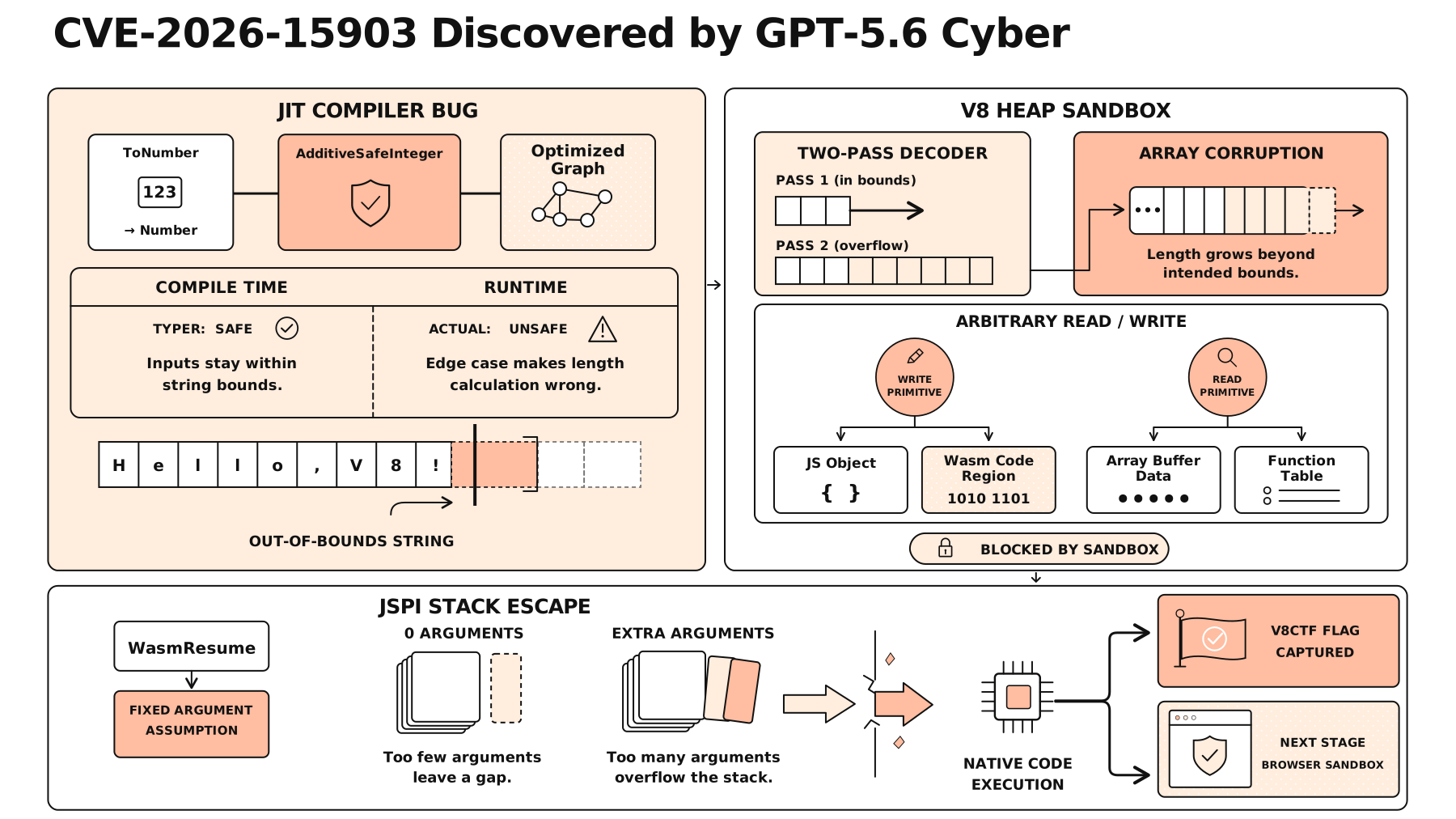
Unlike general-purpose frontier models optimized for creative writing, multimodal synthesis, or broad enterprise workflows, GPT-5.6-Cyber represents a specialized pinnacle of cognitive security engineering. Built upon a foundational architecture that integrates advanced symbolic reasoning with massive-scale neural processing, the model is trained on petabytes of verified exploit data, threat intelligence feeds, and secure-by-design software repositories.
- Sub-Second Threat Triaging: GPT-5.6-Cyber ingests millions of security events per second across disparate cloud-compute architectures, instantly stripping away noise to isolate genuine polymorphic threats.
- Autonomous Patch Synthesis: When a zero-day vulnerability is detected in legacy enterprise software, the model doesn't just alert the SOC—it drafts, tests, and validates verified patches in an isolated sandbox within minutes.
- Adversarial Simulation (Red Teaming at Scale): Enterprises can deploy the model to continuously probe their own internal networks, simulating multi-vector attacks designed by the world's most sophisticated threat actors.
- Zero-Trust Policy Enforcement: The system dynamically updates micro-segmentation rules across cloud environments, ensuring that lateral movement by an intruder is throttled instantly.
For enterprise leadership, this technological leap directly addresses the perpetual talent shortage plaguing the cybersecurity sector. Rather than replacing human security analysts, GPT-5.6-Cyber acts as a force multiplier, elevating tier-one analysts to strategic orchestrators while automating the grueling manual labor of log analysis and basic remediation.
Verified Data & Metrics Breakdown
To understand the quantitative significance of the Daybreak expansion and GPT-5.6-Cyber, we must examine the operational delta between legacy security frameworks and the new AI-native paradigm. The following table outlines critical performance indicators across enterprise security operations:
| Metric / Parameter | Legacy SOC Frameworks (Pre-2025) | Daybreak & GPT-5.6-Cyber Standard (Aug 2026) | Net Enterprise Improvement |
|---|---|---|---|
| Mean Time to Detect (MTTD) | 14 to 28 days average | Sub-30 seconds (real-time stream analysis) | 99.8% reduction in latency |
| Vulnerability Remediation Cycle | 45 days (patching, testing, deployment) | Under 4 hours (autonomous sandbox validation) | 96% compression of window of exposure |
| False Positive Alert Rate | 65% to 80% of total alerts | Less than 3% through symbolic verification | Near-total elimination of alert fatigue |
| Infrastructure Scalability Cost | Linear headcount growth required | Logarithmic compute scaling via API/Dedicated Instances | Significant long-term OpEx optimization |
Industry & Market Implications: Winners and Losers
The August 10, 2026 expansion of Daybreak is not merely a technical milestone; it is a profound market-shaping event that will redraw corporate balance sheets, alter valuation multiples across the technology sector, and redefine competitive moats.
Who Wins?
- Cloud Infrastructure Giants & Enterprise AI Providers: Corporations that integrate deeply with OpenAI’s ecosystem—utilizing high-performance cloud compute architecture to run localized or secure API instances of GPT-5.6-Cyber—will establish an impenetrable defensive posture.
- Forward-Thinking CISOs and Risk-Mitigation Specialists: Security leaders who successfully lobby for budget reallocation toward cognitive security tools will see dramatic drops in breach insurance premiums and operational downtime.
- Sovereign Defense Agencies: National security apparatuses facing relentless state-sponsored cyber warfare gain an invaluable edge in defending critical national infrastructure (grids, financial clearinghouses, telecommunications).
Who Loses?
- Legacy Point-Solution Vendors: Traditional cybersecurity vendors whose business models rely on selling fragmented, signature-based tools face an existential reckoning. Enterprises are consolidating their tech stacks around unified cognitive platforms like Daybreak.
- Unprepared Enterprise Boards: Corporations that treat cybersecurity as an IT compliance checkbox rather than an existential capital allocation priority will find themselves uninsurable and commercially unviable as counterparties demand rigorous, AI-verified security audits.
- Low-Sophistication Cybercrime Syndicates: As automated defense models neutralize routine attack vectors, lower-tier criminal operations will find traditional ransomware-as-a-service (RaaS) models increasingly unprofitable and high-risk.
Frequently Asked Questions (People Also Ask)
What is OpenAI's Daybreak initiative, and how did it change on August 10, 2026?
Daybreak is OpenAI’s strategic frontier-AI framework dedicated to cybersecurity defense and resilience. Originally operating as an experimental research sandbox, Daybreak was significantly expanded on August 10, 2026, to provide operational enterprise-grade deployment tools, shifting the industry from reactive containment to proactive, real-time autonomous defense.
What makes GPT-5.6-Cyber different from standard AI models?
GPT-5.6-Cyber is specifically fine-tuned for symbolic reasoning, threat graph analysis, and code auditing. Unlike general-purpose models, it is optimized to process millions of security telemetry events per second, synthesize secure patches autonomously, and conduct advanced adversarial red-teaming with minimal human intervention.
How does the Daybreak expansion impact enterprise risk mitigation and capital allocation?
The narrowing cyber defense window forces enterprises to reallocate capital away from bloated, legacy point-solutions and toward cognitive security platforms. Implementing GPT-5.6-Cyber drastically reduces the window of exposure, lowers cyber insurance premiums, and ensures compliance with tightening global regulatory frameworks.
Can GPT-5.6-Cyber completely replace human security analysts?
No. While GPT-5.6-Cyber automates high-volume threat triaging, log analysis, and initial patch generation—thus eliminating analyst burnout and alert fatigue—human oversight remains essential for strategic governance, complex policy decisions, and high-level architectural design.
Future Outlook: Milestones to Watch
As the market digests the structural weight of the Daybreak expansion, several key milestones will dictate the trajectory of enterprise cybersecurity through the remainder of 2026 and into 2027:
- Regulatory Harmonization: Watch for insurance underwriters and financial regulators (such as the SEC and EU regulatory bodies) to formally incorporate AI-native defense validation like GPT-5.6-Cyber into baseline compliance mandates.
- Edge and On-Premises Deployments: As enterprise demand for data sovereignty intensifies, the rollout of air-gapped, localized weights of GPT-5.6-Cyber for defense and intelligence agencies will become a major revenue driver.
- The Counter-Offensive Evolution: Anticipate state-sponsored and advanced criminal syndicates attempting to deploy adversarial machine learning attacks specifically tailored to deceive cognitive security models, sparking a new arms race in AI-vs-AI warfare.
Ultimately, the expansion of Daybreak and the arrival of GPT-5.6-Cyber signal a permanent crossing of the Rubicon. The cyber defense window is no longer narrowing due to human error—it is stabilizing because machines have entered the fray to defend the digital infrastructure of global commerce at the speed of light.