
Executive Takeaways
- Tactical Liquidity vs. Macro Volatility: The U.S. Department of the Treasury’s reintroduction of regular debt buyback programs—the first operational suite in over two decades—targets structural friction in "off-the-run" secondary markets, but cannot alter the trajectory of long-term sovereign yields.
- The CFR Policy Verdict: Analysis from the Council on Foreign Relations (CFR) underscores that government interventions designed to cap bond yields remain short-lived without direct monetary policy alignment, fiscal deficit reduction, or an economic slowdown.
- Shadow Foreign Demand & Data Revisions: Treasury International Capital (TIC) data revisions reveal shifts in official foreign reserve holdings, proving that structural cross-border absorption capacity for U.S. duration is tightening as global official buyers diversify away from benchmark paper.
- Institutional Capital Allocations: Corporate treasuries, primary dealers, and asset managers face a regime shift where technical debt management tools must not be confused with Federal Reserve Quantitative Easing (QE), forcing enterprise risk models to price in sustained term premium expansion.
The Liquidity Friction and the Buyback Blueprint
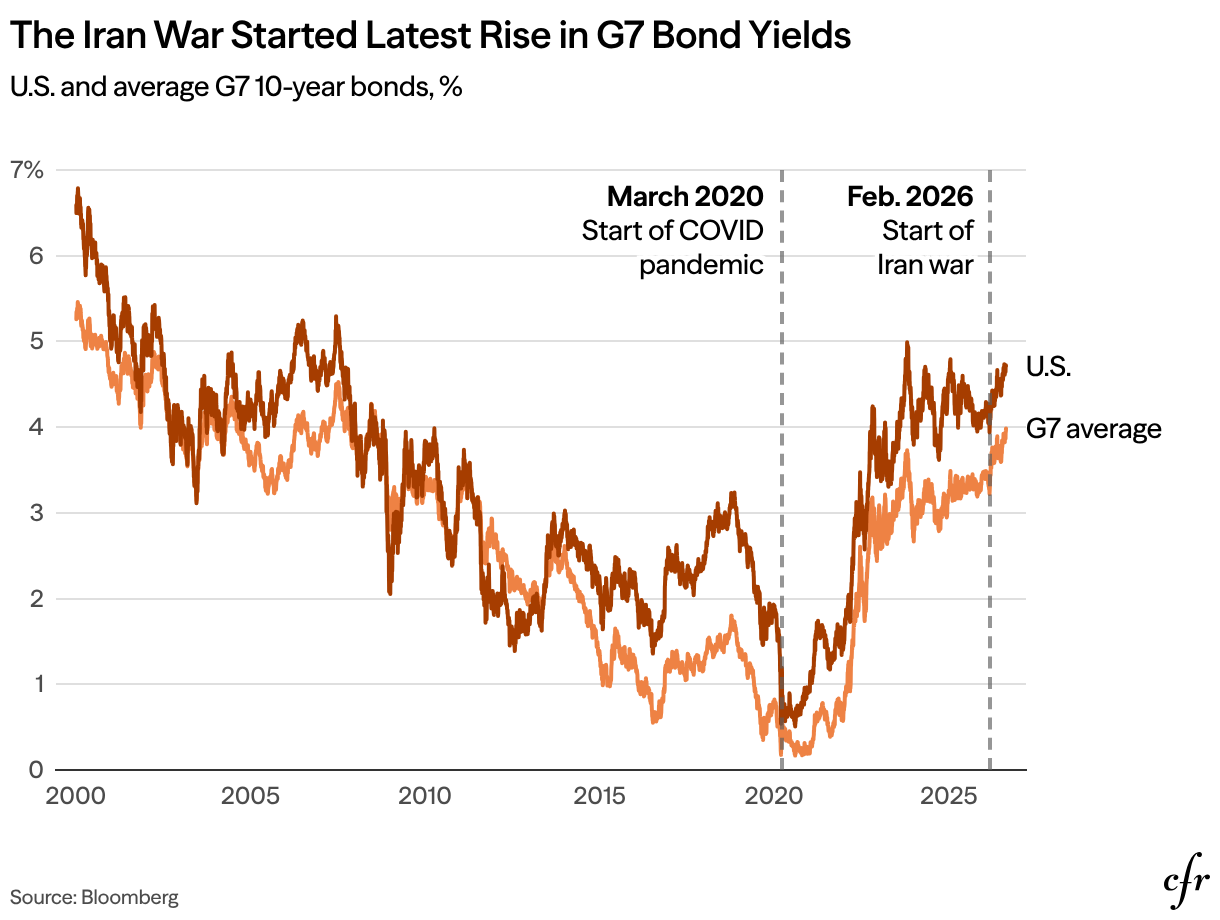
In mid-2024, the U.S. Department of the Treasury launched its first systematic debt buyback program since the surplus years of the Clinton-Bush transition. Designed to execute regular operations purchasing legacy, less-liquid sovereign debt ("off-the-run" Treasuries) while simultaneously issuing highly liquid "on-the-run" benchmark securities, the initiative was hailed by Washington as a structural upgrade to market architecture. However, behind the operational mechanics lies a fundamental economic friction: a widening divergence between microstructural liquidity management and macro-level sovereign debt trajectories.
For primary dealers and sovereign debt strategists across New York and London, the Treasury’s buybacks address a severe market microstructure vulnerability. Since the Federal Reserve initiated its quantitative tightening (QT) campaign to shrink its multitrillion-dollar balance sheet, primary dealer inventories have been strained under unprecedented issuance volumes. When market volatility spikes, liquidity in older, off-the-run Treasury issues—which constitute over 85% of total outstanding U.S. marketable debt—evaporates. By standing ready to repurchase up to $120 billion annually in older debt categories, the Treasury functions as a liquidity provider of last resort, mitigating bid-ask spread widening and preventing dislocations in secondary trading.
Yet, as rigorous research from the Council on Foreign Relations (CFR) demonstrates, market participants who interpret these buyback operations as a stealth mechanism to lower sovereign borrowing costs are mischaracterizing the math. Buybacks are cash-neutral or duration-neutral liquidity adjustments; they do not reduce the net supply of U.S. government obligations absorbed by the private sector. Consequently, while off-the-run liquidity improves, structural upward pressure on benchmark 10-year and 30-year yields remains dictated by macroeconomic fundamentals, fiscal deficits, and monetary policy stances.
Yield Caps, Cross-Border Flows, and Data Revisions
The core conundrum facing advanced economy sovereign debt issuers is the limitation of official intervention. As highlighted in recent CFR analysis on official purchases and global capital flows, attempts by sovereign authorities to limit bond yields without explicit, unhedged central bank balance sheet expansion inevitably run into structural dead ends. When fiscal deficits remain near $2 trillion during periods of low unemployment, the market dynamic demands higher real yields and expanded term premiums to clear the massive volume of new issuances.
A critical dimension of this yield dynamic lies in foreign official buying patterns and subsequent historical data revisions. Historically, foreign central banks—particularly across East Asia and key commodity-exporting nations—acted as price-insensitive anchors for U.S. Treasury auctions. However, recent Treasury International Capital (TIC) data revisions show a structural shift in foreign capital deployment. While aggregate foreign holdings appear elevated on paper, official reserve managers have increasingly shifted allocations toward shorter-duration paper, private repo markets, or alternative foreign currencies, leaving domestic private capital to absorb long-end duration risk.
This dynamic complicates the Treasury's quarterly refunding calculus. When foreign official sector absorption declines, primary dealers must clear larger block sales to private institutional accounts, including hedge funds executing basis trades and asset managers requiring higher yield compensation. The CFR’s research proves that unless advanced economies experience a material economic slowdown or a pivot back toward aggressive central bank rate cuts, technical debt management mechanisms like buybacks cannot offset the yield-expanding forces of domestic fiscal overhang and reduced official foreign absorption.
Mechanics of Operation: Buybacks vs. Federal Reserve Balance Sheet Actions
To evaluate the structural scope of the U.S. Treasury's buyback program, institutional market participants must decouple technical Treasury operations from Federal Reserve monetary interventions. The operational mechanics, funding structures, and balance sheet outcomes diverge significantly across these public finance channels.
Cash Management and Liquidity Operations
The Treasury’s framework operates under two distinct operational pillars: Liquidity Support Buybacks and Cash Management Buybacks. Under liquidity support, the Treasury repurchases illiquid, off-the-run coupon securities across various maturity buckets (from 2-year to 30-year paper) and funds these purchases by incrementally expanding regular auction sizes for current benchmark on-the-run issues. Under cash management buybacks, the Treasury uses temporary cash surpluses (often tied to quarterly tax receipts) to redeem short-dated bills, smoothing out volatility in the Treasury General Account (TGA) balance maintained at the Federal Reserve.
Crucially, neither operation expands bank reserves or injects net liquidity into the broader financial system. Instead, liquidity support buybacks operate as a collateral transformation mechanism: exchanging off-the-run duration for hyper-liquid on-the-run duration. This process reduces the balance sheet risk weighting for primary dealers, allowing them to market-make more efficiently without violating regulatory capital mandates such as the Supplementary Leverage Ratio (SLR).
Comparative Architecture: Treasury Buybacks vs. Central Bank Intervention
The technical distinctions between sovereign debt operations and central bank monetary interventions highlight why market interventions yield vastly different economic outcomes:
| Parameter / Dimension | U.S. Treasury Buyback Program | Federal Reserve Quantitative Easing (QE) | Yield Curve Control (YCC) Frameworks |
|---|---|---|---|
| Primary Objective | Microstructural liquidity support and cash flow smoothing | Macroeconomic stimulus and credit condition easing | Explicit ceiling targeting for benchmark interest rates |
| Balance Sheet Impact | Net Neutral (Funded via rebalanced issuance / TGA) | Net Expansion (Creation of central bank bank reserves) | Uncapped Expansion (Purchases required to enforce target) |
| Targeted Debt Instruments | Off-the-run, illiquid coupon debt and legacy bills | Broad spectrum on-the-run and off-the-run coupons/MBS | Specific benchmark maturities (e.g., 10-year sovereign paper) |
| Yield Curve Term Premium Impact | Negligible / Micro-level bid-ask compression only | Substantial down-draft via structural duration extraction | Absolute suppression at target maturity; steepening elsewhere |
| Primary Dealer Balance Sheet Relief | High (Converts illiquid paper to liquid benchmark inventory) | Moderate (Removes inventory, but shifts capital allocations) | Variable (Creates extreme flow imbalances and market freezes) |
| Durability Without Macro Shift | High (Operationally sustainable indefinitely) | Low (Triggers inflationary pressures if uncalibrated) | Very Low (Exposed to speculative attack under high inflation) |
Industry & Market Implications: Enterprise, Banking, and Asset Allocation
The reality that Treasury buybacks cannot permanently lower benchmark yields carries structural consequences for capital markets, enterprise treasury management, and risk mitigation strategies across multiple sectors.
1. Corporate Treasury & Enterprise Capital Allocation
Chief Financial Officers and enterprise treasury executives must recalibrate debt financing strategies. Over the past decade, corporations leveraged ultra-low benchmark yields to issue long-term fixed-rate debt, driving record enterprise enterprise return on investment (ROI) metrics and funding large-scale share repurchases. In the current regime—where Treasury buybacks address liquidity friction but leave baseline 10-year yields elevated—corporate refinancing cliffs present a material margin squeeze.
Enterprise risk managers must account for a permanently higher cost of capital when modeling hurdle rates for capital expenditure, cloud compute infrastructure investments, and M&A valuations. Corporate debt issuance must increasingly lean on short-to-intermediate maturities, requiring sophisticated interest rate swap strategies to mitigate duration risk while maintaining debt service coverage ratios acceptable to rating agencies.
2. Banking Sector and Primary Dealer Dynamics
For mega-banks and primary dealers, the Treasury’s active secondary market participation offers meaningful relief on balance sheet utilization. By establishing predictable schedules to absorb off-the-run paper, the Treasury reduces the holding cost and inventory risk of legacy debt. This allows primary dealers to allocate risk capital more efficiently toward repo market intermediation, supporting Securitized Overnight Financing Rate (SOFR) stability and lowering system-wide clearing friction.
However, because this liquidity mechanism does not suspend regulatory capital constraints, banks remain cautious about expanding market-making activities during periods of severe volatility. Unless financial regulators adjust the Supplementary Leverage Ratio (SLR) to permanently exempt U.S. Treasuries and central bank reserves, primary dealer absorption capabilities will remain constrained relative to gross debt issuance sizes.
3. Institutional Pension Funds & Sovereign Wealth Allocations
Liability-driven investors (LDI), such as pension funds and life insurers, must evaluate off-the-run yield spreads against long-term liabilities. The buyback program narrows the spread between off-the-run and on-the-run securities, eliminating historical arbitrage opportunities that hedge funds exploited via basis trades. Consequently, institutional asset managers must shift capital allocation toward credit spreads, private debt, and real assets to achieve required asset-liability matching (ALM) targets, rather than relying on structural yield anomalies within the sovereign curve.
Frequently Asked Questions (People Also Ask)
How do U.S. Treasury debt buybacks differ from Federal Reserve Quantitative Easing (QE)?
U.S. Treasury buybacks are debt management operations designed to improve liquidity in secondary trading markets and smooth treasury cash flows. They are funded in a balance-sheet-neutral manner, typically by issuing new benchmark securities to buy back older, illiquid debt. In contrast, Quantitative Easing (QE) is a monetary policy action conducted by the Federal Reserve, which creates new bank reserves to purchase financial assets, directly expanding the central bank's balance sheet and injecting net liquidity into the economy to lower long-term interest rates.
Why are "off-the-run" Treasury securities important to overall market liquidity?
Off-the-run Treasuries comprise older debt issues replaced by newly issued "on-the-run" benchmark securities. Although they represent the vast majority of outstanding U.S. government debt, off-the-run issues trade far less frequently and suffer from wider bid-ask spreads. When primary dealers become overwhelmed by debt inventory, off-the-run liquidity deteriorates rapidly. Treasury buybacks support off-the-run markets by providing a reliable buyer, allowing dealers to recycle capital and maintain smooth functionality across the broader U.S. financial system.
Can the Treasury’s buyback program lower mortgage rates and corporate borrowing costs?
No. While the buyback program improves the internal mechanics and liquidity of the Treasury market, it does not alter the broader macroeconomic forces—such as inflation, Federal Reserve interest rate policy, and total fiscal deficit supply—that determine benchmark U.S. Treasury yields. Because corporate bond yields, consumer loans, and mortgage rates are priced off benchmark Treasury yields, the buyback program alone will not drive down consumer or corporate borrowing costs.
What did the Council on Foreign Relations (CFR) report identify regarding foreign reserve demand?
The CFR analysis emphasized that sovereign debt yield management efforts are unsustainable without macroeconomic slowdowns or coordinated monetary easing. Furthermore, CFR analysis highlighted that structural foreign central bank purchases are no longer absorbing U.S. debt at historical rates. Data revisions reveal that foreign official reserve managers are increasingly prioritizing shorter-duration instruments and non-U.S. assets, leaving domestic private investors to absorb long-term U.S. fiscal issuance at higher required yields.
Future Outlook: Fiscal Trajectories and Technical Boundaries
As the U.S. Department of the Treasury scales its buyback program into a permanent operational capability, the ultimate driver of sovereign yield dynamics will remain the sheer scale of fiscal issuance. With annual U.S. budget deficits projected to hover between 6% and 7% of GDP over the next decade, gross sovereign debt creation will outpace any microstructural liquidity program. The Treasury's debt buybacks provide essential plumbing maintenance for the global financial architecture, but they are not a substitute for structural fiscal adjustment or macroeconomic policy balance.
Institutional investors, chief financial officers, and risk managers must view buybacks for what they are: an operational refinement that reduces systemic market-making frictions. The underlying direction of U.S. yields, term premiums, and enterprise capital costs will continue to be governed by the Federal Reserve's inflation mandate, economic growth trends, and the global market's capacity to absorb unprecedented volumes of sovereign debt. Managing through this decade will require enterprise risk management frameworks calibrated for sustained interest rate volatility rather than structural intervention rescues.