
Executive Takeaways
- Strategic Intervention: The U.S. Treasury’s unexpected debt buyback program signals mounting structural strains in the world’s most critical financial plumbing, forcing a re-evaluation of sovereign risk mitigation.
- Liquidity Management: By repurchasing off-the-run securities to improve market liquidity and smooth cash flows, the Treasury is effectively executing yield-curve stabilization operations under the guise of routine debt management.
- Global Spillover: Advanced economies globally are increasingly deploying unconventional balance-sheet interventions to cap rising government bond yields, directly distorting capital allocation and valuation multiples across equity and credit markets.
For decades, the mechanics of the U.S. Treasury market were viewed by institutional allocators as an immutable law of financial nature: liquid, deep, and largely self-regulating. However, a structural shift engineered inside the Herbert Hoover Building and analyzed extensively by macro-strategists—including recent landmark commentary from the Council on Foreign Relations by Rebecca Patterson—has shattered that illusion. The Treasury’s surprise debt buyback initiative is far more than a routine cash-management maneuver; it is an urgent diagnostic of a sovereign bond market grappling with chronic liquidity evaporation, unrelenting debt issuance, and the hidden limits of global fiscal architecture.
When the Treasury Department unveiled its systematic buyback strategy, the initial market reaction was characterized by cautious optimism regarding cash flow smoothing and the stabilization of off-the-run securities. Yet, beneath the surface of day-to-day trading desks, sophisticated quantitative funds, primary dealers, and risk mitigation committees recognized the operation for what it truly was: a stealth intervention designed to prevent structural market dysfunction. In an era where sovereign debt levels test the boundaries of fiscal sustainability, advanced economies are discovering that maintaining orderly market liquidity requires direct, aggressive central bank and treasury synchronization.
Anatomy of a Market Shock: Why the Buyback Matters
To understand the profound implications of the Treasury's actions, one must examine the acute plumbing failures that plagued the $27 trillion U.S. government debt market. In recent years, episodic bouts of severe market illiquidity—highlighted by wide bid-ask spreads and diminished depth in primary dealer order books—have turned routine Treasury auctions into high-stakes volatility events. As quantitative tightening (QT) reduced the Federal Reserve’s balance sheet footprint, private-sector balance sheets faced a monumental wall of new sovereign issuance without the traditional backstops.
The buyback program was designed to address this exact friction. By purchasing older, less liquid ("off-the-run") securities and replacing them with newly issued ("on-the-run") benchmarks, the Treasury aimed to achieve two primary objectives: enhance overall market liquidity and regularize cash flows to assist primary dealers. Yet, the secondary consequence of this policy is an implicit form of yield management. By absorbing illiquid paper and injecting cash back into the financial system, the Treasury is dampening the upward pressure on yields that structural deficits would otherwise dictate.
This dynamic places fiscal authorities in an uncomfortable parallel with central banks. While central banks have historically utilized open market operations and quantitative easing (QE) to manipulate borrowing costs, the deployment of Treasury-led buybacks introduces a fiscal equivalent. It blurs the traditional demarcation line between monetary policy and debt management, raising critical questions for corporate treasurers, institutional investors, and global regulatory compliance officers monitoring systemic risk.
Verified Data and Market Metrics Breakdown
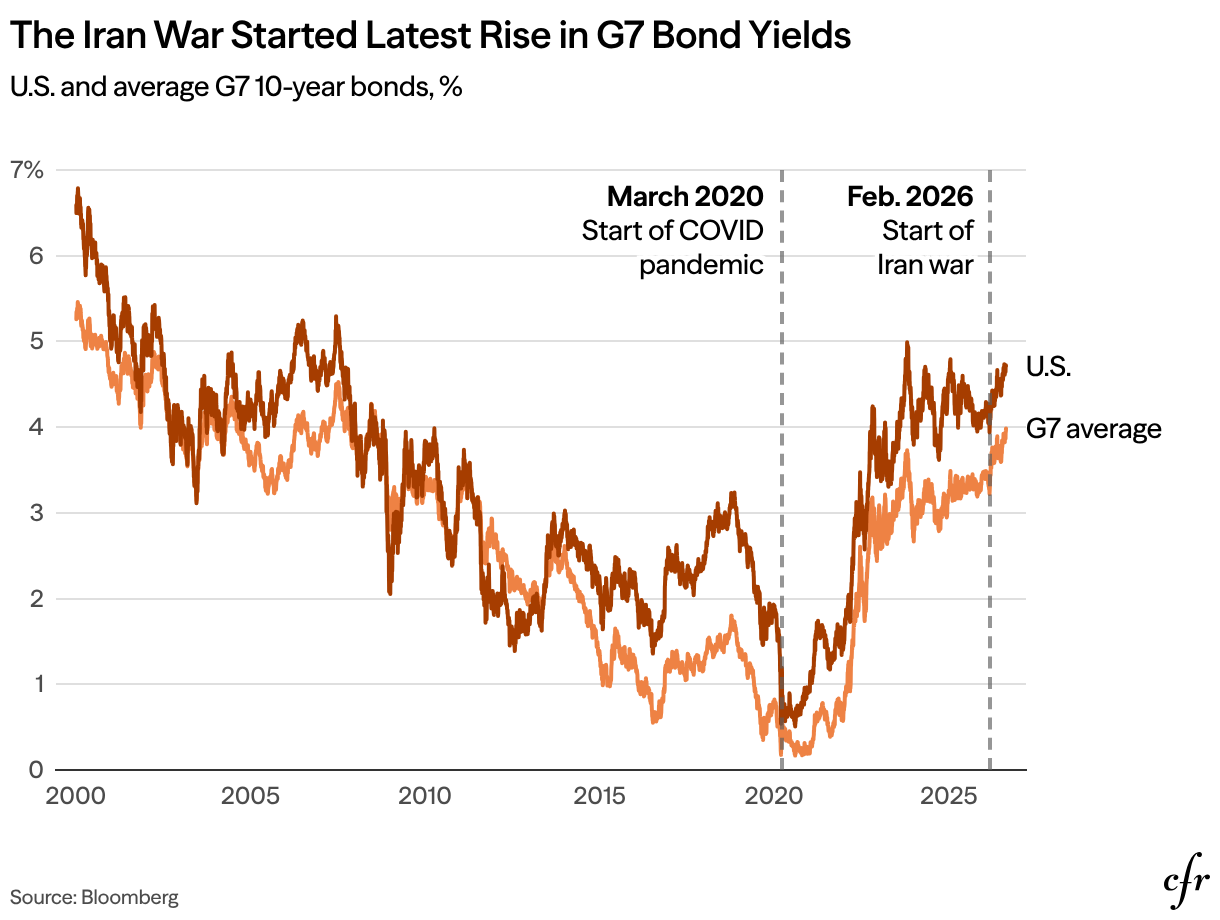
The following comparative breakdown highlights the structural divergence in Treasury market operations, comparing historical norms with the modern mechanics of the targeted buyback regime:
| Metric / Parameter | Pre-Crisis Historical Norm (2010–2019) | Modern Buyback Era (2024–2026) |
|---|---|---|
| Primary Liquidity Driver | Private-sector primary dealers & deep arbitrage capital | Targeted Treasury-led buybacks & liquidity support |
| Off-the-Run Friction | Low; absorbed organically by institutional portfolios | Elevated; requires systematic state-sponsored redemption |
| Bid-Ask Spread Volatility | Contained, reflecting stable market depth | Prone to episodic spikes during heavy auction cycles |
| Policy Overlap | Strict separation of monetary and fiscal mandates | Increasingly blurred lines between debt issuance and yield capping |
Industry and Market Implications: Winners and Losers
In the complex ecosystem of global finance, structural policy interventions invariably create asymmetric outcomes. As institutional capital allocators re-price risk across asset classes, the Treasury’s active footprint reshapes corporate finance and portfolio construction.
Who Wins
- Primary Dealers and Mega-Banks: Financial institutions that underwrite sovereign debt benefit directly from improved secondary market liquidity and reduced inventory risk, safeguarding their balance sheet capacity for corporate underwriting and advisory services.
- Leveraged Macro Funds: Sophisticated macro-investors who correctly anticipate liquidity injections and yield-curve maneuvers can exploit pricing anomalies between on-the-run and off-the-run Treasuries.
- Public Sector Borrowers: By preventing systemic liquidity seizures, the Treasury ensures continued market access for sovereign debt issuance, avoiding catastrophic funding logjams.
Who Loses
- Long-Term Pension Funds and Insurers: Institutional investors reliant on natural, unmanipulated yield curves face ongoing distortion in long-term asset-liability matching and valuation multiples.
- Proponents of Fiscal Orthodoxy: Economists who advocate for strict boundaries between monetary policy and debt management view these operations as a slippery slope toward fiscal dominance and suppressed price discovery.
- Corporate Borrowers Facing Crowding Out: Persistent heavy sovereign issuance, even when cushioned by buybacks, maintains upward pressure on benchmark rates, elevating corporate cost of capital and dampening enterprise ROI on capital expenditure projects.
Frequently Asked Questions (People Also Ask)
What specifically prompted the U.S. Treasury to initiate a systemic buyback program?
The program was initiated to combat chronic structural illiquidity in the secondary market for U.S. government debt. With massive fiscal deficits driving unprecedented issuance volumes and quantitative tightening reducing central bank participation, off-the-run Treasuries suffered from severe trading friction, wide bid-ask spreads, and diminished market depth during auction cycles.
How do Treasury buybacks differ from Federal Reserve quantitative easing (QE)?
While both interventions involve the purchase of government debt, QE is conducted by the central bank (the Federal Reserve) using newly created bank reserves to alter monetary policy and lower borrowing costs economy-wide. In contrast, Treasury buybacks are executed by the executive branch's fiscal agency using cash management funds or debt proceeds to optimize the structure and liquidity profile of the federal debt portfolio.
What are the implications of these operations for global bond yields?
By absorbing illiquid, off-the-run securities and stabilizing market plumbing, buybacks reduce the risk premium demanded by investors holding older debt. While not an explicit yield-cap policy, these operations exert a smoothing influence on the yield curve, preventing disorderly spikes in borrowing costs during heavy supply periods.
How does this policy affect corporate capital allocation and valuation multiples?
Because sovereign bonds serve as the foundational risk-free rate for global financial valuation, any structural intervention in the Treasury market ripples through corporate credit pricing. Elevated sovereign issuance and intervention dynamics maintain baseline pressure on interest rates, forcing corporate executives to demand higher hurdles for enterprise ROI and reassess long-term capital allocation strategies.
Future Outlook: What Comes Next for the Bond Market
As advanced economies navigate an environment defined by high structural deficits and shifting central bank mandates, the U.S. Treasury’s buyback experiment is unlikely to remain an isolated policy footnote. Instead, it marks the evolution of modern sovereign debt management, where state intervention is routinely deployed to safeguard market plumbing against chronic structural imbalances.
For market participants, institutional investors, and risk officers, the upcoming quarters will require vigilant tracking of several critical milestones: the frequency and sizing of forthcoming buyback announcements, the evolution of primary dealer inventory metrics, and the degree of coordination between fiscal authorities and monetary policymakers. In an interconnected global economy where sovereign risk mitigation has become paramount, the integrity of the benchmark bond market remains the ultimate determinant of financial stability.


!['Mirzapur: The Movie' box office collection Day 2 [LIVE]: Pankaj Tripathi, Ravi Kishan, and Ali Fazal sta](https://static.toiimg.com/thumb/resizemode-4,width-1280,height-720,msid-133797053/133797053.jpg)