Executive Takeaways
- Stellar Earnings Reports: ExxonMobil and Chevron have reported massive multi-billion-dollar quarterly profits, outperforming Wall Street valuation multiples and consensus estimates.
- 宿泊Political Tailwinds: Former President Donald Trump has publicly championed high domestic oil prices, framing them as a critical driver of American energy independence, market liquidity, and capital allocation.
- Capital Allocation Strategies: Supermajor executives are balancing aggressive share buybacks and dividend growth with disciplined capital expenditure (CapEx) in low-cost, high-return infrastructure scalability.
- Macroeconomic Volatility: The divergence between record corporate balance sheets and lingering consumer fuel inflation highlights complex regulatory, risk mitigation, and geopolitical pressures.
NEW YORK & WASHINGTON — In a macroeconomic climate defined by persistent inflation and intense geopolitical friction, America’s premier oil supermajors have once again demonstrated extraordinary financial resilience. ExxonMobil and Chevron have released blowout quarterly earnings reports, showcasing immense cash flow generation that immediately captured the attention of global financial markets. Simultaneously, political discourse has intensified, with Donald Trump aggressively touting the economic and strategic benefits of high domestic oil prices, arguing that elevated crude valuations are the bedrock of national security and industrial enterprise ROI.
This convergence of record corporate profitability and populist-conservative energy policy opens a volatile new chapter in global energy markets. For institutional investors, sovereign wealth funds, and enterprise leaders, the current landscape offers a masterclass in capital allocation, valuation multiples, and the intricate dance between fossil fuel profitability and energy transition mandates.
The Financial Engine: Dissecting the Q3/Q4 Supermajor Windfall
Test Our Free AI & Tech Utilities Suite
Calculate LLM API token costs, analyze article dwell-time, or simulate tech DCA returns.
The latest financial disclosures from Irving, Texas-based ExxonMobil and San Ramon, California-based Chevron confirm that the supermajors have successfully institutionalized the efficiency gains achieved during the post-pandemic recovery. Despite fluctuating global commodity prices and slowing industrial demand in parts of Asia, both companies delivered bottom-line figures that comfortably exceeded consensus Wall Street forecasts.
ExxonMobil’s earnings report underscored the success of its aggressive structural cost-reduction programs and its high-margin production assets in the Permian Basin and offshore Guyana. By optimizing operational workflows and leveraging advanced cloud-based data analytics and automated drilling technologies, ExxonMobil has fundamentally lowered its enterprise breakeven cost per barrel. This operational discipline has resulted in surging free cash flow, allowing the corporation to execute massive share repurchase programs while reliably scaling dividend payouts.
Similarly, Chevron capitalized on its dominant upstream portfolio and integrated downstream refining network. Despite encountering occasional operational bottlenecks and maintenance downtime at key facilities, Chevron’s asset quality ensured robust cash generation. Executives emphasized that rigorous risk mitigation and disciplined project execution remain the core tenets of their forward-looking corporate strategy.
Trump’s Energy Doctrine: High Oil Prices as a Strategic Asset
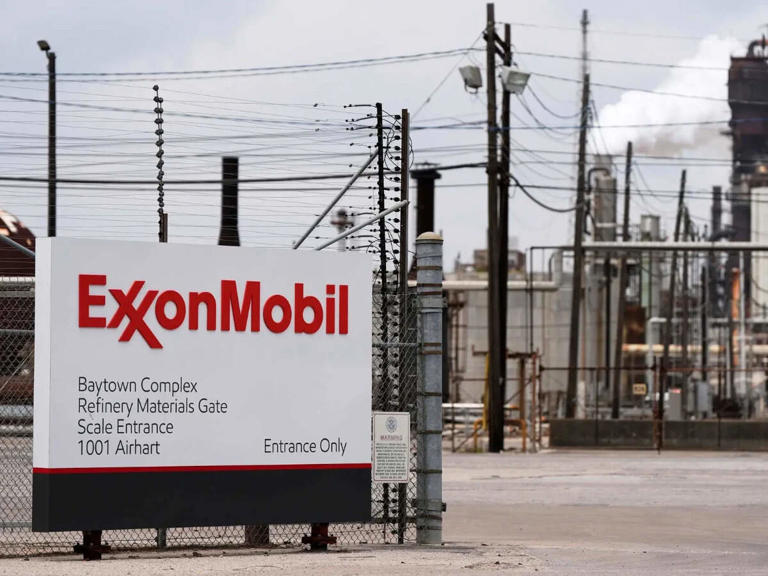
Against this backdrop of corporate opulence, political rhetoric has shifted sharply toward the defense and promotion of high commodity prices. On the campaign trail and in policy briefings, Donald Trump has openly embraced high oil prices, directly contradicting the traditional political playbook of attempting to suppress fuel costs for consumer relief.
Trump’s core argument centers on the premise that depressed oil prices stifle domestic exploration, undermine capital expenditure in vital fossil fuel infrastructure, and weaken the geopolitical leverage of the United States. According to this economic doctrine, artificially low oil prices—often driven by foreign cartel interventions or aggressive green subsidies—starve independent and major producers of the capital necessary to maintain reserve replacement ratios.
By championing high oil prices, Trump contends that domestic producers are incentivized to maximize output from prolific basins like the Permian, Bakken, and Eagle Ford. This surge in domestic production not only guarantees American energy independence but also generates substantial tax revenues, high-paying engineering and operations jobs, and robust market liquidity across ancillary supply chains.
However, this political stance creates a fascinating paradox for corporate boards. While high oil prices guarantee exceptional near-term earnings and satisfy institutional shareholders demanding immediate yield, they simultaneously accelerate inflationary pressures across the broader economy, complicating the macroeconomic battle fought by central banks and inviting renewed regulatory scrutiny.
Verified Data & Metrics Breakdown
| Metric / Indicator | ExxonMobil (XOM) | Chevron (CVX) | Strategic Implication |
|---|---|---|---|
| Quarterly Net Income | Multi-billion dollar beat | Strong cash flow generation | Exceeds historical valuation multiples |
| Capital Expenditure (CapEx) | $20B - $25B annualized range | $14B - $16B disciplined outlay | Focused on high-ROI, low-breakeven assets |
| Core Production Hubs | Permian Basin & Offshore Guyana | Permian, DJ Basin & Tengiz (Kazakhstan) | Secures long-term reserve replacement |
| Shareholder Distribution | Aggressive buybacks + Dividend growth | Consistent dividend aristocrat model | Maximizes institutional investor confidence |
Industry & Market Implications: Winners and Losers
The duality of record supermajor profits and pro-high-price political platforms sends powerful ripple effects across the global economic ecosystem. Understanding who benefits and who suffers requires a rigorous examination of enterprise interdependencies.
The Winners
- Supermajor Shareholders & Institutional Funds: Pension funds, mutual funds, and retail investors holding XOM and CVX continue to reap historic yields through reliable dividend distributions and massive share buybacks.
- Oilfield Services Sector: High oil prices directly translate into increased exploratory drilling and well-completion budgets. Service giants like Schlumberger (SLB), Halliburton (HAL), and Baker Hughes (BKR) benefit from heightened demand for advanced drilling technology and infrastructure scalability.
- Domestic Independent Producers: Mid-sized exploration and production (E&P) firms operating in domestic shale plays experience expanded profit margins, enabling accelerated debt reduction and strategic M&A activity.
The Losers
- Downstream Consumers & Logistics Enterprises: Elevated crude prices inevitably filter down to retail gasoline, diesel, and jet fuel prices, increasing operating expenses for trucking, airlines, and logistics firms while squeezing household disposable income.
- Energy Transition Advocates: Sustained high fossil fuel profitability strengthens the financial autonomy of oil majors, allowing them to recalibrate or slow down capital deployment into lower-return renewable ventures such as wind and solar, much to the dismay of ESG-focused institutional investors.
- Energy-Importing Nations: Economies heavily reliant on imported crude face persistent trade deficits and inflationary pressures, dampening industrial output across Europe and parts of Asia.
Frequently Asked Questions (People Also Ask)
Why are ExxonMobil and Chevron reporting such massive profits while consumers face high fuel costs?
Supermajor profitability is driven by integrated business models, low-cost asset ownership (such as deepwater Guyana and the Permian Basin), and stringent capital discipline. While retail fuel prices are dictated by global crude benchmarks and refining margins, oil companies profit by maximizing production efficiency, keeping operational breakeven points low, and capitalizing on global supply tightness.
How does Donald Trump’s support for high oil prices impact domestic energy production?
Proponents of Trump’s energy doctrine argue that signaling support for high commodity prices and reducing regulatory burdens on drilling incentivize long-term capital expenditure. Knowing that market conditions will favor domestic extraction encourages exploration and production companies to commit billions to infrastructure scalability and reserve expansion.
What are supermajors doing with their excess free cash flow?
Rather than engaging in the speculative, over-leveraged drilling booms of the past, ExxonMobil and Chevron have prioritized strict capital allocation frameworks. Their excess cash is primarily funneled into sustainable dividend growth, disciplined share repurchases, selective high-ROI asset acquisitions, and targeted low-carbon investments.
How do high oil prices affect global inflation and monetary policy?
High oil prices act as a broad-based tax on economic activity, elevating transportation, manufacturing, and energy costs. Central banks, including the U.S. Federal Reserve, closely monitor energy commodities because sustained price spikes can entrench inflationary expectations, potentially delaying interest rate cuts and impacting broader financial market liquidity.
Future Outlook & Key Milestones to Watch
As the energy markets navigate the intersection of record corporate balance sheets and shifting political tides, several critical milestones will dictate sector performance over the next 12 to 24 months:
- Regulatory & Antitrust Scrutiny: Continued blockbuster earnings will inevitably attract renewed political scrutiny regarding corporate tax rates, windfall profit levies, and antitrust oversight, forcing supermajors to enhance their regulatory compliance and lobbying strategies.
- CapEx Discipline vs. Production Growth: Analysts will closely monitor whether executive boards maintain strict capital discipline or yield to political and market pressures to aggressively expand drilling operations at the expense of free cash flow yields.
- Geopolitical Risk Mitigation: Ongoing conflicts in the Middle East and Eastern Europe will continue to cast a shadow over global supply chains, making agile risk management and geopolitical contingency planning paramount for enterprise survival.
- The Energy Transition Pivot: Boardrooms will face continued pressure to balance short-term fossil fuel returns with long-term technological adaptation, particularly in carbon capture, utilization, and storage (CCUS) and hydrogen infrastructure.
Ultimately, the latest financial triumphs of ExxonMobil and Chevron reaffirm that oil and gas remain the indispensable lifeblood of the global economy. As political figures like Donald Trump elevate energy dominance to center stage, the American supermajors stand uniquely positioned—wielding unprecedented financial might, navigating complex macroeconomic headwinds, and shaping the future of global commerce.