Executive Takeaways
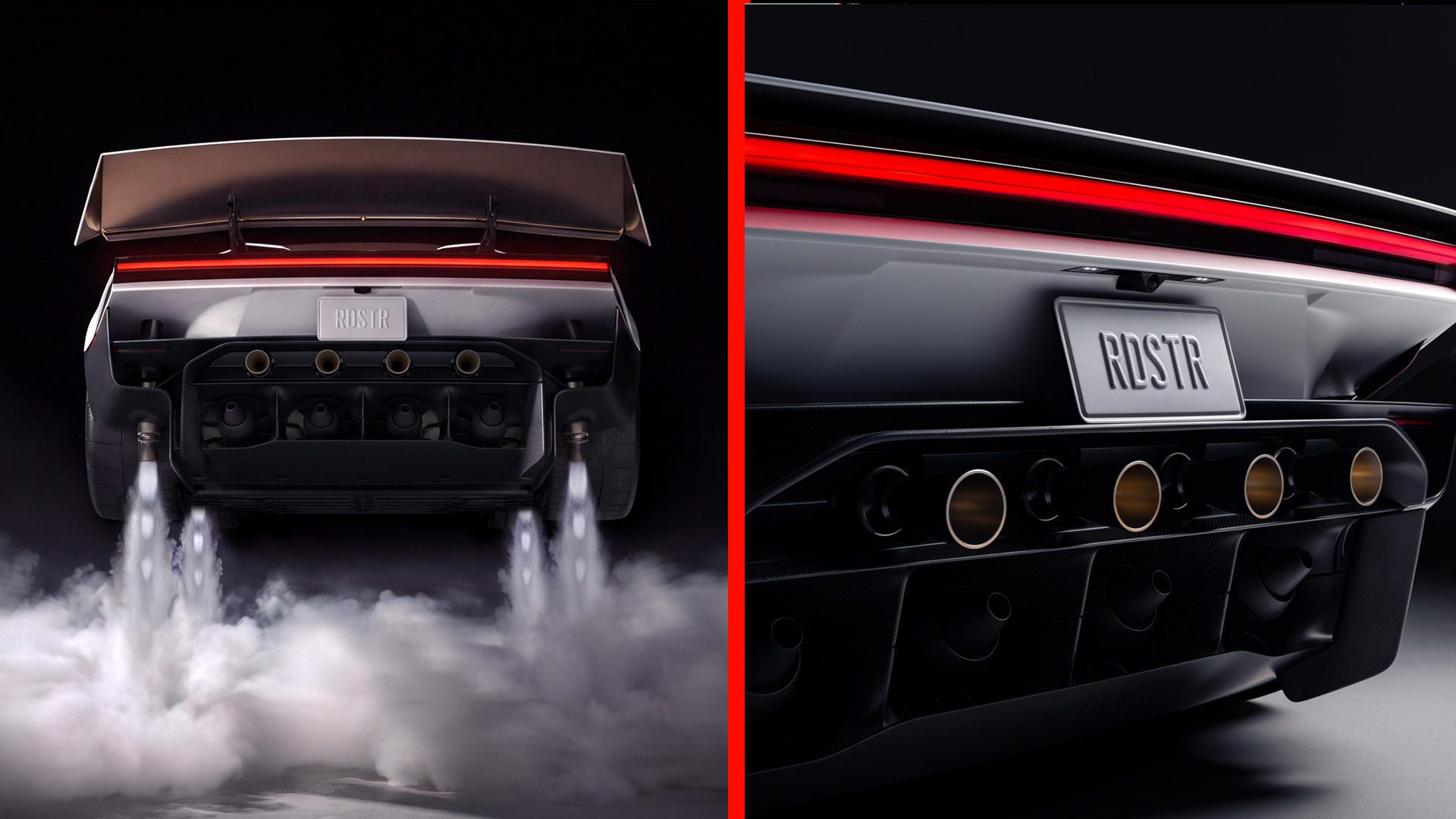
- The Tactical Provocation: Swedish retail titan IKEA has leveraged its hallmark democratic design philosophy to launch a viral campaign teasing a "safe, affordable, flat-pack" flying car, directly skewering Silicon Valley’s multi-year history of unfulfilled personal aviation promises.
- Targeting Tesla’s Unmet Timelines: The tongue-in-cheek campaign takes aim at Elon Musk’s repeated prognostications regarding the next-generation Tesla Roadster equipped with SpaceX cold-gas thrusters, exposing broader consumer fatigue with speculative automotive tech.
- Industrial Realities vs. Speculative Valuations: While electric vertical takeoff and landing (eVTOL) startups burn billions under stringent FAA and EASA certification pathways, IKEA’s counter-narrative underscores the widening gulf between accessible consumer utility and high-multiple venture theater.
- Brand Capital Arbitrage: By positioning itself as the sober, practical adult in the room, IKEA’s parent entities (Ingka Group and Inter IKEA) deploy high-efficiency marketing that highlights manufacturing frugality against Tesla’s luxury-adjacent, high-CapEx tech narratives.
Act I: The Provocation from Älmhult
In the austere corporate ecosystem of Älmhult, Sweden, industrial engineering is traditionally measured in millimeters of particleboard, flat-pack shipping efficiency, and relentless cost deflation. Speculative hyperbole is rarely on the bill of materials. Yet, in a rare and calculated foray into high-profile corporate satire, the global furniture powerhouse has turned its dry Scandinavian wit toward the apex predator of tech-driven valuation multiples: Elon Musk’s Tesla Inc.
The campaign—anchored on the mock reveal of an ultra-minimalist, home-assembled personal aerial vehicle purportedly designed to be "safe, democratic, and actually affordable"—landed with surgical precision across global digital channels. Complete with an iconic Allen wrench, pictogram assembly instructions, and missing-screw disclaimers, the creative execution targeted the widening credibility gap haunting personal aviation projects, autonomous transit timelines, and, specifically, Tesla’s recurring claims of levitating passenger vehicles.
While framed as satirical brand marketing, the underlying subtext represents a serious cultural critique. By contrasting its own mass-market accessibility with Silicon Valley’s tendency to solicit non-refundable reservation deposits for hardware years ahead of industrial feasibility, IKEA executed a masterclass in brand differentiation. The campaign systematically dismantle the prestige aura surrounding speculative deep-tech mobility, reframing high-concept personal transit not as visionary genius, but as an exercise in detached consumer elitism.
Act II: The Ghost of the Flying Roadster
To understand why IKEA’s jab resonated so violently across financial and automotive circuits, one must examine the specific technological and narrative debt accumulated by Tesla over the past decade. In mid-2018, Elon Musk began publicly floating the concept that the delayed second-generation Tesla Roadster would offer an optional "SpaceX package" incorporating roughly ten small cold-gas thrusters arranged seamlessly around the chassis. Musk asserted that these thrusters would dramatically improve acceleration, braking, and cornering, and potentially allow the car to hover or fly short distances.
Year after year, the timeline for the Roadster slipped. Initially unveiled in November 2017 with an anticipated 2020 production target, the vehicle has seen its launch window systematically deferred through 2021, 2022, 2023, and into the latter half of the current decade. Musk reignited the hype cycle by claiming production designs were completed and that the vehicle would achieve zero-to-sixty times under one second, hinting once more at airborne capabilities:
"My good friend Larry Page used to say, 'Elon, why can’t we have flying cars?' And I said, 'We’ll see.' The new Roadster will do things that have never been done before. If you think about it, it’s not even really a car." — Elon Musk, via public investor broadcasts and social media disclosures
For institutional investors and retail depositors alike—many of whom deposited $50,000 for standard reservations or the full $250,000 for Founder Series allocations nearly eight years ago—the continued absence of a street-legal, let alone airborne, platform has become an acute point of friction. IKEA’s parody strikes directly at this sore spot: the transactional exchange of cold, hard capital for promissory notes written against physics and regulatory capture.
Act III: The Divergent Economics of Mobility
The philosophical divide between Tesla and IKEA illustrates an elemental clash of twentieth-century industrial discipline versus twenty-first-century speculative capital allocation. Tesla’s valuation, which routinely swings between $600 billion and $1 trillion, is structurally uncoupled from standard automotive multiples (such as those applied to Toyota, Stellantis, or Volkswagen). Instead, its equity price is sustained by enterprise-level expectations of artificial intelligence leadership, full self-driving network economics, humanoid robotics, and bespoke high-margin engineering marvels.
Conversely, Ingka Group operates on razor-thin manufacturing margins governed by absolute capital efficiency, near-zero supply chain slack, and a non-negotiable commitment to universal affordability. When IKEA pokes fun at personal aviation, it highlights the fundamental economic absurdity of the personal flying vehicle thesis within current technological frameworks.
Consider the raw metrics of the emerging Advanced Air Mobility (AAM) and eVTOL (electric vertical takeoff and landing) sectors. Legitimate aviation innovators like Joby Aviation, Archer Aviation, and Germany’s Volocopter have collectively consumed billions of dollars in venture equity and public market offerings. These operations face rigorous FAA Part 21 and Part 23 certification gauntlets, monumental thermal management challenges in high-density lithium-ion cells, and complex urban noise abatement mandates.
| Parameter / Metric | IKEA Conceptual Satire | Tesla Promised Architecture (Roadster / Cybercab) | Certified eVTOL Sector (Joby / Archer Standard) |
|---|---|---|---|
| Primary Industrial Value Prop | Ultra-low cost, self-assembled, mass consumer utility | Autonomous platform, software margins, halo supercar specs | Commercial air taxi fleets, FAA Part 135 operations |
| Capital Allocation Model | Internal cash-flow reinvestment; disciplined retail margins | Public equity leverage; pre-orders; R&D asset capitalization | Venture debt; SPAC equity; defense-adjacent R&D grants |
| Certification Pathway | Consumer product safety (Satirical: ISO flat-pack standard) | NHTSA Federal Motor Vehicle Safety Standards (FMVSS) | FAA Part 21/23 Airworthiness; EASA SC-VTOL Certification |
| Target End-User Price | "Democratic" (<$5,000 equivalent theoretical retail) | $200,000 – $250,000+ base MSRP | $2.5M – $5.0M production unit CapEx (Fleet-operated) |
| Energy Density Requirement | N/A (Metaphorical "Human Power / Simple Battery") | High-discharge 4680 battery cells + pneumatic cold-gas systems | >250–300 Wh/kg structural cell-to-pack aero integration |
| Regulatory Feasibility | Immediate retail compliance (as furniture/novelty) | High friction (air-thrusters violate pedestrian safety metrics) | Active multi-stage audit; targeted commercialization 2025–2027 |
Act IV: Strategic Implications: Who Wins and Who Loses?
Corporate communications campaigns rarely shift enterprise valuations over a 72-hour trading window, but narrative shifts accumulate compound interest. IKEA’s sharp intervention marks a clear turning point in consumer tolerance for visionary public relations.
1. The Winner: Democratic Pragmatism
IKEA reinforces its global image as the consumer’s champion against runaway inflation and tech-sector hubris. By ridiculing the idea of a luxury personal flying machine, IKEA burnishes its bona fides in simple, high-utility product design. The earned media value across major European and North American markets provides millions of dollars in asymmetric advertising reach without deploying substantial media buy CapEx.
2. The Loser: The Silicon Valley Narrative Premium
Tesla and its peer group increasingly face a compressed narrative multiple. When legacy industrial giants and household retail brands feel emboldened to openly mock core tech promises, the halo effect begins to fray. The friction is particularly acute as Tesla deals with margin compression across its mass-market Model 3 and Model Y lines in China and Europe, alongside delayed timelines for truly autonomous Full Self-Driving (FSD) architecture.
3. The Collateral Impact: The Legitimate eVTOL Pipeline
For serious aerospace executives working through rigorous engineering processes, public mockery of "flying cars" presents an optics hurdle. Companies building quiet, battery-electric multirotors for municipal transit networks must consistently distance their platforms from the cartoonish trope of hovering sports cars. IKEA’s joke lands precisely because it highlights how ungrounded the concept remains in the public imagination.
Frequently Asked Questions (People Also Ask)
Is IKEA actually manufacturing or selling a flying car?
No. IKEA is not developing, testing, or bringing a personal aircraft to market. The initiative is a high-profile brand satire and marketing campaign designed to spotlight the brand's core values: accessible, affordable, democratic consumer products. The concept playfully adopts classic IKEA visual tropes—such as flat-pack boxes, cryptic instruction booklets, and the famous hex key—to satirize Silicon Valley's over-promoted, high-cost personal mobility concepts.
What prompted the comparison between IKEA and Tesla's flying car?
The campaign directly riffs on long-standing claims made by Tesla CEO Elon Musk regarding the delayed second-generation Roadster. Musk has repeatedly stated that the vehicle could feature cold-gas thrusters developed with SpaceX, enabling it to hover or fly for short intervals. Because the Roadster has faced rolling production delays since its 2017 announcement, IKEA leveraged the public’s impatience with speculative tech promises to present its own humorous, "safe and affordable" flat-pack alternative.
Can a commercial passenger vehicle legally utilize cold-gas thrusters for flight?
Under current regulatory structures, integrating external pneumatic or rocket-style thrusters into a passenger automobile faces immense hurdles. Vehicle manufacturers must satisfy strict Federal Motor Vehicle Safety Standards (FMVSS) governed by the National Highway Traffic Safety Administration (NHTSA), which focus on pedestrian protection, crash absorption, and external noise levels. Simultaneously, any vehicle operating in controlled airspace must achieve rigorous FAA airworthiness certification, making a hybrid street-legal flying sports car exceptionally difficult to approve.
What is the status of the genuine electric flying car (eVTOL) market?
The legitimate Advanced Air Mobility sector is focused on commercial aircraft rather than flying cars for personal driveways. Aerospace startups such as Joby Aviation, Archer Aviation, and Eve Air Mobility are working directly with the FAA and global aviation authorities to certify piloted, four-to-six passenger electric aircraft for urban air taxi services. Commercial passenger deployments are projected for key metropolitan areas between 2025 and 2027, built on commercial fleet infrastructure rather than direct retail sales to individuals.
The Forward Horizon: Beyond the Satire
As the gigabytes settle on IKEA’s viral masterstroke, the global industrial economy stands at a telling juncture. The era of loose capital, which allowed tech firms to trade at infinite multiples purely on aspirational timelines, has yielded to a market regime anchored in free cash flow, verified deliveries, and immediate consumer return on investment.
For Tesla, the path forward requires operational execution over theatrical demonstrations. As competitive pressure mounts from vertically integrated domestic original equipment manufacturers (OEMs) in Asia—most notably BYD—Tesla’s ability to defend its market dominance will rely on delivering the affordable $25,000 next-generation platform and solving edge-case safety metrics for autonomous transport, rather than teasing aerospace crossover novelties.
For IKEA, the campaign serves as a timely reminder of its unique marketing power. By remaining anchored to the basic economic realities of the global middle class, the brand has demonstrated that in an era of soaring corporate promises and delayed delivery windows, nothing captures consumer loyalty quite like real-world pragmatism—even if it occasionally requires a hex key.




/odishatv/media/media_files/2026/09/07/spider-man-brand-new-day-2026-09-07-19-46-42.jpg)