Executive Takeaways
Test Our Free AI & Tech Utilities Suite
Calculate LLM API token costs, analyze article dwell-time, or simulate tech DCA returns.
- 378 Days in Earth-Bound Isolation: Four civilian crew members successfully completed NASA’s inaugural Crew Health and Performance Exploration Analog (CHAPEA Mission 1) inside a 1,700-square-foot 3D-printed structure at Johnson Space Center in Houston.
- Critical Stress-Testing of Mars Telemetry: The mission rigorously evaluated human behavioral health, cognitive performance, and resource management under realistic Martian constraints, including communications delays of up to 22 minutes each way.
- Substantial De-Risking for Deep-Space Capital Deployment: Data collected on closed-loop life support, crop cultivation, and psychological endurance provides essential risk-mitigation framework metrics for NASA’s Artemis program and future crewed missions to Mars targeted for the 2030s.
- Commercial Space & Technology Transfer Value: Enterprise additive manufacturing partners (such as ICON) and closed-loop bio-resource developers stand to capitalize on cross-industry technology deployment, translating space-grade resilience into terrestrial emergency infrastructure and defense sector supply chains.
The Mars Simulation Protocol: A Year Behind Locked Doors
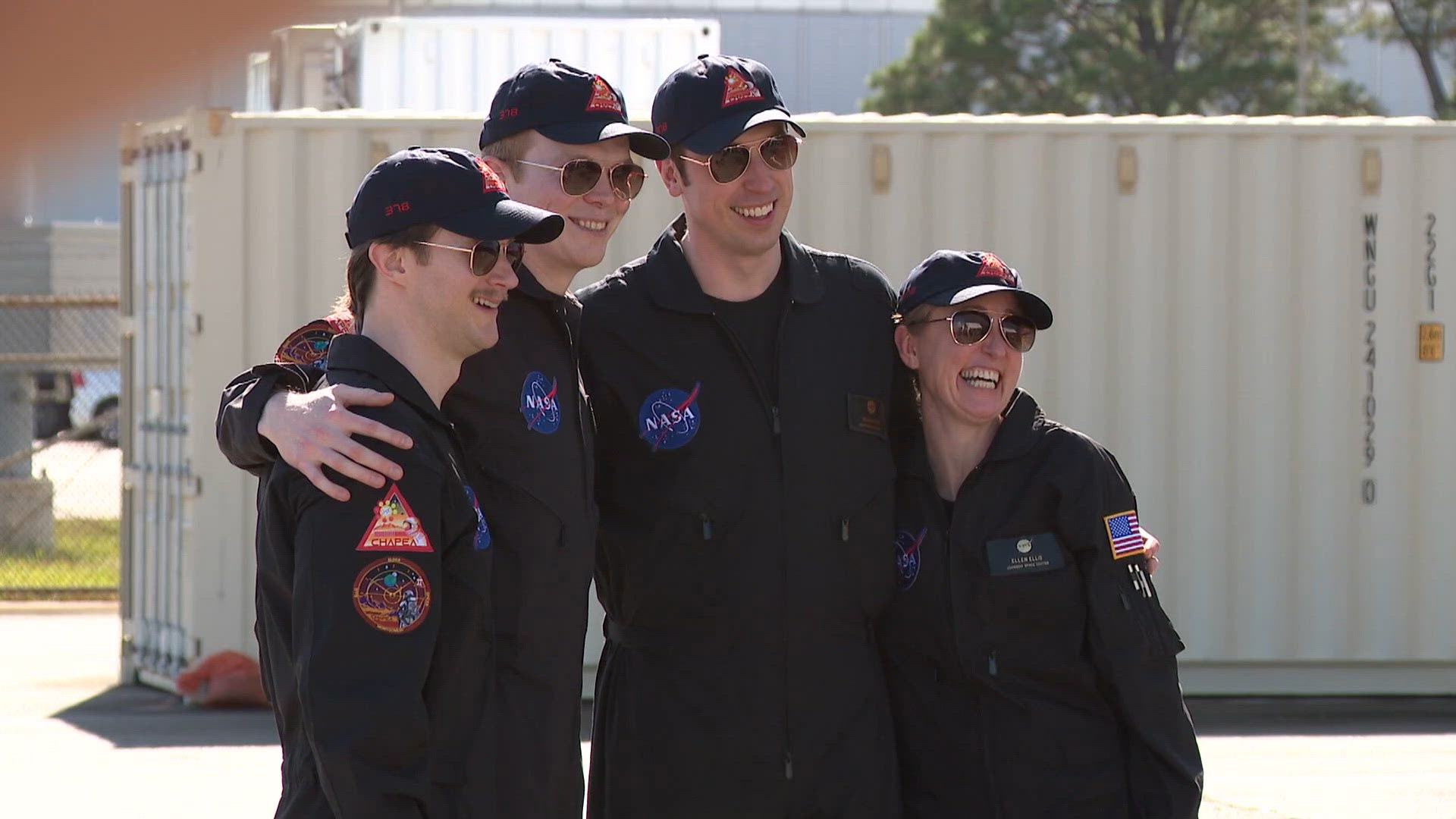
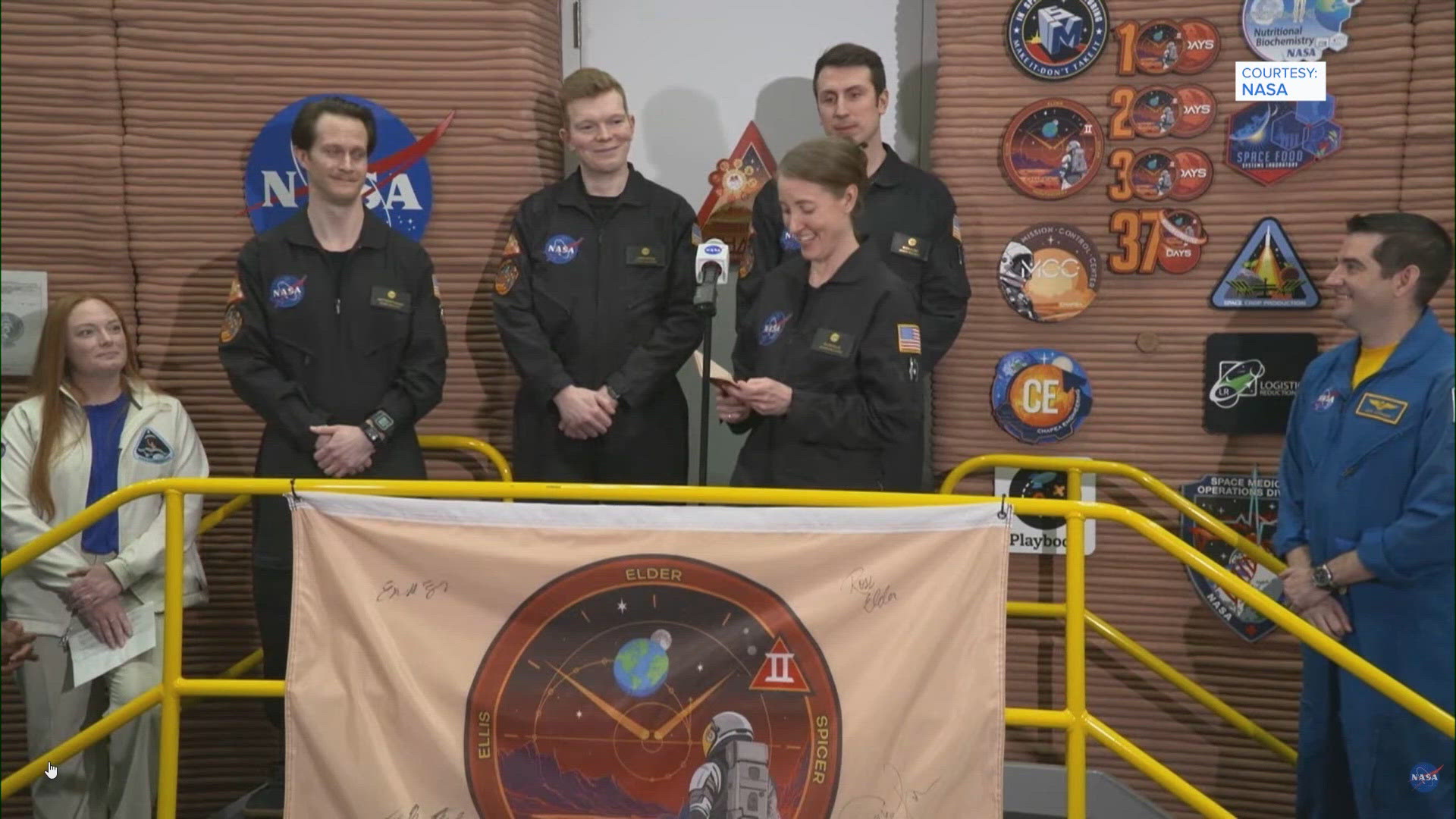
On July 6, 2024, four researchers stepped through the airlock of a specialized enclosure at NASA’s Johnson Space Center in Houston, Texas, concluding 378 consecutive days of continuous operational isolation. The team—comprising Commander Kelly Haston (a human disease researcher), Flight Engineer Anca Selariu (a U.S. Navy microbiologist), Structural Engineer Ross Brockwell, and Emergency Medicine Physician Nathan Jones—had been sealed inside since June 25, 2023.
Designated as CHAPEA Mission 1, this effort represents the first of three planned ground-based analog missions intended to stress-test human physiology and psychological resilience under conditions mirroring the harsh realities of interplanetary transit and surface operations on Mars. As NASA targets crewed missions to the Red Planet in the 2030s under its broader exploration architecture, CHAPEA serves as a crucial testbed for operational risk management and capital allocation efficiency.
Rather than focusing exclusively on microgravity hardware, CHAPEA isolates the human factor: how small teams operate under extreme physical, psychological, and logistics constraints. Throughout their 12.5 months in captivity, the crew conducted simulated "Marswalks" inside a 1,200-square-foot red-sand enclosure, cultivated hydroponic crops, maintained their facility systems, and navigated simulated hardware failures—all while experiencing a communication lag with Mission Control that scaled up to 22 minutes in each direction to match interplanetary orbital distances.
Inside Mars Dune Alpha: Engineering, Operations, and Human Factors
At the center of CHAPEA Mission 1 is "Mars Dune Alpha," a 1,700-square-foot habitat engineered via large-scale additive manufacturing. Constructed in partnership with Austin-based construction technology firm ICON using its proprietary Lavacrete polymer-concrete blend, the structure demonstrates how off-world infrastructure scalability can minimize up-mass payload costs—one of the primary financial barriers to deep-space mission viability.
Additive Manufacturing and Structural Resiliency
Traditional payload logistics dictate that every kilogram lifted beyond Low Earth Orbit (LEO) incurs immense expenditure. By utilizing 3D-printed building technologies designed for execution with local regolith (planetary soil), NASA and its private-sector partners are establishing structural blueprints that drastically lower launch-vehicle launch-weight demands. Mars Dune Alpha features four private crew quarters, dedicated workstations, a medical facility, private bath facilities, a fitness zone, and an automated crop-growing station.
Communication Latencies and Decision Autonomy
Because electromagnetic signals travel at the speed of light, the physical distance between Earth and Mars (varying between 34 million and 250 million miles) generates a dynamic round-trip comms latency ranging from 5 to 44 minutes. During CHAPEA 1, NASA systematically enforced these latency windows. The operational shift removed real-time Mission Control overrides, compelling the four crew members to function with a high degree of operational autonomy.
When unexpected equipment degradation or simulated operational emergencies occurred, the crew could not rely on instant guidance. They were required to diagnose problems, perform emergency maintenance, and deploy workarounds autonomously. This administrative and operational decoupling represents a fundamental culture shift for space flight operations, which historically have depended heavily on real-time guidance from ground controllers.
Resource Constraints, Biometrics, and Psychological Metrics
The mission enforced strict rationing across all operational vectors, including fresh water, energy consumption, exercise schedules, and food rations. Crew members harvested rotational crops—such as leafy greens, radishes, and tomatoes—to supplement pre-packaged, shelf-stable freeze-dried provisions. NASA behavioral scientists continuously monitored real-time biometric indicators, sleep architecture, stress-hormone levels, cognitive agility, and intra-group group dynamics to track degradation trends across the 378-day period.
Verified Data & Operational Metrics Breakdown
The operational metrics of CHAPEA Mission 1 reflect the structural and temporal scale required to collect actionable deep-space telemetry:
| Metric / Feature | CHAPEA Mission 1 Specifications | Strategic & Operational Relevance |
|---|---|---|
| Mission Duration | 378 Days (June 25, 2023 – July 6, 2024) | Validates long-term operational resilience during round-trip Mars transit windows. |
| Habitat Footprint | 1,700 sq. ft. living area + 1,200 sq. ft. sandbox | Tests minimum spatial parameters for crew psychological wellbeing and operational efficiency. |
| Construction Tech | 3D-Printed Lavacrete (ICON Partnership) | De-risks off-world infrastructure creation via local material deployment and high-strength polymers. |
| Telemetry Delay | 5 to 22 minutes (one-way); up to 44 mins round-trip | Evaluates autonomous decision-making performance in non-real-time environments. |
| Crew Composition | 4 Volunteers (Science, Medical, Engineering, Navy) | Simulates cross-functional multi-disciplinary expertise required for independent crew operations. |
| Auxiliary Analog Subsystems | VR-based Marswalks, Crop Hydroponics, ECLSS | Monitors resource utilization, operational maintenance load, and agricultural output. |
Industry & Commercial Space Market Implications
The successful execution of CHAPEA 1 yields operational data that directly informs the commercial space industry, high-tech manufacturing, and defense-aerospace supply chains.
Lowering Deep-Space Operational Expenditures (OpEx)
As commercial space companies like SpaceX (with its Starship architecture) and Blue Origin (developing New Glenn) work toward lunar and Martian logistics capabilities, understanding crew support requirements is critical for unit-economics modeling. Every liter of water, cubic meter of oxygen, or kilogram of spare parts saved through efficient recycled systems or local manufacturing reduces payload demands. The CHAPEA baseline dataset provides precise requirements for Environmental Control and Life Support Systems (ECLSS) manufacturers, helping to de-risk investments in orbital and surface architecture.
Commercial Additive Manufacturing and Advanced Materials
ICON’s partnership with NASA demonstrates how space programs drive commercial additive manufacturing capabilities. The high-performance Lavacrete system, built to withstand extreme environmental stress, offers clear dual-use applications for rapid emergency housing response, remote military base construction, and low-carbon terrestrial development. Success in high-reliability analog missions increases enterprise evaluation multiples for construction-tech pioneers venturing into defense and civil infrastructure contracts.
Terrestrial Applications: Closed-Loop Agriculture and Behavioral Health
Beyond off-world applications, the technology optimized inside Mars Dune Alpha has direct relevance to Earth-bound challenges:
- Precision Agriculture: Ultra-low-water indoor hydroponic systems engineered for extreme isolation environments offer solutions for arid urban centers and climate-stressed agricultural regions.
- Remote Workplace Logistics: Behavioral health frameworks developed during the 378-day protocol offer actionable protocols for isolated industrial sites, such as polar research stations, offshore drilling platforms, and submarine deployments.
- Advanced Sensor Telemetry: Wearable sensors and cloud-based operational diagnostic suites tested during the mission serve as early templates for remote medical diagnostics and enterprise monitoring systems.
Frequently Asked Questions (People Also Ask)
What was the primary objective of NASA’s CHAPEA 1 mission?
The primary objective of CHAPEA Mission 1 was to evaluate human health, behavioral responses, and operational performance under realistic Mars surface conditions. NASA gathered baseline data on cognitive performance, stress metrics, resource management, and crew dynamics during 378 days of isolation to prepare for crewed Mars missions planned for the 2030s.
How did the CHAPEA crew simulate Martian activities inside a Houston facility?
The crew lived inside "Mars Dune Alpha," a 1,700-square-foot 3D-printed habitat. They performed simulated "Marswalks" inside an adjoining 1,200-square-foot enclosure using virtual reality (VR) systems and treadmills to recreate foreign terrain tasks. They also managed crop growth, cooked using freeze-dried rations, maintained internal machinery, and conducted real-time scientific research.
How did communication delays impact crew operations during the experiment?
Communications between the habitat and Mission Control were artificially delayed by up to 22 minutes each way (a 44-minute round trip) to simulate the physical distance between Earth and Mars. This delay forced the crew to operate autonomously, troubleshooting emergency alerts, resolving system faults, and directing daily work schedules without real-time assistance from ground control.
What role did private enterprise play in the CHAPEA simulation?
Private technology firms provided vital infrastructure. Construction technology company ICON utilized its proprietary additive manufacturing system and concrete-like material (Lavacrete) to print the 1,700-square-foot habitat. This public-private collaboration demonstrates how commercial 3D-printing technologies can address complex structural engineering challenges for off-world habitation and terrestrial applications.
Future Strategic Outlook & Exploration Roadmap
With CHAPEA Mission 1 officially complete, NASA data analysts and biometric researchers are beginning a multi-year analysis phase to process terabytes of physiological, psychological, and environmental data. The findings will directly influence human factors design for the Artemis lunar missions and future deep-space crewed vehicles.
Looking ahead, NASA plans to launch CHAPEA Mission 2 in 2025 and CHAPEA Mission 3 in 2026. Subsequent missions will incorporate updated variable scenarios based on insights from the initial trial, including more complex hardware degradation events, modified crew roles, and next-generation closed-loop life support equipment. As public space agencies and commercial spaceflight entities align their capital strategies toward sustainable off-world operations, the empirical data derived from Mars Dune Alpha will serve as a foundational blueprint for humanity’s expansion into the solar system.