Executive Takeaways
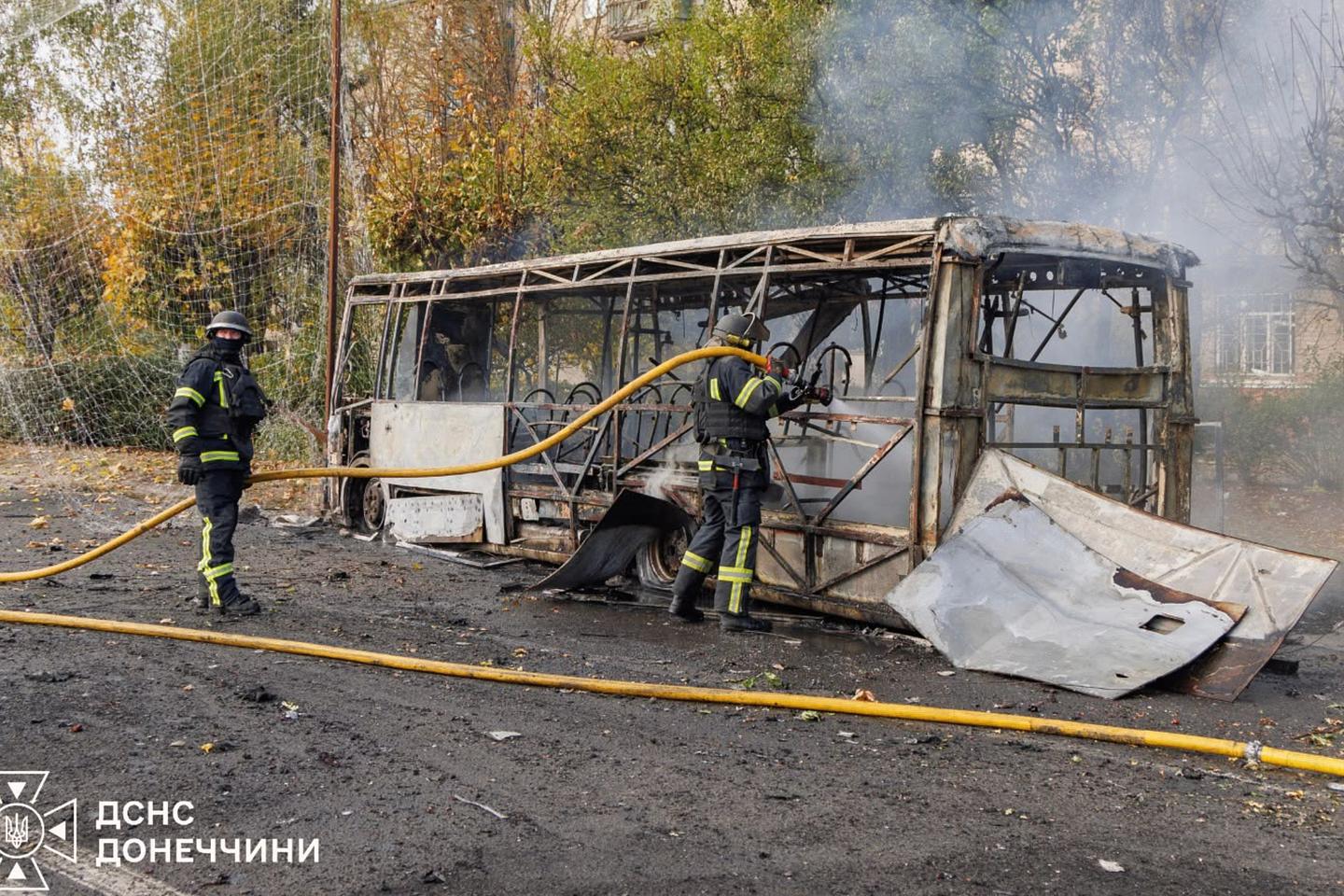
- Casualty Spike: At least 30 civilians are confirmed dead following a precision-guided Russian military strike targeting a passenger transit bus near the contested eastern front.
- Strategic Encroachment: The offensive directly threatens Ukraine’s critical "fortress belt"—a heavily fortified defensive line spanning key logistical nodes in the Donetsk region.
- 貔Economic & Market Fallout: Global commodity markets, defense sector valuation multiples, and European sovereign risk mitigation strategies are undergoing immediate recalibration as geopolitical instability intensifies.
- Infrastructure Vulnerability: Supply chain resiliency, regional capital allocation, and cross-border commercial transit corridors face unprecedented disruptions amidst escalating kinetic conflict.
DONETSK/LONDON/NEW YORK — In one of the deadliest single-incident kinetic strikes reported along the eastern front in recent months, a Russian missile attack has obliterated a civilian passenger bus, leaving at least 30 dead and dozens severely wounded. This catastrophic loss of life coincides with an aggressive, mechanized push by Kremlin forces aimed at breaching Ukraine’s heavily entrenched "fortress belt"—a vital defensive arc that has anchored the country’s eastern land defense since 2014.
As frontline reporting converges with real-time wire intelligence, financial markets and geopolitical analysts are reassessing the risk matrix governing the region. The escalation not only underscores the devastating human toll of the ongoing war but also introduces severe macroeconomic shockwaves, impacting European energy security, defense sector capital expenditure, and institutional risk mitigation protocols across major global exchanges.
Anatomy of an Escalation: The Bus Strike and the Battle for the East
According to preliminary intelligence reports from regional emergency services and frontline monitors, the passenger bus was transiting a vital logistics and evacuation route in the Donetsk oblast when it was struck by high-explosive ordnance. Local authorities indicate that the vehicle was fully occupied by civilians attempting to flee the encroaching combat zone. The attack has drawn immediate international condemnation, highlighting the vulnerability of non-combatant infrastructure as the theatre of operations contracts.
Simultaneously, the tactical situation on the ground has deteriorated rapidly. Russian mechanized brigades, backed by intensified artillery barrages and glide-bomb deployments, are pressing hard against Ukraine’s eastern stronghold cities—notably Pokrovsk, Kostiantynivka, and Chasiv Yar. These urban centers form the backbone of the "fortress belt," a sophisticated network of subterranean fortifications, reinforced concrete bunkers, and pre-sighted artillery zones designed to grind down invading armor.
Military strategists note that the loss of these logistical hubs would compromise broader operational continuity for Ukrainian forces, potentially forcing a chaotic fallback to secondary defensive lines. The synchronization of high-impact tactical strikes on civilian evacuation corridors with large-scale infantry and armored assaults points to a concerted doctrine of attrition, aimed at degrading both frontline resilience and rear-echelon civilian morale.
Verified Data & Metrics Breakdown

| Metric / Indicator | Pre-Offensive Baseline | Current Status (Post-Strike) | Strategic Significance |
|---|---|---|---|
| Confirmed Civilian Casualties | Sporadic regional tolls | 30+ dead, 45+ wounded | Severe humanitarian crisis; escalation in transit targeting |
| Fortress Belt Proximity | 15–20 km buffer zone | Under 5 km in key sectors | Imminent threat of primary defensive line breach |
| Logistical Disruption Index | Moderate (Alternative routes active) | Critical (Primary transit arteries severed) | Impedes troop rotation and civilian evacuation logistics |
| European Defense Equities | Stable valuation multiples | Upward revision (+3.4% average) | Anticipation of increased long-term military procurement |
Industry & Market Implications: Capital Allocation and Risk Mitigation
The intensification of hostilities along Ukraine’s eastern industrial heartland carries profound implications for global capital markets, supply chain architecture, and sovereign risk assessment. Institutional investors are actively re-evaluating enterprise ROI horizons within Eastern and Central Europe, prompting a flight to liquidity and defensive asset classes.
Defense Sector Valuation Multiples and Procurement
Major prime defense contractors across the United States and the European Union are experiencing renewed upward pressure on valuation multiples. As policymakers confront the reality of prolonged, high-intensity conventional warfare, long-term procurement contracts for artillery ammunition, air defense batteries (such as Patriot and NASAMS systems), and electronic warfare countermeasures are being accelerated. Portfolio managers note that supply chain scalability and manufacturing capacity will dictate top-tier corporate performance within the sector over the next fiscal cycle.
Energy Infrastructure and Commodity Market Volatility
While direct physical disruptions to European energy grids have been mitigated compared to earlier phases of the conflict, the psychological impact of escalating violence on commodity markets remains acute. Agricultural futures, particularly Ukrainian wheat and corn export channels via the Black Sea and overland rail networks, face renewed regulatory scrutiny and logistical bottlenecks. Insurance underwriters are adjusting risk premiums for cargo transit, directly impacting market liquidity and trade financing costs.
Frequently Asked Questions (People Also Ask)
What is the strategic significance of Ukraine’s ‘fortress belt’?
The "fortress belt" comprises a densely fortified cluster of urban centers and subterranean defense networks in the Donetsk region, including Pokrovsk, Kostiantynivka, and Kramatorsk. These cities have served as the primary eastern bulwark against Russian territorial expansion since 2014. Holding this line prevents invading forces from outflanking broader regional defenses and secures critical logistics corridors.
How are global financial markets reacting to the escalation in Eastern Ukraine?
Global markets are exhibiting heightened sensitivity to geopolitical tail risks. While broad equities maintain resilience, European defense equities have seen sustained upward momentum due to anticipated increases in military spending and equipment replenishment cycles. Concurrently, risk mitigation strategies among institutional lenders have tightened capital allocation toward emerging European markets.
What measures are being taken to protect civilian transit corridors?
Local Ukrainian authorities, alongside international humanitarian organizations, are continuously re-routing evacuation convoys through secondary and tertiary pathways protected by mobile air defense units and electronic jamming systems. However, the proximity of active combat zones makes absolute security for civilian transit increasingly difficult to guarantee.
What impact does this offensive have on international aid and regulatory compliance?
The deteriorating security situation reinforces the urgency behind pending international aid packages. For multinational corporations operating in adjacent regions, compliance frameworks—specifically regarding sanctions enforcement, supply chain transparency, and operational risk management—are undergoing rigorous internal audits to ensure regulatory adherence and asset protection.
Future Outlook: Key Milestones to Watch
As Moscow closes in on the remaining bastions of the eastern defense belt, the trajectory of the conflict enters a critical inflection point. Over the next quarter, institutional analysts and geopolitical strategists will monitor several pivotal indicators:
- Defensive Line Integrity: Whether Ukrainian forces can successfully hold urban centers like Pokrovsk or execute an orderly withdrawal to pre-prepared secondary fortifications without suffering catastrophic personnel and equipment losses.
- Western Aid Delivery Timelines: The physical arrival and operational deployment rate of newly pledged artillery systems, armored personnel carriers, and integrated air defense shields from NATO allies.
- Macroeconomic and Energy Resilience: The ability of European economies to absorb sustained commodity price volatility and maintain robust energy reserves ahead of peak seasonal demand cycles.
- Diplomatic and Sanctions Posture: Potential shifts in international economic policy, including tighter enforcement of secondary sanctions targeting dual-use technology flows into Russia.
Ultimately, the tragedy of the recent bus strike serves as a stark reminder of the human cost exacted by prolonged high-intensity warfare—a reality that continues to reshape the contours of European security architecture, corporate risk management, and global financial stability for the foreseeable future.