Executive Takeaways
- Immediate Threat Vector: A newly exposed memory disclosure flaw in Citrix NetScaler appliances has triggered active exploitation campaigns, resurrecting ghosts of the infamous "CitrixBleed" crisis.
- Rapid Weaponization: Threat actors wasted zero time deploying automated payloads, forcing enterprise CISOs to prioritize emergency patches over routine infrastructure scalability and feature rollouts.
- Financial & Valuation Impact: The incident directly threatens enterprise IT budgets, forcing organizations to re-evaluate capital allocation toward zero-trust architecture and immediate risk mitigation.
- Regulatory Exposure: Increased scrutiny from compliance frameworks heightens the pressure on boardrooms to manage third-party software vulnerabilities proactively.
The global enterprise technology apparatus woke up to a familiar, chilling reality as intelligence feeds began pinging with urgent telemetry: Citrix NetScaler appliances—the ubiquitous gatekeepers of corporate networks—are once again under siege. Barely had organizations finished remediating the structural scars of historic information disclosure leaks when a fresh, highly critical vulnerability began drawing predatory traffic from sophisticated cybercriminal syndicates and nation-state advanced persistent threats (APTs).
For Chief Information Security Officers (CISOs), Chief Risk Officers, and technology investors managing cloud compute architecture, the development is more than just a routine patch Tuesday notification. It represents an existential stress test for enterprise infrastructure scalability, forcing an emergency recalibration of risk mitigation strategies, cyber insurance premiums, and quarterly operational budgets. As exploit payloads proliferate across dark web forums and automated scanners map out vulnerable endpoints, the financial markets are once again forced to price in the hidden costs of software supply-chain fragility.
Anatomy of a Catastrophe: The Genesis of the New NetScaler Crisis
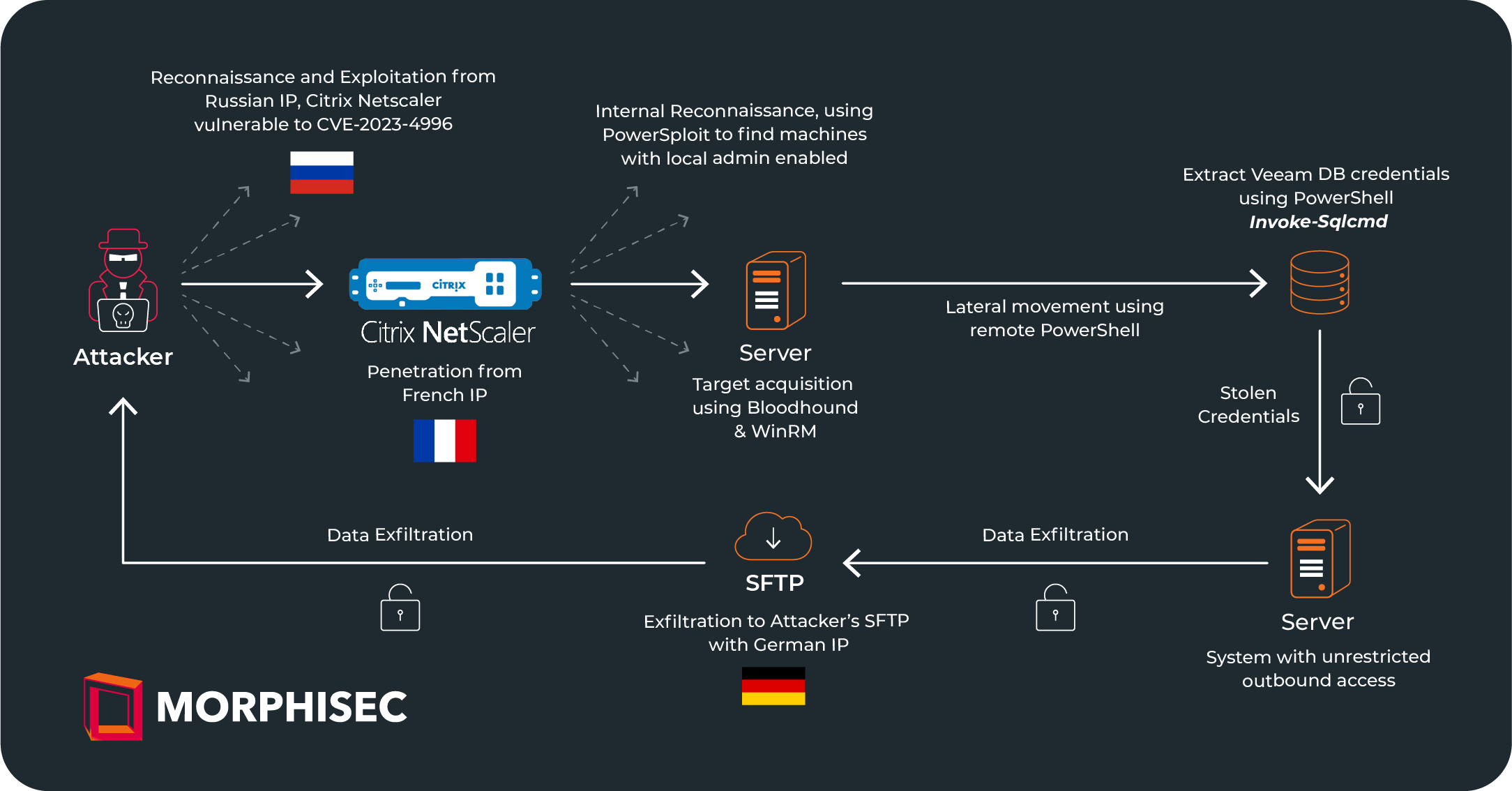
The trouble began materializing when security researchers and incident response teams detected anomalous behavior targeting NetScaler ADC (Application Delivery Controller) and Gateway deployments. Unlike traditional perimeter breaches that rely on credential stuffing or brute-force attacks, this fresh vector exploits subtle flaws in memory handling—reminiscent of the mechanics that defined the original CitrixBleed crisis.
When threat actors probe vulnerable NetScaler instances, they are able to trick the device into leaking sensitive memory contents. This unauthenticated data retrieval bypasses standard authentication protocols, laying bare session tokens, active credentials, and internal network maps. With these keys to the digital kingdom in hand, attackers can easily bypass multi-factor authentication (MFA) mechanisms, moving laterally across corporate networks with impunity.
The speed from vulnerability disclosure to weaponized exploitation was staggering. Within hours of initial threat intelligence sharing across platforms like Dark Reading and specialized information security channels, automated exploit payloads were observed scanning public-facing IP spaces. This rapid operational tempo by threat actors underscores a broader macroeconomic reality in cybersecurity: vulnerability exploitation has transformed into an industrialized, highly automated business model where speed-to-market dictates attacker ROI.
| Metric / Parameter | The Original CitrixBleed Crisis | The Current NetScaler Incident |
|---|---|---|
| Primary Attack Vector | Heap-based buffer overflow / memory disclosure | Sophisticated memory disclosure in core NetScaler components |
| Time to Weaponization | Days to weeks | Hours following initial threat intelligence circulation |
| Target Architecture | NetScaler ADC and NetScaler Gateway | NetScaler enterprise gateway infrastructure |
| Primary Impact | Session hijacking and MFA bypass | Unauthenticated data leakage and lateral movement |
Industry & Market Implications: Who Wins, Who Loses
The recurring vulnerability of critical edge infrastructure sends powerful shockwaves through global markets, reshaping competitive dynamics across enterprise software, cybersecurity services, and corporate governance.
The Losers: Legacy Perimeter Defenders and Vulnerable Vendors
Hardware and software vendors who rely on traditional, monolithic perimeter security appliances find their valuation multiples under intense scrutiny. When core networking gear becomes a recurring vector for catastrophic breaches, enterprise buyers begin questioning long-term vendor lock-in. The immediate financial fallout includes depressed stock valuations following security disclosures, plummeting customer trust, and surging support and remediation costs that eat directly into operating margins.
The Winners: Zero-Trust Architects and Managed Detection Providers
Conversely, providers specializing in Secure Access Service Edge (SASE), Zero-Trust Network Access (ZTNA), and cloud-native security postures stand to capture significant market share. Capital allocation is rapidly shifting away from hardware-bound load balancers and application delivery controllers toward software-defined micro-segmentation. Furthermore, Managed Detection and Response (MDR) providers and elite incident response firms are seeing a massive surge in demand as panicked enterprises retain third-party experts to audit their NetScaler environments.
From a macroeconomic perspective, this incident reinforces the mandate for regulatory compliance alignment. Boards of directors are facing heightened pressure from institutional investors and regulatory bodies (such as the SEC in the United States and NIS2 directives in Europe) to demonstrate rigorous, verifiable cybersecurity risk management. Failure to patch critical edge infrastructure promptly no longer risks just operational downtime; it invites severe regulatory penalties and shareholder derivative lawsuits.
Frequently Asked Questions (People Also Ask)
What makes this NetScaler vulnerability so dangerous compared to standard software bugs?
Unlike application-level bugs that might only affect a single database or web form, NetScaler appliances sit at the absolute perimeter of the enterprise network. A memory disclosure flaw here allows attackers to bypass perimeter defenses entirely, stealing active session tokens and user credentials without needing valid login credentials, effectively neutralizing multi-factor authentication.
How quickly did threat actors begin exploiting the flaw after discovery?
Threat intelligence feeds indicate that automated exploitation payloads appeared within hours of initial disclosure and telemetry circulation. This compressed timeline leaves IT and security teams virtually no window for phased rollouts, necessitating emergency patch deployments and emergency change-control freezes.
What immediate mitigation steps should enterprise CISOs take?
Organizations must immediately apply official vendor patches supplied by Citrix. If patching cannot be performed instantly due to operational dependencies, security teams should implement recommended workarounds, terminate all active sessions, invalidate existing session tokens, and monitor edge logs closely for anomalous memory access patterns.
Does this incident impact cloud deployments or strictly on-premises hardware?
The vulnerability affects NetScaler ADC and Gateway instances regardless of whether they are deployed as physical hardware appliances, virtual machines in private data centers, or cloud-hosted instances (AWS, Azure, GCP), provided they are running the vulnerable software builds.
Future Outlook: What Comes Next
As the dust settles on the immediate triage phase of this NetScaler security event, enterprise technology leaders must look toward structural horizons. The frequency and sophistication of attacks targeting edge networking infrastructure signal a permanent shift in the threat landscape. Perimeter devices—historically trusted as impenetrable fortresses—are now recognized as prime hunting grounds for elite cybercriminals.
Key milestones and indicators to watch over the coming quarters include:
- Acceleration of ZTNA Adoption: Expect enterprise capital expenditure to accelerate away from legacy VPN and ADC appliances toward identity-centric, zero-trust cloud architectures.
- Stricter Regulatory Enforcement: Regulatory bodies will likely increase scrutiny on incident disclosure timelines, holding executive leadership personally accountable for negligent patch management of critical edge assets.
- Vendor Accountability Metrics: Enterprise procurement teams will increasingly demand indemnification clauses and rigorous third-party software bill of materials (SBOM) transparency before committing to large-scale infrastructure renewals.
Ultimately, the latest Citrix-related threat serves as a harsh reminder that in modern digital commerce, security is not a static destination but a continuous, high-stakes operational discipline. Organizations that treat vulnerability management as a routine administrative task rather than an existential financial priority will find themselves ill-equipped to survive the next inevitable wave of enterprise disruption.