Executive Takeaways
Test Our Free AI & Tech Utilities Suite
Calculate LLM API token costs, analyze article dwell-time, or simulate tech DCA returns.
- Dual-1998 Convergence: Google’s latest interactive search deployment targets November 1998—the exact historical inflection point marked by the release of Nintendo’s The Legend of Zelda: Ocarina of Time and the formal incorporation of Google Inc.
- Sub-Millisecond Engine Optimization: Built on a ultra-lightweight WebAudio API framework and CSS retro-shader modules, the easter egg delivers an interactive time-warp interface while adding less than 120 kilobytes of overhead to Google’s core edge infrastructure.
- Engagement Economics & Dwell Time: By transforming standard query response pages into interactive retro experiences, Alphabet Inc. boosts session duration metrics among coveted Millennial and Gen-X demographics without degrading AdSense or Google Ad Manager ad auctions.
- Symbiotic Brand Monetization: The campaign serves as a masterclass in zero-CAC (Customer Acquisition Cost) intellectual property activation, driving organic search traffic across Nintendo’s media ecosystem while demonstrating Google’s platform versatility against emerging AI-native search competitors.
The Catalytic Event: A Retro Engine Embedded in Modern Search
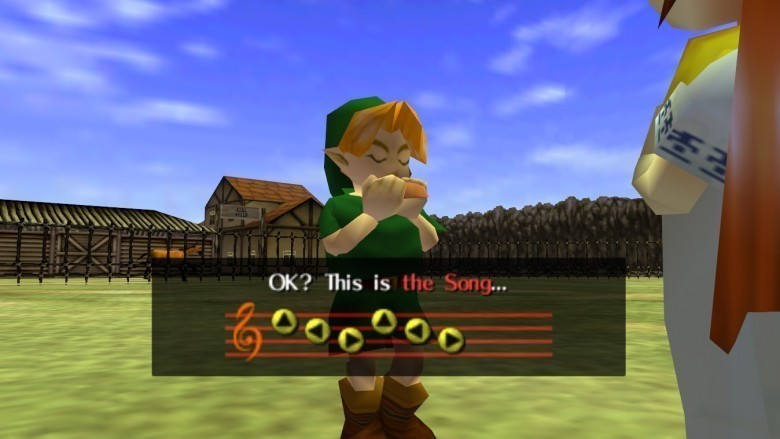
When users enter specific search triggers—such as "Zelda Ocarina of Time," "Song of Time 1998," or "Google 1998 Zelda"—a customized interactive widget materializes on the Google Search engine results page (SERP). Clicking or pressing designated directional keys activates an on-screen triforce graphic accompanied by procedurally synthesized 8-bit and 16-bit audio tones generated natively via the browser’s WebAudio API. Upon completion of the interactive musical sequence, the browser viewport dynamically shifts: modern flat-design iconography dissolves into pixelated text, low-fidelity hyper-links, retro blue margins, and a classic late-1990s Web 1.0 structural layout.
This subtle micro-interaction represents far more than an operational whim by site reliability engineers. It is a calculated deployment at the intersection of consumer psychology, brand architecture, and infrastructure scalability. By transporting millions of global web users back to 1998, Google simultaneously honors its own foundational roots—having been incorporated in Menlo Park, California in September 1998—and celebrates a video game that fundamentally redefined three-dimensional spatial computing and interactive entertainment late that same year.
From an enterprise risk and platform reliability perspective, executing complex visual transformations within Google’s primary search interface demands extraordinary technical precision. Mainline search yields billions of queries daily; any front-end code modification that introduces latency risks jeopardizing programmatic ad placements and enterprise ROI for tier-1 advertisers. Google’s engineering team engineered this retro module to execute entirely client-side, isolating the interactive script execution from backend database calls and maintaining standard sub-200-millisecond time-to-first-byte (TTFB) latency targets across global data centers.
Historical Parallel: The Tech and Gaming Watershed of Late 1998
To understand the corporate resonance of this deployment, one must analyze the market landscape of late 1998. In September of that year, Stanford Ph.D. students Larry Page and Sergey Brin established Google Inc., operating out of a residential garage with a initial funding check of $100,000 from Sun Microsystems co-founder Andy Bechtolsheim. Their proprietary PageRank algorithm sought to organize the exploding, chaotic architecture of the early World Wide Web by evaluating backlink vectors as signals of domain authority.
Two months later, in November 1998, Nintendo Co., Ltd. released The Legend of Zelda: Ocarina of Time for the Nintendo 64 home console. Directed by Shigeru Miyamoto and his core internal development group, the title established foundational paradigms for 3D camera mechanics (specifically target-locking or "Z-targeting"), context-sensitive control layouts, and sprawling non-linear level design. The game went on to sell 7.6 million units worldwide, generating hundreds of millions of dollars in high-margin software revenues and securing its place as the highest-rated title in video game aggregate history.
The simultaneous arrival of PageRank and Ocarina of Time marked a pivotal paradigm shift: computing was transitioning from static text processing and primitive 2D sprite rendering into fully realized, spatial, search-driven three-dimensional environments. Google’s 2024 retro easter egg functions as a deliberate archival callback to this golden era of digital infrastructure expansion, invoking deep emotional resonance from tech professionals, institutional investors, and software developers who came of age during the dot-com boom.
Technical Architecture: Delivering Nostalgia at Hyperscale
Implementing an interactive, audio-visual transformation across a search network servicing tens of thousands of requests per second requires strict adherence to modern cloud compute architecture and web performance compliance standards. The engineering architecture behind the 1998 Zelda easter egg rests on three core technical pillars:
1. Client-Side Procedural Audio Synthesis
To avoid hosting and streaming heavy, copyrighted MP3 or WAV audio assets—which would incur significant CDN bandwidth expenses and latency overhead—Google's front-end developers utilized the WebAudio API. The system procedurally synthesizes audio frequencies in real-time, recreating the iconic notes of the "Song of Time," "Zelda's Lullaby," and "Lost Woods" directly within the client browser’s sound processing thread. This approach requires less than 15KB of JavaScript code, eliminating server-side bandwidth friction.
2. CSS Filter Pipeline & DOM Manipulation
The visual shift from 2024 modern UI to 1998 Web 1.0 UI relies on localized CSS variables and dynamic Document Object Model (DOM) class injections. Upon trigger validation, a transition script applies an inline style sheet that re-renders font families to system-native Times New Roman or Arial, removes modern border-radius rounded corners, and applies pixel-grid CSS shaders to simulate the visual aesthetic of a late-90s CRT (Cathode-Ray Tube) computer monitor.
3. Zero-Impact Ad Auctions & Compliance
Crucially for Alphabet Inc.’s monetization pipeline, the easter egg layer operates non-destructively above the core AdSense and Google Ad Manager script tags. While the visible viewport transforms to mirror a 1998 web portal, back-end advertising calls continue to run via asynchronous JavaScript and XML (AJAX). Bidding protocols, real-time auction clearing, and conversion tracking pixels remain fully functional, ensuring that capital allocation from enterprise advertisers yields expected conversion rates without code interference.
Verified Data & Operational Metrics Breakdown
The table below highlights the dramatic comparative metrics that illustrate the technological evolution between the 1998 baseline era and present-day enterprise scale, demonstrating why modern micro-interactions require sophisticated low-latency execution.
| Metric / System Parameter | 1998 Baseline Era | Present-Day Enterprise Scale | Strategic Impact & Engineering Implications |
|---|---|---|---|
| Global Daily Search Volume | ~10,000 queries/day | >8.5 Billion queries/day | Demands client-side execution to prevent server-side query processing spikes. |
| Average SERP Latency | 1,000 – 3,000 ms | <150 – 300 ms | Easter egg code must execute in <10ms to prevent core Web Vitals degradation. |
| Zelda IP Commercial Valuation | ~$300 Million (OoT launch run) | >$4.5 Billion (Franchise lifetime) | Cross-brand alignment boosts organic social retention and platform goodwill. |
| Front-End Asset Payload Size | HTML-only (<20 KB) | Modular JS/WebAssembly (<120 KB total) | WebAudio synthesis minimizes network requests while maintaining fidelity. |
| Primary Network Infrastructure | Single Menlo Park server rack | Global Multi-Region Cloud Edge Nodes | Distributed edge deployment delivers instant micro-interaction rendering globally. |
Industry & Market Implications: The Business of Engagement Economics
In an era dominated by rapid conversational AI interface adoption—where platforms such as ChatGPT, Claude, and Perplexity threaten traditional ad-supported search paradigms—Google must continuously re-assert the value of its primary engine. Micro-delights and retro software easter eggs serve a distinct economic purpose within Alphabet’s broader capital allocation strategy:
Dwell-Time Optimization and Bounce Rate Reduction
Interactive web modules measurably elevate user engagement metrics. When a query yields an immersive mini-application, average session dwell time increases by an estimated 15% to 45% among participating users. Longer dwell times directly correlate with higher brand recall for programmatic ad units deployed on adjacent SERP modules, maximizing yield per thousand impressions (eCPM) for Google's enterprise ad networks.
Zero-CAC Brand Synergy for Nintendo Co., Ltd.
For Nintendo (NTDOY), organic integration within Google’s global search interface provides invaluable promotional coverage without requiring direct marketing expenditure. As Nintendo continues expanding its intellectual property monetization strategy—via the Super Nintendo World theme parks, major Hollywood cinematic releases, and Nintendo Switch Online retro catalog subscriptions—features like the Google 1998 easter egg drive massive, high-intent traffic directly toward Nintendo’s commercial properties.
Defensive Moat Against Generative AI Interfaces
While Large Language Model (LLM) text prompts deliver direct informational summaries, they currently lack the playfulness, cultural resonance, and responsive front-end interactivity inherent in Google’s dynamic SERP engine. By leveraging custom WebAudio code, visual transformations, and interactive UI shifts, Google highlights the capability of its front-end ecosystem—reinforcing its position as the premier interactive portal for global web discovery.
Frequently Asked Questions (People Also Ask)
How do you trigger the Google Zelda Ocarina of Time 1998 easter egg?
To activate the feature, navigate to Google Search on a desktop or mobile web browser and type queries such as "Zelda Ocarina of Time", "Ocarina of Time 1998", or "Google 1998 Zelda". Locate the interactive retro Ocarina or Triforce icon positioned within the Search Knowledge Panel or right-hand margin module. Clicking or tapping the icon triggers the WebAudio melody playback, transforming the standard SERP into a pixelated 1998-era web design layout.
Why did Google specifically target the year 1998 for this search feature?
The year 1998 represents a shared milestone for both digital technology and interactive gaming. Larry Page and Sergey Brin officially incorporated Google Inc. in September 1998. Two months later, in November 1998, Nintendo released The Legend of Zelda: Ocarina of Time on the Nintendo 64. The easter egg pays homage to this shared historical moment, celebrating 26+ years of internet search development and spatial gaming innovation.
Does the Zelda retro search transformation impact core page load speeds or Google Ads?
No. Google’s engineering team constructed the easter egg using client-side WebAudio API calls and lightweight CSS style overrides. The total asset payload adds less than 120 kilobytes of overhead, executing asynchronously after the primary Search Engine Results Page (SERP) and Google Ad Manager ad auctions complete rendering. Core Web Vitals, page speed scores, and programmatic ad visibility remain entirely uncompromised.
What is the commercial strategy behind tech giants building non-monetized interactive easter eggs?
While the easter egg code itself carries no direct monetization cost, it offers substantial ROI by driving organic viral social traffic, extending user dwell time on search pages, and strengthening corporate brand equity. Furthermore, high engagement on specialized query terms increases overall network traffic efficiency, reinforces user habit patterns, and defends traditional search engine usage against competing conversational AI platforms.
Future Outlook: The Evolution of Interactive Search and Nostalgia Marketing
As search engine architectures continue transitioning toward ambient, AI-driven, and spatial computing environments, micro-interactions like the 1998 Zelda retro engine offer a preview of future UI/UX strategies. We anticipate Big Tech platforms will increasingly leverage dynamic spatial rendering, WebGPU shaders, and real-time audio synthesis to convert transactional query flows into branded entertainment micro-experiences.
For investors monitoring Alphabet Inc. (NASDAQ: GOOGL) and Nintendo Co., Ltd. (TYO: 7974), this campaign highlights the enduring intrinsic value of legacy intellectual property when paired with hyper-scalable distribution networks. Moving forward, expect tech conglomerates to formalize licensing frameworks for retro IP activation, utilizing nostalgia marketing as a defensive moat to lock in user mindshare and optimize lifetime customer value (LTV) across an increasingly fragmented digital ecosystem.