WASHINGTON & NEW YORK — The mathematical gravity of the United States’ fiscal trajectory is no longer a theoretical debate confined to academic journals or congressional hearing rooms. According to comprehensive market intelligence from Funds Society and frontline tracking across global trading desks, surging long-term US Treasury yields have triggered systemic alarm bells, signaling acute vulnerabilities in the federal government’s debt financing architecture.
As sovereign debt issuance scales to historic, post-World War II peaks, institutional investors, primary dealers, and corporate treasurers are re-evaluating capital allocation strategies, asset valuation multiples, and risk mitigation frameworks. The convergence of persistent federal deficits, quantitative tightening by the Federal Reserve, and shifting foreign demand for American debt has transformed routine Treasury auctions into high-stakes bellwethers for global financial stability.
Executive Takeaways
- Escalating Borrowing Costs: Long-term US Treasury yields have breached critical psychological and technical resistance levels, structurally shifting the baseline for federal debt service obligations.
- Sustained Primary Deficits: Structural budget gaps continue to force aggressive Treasury refunding operations, overwhelming traditional market liquidity pools.
- Corporate & Consumer Spillover: Higher sovereign yields directly compress corporate valuation multiples, elevate commercial and consumer borrowing rates, and challenge infrastructure scalability financing.
- Global Liquidity Strain: International central banks and institutional asset managers are recalibrating foreign exchange and fixed-income portfolios to hedge against US fiscal expansion.
The Anatomy of the Yield Surge: Catalysts and Market Mechanics
Test Our Free AI & Tech Utilities Suite
Calculate LLM API token costs, analyze article dwell-time, or simulate tech DCA returns.
The modern era of sovereign debt management is defined by an unprecedented paradox: while the United States enjoys the exorbitant privilege of issuing the world’s primary reserve currency, the sheer volume of issuance required to fund federal outlays is testing the carrying capacity of global capital markets. Throughout late August 2026, long-term yields—led by the benchmark 10-year and 30-year Treasury notes—have reacted sharply to an equilibrium shift in supply and demand dynamics.
Historically, Treasury yields reflected expectations of economic growth, inflation, and monetary policy paths. Today, however, a significant "term premium" has been re-priced into the curve. Investors demand higher compensation for holding long-duration sovereign paper due to mounting supply indigestion. Each successive Treasury refunding announcement reveals larger-than-expected borrowing requirements, compelling primary dealers to absorb monumental blocks of debt that cannot always be easily cleared by end-investors.
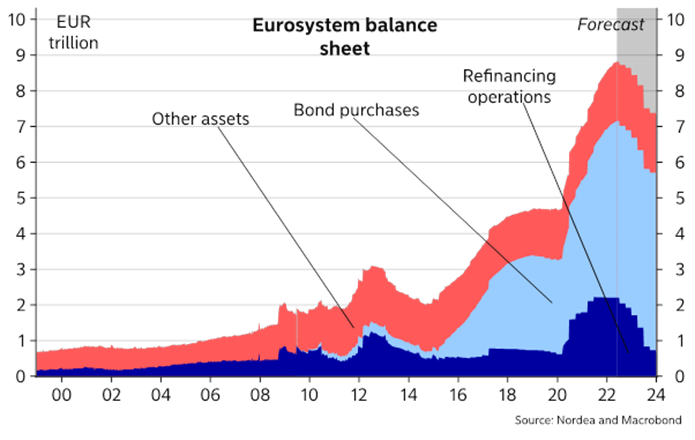
This dynamic has been exacerbated by the Federal Reserve’s ongoing quantitative tightening (QT). By actively rolling off maturing mortgage-backed securities and Treasuries from its balance sheet, the central bank has stepped back from its historical role as the marginal buyer of last resort. Consequently, private-sector balance sheets, hedge funds, and pension funds must absorb the shortfall, demanding higher yields as an inducement for capital commitment.
Macroeconomic Transmission: From Sovereign Risk to Corporate Valuation
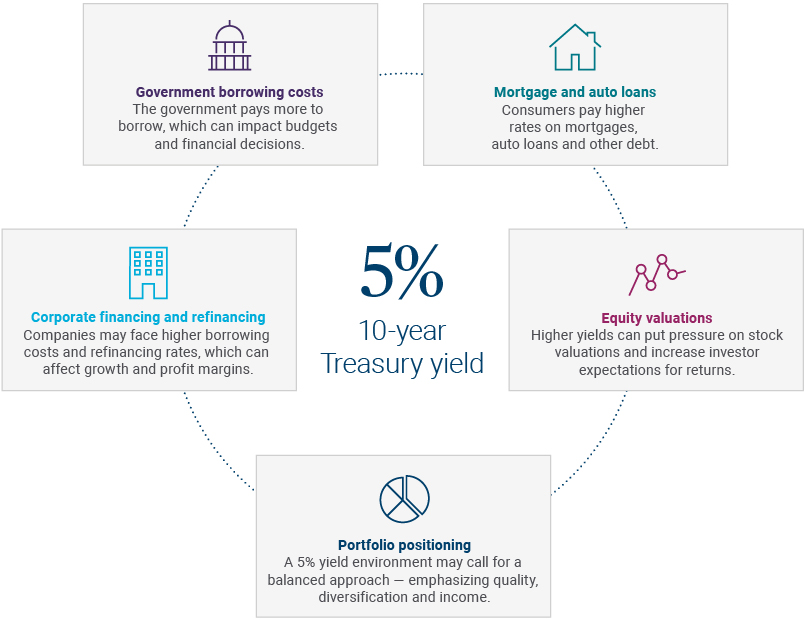
The implications of elevated Treasury yields extend far beyond Washington’s ledger books, sending powerful shockwaves through both traditional industries and high-growth sectors. Because the 10-year Treasury yield serves as the foundational risk-free rate for global finance, its upward movement immediately alters asset pricing models across the board.
For corporate America, the cost of capital has structurally re-anchored at higher levels. CFOs undertaking long-term strategic planning, supply chain diversification, and cloud compute architecture investments must now measure projected initiatives against a hurdle rate that bears little resemblance to the ultra-low interest rate environment of the 2010s. Private equity and venture capital firms face compressed valuation multiples, as future cash flows are discounted at steeper rates, forcing a pivot toward operational efficiency over top-line expansion.
Moreover, the banking sector faces unique balance sheet pressures. Unrealized losses on legacy fixed-income portfolios remain a persistent background risk, while competition for deposits intensifies as retail and institutional investors chase risk-free yields in money market funds and short-duration T-bills rather than keeping capital in traditional commercial bank deposits.
| Metric / Indicator | Historical Baseline (2024) | Current Environment (Aug 2026) | Directional Trend |
|---|---|---|---|
| Total US National Debt | ~$34.5 Trillion | ~$36.2 Trillion | Upward Expansion |
| Benchmark 10-Year Treasury Yield | ~3.8% – 4.2% | Elevated / Testing Multi-Year Highs | Structural Upward Pressure |
| Annual Federal Interest Expense | ~$880 Billion | Approaching $1 Trillion+ | Accelerating Outflow |
| Federal Reserve Balance Sheet | ~$7.1 Trillion | Declining via Active QT | Contraction |
| Primary Dealer Absorption Ratio | Moderate | Stretched / High Volatility | Increased Friction |
Who Wins and Who Loses in the New Yield Regime
Financial market regime shifts inevitably create clear delineations between beneficiaries and casualties. Understanding these fault lines is critical for institutional investors navigating current market volatility.
The Beneficiaries
- Fixed-Income Investors & Retirees: Savers and institutional funds with strong cash positions are finally earning nominal and real positive returns on cash equivalents and short-term debt instruments without taking on excessive equity or credit risk.
- Asset Managers Specializing in Private Credit: As traditional commercial banks tighten lending standards due to regulatory compliance pressures and capital adequacy rules, private credit funds are stepping in to provide bespoke financing at premium spreads.
- Active Portfolio Managers: Heightened volatility across the yield curve creates rich opportunities for tactical duration management, relative-value trading, and sophisticated hedging strategies.
The Vulnerable Entities
- Capital-Intensive Infrastructure & Real Estate: Sectors reliant on high leverage and steady debt refinancing face severe margin compression. Real estate investment trusts (REITs) and utilities must contend with soaring debt service costs.
- Emerging Markets with Dollar-Denominated Debt: Higher US yields strengthen the US dollar and draw capital back to American shores, increasing debt-servicing burdens for developing nations borrowing in greenbacks.
- Federal Budgetary Flexibility: As net interest payments consume an increasingly vast share of federal tax receipts, discretionary spending on defense, education, and domestic programs faces inevitable crowding out.
Frequently Asked Questions (People Also Ask)
Why are US Treasury yields rising despite stabilizing inflation data?
While consumer price inflation has moderated from its pandemic-era peaks, Treasury yields are currently being driven upward by supply-side and structural factors rather than inflation panic alone. The sheer volume of new federal debt issuance, combined with the Federal Reserve's quantitative tightening (reducing its bond holdings), has created a supply glut. Investors are demanding a higher "term premium" to absorb massive quantities of long-term government debt.
How do rising Treasury yields impact corporate borrowing and enterprise ROI?
Because corporate debt issuance is priced at a spread over corresponding Treasury benchmarks, rising sovereign yields directly increase corporate borrowing costs. This raises the cost of capital for enterprise expansion, technology upgrades, and infrastructure scalability. Consequently, corporate financial planners must demand higher operational returns (enterprise ROI) on capital expenditures to justify investments against the risk-free benchmark.
Are foreign buyers still purchasing US government debt?
Foreign official demand—traditionally anchored by central banks holding US dollars for trade and reserve management—has evolved. While some international buyers have diversified their holdings amid geopolitical shifts and fiscal expansion concerns, private international institutional capital continues to participate in auctions, albeit at price points that reflect higher required yields and currency hedging costs.
What is the role of the "Bond Vigilantes" in current market dynamics?
The term "bond vigilantes" refers to investors who sell bonds in response to monetary or fiscal policies they consider inflationary or fiscally unsustainable, thereby driving up yields. In the current market, institutional participants are effectively signaling to fiscal authorities that unchecked deficit spending carries a tangible penalty in the form of higher borrowing costs, imposing market discipline on government financing.
Future Outlook and Strategic Milestones to Watch
As the United States navigates this complex fiscal juncture, financial markets remain hyper-sensitive to incoming macroeconomic data and policy announcements. The interaction between executive branch fiscal policy, congressional budget negotiations, and the Federal Reserve’s monetary stance will dictate whether current yield pressures morph into broader liquidity strains.
Market participants and institutional risk managers should monitor several critical milestones over the coming quarters:
- Treasury Quarterly Refunding Announcements: Shifts in auction sizes, particularly the balance between short-term bills and long-term coupon issuance, will test primary dealer capacity.
- Federal Reserve Rate Trajectory & Balance Sheet Policy: Any adjustments to the pace of quantitative tightening or signals regarding the terminal neutral rate will directly influence long-duration yield stability.
- Congressional Budget and Debt Ceiling Debates: Legislative signals regarding medium-term fiscal consolidation or deficit reduction will heavily influence sovereign risk ratings and investor confidence.
Ultimately, the message emanating from the Treasury market is unequivocal: the era of frictionless, low-cost federal borrowing has drawn to a close. Navigating the modern economic landscape requires rigorous risk mitigation, disciplined capital allocation, and acute awareness of how sovereign debt dynamics ripple through the entire global financial ecosystem.