Executive Takeaways
- Peak Activity & Astrophysical Origin: The Orionid meteor shower reaches its annual crescendo this week, delivering a peak Zenithal Hourly Rate (ZHR) of 15 to 25 meteors per hour. The display is driven by Earth’s passage through the dense debris stream shed by Comet 1P/Halley during its 76-year retrograde orbit.
- Hyper-Velocity Atmospheric Encounters: Orionid meteoroids collide with the upper mesosphere at approximately 66 kilometers per second (nearly 148,000 miles per hour), producing luminous, ionized persistence trains and occasional fireballs visible globally under optimal astronomical viewing conditions.
- Orbital Risk Mitigation for LEO Capital: While offering an awe-inspiring spectacle for ground observers from North Texas to international dark-sky reserves, the stream elevates micro-meteoroid and orbital debris (MMOD) risks for commercial satellite constellations, prompting proactive attitude adjustments and sensor recalibration among Low Earth Orbit (LEO) operators.
- Economic & Industry Tailwinds: The event underscores the rapid expansion of the orbital defense and Space Situational Awareness (SSA) sector—an emerging commercial ecosystem capturing billions in venture capital allocation and institutional liquidity.
The Celestial Engine: Decrypting the Mechanics of Comet 1P/Halley’s Debris Stream
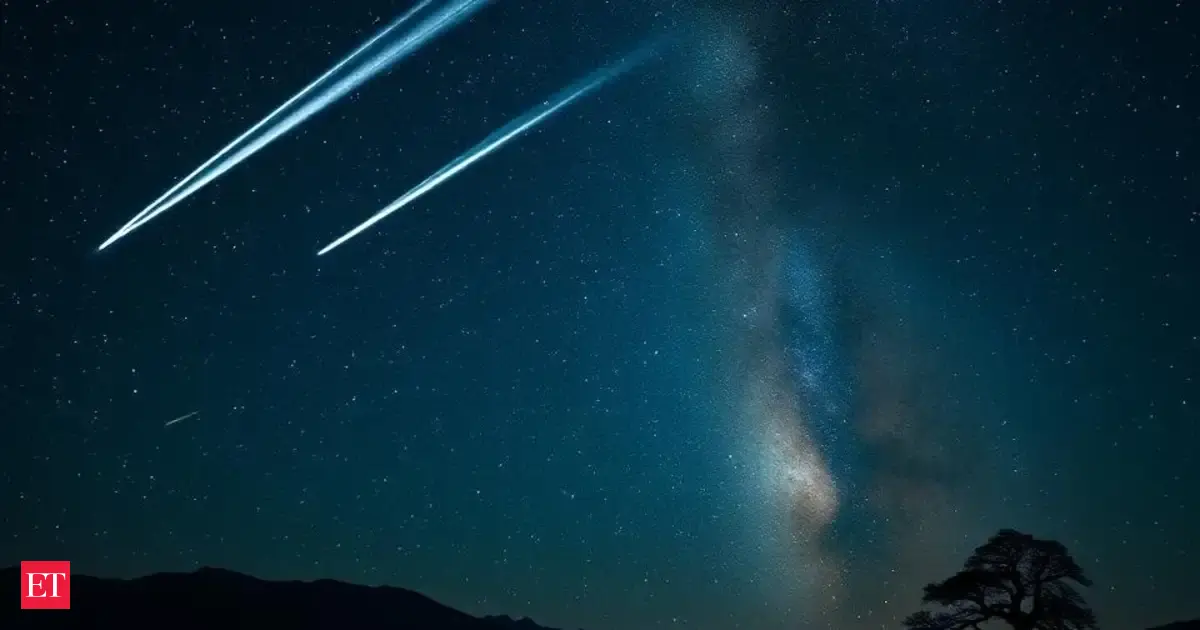
The annual emergence of the Orionid meteor shower represents one of the most mechanically elegant phenomena in orbital dynamics. While local observation advisories—such as those issued across the Dallas-Fort Worth metropolitan area—focus on backyard observation windows, astrophysicists and commercial aerospace engineers view the event through the lens of hyper-velocity orbital mechanics. The Orionids do not originate from an active, proximate celestial body; rather, they are the persistent kinetic signature of Comet 1P/Halley, a primitive aggregate of volatile ices, silicates, and carbonaceous refractory dust that traverses an eccentric elliptical circuit around the Sun once every 75 to 76 years.
As Halley approaches perihelion, intense solar radiation triggers sublimation, ejecting volatile gases that liberate embedded particulate matter into the comet’s orbital wake. Over millennia, gravitational perturbations—primarily driven by Jupiter and Saturn—disperse these ejections into a toroidal river of micro-debris known as the Orionid meteoroid stream. Earth intersects this stream twice annually: first in May, yielding the Eta Aquariids, and again in late October, producing the Orionids. Because Halley moves in a retrograde orbit inclined at roughly 18 degrees to the ecliptic plane, Earth meets the outbound debris stream in a near head-on geometry. This vector collision generates an atmospheric entry speed of roughly 66 km/s, positioning the Orionids among the fastest naturally occurring orbital projectiles that encounter our biosphere.
Atmospheric Physics, Luminous Efficiency, and Nocturnal Viewing Dynamics
The luminous streaks cataloged by observers represent the violent dissipation of kinetic energy. When a sub-millimeter grain of Halley's debris collides with ambient atmospheric molecules at altitudes between 95 and 115 kilometers, instantaneous ram pressure generates extreme thermal shocks. The solid meteoroid undergoes rapid ablation, vaporizing into a high-temperature plasma trail of ionized atmospheric nitrogen, oxygen, and volatilized metallic elements such as iron, sodium, and magnesium.
This kinetic vaporization manifests in two distinct observational phenomena: brief, brilliant optical flashes lasting fractions of a second, and "persistent trains"—columns of ionized gas that remain visible for several seconds, occasionally minutes, as upper-atmospheric winds shear the trail. The radiant point for the shower lies within the constellation Orion, just north of the red supergiant Betelgeuse. However, optical mechanics dictate that viewers should not stare directly at the radiant; meteors appearing near the radiant exhibit severe foreshortening, whereas those incinerating 45 to 90 degrees away trace longer, more dramatic angular arcs across the sky.
For regional observation epicenters such as North Texas, viewing quality depends heavily on three variables: urban light pollution, local cloud cover, and lunar phase. Light pollution indexed on the Bortle scale severely degrades visible meteor counts; an urban core rated Bortle 8 or 9 reduces a nominal ZHR of 20 down to one or two occasional fireballs. Conversely, transition into rural zones outside the suburban footprint of Dallas-Fort Worth (Bortle 3 to 4) restores full visibility of the fainter, higher-frequency ablation events. Astronomical conditions this cycle benefit from a favorable lunar geometry, wherein a waning crescent moon minimizes sky glow during the peak midnight-to-dawn viewing window.
Comparative Astrophysical & Orbital Data Matrix
The following data matrix compares the core physical, kinetic, and observational specifications of the Orionid stream against adjacent major annual showers, illustrating the specific kinetic risk profile Halley’s debris presents to upper atmospheric and near-Earth space domains.
| Meteor Shower / Event | Parent Celestial Body | Atmospheric Entry Velocity (km/s) | Peak Zenithal Hourly Rate (ZHR) | Kinetic Energy Index (Relative to Orionids) | Primary Particle Composition |
|---|---|---|---|---|---|
| Orionids (October Peak) | 1P/Halley | 66 km/s | 15 – 25 | 1.00 (Baseline) | Carbonaceous chondrite, silicates, volatile ices |
| Perseids (August) | 109P/Swift-Tuttle | 59 km/s | 75 – 100 | 0.80 | Primitive silicates, magnesium-rich dust |
| Geminids (December) | 3200 Phaethon (Asteroid) | 35 km/s | 120 – 150 | 0.28 | Dense, rocky refractory silicates |
| Eta Aquariids (May) | 1P/Halley | 65 km/s | 40 – 60 | 0.97 | Porous icy aggregate, iron-nickel matrix |
| Leonids (November) | 55P/Tempel-Tuttle | 71 km/s | 10 – 15 (Quiescent) | 1.16 | Low-density cometary aggregates |
The Low-Earth Orbit Calculus: Megaconstellations, Kinetic Risk, and Capital Protection
While the broader public views the Orionid peak as an astronomical curiosity, aerospace asset managers and institutional underwriters assess the event with analytical scrutiny. Over the past five years, the operational architecture of Low Earth Orbit (LEO) has fundamentally transformed. The deployment of mega-constellations—epitomized by SpaceX’s Starlink, Eutelsat OneWeb, and the nascent rollout of Amazon’s Project Kuiper—has elevated active satellite headcounts exponentially, compounding spatial collision probabilities.
Although the probability of a catastrophic strike by a macro-meteoroid remains statistically low, the hyper-velocity profile of the Orionid stream introduces unique operational hazards. A one-milligram particulate traveling at 66 km/s possesses kinetic energy comparable to a high-caliber projectile fired at point-blank range. Upon impact with exposed hardware, solar arrays, or radiator surfaces, these particles do not simply penetrate; they flash-vaporize, generating localized electromagnetic pulses (EMP) and plasma plumes capable of inducing systemic electrical arcing, sensor blinding, or telemetry failure.
To defend balance-sheet assets and preserve enterprise ROI, satellite fleet operators execute sophisticated risk mitigation protocols during active shower peaks:
- Attitude Biasing: Flight dynamics software utilizes automated orbital mechanics algorithms to orient the narrowest cross-sectional surface area of the spacecraft directly into the radiant vector, radically reducing exposed surface profiles.
- Solar Array Feathering: Arrays are articulated edge-on relative to the cometary flux vector, protecting expensive photovoltaic junctions from micro-perforation and subsequent power degradation.
- Optical Sensor Shuttering: Sensitive star trackers and earth-observation payloads are slewed away from direct exposure to avoid micro-pitting on critical optical coatings and focal plane arrays.
These defensive posture adjustments illustrate how commercial operators balance service uptime against physical asset depreciation. In the institutional finance sector, space insurance syndicates—most notably within the Lloyd’s of London market—closely monitor cometary debris fluxes when underwriting orbital asset risk, calibrating premium structures, and assessing the adequacy of operators’ autonomous collision-avoidance platforms.
Macroeconomic Ripple Effects: Space Situational Awareness and the Commercial Data Ecosystem
The predictable recurrence of high-velocity streams like the Orionids functions as a real-time calibration benchmark for the rapidly expanding Space Situational Awareness (SSA) and Space Traffic Management (STM) industrial base. The commercial space sector is no longer entirely dependent on government tracking infrastructure, such as the U.S. Space Force’s Space Surveillance Network. Instead, a new cohort of venture-backed aerospace firms is deploying advanced cloud compute architecture, ground-based phased-array radars, and orbital optical monitoring platforms to map the near-Earth environment in high fidelity.
The financial incentives driving this market are clear. As global capital allocation shifts toward the orbital economy—projected by Morgan Stanley and McKinsey to surpass $1 trillion in aggregate valuation within the next decade—the requirement for real-time, deterministic telemetry expands concurrently. SSA operators leverage machine-learning algorithms to ingest multi-source sensor data, dynamically calculating conjunction assessment risks and generating actionable flight maneuvers. Companies that successfully monetize predictive orbital modeling enjoy high valuation multiples, driven by recurring software-as-a-service (SaaS) business models integrated directly into commercial and sovereign satellite command-and-control infrastructures.
Simultaneously, the broader macroeconomic footprint of astronomical phenomena is felt in regional commercial markets. The growth of astrotourism, driven by public fascination with events like the Orionids, is stimulating localized capital inflows into rural hospitality, dark-sky nature reserves, and specialty manufacturing sectors, including consumer optical equipment, astrophotography sensors, and thermal instrumentation.
Frequently Asked Questions (People Also Ask)
What is the precise window to observe the Orionid meteor shower at its peak?
The optimal viewing window occurs between midnight and the onset of nautical dawn during the shower's peak activity. During this timeframe, the observer’s local horizon rotates directly into the cometary debris stream, maximizing the encounter rate. Viewers should secure a dark location away from metropolitan light interference and allow roughly 30 minutes for their eyes to achieve complete scotopic (night-vision) adaptation without looking at mobile devices or artificial white light.
Why are the Orionids definitively linked to Halley’s Comet?
The Orionids occur because Earth’s orbit intersects the invariant plane of debris ejected by Comet 1P/Halley over thousands of orbital revolutions. While Halley itself is currently outbound in its distant aphelion orbit near the constellation Hydra—not due to return to perihelion until mid-2061—the dense trail of particulate matter it shed across centuries remains fixed along its historical trajectory, colliding with Earth’s upper atmosphere every October.
Do Orionid meteors present a direct danger to the International Space Station or humans on Earth?
No danger exists for populations on the ground. The immense kinetic energy and small mass (typically ranging from microscopic dust to pebble-sized grains) ensure that virtually 100% of Orionid debris completely vaporizes in the upper mesosphere at altitudes exceeding 80 kilometers. For the International Space Station (ISS) and operational satellites, the risk is real but carefully managed. The ISS utilizes multi-layered Whipple shielding composed of aluminum, Nextel, and Kevlar designed to disrupt and disperse hyper-velocity micro-meteoroids before they can breach pressurized living quarters.
How does this year’s lunar cycle affect the visibility of the Orionids?
Visibility conditions during this cycle are rated highly favorable due to the phase of the Moon. A waning crescent configuration ensures minimal lunar illumination during the critical pre-dawn hours. This reduced sky brightness allows the fainter, lower-magnitude meteors—which constitute the vast majority of the debris flux—to stand out crisply against the background stars, providing significantly higher visible counts compared to years dominated by a waxing gibbous or full Moon.
Strategic Outlook: The 2061 Halley Perihelion and Next-Gen Orbital Monitoring
Looking ahead, the long-term observation of cometary streams will transition from passive astronomical curiosity into an empirical discipline tied to space asset survivability. Comet 1P/Halley reached its maximum distance from the Sun (aphelion) in December 2023 at an orbital distance of roughly 35 astronomical units (beyond the orbit of Neptune) and has officially begun its long gravitational return toward the inner solar system, culminating in its next perihelion in mid-2061.
Over the next four decades, as Halley descends back into the solar system, gravitational modeling indicates that the core debris stream will experience localized compression and renewed particulate injection. For the burgeoning space economy, this timeline coincides with the anticipated buildout of permanent lunar logistics infrastructure, human orbital habitats, and exponentially more crowded LEO shells. The data gathered during contemporary Orionid peaks is therefore far from trivial; it directly feeds the predictive algorithms that will govern autonomous collision-avoidance platforms, next-generation orbital shielding materials, and enterprise-grade space domain awareness networks for the remainder of the century.