Modi’s Redoubt Breach: BJP Topples Mamata Banerjee in Historic West Bengal Election Triumph
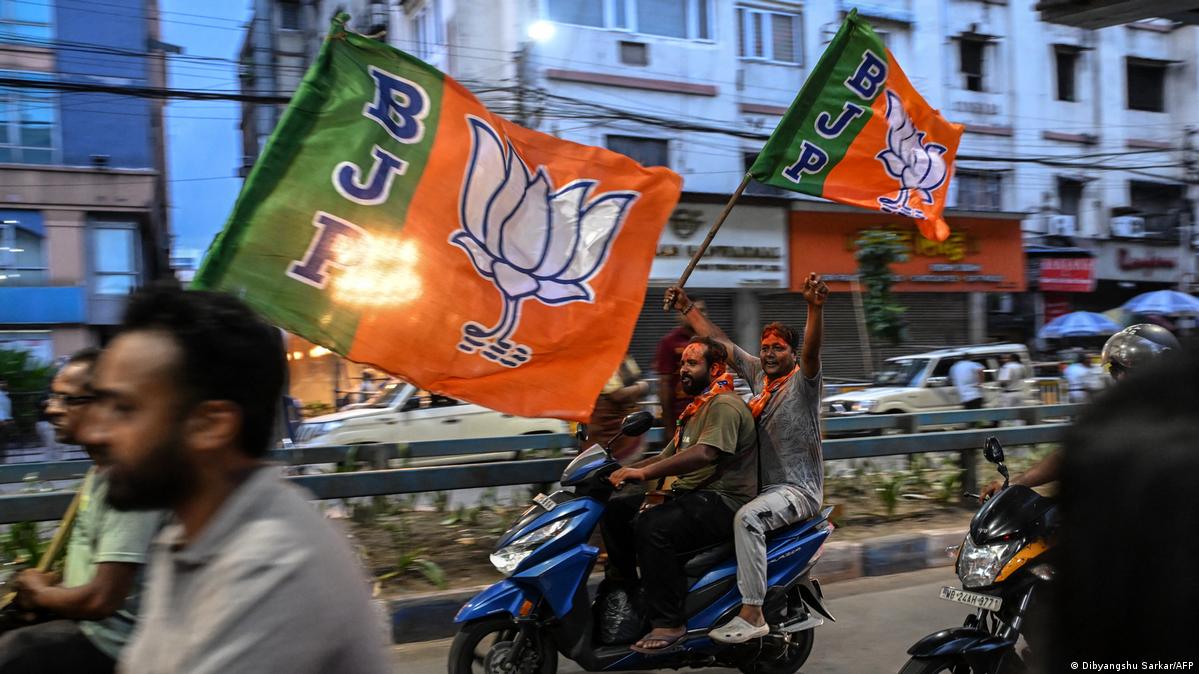
KOLKATA / NEW DELHI — May 5, 2026 — In what political historians are already characterizing as the most consequential regional power shift in modern Indian history, Prime Minister Narendra Modi’s Bharatiya Janata Party (BJP) has decisively breached West Bengal, unseating Chief Minister Mamata Banerjee and ending her 15-year rule. The state awoke on Tuesday to a dramatically altered political geography, concluding a bitter, multi-phase electoral contest that has redrawn the boundaries of political gravity in eastern India.
According to comprehensive tallies certified by the Election Commission of India following the marathon vote counting, the BJP crossed the requisite 148-seat threshold in the 294-member West Bengal Legislative Assembly, securing a workable majority of 154 seats. The ruling Trinamool Congress (TMC) plummeted to 128 seats—a contraction driven by severe hemorrhaging across rural strongholds, deep anti-incumbency, and relentless federal investigations into state governance scandals.
A Seismic Mandate: Breaking the Fortress of the East
For more than half a century, West Bengal had repelled right-of-center national parties. It was governed first by the world’s longest-running democratically elected Left Front administration for 34 years, followed by Mamata Banerjee’s firebrand, regional-populist Trinamool regime beginning in 2011. The BJP’s ascent from a marginal player with a 10% vote share a decade ago to the treasury benches in Kolkata represents the culmination of an unrelenting electoral project engineered by Narendra Modi and Union Home Minister Amit Shah.
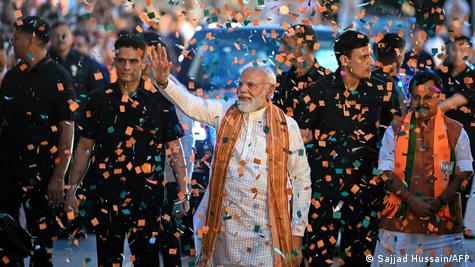
“Today, the people of West Bengal have declared with one resounding voice that misrule, syndicates, and administrative extortion have no place in the land of Swami Vivekananda and Rabindranath Tagore,” Prime Minister Modi declared before thousands of jubilant party workers at the BJP headquarters in New Delhi late Monday evening. “This is a victory for development, national integration, and transparent governance.”
A somber Mamata Banerjee addressed reporters outside her Kalighat residence, conceding defeat while pledging sustained opposition. “The mandate is accepted, but the fight for the democratic soul of Bengal will not cease,” she remarked. “Democracy has faced an unprecedented onslaught of state power, financial resources, and polarization. We bow to the people, but we will return.”
The Numbers Behind the Reversal
The transition reflects a razor-thin swing in overall vote share that yielded disproportionate seat conversions across North Bengal, the tribal belts of Junglemahal, and the peripheral industrial belts surrounding Kolkata.
| Party / Coalition | Seats Won (2026) | Seat Change (vs 2021) | Vote Share (%) |
|---|---|---|---|
| Bharatiya Janata Party (BJP) | 154 | +77 | 43.8% |
| All India Trinamool Congress (TMC) | 128 | -85 | 41.2% |
| Left Front - Congress Alliance | 8 | +7 | 9.4% |
| Others / Independents | 4 | +1 | 5.6% |
Catalysts of the Upheaval: Scandals, Welfare Fatigue, and Demographics
Analysts pinpoint three decisive structural factors that fractured the TMC’s once-impenetrable coalition:
- Institutional Anti-Incumbency and Corruption Fatigue: Sustained enforcement actions by central agencies—surrounding state recruitment drives, municipal contracts, and municipal welfare delivery—eroded the TMC’s moral authority among middle-class voters and educated youth facing chronic underemployment.
- Sub-Caste and Rural Consolidation: The BJP’s strategic focus on the Matua community and Scheduled Caste/Scheduled Tribe populations delivered massive dividends across North Bengal and South 24 Parganas, neutralizing the TMC’s traditional rural advantage.
- Welfare Law of Diminishing Returns: While Ms. Banerjee’s flagship direct benefit transfers, such as Lakshmir Bhandar, maintained a baseline of female voter loyalty, they proved insufficient against persistent youth flight, inflation, and a perceived absence of private industrial investment.
Economic Repercussions: What the Markets and Corporates Expect
Financial markets rallied selectively on the outcome. The benchmark BSE Sensex jumped 420 points in early trade on Tuesday, driven by optimism that an aligned “double-engine” administration between Kolkata and New Delhi could revive industrialization across eastern India’s mineral and port belts.
West Bengal, the sixth-largest state economy in India, has historically lagged in capital expenditure and manufacturing output relative to western and southern states. Business federations anticipate immediate movement on long-stalled industrial corridors, port modernizations at Haldia and Tajpur, and an aggressive push to integrate Bengal into India’s global semiconductor and electric vehicle manufacturing supply chains.
“For decades, West Bengal operated in a persistent state of institutional friction with the federal government,” noted Arvind Rao, Chief Emerging Markets Strategist at Indus Capital Partners. “A unified policy framework under the BJP lowers sovereign-subnational friction risk, enhances credit profiles for state infrastructure vehicles, and unlocks stalled private CapEx that previously bypassed the state due to land and labor sensitivities.”
Strategic and Geopolitical Ripples
Beyond economics, the transition carries intense geopolitical weight. West Bengal shares an extensive, porous international border with Bangladesh, alongside frontiers with Nepal and Bhutan, and the sensitive Siliguri Corridor (“Chicken’s Neck”) connecting mainland India to its northeastern states.
With the BJP at the helm in Writers’ Buildings, the central government is expected to immediately overhaul border security logistics, fast-track long-delayed border fencing projects, fully operationalize citizenship verification programs, and align state policing directly with federal counter-intelligence priorities.
Executive Summary: The Road Ahead
- New Chief Minister to be Named: The BJP parliamentary board is scheduled to convene in New Delhi today to select its first Chief Minister for West Bengal, with veteran administrative leaders and prominent state figures under close consideration.
- National Impact: The victory strips the fragmented opposition INDIA bloc of its most combative, influential regional figurehead, substantially elevating Prime Minister Modi’s domestic legislative leverage heading into the mid-term federal cycle.
- Policy Overhauls: Immediate state-level adoption of central flagship schemes, including Ayushman Bharat and direct port infrastructure concessions, is expected within the incoming cabinet’s first 100 days.
Frequently Asked Questions
How does this victory alter Narendra Modi’s national standing?
The conquest