Executive Takeaways
- The Core Thesis: European Central Bank President Christine Lagarde’s landmark May 2026 address establishes a foundational regulatory framework separating monetary functions from private-label financial instruments.
- Systemic Risk & Capital Allocation: Global central banks are accelerating digital fiat strategies to counter systemic runs on private stablecoins, which currently threaten short-term sovereign debt markets and commercial bank liquidity.
- Enterprise & Infrastructure Shifts: Multinational corporations must re-evaluate enterprise ROI, cloud compute architecture, and compliance protocols as tokenized payments merge with regulated central bank digital currencies (CBDCs).
- Valuation Multiples Under Pressure: Fintech business models relying on proprietary stablecoin yield generation face impending compression as regulatory arbitrage closes across European and Latin American corridors.
MADRID/FRANKFURT — In the high-stakes arena of global monetary architecture, a philosophical line has officially been drawn in the sand. Delivering a sweeping address at the Banco de España, European Central Bank (ECB) President Christine Lagarde ignited a ferocious debate across global financial capitals. Her thesis—centered on the decoupling of monetary functions from private payment instruments—serves as a definitive warning shot to both Silicon Valley innovators and Wall Street institutions capitalizing on the multi-trillion-dollar digital asset boom.
For more than a decade, private issuers of dollar-pegged and euro-pegged stablecoins have operated in a regulatory twilight zone. They have marketed themselves as seamless digital cash while collecting billions in yield from underlying U.S. Treasury and sovereign debt portfolios. However, as joint research documents from the European Central Bank and the Bank of Japan outline, the unfettered expansion of private on-chain money movement introduces acute vulnerabilities to market liquidity and systemic financial stability. As enterprise clients accelerate their capital allocation toward tokenized assets, central banks are drawing a hard boundary between the public trust embedded in sovereign money and the private risk inherent in digital bearer instruments.
The Anatomy of the Unbundling: Functions Versus Instruments
Test Our Free AI & Tech Utilities Suite
Calculate LLM API token costs, analyze article dwell-time, or simulate tech DCA returns.
To understand the gravity of the ECB’s 2026 policy pivot, one must examine the fundamental mechanics of money. Economists have long defined money through three classic pillars: a medium of exchange, a unit of account, and a store of value. For centuries, commercial banking systems bundled these functions into a singular commercial construct—bank deposits backed by fractional reserves and public safety nets.
Private stablecoins attempted a radical technological re-engineering of this framework. By leveraging distributed ledger technology (DLT), these instruments optimized the medium-of-exchange function, offering instantaneous, frictionless global settlement. Yet, as Lagarde emphasized in her LatAm address, tokenized instruments issued by private entities cannot inherently guarantee the uniform trust required for a stable unit of account during a systemic liquidity crunch.
| Monetary Dimension | Commercial Stablecoins (Private Instruments) | Sovereign Digital Currency / CBDC (Public Infrastructure) |
|---|---|---|
| Underlying Trust | Commercial paper, T-bills, and private reserve management | Full faith and credit of the sovereign central bank |
| Liquidity Risk | High vulnerability to digital bank runs and de-pegging events | Risk-free settlement with zero counterparty default exposure |
| Infrastructure Scalability | Optimized for public permissionless and enterprise chains | Interoperable hybrid ledger architecture under regulatory oversight |
| Regulatory Compliance | Subject to fragmented global AML/KYC frameworks (e.g., MiCA) | Hard-coded compliance, zero-knowledge privacy, and statutory limits |
This structural friction is driving senior global product managers in digital assets to fundamentally redesign their operating models. Financial institutions are realizing that while blockchain-based settlement layers offer unmatched speed and programmable utility, anchoring those layers to unbacked or privately managed liabilities creates unacceptable compliance and balance-sheet exposure.
Market Liquidity and Systemic Vulnerabilities
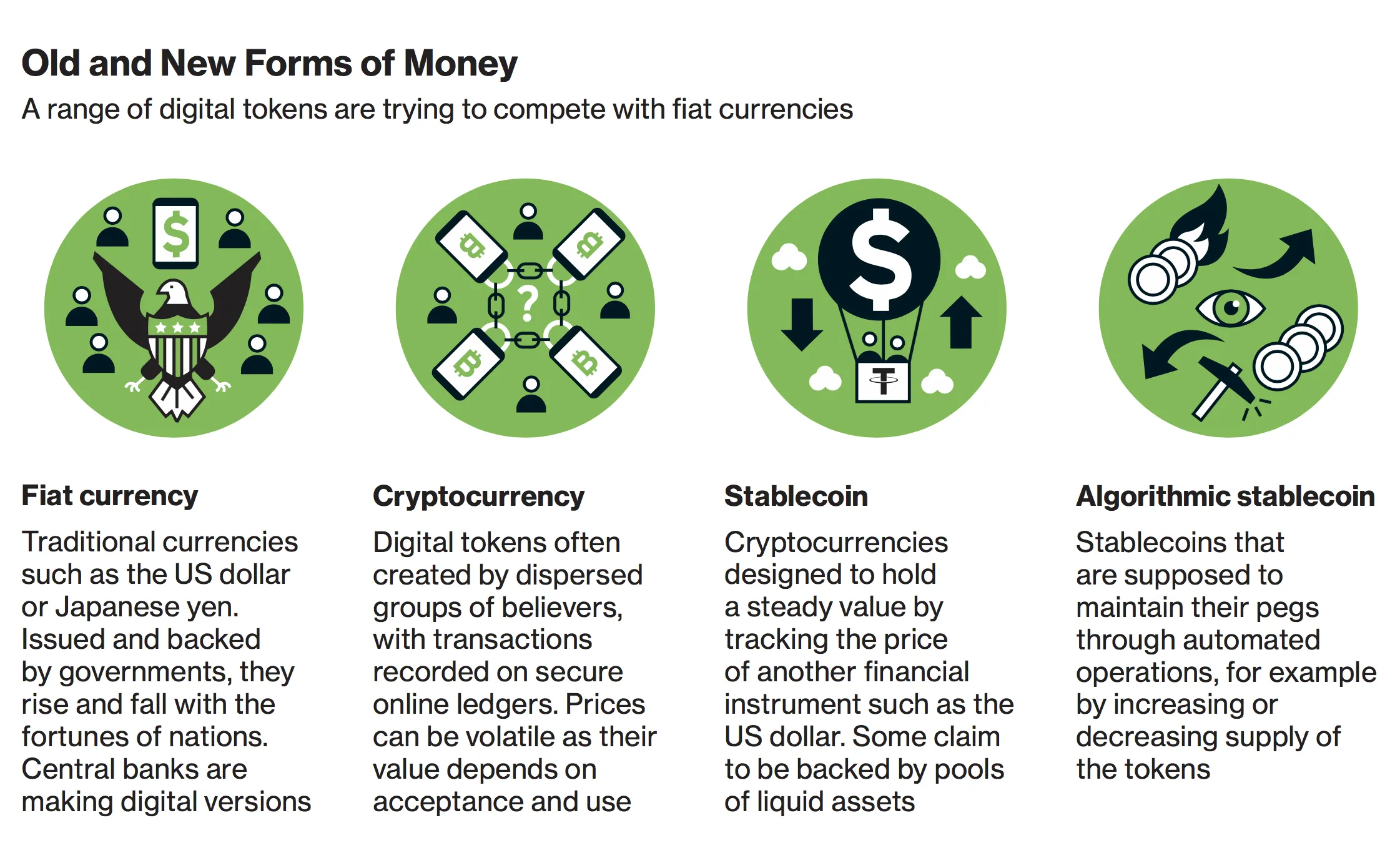
The macroeconomic implications of private stablecoin dominance extend far beyond crypto-asset trading pairs. Major stablecoin issuers have quietly ascended to become among the largest marginal buyers of short-dated U.S. government debt. While this dynamic provides a ready pool of buyers for sovereign debt issuance, it introduces a dangerous feedback loop into traditional financial markets.
During periods of heightened market volatility, a sudden flight to liquidity can trigger simultaneous redemption requests across multiple stablecoin platforms. Because these issuers must rapidly liquidate their reserve portfolios to meet on-chain redemptions, they risk sparking fire sales in the very sovereign debt markets they rely upon for backing. This structural vulnerability has alarmed monetary authorities from Frankfurt to Tokyo, validating the collaborative 53-page research dossiers published jointly by the ECB and Bank of Japan.
For corporate treasurers navigating this landscape, risk mitigation has become paramount. Enterprise ROI calculations must now factor in the probability of regulatory interventions that could freeze, tax, or heavily restrict the utilization of unbacked digital bearer instruments in cross-border trade settlements.
Who Wins, Who Loses: The Economic Fallout
As the international financial system pivots toward a regulated digital paradigm, clear winners and losers are emerging across the global economy:
- Winners — Tier-1 Commercial Banks: Institutions capable of upgrading their core banking and cloud compute architectures to support tokenized commercial bank money will recapture institutional payment flows currently migrating to crypto-native rails.
- Winners — Regulatory Compliance Tech Providers: Software engineering firms specializing in real-time anti-money laundering (AML), know-your-customer (KYC), and cross-border tax compliance will experience massive enterprise software adoption.
- Losers — Unregulated Offshore Issuers: Stablecoin providers relying on regulatory arbitrage, opaque reserve attestations, and high-yield marketing to retail depositors will face severe margin compression and jurisdictional bans.
- Losers — Legacy Intermediaries: Traditional correspondent banking networks that rely on multi-day settlement delays and exorbitant fee structures will see their market share systematically dismantled by instant on-chain settlement alternatives.
Frequently Asked Questions (People Also Ask)
What does "separating functions from instruments" actually mean in practice?
It means distinguishing the underlying economic utility of money (its ability to settle debts and measure value safely) from the specific private or public tokens used to transport it. Central banks argue that while private entities can innovate payment instruments, the foundational backing and stability of the monetary unit must remain a public trust.
How do central bank digital currencies (CBDCs) threaten commercial stablecoins?
CBDCs provide a risk-free, central-bank-backed digital settlement asset that eliminates the counterparty and de-pegging risks associated with private stablecoins. Once interoperable digital euros or dollars are widely available for institutional and retail use, the value proposition of holding private, yield-bearing stablecoins diminishes significantly.
Are global regulators moving toward a blanket ban on stablecoins?
Rather than an outright ban, major jurisdictions—exemplified by the European Union’s Markets in Crypto-Assets (MiCA) regulation and escalating U.S. oversight—are implementing stringent reserve backing, auditability, and capital requirement mandates. These rules effectively strip stablecoins of their speculative yield advantages, aligning them more closely with regulated electronic money institutions.
How will this shift impact enterprise treasury management?
Corporate treasurers must transition away from legacy crypto-native payment rails and prepare for tokenized deposits and wholesale CBDCs. Strategic capital allocation will increasingly favor programmable, bank-issued digital instruments that guarantee compliance and eliminate operational counterparty risk.
Future Outlook: Milestones to Watch
The next twenty-four months will prove decisive for the future of money. As the European Central Bank moves closer to concrete implementation phases for the digital euro, and as global standard-setting bodies finalize capital treatment rules for digital assets, market participants must monitor several critical milestones:
- Legislative Harmonization: Watch for coordinated cross-border enforcement actions between the SEC, ESMA, and Asian regulators regarding reserve asset transparency and redemption parity.
- Wholesale CBDC Pilots: Track large-scale commercial bank trials utilizing distributed ledger technology for cross-border wholesale settlements, which will test the scalability of central bank money on private and permissioned chains.
- Enterprise Tokenized Deposits: Measure the velocity at which Tier-1 global banks roll out programmable, tokenized deposit solutions for multinational corporate clients, effectively displacing third-party stablecoin usage in B2B commerce.
Ultimately, Christine Lagarde’s 2026 mandate marks the end of the wild-west era of digital money. The future will not belong to unregulated tech monopolies issuing private claims on sovereign debt, but rather to an institutionalized, interoperable ecosystem where technology serves stability, and innovation reinforces trust.