Space Race 2.0: Inside ISRO’s High-Stakes GISAT-1 Launch and India's Push for Real-Time Surveillance
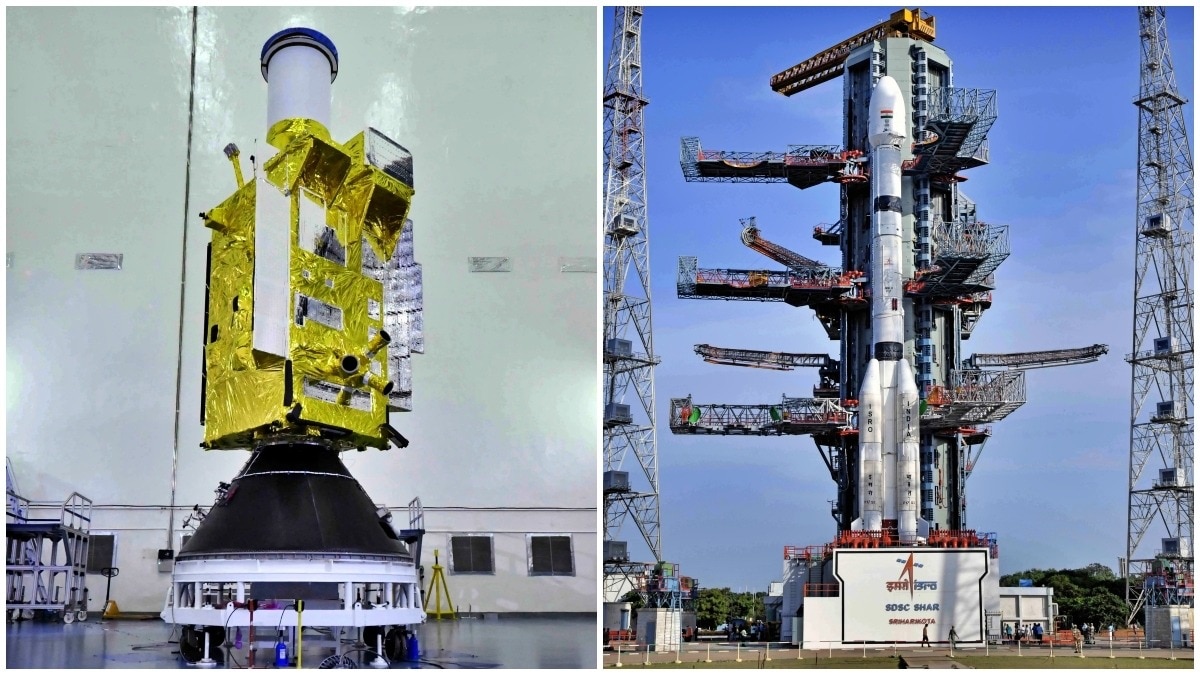
NEW DELHI — In a monumental leap for national security and atmospheric science, the Indian Space Research Organisation (ISRO) is primed to launch GISAT-1—rebranded as EOS-05—on September 4. Dubbed India’s new "eyes in space," this advanced earth observation satellite represents a paradigm shift from traditional low-Earth orbit spacecraft. By stationing a high-powered eye directly over the subcontinent in a geostationary orbit, ISRO is rewriting the playbook on real-time disaster management, border surveillance, and meteorological tracking.
The upcoming mission, slated for early September liftoff from the Satish Dhawan Space Centre in Sriharikota, comes at a critical juncture. As geopolitical tensions simmer across South Asia and extreme weather events batter domestic infrastructure with alarming frequency, the demand for continuous, uninterrupted telemetry has never been more urgent. Industry insiders and defense analysts alike are watching closely, recognizing that EOS-05 is not merely a scientific instrument, but a strategic force multiplier.
The Geostationary Advantage: Why EOS-05 Changes the Game
To understand the magnitude of the GISAT-1 (EOS-05) launch, one must look at the mechanics of orbital physics. Traditional earth observation satellites typically operate in Low Earth Orbit (LEO), flying between 500 and 800 kilometers above the planet. While LEO satellites offer high-resolution imagery, they suffer from a major operational limitation: revisit time. A LEO satellite can only image a specific target once every few days as it orbits the globe, creating dangerous blind spots during rapidly evolving crises.
GISAT-1 shatters this limitation by occupying a Geostationary Orbit (GEO) at roughly 36,000 kilometers above the equator. At this altitude, the satellite matches the Earth’s rotational speed, allowing it to hover continuously over the Indian landmass.
- Unprecedented Persistence: Unlike LEO satellites that offer fleeting snapshots, EOS-05 provides near-continuous, round-the-clock monitoring of the subcontinent and surrounding oceans.
- Real-Time Tracking: The satellite enables live streaming of meteorological events, allowing meteorologists to track cyclones, cloudbursts, and thunderstorms as they form rather than hours later.
- Strategic Surveillance: Defense planners gain a constant, unblinking eye over borders and maritime approaches, drastically reducing reaction times to unauthorized incursions or naval movements.
Payload Capabilities and Technological Prowess
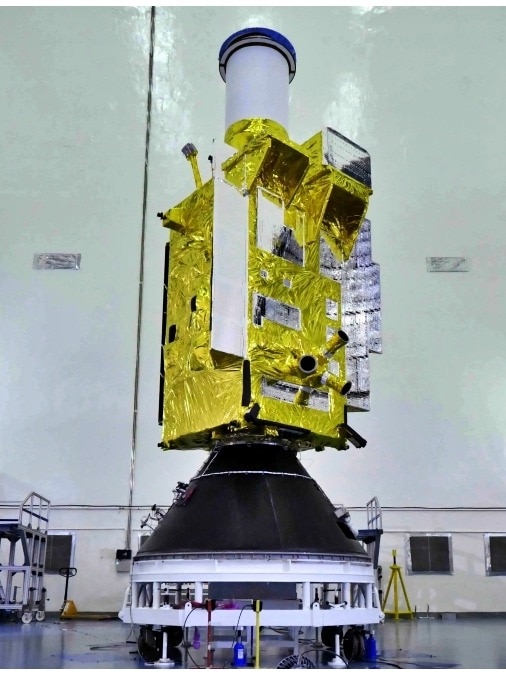
Equipped with state-of-the-art multi-spectral imagers, EOS-05 is designed to capture high-resolution data across various bands of the electromagnetic spectrum. According to mission briefings, the spacecraft carries high-resolution cameras operating in the visible, near-infrared, and shortwave infrared bands. These instruments are engineered to peer through light haze, dust storms, and thin cloud cover—environmental hurdles that routinely blind conventional optical sensors.
"The ability to maintain a fixed gaze over our region gives India an unprecedented strategic and operational edge," noted a senior aerospace analyst based in Bengaluru. "Whether it is monitoring the genesis of a super-cyclone in the Bay of Bengal or keeping tabs on tactical movements along contested borders, the latency between data capture and ground decision-making is effectively reduced to zero."
At a Glance: GISAT-1 (EOS-05) Mission Profile
| Parameter | Mission Specification |
|---|---|
| Launch Date | September 4 |
| Launch Vehicle | GSLV (Geosynchronous Satellite Launch Vehicle) |
| Launch Site | Satish Dhawan Space Centre, Sriharikota |
| Orbital Class | Geostationary Earth Orbit (GEO) |
| Primary Objective | Real-time earth observation, disaster warning, and strategic surveillance |
Economic and Humanitarian Implications
Beyond defense and meteorology, the economic impact of GISAT-1 cannot be overstated. India’s vast agricultural sector, which remains heavily dependent on the unpredictable monsoons, stands to gain immensely from hyper-local weather forecasting. By providing precise data on soil moisture, crop health, and precipitation patterns, the satellite will empower policymakers and farmers to make data-driven decisions, mitigating financial losses caused by unseasonal droughts or floods.
Furthermore, disaster management agencies will leverage the satellite's continuous feed to coordinate rapid-response operations during natural disasters. In the wake of climate change-induced extreme weather events that frequently devastate coastal and mountainous regions, having a live feed of affected areas will save countless lives and streamline relief logistics.
Looking Ahead: The GSLV Test and Future Outlook
The September 4 launch will also serve as a critical validation test for ISRO’s Geosynchronous Satellite Launch Vehicle (GSLV) stack. Ensuring the heavy-lift rocket accurately places the satellite into its designated geostationary slot is paramount. Success on this front will further solidify India's reputation as a reliable, cost-effective global launch provider, attracting international commercial payloads and strengthening bilateral space partnerships.
As the countdown to September 4 begins, ISRO technicians are conducting final integration and rigorous pre-launch checks at Sriharikota. When the GSLV ignites its engines next month, it will not just be lifting hardware into the sky; it will be elevating India’s space-based reconnaissance and environmental monitoring capabilities to an elite global tier.
Frequently Asked Questions
What is the primary difference between GISAT-1 and traditional Indian observation satellites?
Traditional satellites like the Cartosat or RISAT series operate in Low Earth Orbit (LEO), meaning they circle the globe and only pass over India periodically. GISAT-1 operates in a Geostationary Orbit (GEO), allowing it to hover continuously over the same region for real-time, 24/7 monitoring.
How will GISAT-1 impact national security?
By providing continuous, live imaging of borders and surrounding maritime zones, the satellite eliminates the data blind spots inherent in LEO constellations, allowing military and intelligence agencies to detect and respond to security threats instantaneously.