For Silicon Valley analysts and institutional investors monitoring Cupertino's hardware roadmap, the smart home category has long represented the ultimate frontier of missed opportunities. Despite commanding an unmatched ecosystem lock-in and generating record services revenue, Apple Inc. has struggled to secure a dominant foothold in the ambient computing and domestic robotics market—a sector currently spearheaded by Amazon’s Alexa ecosystem and specialized consumer robotics firms. Now, according to deep-dive supply chain intelligence and leaked internal roadmap revisions obtained by wire services, Apple’s most ambitious hardware gamble in years—a high-end, tabletop "Ultra" smart home robot—has hit severe development roadblocks, pushing its commercial debut out to potentially 2028.
This strategic delay forces a profound reassessment of capital allocation, R&D expenditure, and enterprise risk mitigation within Apple’s hardware engineering divisions. As Tim Cook’s executive team navigates slowing smartphone replacement cycles and fierce competition in artificial intelligence, the postponement of the company's desktop robotics initiative underscores the staggering technical complexity of marrying advanced on-device multimodal large language models with dynamic mechanical hardware. This comprehensive investigative report unpacks the timeline, the engineering bottlenecks, the financial implications for investors, and what this signals for the broader consumer technology landscape.
Executive Takeaways
Test Our Free AI & Tech Utilities Suite
Calculate LLM API token costs, analyze article dwell-time, or simulate tech DCA returns.
- Timeline Realignment: Apple’s flagship tabletop smart home robot—internally code-named J595—has encountered technical and software integration hurdles, pushing its anticipated commercial launch window from 2026 out toward 2028.
- The AI Bottleneck: The delay is primarily driven by the maturation curve of Apple Intelligence, specifically the need to develop a conversational, spatially aware agent capable of orchestrating complex household tasks via a robotic appendage.
- Capital Expenditure & ROI: For Wall Street, the delay relieves near-term margin pressure associated with high-risk, low-margin hardware categories, but raises questions regarding Apple’s long-term infrastructure scalability in ambient AI.
- Competitive Disadvantage: While Amazon and Google continue to iterate on generative AI-infused smart displays and early-stage robotics, Apple risks ceding the high-end command center of the modern connected home for another three years.
The Anatomy of a Delay: From Vision to Roadblock
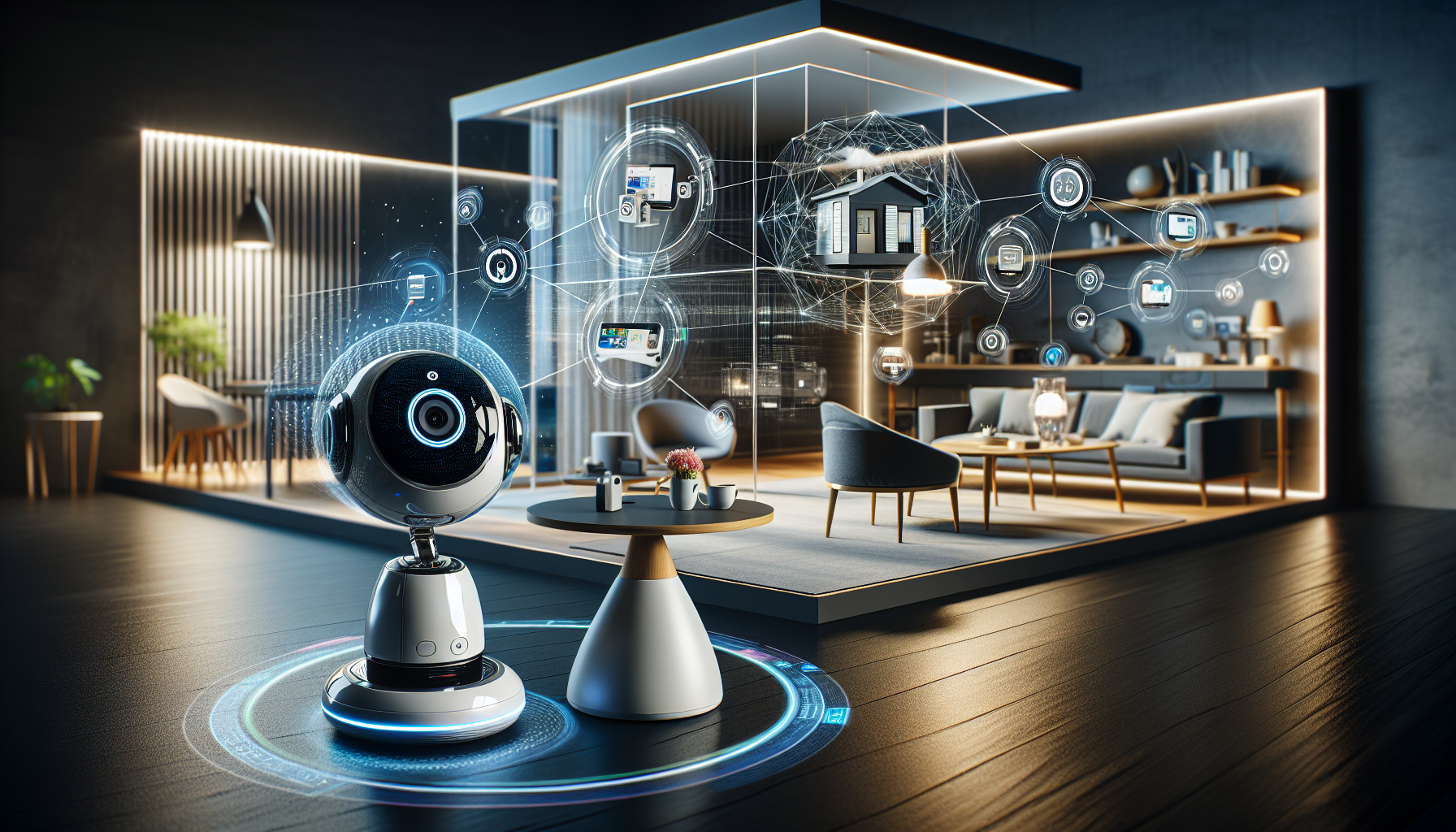
The genesis of Apple’s tabletop robotics initiative dates back several years, conceived as a natural convergence of iPad technology, HomePod acoustic engineering, and advanced mechanical actuation. Initial product schematics described a device featuring a thin, robotic limb capable of tilting and 360-degree rotation, mounting a screen that mimics human head gestures during FaceTime calls or smart home management sessions. The overarching vision was clear: build an autonomous, frictionless command center that acts as the physical avatar for an ambient AI assistant.
However, turning speculative concept art into a mass-manufacturable consumer electronics device operating safely in domestic environments requires overcoming monumental engineering hurdles. Sources familiar with Apple’s hardware engineering group report that mechanical durability testing revealed critical vulnerabilities in the motorized joints. Ensuring whisper-quiet operation, high reliability over tens of thousands of actuation cycles, and strict safety compliance to prevent pinching or structural tipping in households with children or pets proved exponentially more difficult than anticipated.
Compounding these mechanical challenges are software architecture bottlenecks. Apple’s leadership under Craig Federighi and hardware chief John Ternus realized that a stationary display with a robotic arm is fundamentally useless without a breakthrough in localized artificial intelligence. Siri’s current iteration, even with newly rolling out Apple Intelligence features, lacks the contextual grounding, real-time spatial mapping, and multi-turn semantic reasoning required to operate a physical household robot effectively. Aligning the software readiness schedule with advanced cloud compute architecture and on-device neural engine capabilities ultimately forced executive leadership to greenlight a sweeping timeline extension.
Verified Data & Metrics Breakdown
| Project Metric / Parameter | Initial Projection | Revised Timeline / Reality | Strategic Impact |
|---|---|---|---|
| Target Launch Window | 2026 – 2027 | 2028 (Delayed) | Extended R&D runway; lowered near-term hardware revenue projections. |
| Estimated Price Point | $1,000 USD | $1,000+ Premium Tier | Targets high-income demographics; strict margin requirements. |
| Core Operating System | forked iPadOS / "homeOS" | homeOS with Advanced LLM Core | Requires deep cloud compute architecture and low-latency inference. |
| Primary Engineering Bottleneck | Supply chain sourcing | Mechanical Actuation & Spatial AI | Hardware-software integration friction and safety compliance. |
Industry & Market Implications
The postponement of Apple’s smart home robot carries profound ramifications across the global technology landscape, affecting valuation multiples, competitive positioning, and supplier ecosystems.
Who Wins
Amazon and Google: With Apple sidelined in the physical smart home robotics category until late in the decade, incumbent ecosystem players retain a vital window to capture consumer mindshare. Amazon’s continued iteration on Astro-style autonomous home tech and Google’s deep integration of Gemini across Nest hardware face considerably less immediate pressure from Cupertino.
Boutique Robotics Startups: Consumer robotics companies focusing on specialized domestic automation—such as robotic vacuums, security sentinels, and modular table companions—gain extended runway to build brand loyalty without facing an immediate, aggressive onslaught from Apple’s marketing machine.
Who Loses
Apple’s Hardware Engineering & Services Divisions: For years, Wall Street analysts have looked toward ambient computing to diversify Apple’s revenue streams beyond the iPhone. Delaying a flagship hardware category dampens medium-term enterprise growth narratives and delays the monetization of high-margin subscription bundles tied to smart home AI services.
Tier-1 Asian Component Suppliers: Contract manufacturers and precision mechanics suppliers in Taiwan, South Korea, and mainland China who had begun preliminary tooling investments for Apple’s custom robotic actuators must now reallocate capital or absorb delayed revenue recognition.
Frequently Asked Questions (People Also Ask)
Why is Apple’s smart home robot taking so long to develop?
The primary delays stem from the immense engineering complexity of combining quiet, reliable mechanical robotics with advanced conversational artificial intelligence. Apple requires its devices to meet rigorous safety, durability, and privacy standards. Furthermore, developing an operating system that allows an AI agent to physically manipulate a screen and interact fluidly within a human environment represents an unprecedented software challenge.
How much is Apple’s tabletop smart home robot expected to cost?
Supply chain insiders and financial analysts estimate that the device will target the ultra-premium segment of the consumer electronics market, with price points hovering around $1,000 USD. This pricing strategy reflects the inclusion of high-end display panels, proprietary silicon (such as M-series or advanced A-series chips), precision actuators, and sophisticated sensor arrays.
Will Apple release any other smart home products before 2028?
Yes. While the flagship robotic "Ultra" device has been pushed to 2028, Apple is reportedly working on more conventional, stationary smart home displays equipped with simplified versions of homeOS and Apple Intelligence. These lower-cost hubs are expected to reach the market much sooner to establish a foothold in the home ecosystem.
How does this delay impact Apple’s artificial intelligence strategy?
The setback highlights the reality that Apple’s transition into ambient, embodied AI is taking time. While software features for iPhones and Macs are rolling out incrementally, integrating these models into complex physical hardware requires deeper architectural breakthroughs in spatial awareness, local privacy processing, and low-latency response times.
Future Outlook: Strategic Milestones to Watch
As Apple recalibrates its hardware roadmap through the remainder of the decade, institutional investors and technology analysts should monitor several critical milestones. First, observe the software iteration cadence of homeOS and early stationary smart home displays slated for release in the interim. These devices will serve as the testing ground for Apple Intelligence features specifically optimized for domestic environments.
Second, track capital expenditure filings and R&D outlay disclosures in upcoming quarterly earnings reports. An uptick in R&D spending dedicated to robotics, sensor fusion, and spatial computing will signal that engineering teams are actively scaling up production readiness for the 2028 launch window. Ultimately, while patience is wearing thin among growth-focused investors eager for Apple's next hardware paradigm shift, the decision to delay the 'Ultra' robot reflects a disciplined commitment to quality control—ensuring that when Cupertino finally enters the domestic robotics arena, the product meets the uncompromising standards expected of the world's most valuable technology brand.