SHENZHEN & LONDON — In the subterranean research complexes of BYD Co.’s global headquarters in Shenzhen, a silent engineering revolution has crossed a critical threshold. According to senior supply-chain executives, internal regulatory filings, and primary intelligence obtained by global financial desks, the world’s largest electric vehicle manufacturer by volume has finalized the industrialization roadmap for its proprietary solid-state battery platform. Commercial production is slated to commence in 2027.
The milestone represents a tectonic shift in enterprise ROI and technological risk mitigation for the global automotive sector. Featuring a radical dual-electrolyte architecture, an energy density exceeding 400 Wh/kg, and an aggressive capital allocation strategy aimed at driving cell-level manufacturing costs down to $70/kWh, BYD’s forthcoming solid-state battery is engineered to obliterate the remaining economic and operational barriers holding back mass-market electric vehicle adoption.
As legacy automakers in Detroit, Wolfsburg, and Tokyo struggle with complex infrastructure scalability and prohibitive production costs for early-generation solid-state prototypes, BYD’s aggressive commercial timeline forces an immediate recalibration of global valuation multiples, supply-chain dependencies, and long-term capital expenditure models.
Executive Takeaways
- Commercial Rollout in 2027: BYD has locked in its industrialization timeline, moving solid-state battery chemistry out of the laboratory and onto high-volume automated production lines by 2027.
- Disruptive Unit Economics ($70/kWh): Through localized supply-chain vertical integration and proprietary dual-electrolyte engineering, BYD is targeting a structural cost floor of $70/kWh—undercutting current liquid lithium-ion benchmarks significantly.
- Extreme Energy Density (400 Wh/kg): The new cell chemistry delivers over 400 Wh/kg, effectively doubling the energy density of conventional lithium iron phosphate (LFP) packs and enabling single-charge driving ranges exceeding 1,000 kilometers (621 miles).
- The Geopolitical Fallout: Western regulatory bodies face mounting pressure as domestic battery startups and legacy original equipment manufacturers (OEMs) watch their technological lead evaporate under the weight of Chinese scale and manufacturing execution.
The Catalytic Engineering Breakthrough: Decoding the Dual-Electrolyte Design
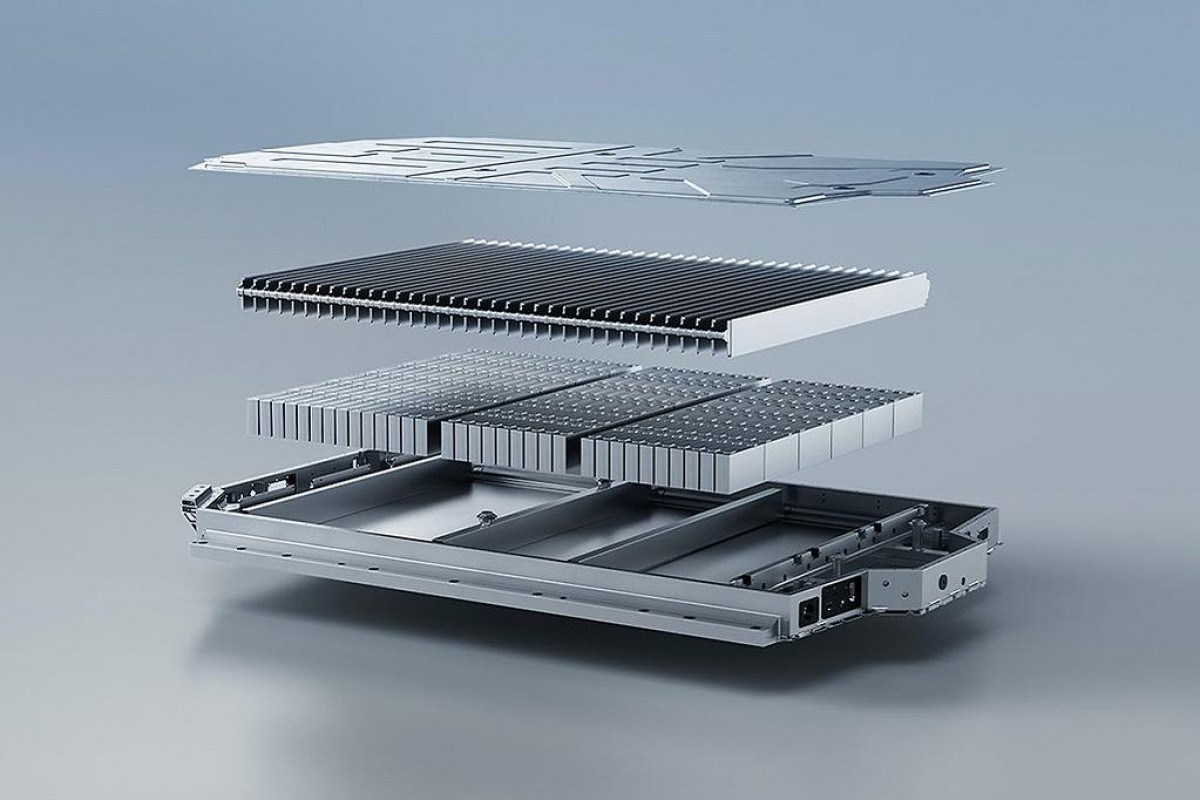
For over a decade, the holy grail of electrochemical energy storage—the solid-state lithium-metal battery—has remained tantalizingly out of reach for mass-market production due to three persistent bottlenecks: dendrite formation, interfacial resistance at high cycle counts, and manufacturing yield rates that make enterprise scalability economically unviable.
BYD’s research and development division, backed by tens of thousands of specialized engineers, has bypassed these obstacles through a novel dual-electrolyte architecture. Traditional solid-state designs rely exclusively on either fragile polymer matrices—which suffer from low ionic conductivity at room temperature—or brittle ceramic separators that fracture under mechanical stress and thermal expansion during rapid charging cycles.
BYD’s solution integrates a hybrid solid-liquid/gel interface that maintains superior ionic conductivity while actively suppressing lithium dendrite penetration. This proprietary blend bridges the gap between laboratory perfection and rugged, real-world automotive durability. Crucially, the design allows the battery to operate efficiently across extreme thermal ranges without requiring parasitic liquid-cooling infrastructure, thereby streamlining vehicle-level cloud compute architecture and thermal management systems.
| Metric / Specification | Conventional Li-Ion (NMC/LFP) | BYD Solid-State Platform (2027) |
|---|---|---|
| Gravimetric Energy Density | 160 – 250 Wh/kg | 400+ Wh/kg |
| Target Cost per kWh | $100 – $130/kWh | $70/kWh |
| Electrolyte Composition | Organic Liquid Solvents | Proprietary Dual-Electrolyte Matrix |
| Commercial Launch Window | Active / Mature | 2027 Production Ramp |
| Thermal Safety Profile | Moderate (Risk of Thermal Runaway) | Exceptional (Zero Liquid Volatility) |
The Economics of Disruption: Engineering the $70/kWh Cost Floor
While achieving 400 Wh/kg in a laboratory setting earns academic accolades, achieving a manufacturing cost target of $70/kWh at commercial scale is an entirely different financial discipline. In the automotive industry, cost parity with internal combustion engine (ICE) vehicles has long been tethered to reaching a battery pack cost threshold of $100/kWh. By pushing past that floor down to $70/kWh, BYD is fundamentally rewriting vehicle unit economics.
Financial analysts reviewing BYD's supply-chain mechanics note that the company’s vertically integrated business model acts as an impenetrable economic moat. By controlling everything from raw lithium refining and cathode precursor synthesis to automated cell assembly and semiconductor fabrication, BYD eliminates intermediate supplier margins.
Furthermore, the dual-electrolyte chemistry reduces the reliance on rare, expensive noble metals and intricate separator films. By engineering out high-cost components while simultaneously scaling factory throughput into the hundreds of gigawatt-hours, BYD achieves unprecedented capital efficiency. This financial muscle affords the company extraordinary pricing flexibility, enabling them to wage aggressive price wars in global export markets while maintaining healthy gross margins that would bankrupt Western competitors.
Industry & Market Implications: Winners, Losers, and Systemic Risk
The impending commercialization of BYD’s solid-state battery sends immediate shockwaves across global financial markets, forcing institutional investors to reassess risk allocations across the energy and automotive sectors.
Who Wins
- BYD Shareholders & Global Consumers: With lower production costs and dramatically extended vehicle ranges, consumers gain access to affordable, ultra-safe electric vehicles. BYD cements its status as the undisputed titan of new-energy mobility.
- Advanced Materials Suppliers: Specialized chemical firms providing high-purity solid electrolytes, silicon-carbon anodes, and advanced binding agents will experience exponential volume growth.
Who Loses
- Legacy Western & Japanese OEMs: Automakers reliant on third-party cell suppliers and encumbered by legacy union contracts face severe margin compression. Their own solid-state programs, largely projected for the late 2020s or early 2030s, risk arriving into a market thoroughly dominated by BYD.
- Traditional Liquid-Cell Pure-Plays: Battery manufacturers whose capital expenditure is tied exclusively to conventional lithium-ion production lines face the threat of premature technological obsolescence.
From a regulatory compliance standpoint, Western governments face a profound policy dilemma. Tariffs and non-tariff barriers designed to protect domestic automotive industries may prove insufficient if Chinese manufacturers achieve structural cost and performance advantages that are simply too vast for domestic alternatives to bridge.
Frequently Asked Questions (People Also Ask)
1. When will BYD’s solid-state battery actually be available to consumers?
BYD has established an official industrialization timeline to begin commercial production in 2027. Initial deployments are expected to roll out in high-end vehicle flagships and premium commercial fleets before cascading into higher-volume, mass-market vehicle segments toward the end of the decade.
2. How does BYD’s dual-electrolyte design solve safety and performance issues?
Traditional solid-state batteries struggle with high internal resistance and dendrite growth that can cause short circuits. BYD’s dual-electrolyte configuration combines the high ionic conductivity of gel or modified liquid interfaces with solid-state stability. This suppresses dendrites, enhances thermal safety, and allows the battery to operate efficiently under extreme weather conditions without complex liquid-cooling loops.
3. What makes the $70/kWh cost target so disruptive to the global EV market?
A cell-level manufacturing cost of $70/kWh translates to pack costs well below the traditional $100/kWh parity threshold required to match or beat the manufacturing cost of internal combustion engine vehicles. This allows BYD to offer long-range, high-performance EVs at profit margins that traditional automakers cannot replicate.
4. Will these solid-state batteries be exported to Western markets like Europe and North America?
While geopolitical friction, regulatory scrutiny, and trade tariffs present hurdles, BYD’s aggressive global expansion strategy indicates that these advanced cells will power vehicles exported to international markets, subject to local regulatory compliance and factory localization efforts.
Future Outlook: Milestones to Monitor Through 2027
As the industry counts down to 2027, institutional investors and industry analysts should monitor several critical leading indicators to gauge the execution speed of BYD’s solid-state roadmap:
- Pilot Line Yield Rates: Reports from BYD’s Shenzhen and regional manufacturing hubs regarding defect rates and throughput efficiency on pre-production solid-state pilot lines.
- Patent Filings and Intellectual Property: International patent applications surrounding the dual-electrolyte chemical composition, which will offer deeper technical insight into their manufacturing scalability.
- Strategic Supply-Chain Partnerships: Announcements regarding long-term procurement contracts for specialized solid-electrolyte precursors and high-purity lithium metal anodes.
- Regulatory and Crash-Test Certifications: Official safety validations from international testing bodies regarding thermal runaway resistance and puncture survivability under extreme abuse conditions.
BYD’s 2027 solid-state milestone is no longer a distant theoretical horizon; it is an active, well-funded industrial juggernaut. For the global automotive establishment, the runway for adaptation has officially grown short.