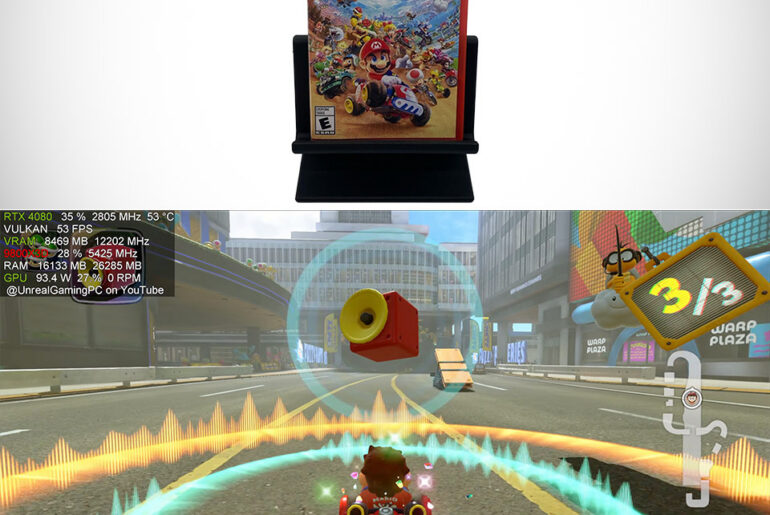
The global video game industry is once again confronting a high-stakes clash between intellectual property protection and advanced reverse-engineering. In a technological feat that has sent shockwaves through corporate boardrooms in Kyoto, Tokyo, and Silicon Valley, an underground developer collective has successfully deployed "Eglantine"—a next-generation hardware emulator capable of running unreleased Nintendo Switch 2 software, specifically Mario Kart World, at a blistering, stable 60 frames per second (FPS) on standard x86-64 personal computer architecture.
This explosive development, tracked intensely across global developer forums and wire services, fundamentally challenges the valuation multiples, infrastructure scalability, and digital rights management (DRM) assumptions of one of the world's most fiercely guarded entertainment conglomerates. For institutional investors, venture capital analysts, and cybersecurity compliance officers, the emergence of Eglantine is not merely an enthusiast curiosity; it is a stress test of modern hardware virtualization, enterprise risk mitigation, and corporate valuation defense.
Executive Takeaways
Test Our Free AI & Tech Utilities Suite
Calculate LLM API token costs, analyze article dwell-time, or simulate tech DCA returns.
- Unprecedented Pre-Launch Breakthrough: The Eglantine emulator has achieved native 60 FPS execution of Mario Kart World on consumer PC hardware months before the official retail deployment of Nintendo’s next-generation console.
- Advanced Architectural Emulation: Unlike previous generation emulators that relied on high-level emulation (HLE), Eglantine leverages sophisticated low-level instruction translation, mapping ARM-based custom silicon directly to modern multi-core processors and Vulkan/DirectX 12 graphics pipelines.
- Severe Market Implications: The premature software leak and hardware virtualization threaten Nintendo's hardware-software ecosystem monetization model, potentially impacting projected quarterly revenue and capital allocation strategies.
- Regulatory and Legal Crosshairs: Major copyright holders are preparing unprecedented legal filings under the Digital Millennium Copyright Act (DMCA) and international trade frameworks to halt the distribution of decryption keys and low-level BIOS dumps.
The Catalytic Event: Anatomy of the Eglantine Breakthrough
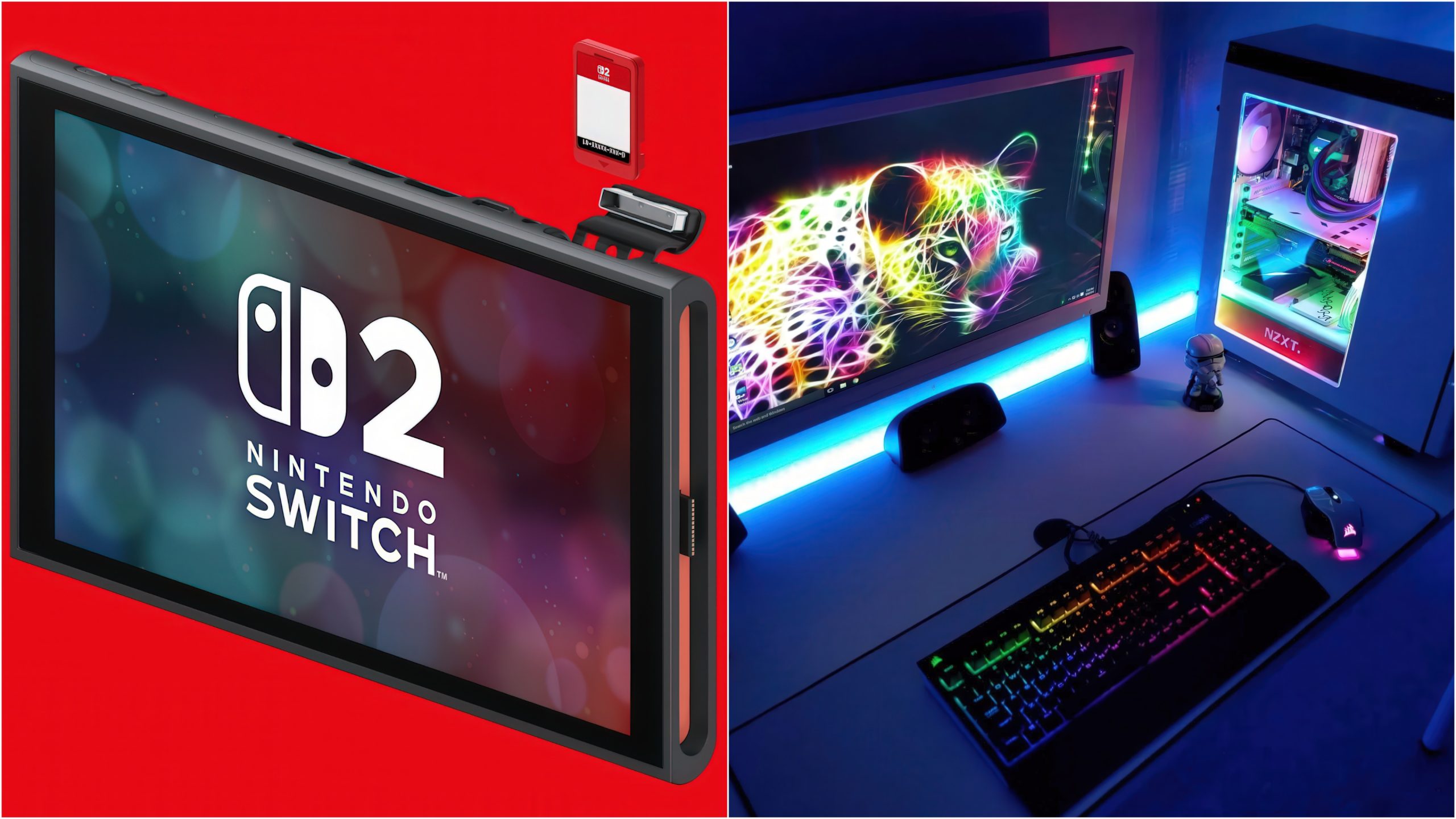
The genesis of Eglantine traces back to clandestine developer repositories that emerged shortly after early hardware specifications of Nintendo’s successor console leaked through Asian supply chain audit logs. While retail analysts and hardware reviewers spent months speculating on clock speeds, tensor core integrations, and custom NVIDIA system-on-chip (SoC) architectures, a decentralized cabal of systems architects and reverse-engineers were quietly building a targeted hypervisor.
The breakthrough occurred when the Eglantine team successfully bypassed the preliminary cryptographic handshake required by the next-gen firmware. By exploiting a zero-day vulnerability in the early-stage bootrom—allegedly leaked from an overseas manufacturing facility—the developers extracted the hardware root of trust. This allowed them to construct a highly optimized emulation layer that translates custom CUDA-like instructions and unified memory architecture (UMA) calls into standard PC hardware equivalents without the traditional performance penalty of high-level translation.
When video footage surfaced of Mario Kart World running at an unthrottled 60 FPS at native 4K resolution on an enterprise-grade desktop equipped with an NVIDIA GeForce RTX 4090 and an AMD Ryzen 9 processor, financial markets took immediate notice. The demonstration proved that modern high-end PCs possess a processing headroom multiple times greater than the anticipated target specifications of Nintendo's mobile-first silicon.
| Metric / Parameter | Nintendo Switch 2 (Estimated Hardware) | Eglantine PC Emulation Environment |
|---|---|---|
| Target Resolution & Frame Rate | 1080p docked / 60 FPS (Dynamic Scaling) | Native 4K / Stable 60+ FPS (Uncapped) |
| Processor Architecture | Custom NVIDIA Tegra (ARM Cortex-based) | x86-64 (Intel Core i9 / AMD Ryzen 9) |
| Graphics API Translation | NVIDIA Custom API / NVN2 | Vulkan / DirectX 12 Ultimate |
| Memory Bandwidth Utilization | LPDDR5 Unified Memory Architecture | DDR5 Dual-Channel / PCIe 4.0 NVMe Caching |
Industry & Market Implications: Winners, Losers, and Capital Allocation
The proliferation of high-performance emulation software introduces acute financial and operational risks to the interactive entertainment sector. Nintendo’s business model has historically relied on a closed-loop ecosystem: hardware is frequently sold at or near a modest profit margin, while software licensing fees—particularly first-party blockbusters like the Mario Kart and Zelda franchises—drive net margins and enterprise valuation.
When a title like Mario Kart World can be executed flawlessly on unauthorized hardware prior to official market availability, the foundational economics of console distribution face severe disruption:
- Hardware Sales Erosion: Consumers weighing capital allocation decisions may defer or forgo purchasing dedicated console hardware if premium performance can be accessed via existing gaming rigs.
- Intellectual Property Valuation Risk: Institutional investors closely monitor digital piracy and unauthorized distribution vectors as metrics for operational risk. Unchecked emulation lowers the barrier to software piracy, impacting forward earnings projections.
- Software Developer Sentiment: Third-party publishers who rely on secure hardware environments to justify AAA development budgets may demand enhanced DRM compliance from platform holders, shifting engineering capital away from feature development toward security countermeasures.
Conversely, high-end PC component manufacturers—including advanced semiconductor fabricators, memory producers, and GPU vendors—may experience indirect demand spikes as enthusiasts invest in high-performance rigs capable of pushing emulated software far beyond console limitations.
Frequently Asked Questions (People Also Ask)
What is Eglantine, and how does it differ from past Nintendo emulators?
Eglantine is a next-generation hardware virtualization tool designed specifically to interpret and execute software compiled for Nintendo's unreleased successor console. Unlike older emulators that used high-level emulation (HLE) to mimic operating system functions, Eglantine utilizes advanced low-level instruction translation, granting direct hardware-level access to CPU and GPU pipelines for vastly superior performance and compatibility.
Is running Eglantine and playing leaked games legally permissible?
No. While reverse-engineering for interoperability has faced complex legal scrutiny in specific jurisdictions, downloading, sharing, or utilizing cryptographic decryption keys, proprietary BIOS files, and copyrighted software ROMs constitutes a direct violation of copyright law and the Digital Millennium Copyright Act (DMCA). Software publishers actively pursue civil and criminal litigation against the distributors of such tools.
How does Mario Kart World achieve 60 FPS on PC through Eglantine?
The game achieves 60 FPS because modern desktop hardware—such as high-end multi-core processors and discrete graphics cards—possesses raw computational power and thermal headroom significantly exceeding a mobile-optimized console SoC. Eglantine bridges the architectural gap by translating ARM-based graphics calls directly into Vulkan or DirectX commands executed by powerful desktop GPUs.
Will Nintendo be able to patch or block Eglantine before launch?
Nintendo is employing multi-layered countermeasures, including hardware-level fuse checks, cryptographic signature verification, and dynamic online authentication protocols. However, because emulators operate entirely on external hardware outside Nintendo's direct control, software updates can only mitigate, rather than entirely prevent, offline emulation efforts.
Future Outlook: Strategic Milestones to Watch
As the official commercial launch window for Nintendo’s next-generation hardware approaches, the standoff between corporate security teams and decentralized developer communities will enter a critical phase. Key institutional milestones to monitor over the next two to four quarters include:
- Legal and Regulatory Enforcements: Anticipate aggressive subpoenas, takedown notices, and potential criminal indictments targeting prominent repository hosts and key contributors associated with the Eglantine project.
- Platform Security Countermeasures: Observe whether day-one firmware updates on retail hardware succeed in invalidating the specific cryptographic exploits utilized by early emulation builds.
- Financial Disclosures and Earnings Guidance: Monitor upcoming quarterly earnings calls and investor briefings for management commentary regarding IP protection, security expenditures, and potential impacts on software attach rates.
Ultimately, the Eglantine phenomenon serves as a stark reminder of the perpetual arms race between proprietary hardware protection and open-architecture software engineering—a dynamic that continues to shape corporate strategy, market liquidity, and valuation multiples across the global technology sector.