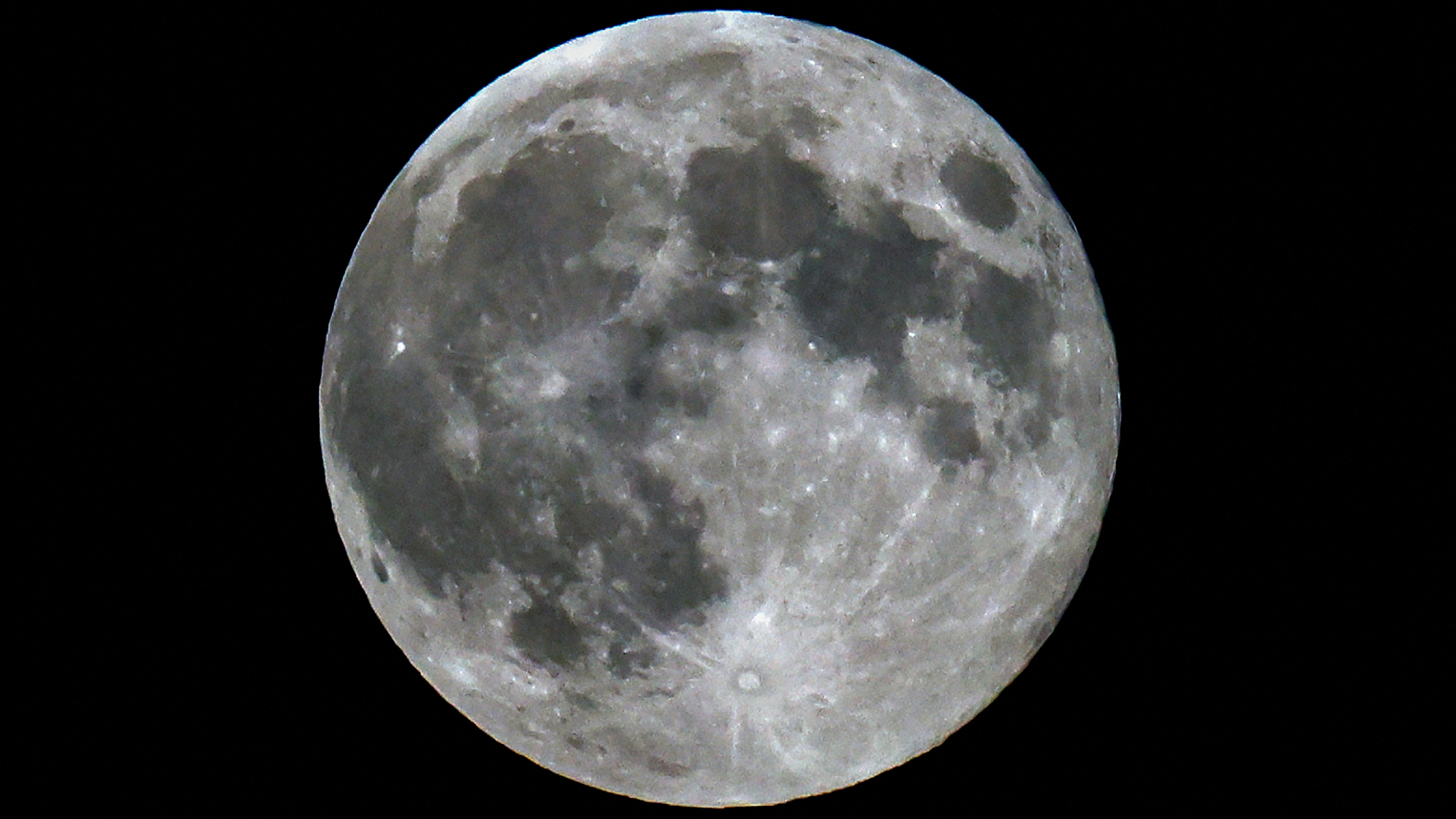
Tonight, the celestial mechanics of our solar system converge to deliver one of the year’s most visually commanding and scientifically significant astronomical events: the Hunter’s Moon. Hovering near its absolute orbital perigee, this month’s full lunar phase is not merely a seasonal marker for autumn in the Northern Hemisphere; it is an astronomical supermoon of the highest order. For stargazers, it offers an arresting display of golden-orange luminosity. For maritime logistics networks, civil engineers, and aerospace operators, however, it triggers measurable real-world consequences—ranging from heightened coastal flood risks driven by perigean spring tides to optical calibration windows for low-Earth orbit satellite constellations.
As retail observation gear sells out and institutional capital pours into the rapidly scaling "astrotourism" sector, the October Hunter’s Moon stands at the unique intersection of ancient chronometry, complex astrophysics, and modern enterprise risk management. Here is the definitive investigative analysis of tonight’s lunar event, detailing the orbital science, physical mechanics, economic fallout, and optimal viewing strategies.
Executive Takeaways
Test Our Free AI & Tech Utilities Suite
Calculate LLM API token costs, analyze article dwell-time, or simulate tech DCA returns.
- Perigee Alignment: Tonight’s Hunter’s Moon reaches peak syzygy within hours of perigee—the Moon's closest approach to Earth—making it roughly 14% larger in apparent diameter and nearly 30% brighter than an apogee micromoon.
- Hydrodynamic & Maritime Risk: The gravitational synergy of the Sun and perigee Moon induces severe perigean spring tides ("king tides"), exerting stress on maritime ports, commercial shipping drafts, and vulnerable coastal infrastructure across global littoral zones.
- Astrotourism Capital Monetization: The event underscores a multi-billion-dollar shift in hospitality and leisure capital allocation toward verified dark-sky reserves, boutique experiential real estate, and high-margin optical consumer equipment.
- Aerospace & Satellite Telemetry: Space domain awareness (SDA) teams and Earth-observation operators are actively mitigating star-tracker optical glare while leveraging lunar albedo for radiometric instrument recalibration.
The Celestial Architecture: Perigee-Syzygy and Orbital Mechanics
To understand the sheer luminosity and physical presence of tonight's Hunter’s Moon, one must examine the mathematics of the lunar orbit. The Moon does not circle Earth in a static, perfect sphere; rather, it traverses an elliptical trajectory characterized by an average orbital eccentricity of 0.0549. This non-circular path creates a varying distance between Earth and its primary satellite, oscillating between apogee (the farthest point, approximately 405,500 kilometers away) and perigee (the closest point, roughly 356,500 kilometers away).
When the full lunar phase—astronomically termed syzygy, when the Earth, Moon, and Sun align in a near-perfect linear plane—coincides with the Moon being within 90% of its absolute perigee, the result is technically classified as a "perigee-syzygy full moon," colloquially termed a supermoon. Tonight's Hunter’s Moon marks one of the closest approaches of the current calendar year, compressing the distance between Earth’s core and the Moon’s center to approximately 357,364 kilometers.
Because the intensity of light follows the inverse-square law, minor reductions in orbital distance yield non-linear increases in lunar illuminance on the terrestrial surface. Tonight, the Earth receives approximately 30% more solar radiation reflected off the lunar regolith than during an apogee full moon. Simultaneously, the angular diameter of the lunar disk expands from its baseline average of 31 arcminutes to nearly 33.5 arcminutes, producing an undeniable visual magnification that dominates the nocturnal horizon.
Historical Etymology and the Autumn Ecliptic Advantage
Every full moon carries historical monikers rooted in agricultural chronometry, but the Hunter’s Moon possesses a unique astronomical characteristic that separates it from standard monthly cycles. By definition, the Hunter’s Moon is the first full moon immediately following the Harvest Moon—the full moon occurring closest to the autumnal equinox.
In mid-to-high northern latitudes, the orbital mechanics of late autumn introduce a peculiar phenomenon: the angle of the ecliptic (the plane of Earth’s orbit around the Sun) forms a remarkably shallow angle relative to the eastern horizon at sunset. On average, the Moon rises roughly 50 minutes later each subsequent night. However, around the Harvest and Hunter’s Moons, this orbital tilt compresses that delay down to as little as 20 to 30 minutes across several consecutive nights.
Historically, this compressed interval provided continuous, uninterrupted twilight and early-evening illumination. Indigenous North American tribes, Anglo-Saxon agrarian societies, and medieval European hunters capitalized on this natural optical asset to stalk game—which were actively foraging on the cleared remains of harvested summer fields—under clear lunar light before winter sets in. Hence, the moniker "Hunter’s Moon" was codified not through folklore alone, but through repeatable, celestial orbital geometry.
The Physics of Coloration: Rayleigh Scattering and the Moon Illusion
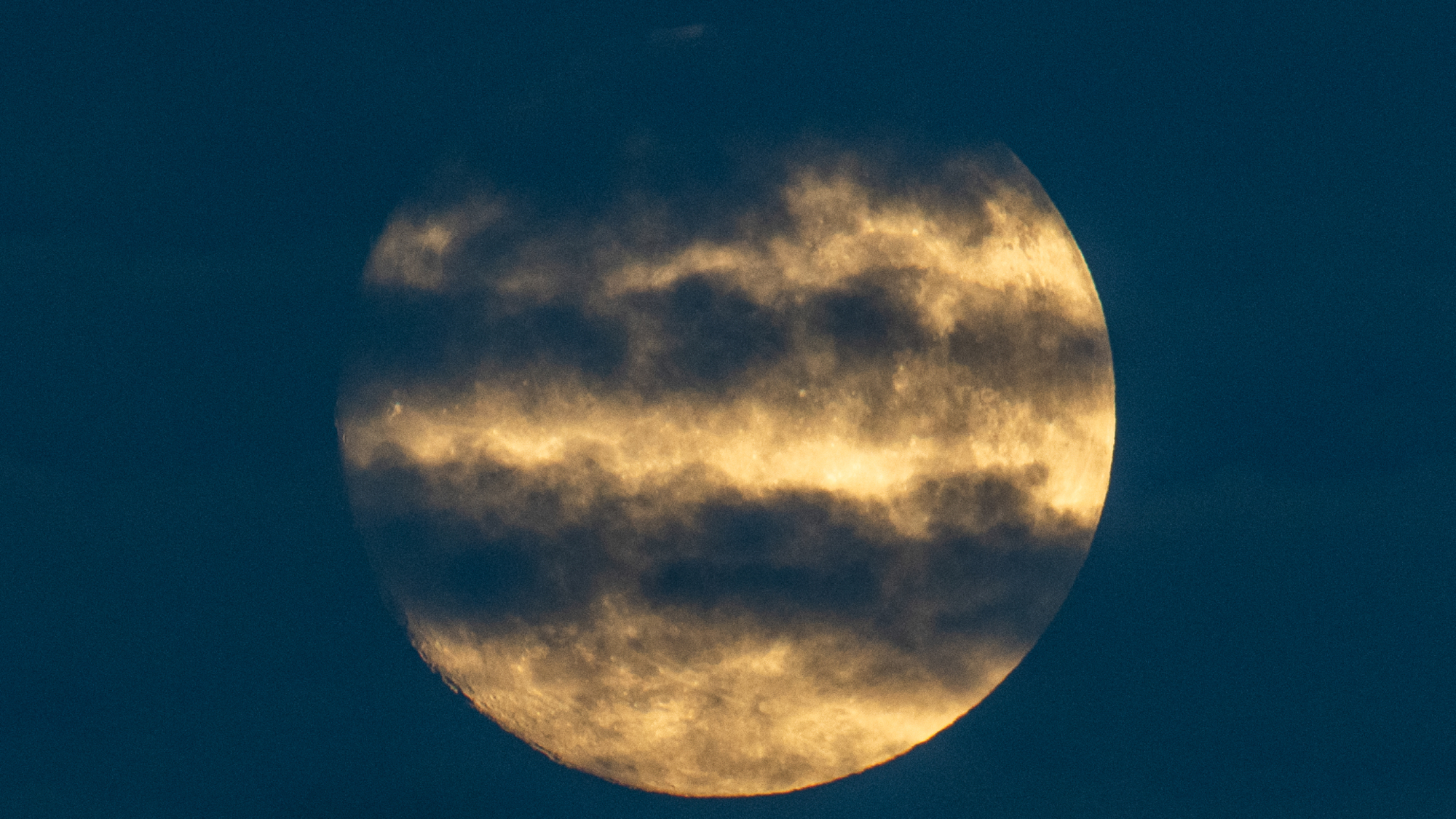
Observers watching the Hunter’s Moon crest the eastern horizon tonight will immediately note an intense, deep-amber or crimson hue, shifting gradually to a piercing, silvery-white as it climbs toward the zenith. This transformation is governed entirely by atmospheric optics rather than any intrinsic change on the lunar surface.
When the Moon sits low on the horizon, its reflected light must penetrate an atmospheric path roughly ten times thicker than when observed overhead. This dense column of air contains nitrogen, oxygen, water droplets, and ambient aerosols. Under Rayleigh scattering, the shorter wavelengths of the electromagnetic spectrum (violet and blue light) are scattered aggressively in all directions by these atmospheric particles, preventing them from reaching the observer's eye. The longer wavelengths—specifically red, orange, and amber—penetrate the dense atmosphere with far less interference, bathing the rising moon in rich, warm hues.
Furthermore, the perceived enormous scale of the Moon at the horizon is an artifact of evolutionary human cognitive processing known as the Moon Illusion (often analyzed through the lens of the Ponzo illusion and the flattened-sky model). When positioned near terrestrial reference markers—such as skylines, industrial infrastructure, or tree canopies—the human brain miscalculates the distance and size ratio, projecting an inflated mental image of the lunar disk. Once elevated into an empty sky, free of comparative visual cues, the optical perception recalibrates to its true angular size.
Verified Technical & Orbital Data Matrix
The operational and astronomical metrics governing tonight's perigee-syzygy event demonstrate significant variance against standard and apogee baselines:
| Metric / Parameter | Tonight’s Hunter’s Supermoon | Mean Full Moon Baseline | Apogee Full Moon (Micromoon) |
|---|---|---|---|
| Geocentric Distance (km / mi) | ~357,364 km (222,055 mi) | ~384,400 km (238,855 mi) | ~405,500 km (251,966 mi) |
| Apparent Angular Diameter | 33.43 arcminutes | 31.07 arcminutes | 29.43 arcminutes |
| Relative Surface Luminance | +14% to +16% vs. Mean (+30% vs. Apogee) | Baseline (100%) | -14% vs. Mean |
| Tidal Gravitational Pull Multiplier | ~1.18x – 1.25x Normal Spring Range | 1.00x Baseline | ~0.82x Normal Spring Range |
| Moonrise Delay Window (Lat. 40°N) | 25 to 30 minutes daily | ~50 minutes daily | ~55 to 60 minutes daily |
Industry & Market Implications: Civil Risk and Commercial Tailwinds
1. Maritime Logistics and Coastal Infrastructure Degradation
The gravitational force exerted on Earth’s oceans varies inversely with the cube of the distance to the Moon ($F \propto 1/r^3$). Consequently, even minor perigee compressions substantially magnify oceanic tidal bulges. Combined with solar gravitational alignment, tonight's event sparks perigean spring tides, commonly designated as "king tides."
For municipal asset managers and port operators along the Eastern Seaboard of the United States, Northwestern Europe, and East Asia, these tides present immediate commercial vulnerabilities:
- Port Throughput & Draft Clearance: Ultra-large container vessels (ULCVs) face narrowed operational windows, where channel depths fluctuate dramatically between extreme low water (keel-strike hazards) and high water (bridge air-draft constraints).
- Nuisance Sunny-Day Flooding: Coastal commercial real estate assets and municipal transit arteries in low-lying metros (e.g., Miami, Charleston, Venice) experience saltwater inundation regardless of local meteorological conditions, accelerating asset depreciation and elevating municipal civil defense expenditures.
2. The Rapid Maturation of Astrotourism
Once considered an esoteric niche, stargazing and astronomical phenomena have evolved into high-eCPM drivers of hospitality capital. Institutional hospitality firms and boutique developers are aggressively investing in dark-sky real estate assets certified by DarkSky International.
From the desert corridors of Utah and Arizona to rural Scottish estates, occupancy rates for high-end eco-lodges, transparent geodesic glamping resorts, and guided optical excursions regularly surge by 40% to 75% during major perigee-syzygy events. High-net-worth travelers are actively channeling discretionary capital into low-light-pollution locations, triggering high-margin ancillary revenue for specialized regional travel operators, guide syndicates, and premium optical gear manufacturers such as Celestron, Sony (Alpha series low-light imaging), and Leica.
3. Aerospace Telemetry, Defense, and Satellite Orbital Tracking
In low-Earth orbit (LEO) and geostationary orbit (GEO), commercial and military space domain awareness (SDA) systems face unique optical telemetry conditions during a supermoon. The dramatic spike in lunar albedo creates an elevated optical wash, potentially blinding sensitive space-based star trackers used for attitude determination on commercial telecommunications and surveillance satellites.
Conversely, the event provides a critical calibration window. National meteorological and defense organizations routinely use the lunar disk during peak perigee-syzygy as an invariant celestial calibration target—leveraging the Robotic Lunar Observatory (ROLO) radiometric model to calibrate Earth-observing multi-spectral imagers. The known, stable reflectance of the lunar surface allows calibration teams to adjust spaceborne sensors for sensor degradation caused by solar ultraviolet exposure.
Field Guide: Optimal Observation and Imaging Protocol
To maximize viewing yields of tonight’s event, observers and professional photographers must operate within precise tactical windows:
- The Horizon Window (T-Minus 15 to 45 Minutes Post-Sunset): The primary window occurs immediately after sunset as the Moon rises on the opposing eastern horizon. This interval captures the intersection of maximum atmospheric Rayleigh scattering (warm amber-crimson spectrum) and contextual terrestrial foreground framing.
- Geographic Selection: Optimal tracking requires an unobstructed eastern horizon—such as elevated coastal bluff lines, unobstructed prairies, or high-altitude ridges—free from severe local light-pollution domes.
- Optical Equipment Configuration: For photographers utilizing DSLR or mirrorless systems, the optimal technical setup mandates a telephoto focal length of 400mm or higher to achieve compression between foreground elements and the lunar surface. To prevent overexposing the brilliant lunar highlands, photographers should disengage auto-exposure matrices, deploying manual spot-metering on the lunar face, paired with an aperture of f/8 to f/11, ISO 100-200, and rapid shutter speeds (1/125s to 1/250s) to counteract rapid apparent orbital motion.
Frequently Asked Questions (People Also Ask)
Why is October's full moon called the Hunter's Moon, and how does it differ from a Harvest Moon?
The naming convention traces back to Native American, Anglo-Saxon, and early European calendar systems. The Harvest Moon is always defined as the full moon occurring closest to the autumnal equinox (September 22 or 23). The Hunter's Moon is systematically designated as the first full moon immediately following the Harvest Moon. The astronomical differentiator of both moons is the shallow angle of the ecliptic in autumn, which reduces the nightly moonrise delay from 50 minutes to as little as 20 minutes, providing extended, continuous evening twilight historically utilized by hunters tracking foraging animals before winter conditions set in.
What makes tonight's Hunter's Moon an official "Supermoon"?
A supermoon is technically classified as a perigee-syzygy full moon. It occurs when the Moon reaches its phase of complete solar illumination (syzygy) while simultaneously residing within 90% of its closest approach to Earth along its elliptical orbit (perigee). Tonight, the Moon tracks roughly 357,364 kilometers away from Earth, significantly closer than its mean distance of 384,400 kilometers. This spatial proximity causes the Moon to appear up to 14% larger in apparent angular diameter and up to 30% brighter than when positioned at orbital apogee.
How do perigean spring tides caused by the Hunter's Moon impact coastal infrastructure and commercial shipping?
Oceanic tides are heavily dictated by the Moon's gravitational pull, which increases exponentially at closer distances. When the Moon and Sun align at perigee, their combined gravitational influence creates perigean spring tides, often called "king tides." These produce significantly higher-than-average high tides and drastically lower low tides. Maritime shipping hubs experience constrained navigation windows due to shallow low-water drafts and altered bridge clearances at high water. Simultaneously, low-lying coastal regions face non-storm-related "sunny day" flooding, stressing municipal stormwater systems and vulnerable shoreline assets.
Do I need specialized equipment to see the Hunter's Moon tonight?
No specialized optical equipment is necessary to witness the phenomenon; the naked human eye will clearly perceive its enhanced brightness, scale, and coloration along the eastern horizon at moonrise. However, observers seeking to study fine geomorphological details—such as the Maria basins, impact craters like Tycho and Copernicus, or highland ridges—will benefit significantly from standard 7x50 or 10x50 binoculars or any entry-level refractor telescope fitted with a neutral-density lunar filter to mitigate eye strain from extreme luminosity.
Future Outlook: The Lunar Cycle and Cislunar Evolution
Following tonight’s Hunter’s Moon, the astronomical calendar shifts toward the final lunar events of the year: the Beaver Moon in November and the Cold Moon in December. November's full moon will also exhibit supermoon characteristics, maintaining elevated tidal ranges and excellent astronomical conditions before the orbital perigee shifts out of direct phase-alignment with full syzygy in early 2025.
More broadly, the intense public and institutional focus on tonight's event mirrors humanity's shifting relationship with the Moon. As NASA's Artemis program accelerates, alongside private commercial lunar delivery frameworks via the Commercial Lunar Payload Services (CLPS) initiative, orbital mechanics are moving from passive celestial observation to operational logistics. The same orbital corridors, gravitational gradients, and lighting conditions monitored tonight form the core telemetry datasets guiding the next generation of lunar landers, cislunar communication relays, and deep-space infrastructure. Tonight's autumn sky provides not merely a striking visual centerpiece, but a compelling real-time display of the orbital architecture that will define the expanding space economy of the 21st century.