Executive Takeaways
- Substantial Capital Injection: Ema secures a landmark $77 million financing round backed by premier institutional investors to accelerate product roadmaps and global scaling.
- The "AI Employee" Paradigm: Moving beyond simple chat interfaces, Ema deploys autonomous digital agents capable of executing complex, multi-step enterprise workflows across disparate software stacks.
- Enterprise ROI & Cost Arbitrage: Corporate buyers are increasingly turning to specialized agentic AI to optimize operational efficiency, mitigate labor cost pressures, and drive high-margin digital transformation.
- Global Expansion & Infrastructure: The capital allocation strategy prioritizes heavy investments in secure cloud compute architecture, regulatory compliance frameworks, and international go-to-market teams.
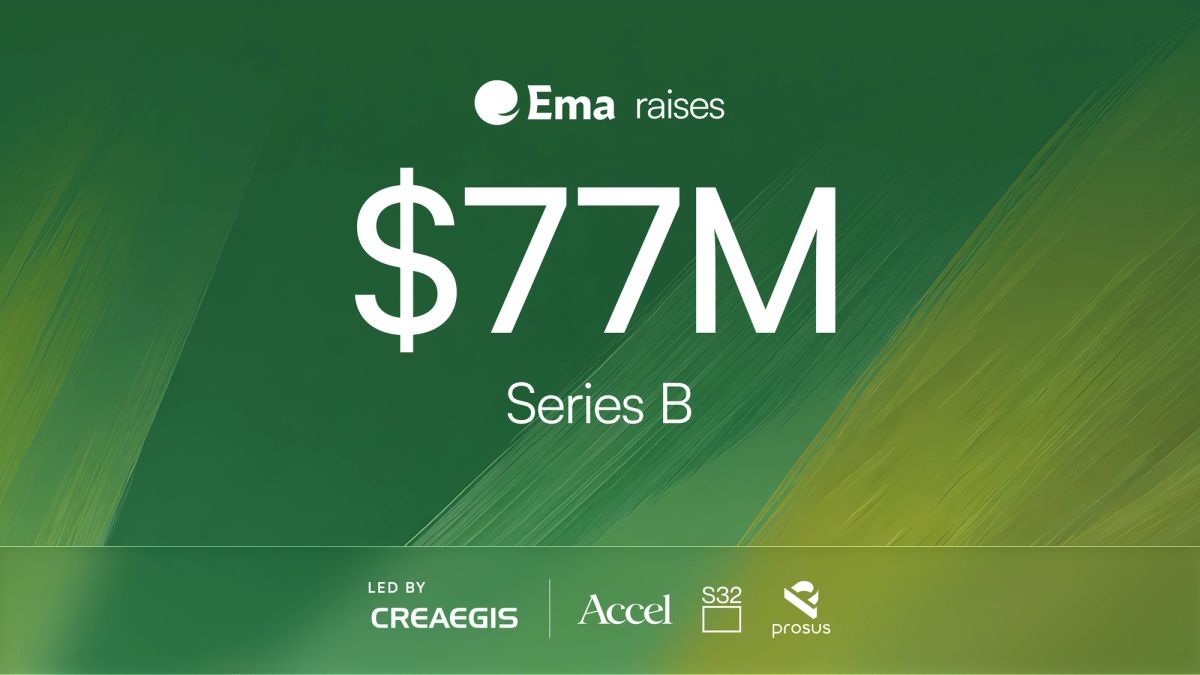
The enterprise software landscape is undergoing a structural paradigm shift. No longer content with predictive text generators and superficial conversational copilots, corporate boardrooms are aggressively bidding for autonomous digital labor. Enter Ema—an ambitious enterprise AI startup that has just secured a landmark $77 million funding round to scale its revolutionary "AI employee" platform.
Reported initially via primary wire services, this fresh capital injection from existing and tier-one institutional backers underscores a profound transition in venture capital allocation. Venture capitalists and enterprise buyers alike are pivoting away from proof-of-concept novelties toward deeply integrated, production-grade agentic architectures. As corporations grapple with inflationary pressures, talent shortages, and the imperative for accelerated digital transformation, Ema’s positioning at the intersection of generative AI and enterprise workflow automation makes it one of the most closely watched entities in the global tech ecosystem.
The Evolution of Enterprise AI: From Copilots to Autonomous Agents
Test Our Free AI & Tech Utilities Suite
Calculate LLM API token costs, analyze article dwell-time, or simulate tech DCA returns.
To understand the strategic significance of Ema’s $77 million capital raise, one must examine the evolutionary trajectory of enterprise artificial intelligence over the past 36 months. The first wave of generative AI was defined by foundational models and general-purpose chatbots. While transformative for creative writing and basic code generation, these tools suffered from severe enterprise friction: they lacked context awareness, could not natively interact with proprietary legacy databases, and required constant human supervision.
Ema—standing for "Enterprise Machine Assistant"—was engineered from the ground up to solve these structural limitations. Rather than functioning as a passive assistant that waits for prompts, Ema’s platform introduces the concept of the "AI employee." These are specialized, autonomous digital agents designed to seamlessly integrate into existing corporate hierarchies, shoulder repetitive operational burdens, and execute complex, multi-system workflows.
Whether handling intricate customer support escalations, reconciling financial ledgers, or orchestrating cross-departmental compliance audits, Ema’s platform leverages sophisticated reasoning loops, retrieval-augmented generation (RAG), and deterministic guardrails. This technical sophistication reduces hallucination rates to enterprise-acceptable thresholds, establishing a new benchmark for reliability in mission-critical environments.
Capital Allocation and Strategic Growth Drivers
In the current macroeconomic climate characterized by disciplined valuation multiples and stringent venture capital scrutiny, commanding a $77 million financing round requires more than visionary rhetoric; it demands rigorous enterprise traction and clear unit economics. Ema’s leadership team has outlined a precise capital allocation strategy designed to fortify its market dominance across three core pillars:
- Cloud Compute Architecture & Infrastructure Scalability: Scaling autonomous AI agents capable of processing millions of enterprise transactions in real-time requires immense computational muscle. A significant portion of the funds will be directed toward optimizing low-latency inference pipelines and securing enterprise-grade cloud compute partnerships.
- Global Expansion and Go-To-Market Execution: To capture international market share, Ema is expanding its sales, customer success, and solutions engineering footprints across North America, Europe, and key Asia-Pacific hubs. This global buildout is essential for serving multinational conglomerates that demand localized compliance and support.
- Regulatory Compliance and Risk Mitigation: As regulatory frameworks—such as the European Union Artificial Intelligence Act—take effect, enterprise buyers are acutely sensitive to data privacy, model transparency, and governance. Ema is aggressively investing in enterprise-grade security protocols, SOC 2 compliance, and zero-data-retention architectures to provide absolute risk mitigation for risk-averse legal and compliance departments.
Verified Data and Metrics Breakdown
An objective examination of Ema’s market positioning requires a close look at the quantitative dimensions of its recent growth and funding structure. The table below outlines the core metrics shaping the company's current trajectory:
| Metric / Dimension | Details & Specifications |
|---|---|
| Total Funding Secured | $77 million in fresh capital from existing and institutional backers. |
| Core Product Offering | Autonomous "AI employee" platform for complex enterprise workflow automation. |
| Primary Strategic Focus | Global market expansion, infrastructure scalability, and advanced agentic reasoning. |
| Target Enterprise ROI | Dramatic reduction in operational overhead, accelerated task completion, and enhanced labor productivity. |
Industry & Market Implications: Who Wins, Who Loses?
The maturation of platforms like Ema sends immediate shockwaves across the global labor and technology markets. Understanding the broader economic impact requires analyzing the direct beneficiaries and those facing structural obsolescence.
The Winners: Enterprise software buyers stand to gain the most. Chief Financial Officers and Chief Operating Officers gain access to unprecedented cost arbitrage, scaling operational output without linear headcount growth. Furthermore, niche systems integrators and specialized AI consulting firms will experience a surge in demand as Global 2000 enterprises rush to deploy and govern these agentic systems.
The Vulnerable: Legacy business process outsourcing (BPO) firms face an existential reckoning. Traditional labor-arbitrage models—relying on large pools of human workers executing routine data entry, tier-one customer support, and basic administrative tasks—are fundamentally challenged by software that operates 24/7 at a fraction of the cost. To survive, BPO providers must rapidly pivot toward high-value advisory services or integrate platforms like Ema into their own service delivery models.
Frequently Asked Questions (People Also Ask)
What is an "AI employee" platform, and how does it differ from traditional chatbots?
Unlike traditional chatbots that simply respond to text prompts with static answers, an AI employee platform like Ema deploys autonomous digital agents. These agents possess reasoning capabilities, can connect directly to enterprise databases, and execute multi-step workflows across different software applications independently, requiring minimal human intervention.
How will Ema utilize its recent $77 million funding round?
Ema is allocating the $77 million toward scaling its cloud compute infrastructure, expanding its go-to-market teams across international jurisdictions, and strengthening enterprise-grade regulatory compliance, data privacy, and security frameworks.
What types of enterprises are adopting Ema's technology?
Mid-market to Global 2000 corporations across heavily regulated and operations-heavy sectors—including financial services, healthcare, technology, and global logistics—are adopting Ema to optimize internal efficiencies and reduce administrative overhead.
What are the primary security and compliance measures built into the platform?
Ema prioritizes enterprise security through strict data governance, SOC 2 compliance readiness, zero-data-retention training policies, and role-based access controls to ensure sensitive corporate and customer information remains completely secure.
Future Outlook and Key Milestones to Watch
As Ema deploys its newly acquired capital, the next 12 to 18 months will serve as a crucial crucible for the enterprise agentic AI market. Industry analysts will monitor several key milestones:
- Enterprise Adoption Velocity: The speed at which Ema converts pilot programs into large-scale, multi-year enterprise contracts will validate the true demand for autonomous AI labor.
- Ecosystem Integrations: The breadth of native connectors Ema establishes with dominant enterprise resource planning (ERP) and customer relationship management (CRM) ecosystems, such as Salesforce, SAP, and Workday.
- Regulatory Benchmarks: How successfully Ema navigates evolving global AI regulations, setting a standard for transparent, accountable, and secure artificial intelligence deployment.
Ultimately, Ema’s $77 million funding milestone is much more than a routine venture capital transaction; it is a clear indicator that the future of work is arriving faster than anticipated. As autonomous digital agents take their place alongside human colleagues, corporate productivity metrics, cost structures, and organizational frameworks are set to be permanently redefined.