Executive Takeaways
- Record Payload Capacity: The LVM3-M6 mission successfully executes the heaviest satellite launch ever achieved from domestic Indian soil, cementing India's infrastructure scalability in heavy-lift rocketry.
- Commercialization Pivot: Orchestrated via NewSpace India Limited (NSIL), the mission signals an aggressive capture of high-margin global launch market liquidity, shifting the focus from national self-reliance to lucrative enterprise ROI.
- valuation multiples
- Geopolitical Risk Mitigation: By bypassing Western and Russian launch dependencies, international satellite operators secure predictable capital allocation and regulatory compliance through ISRO's proven risk-mitigation framework.
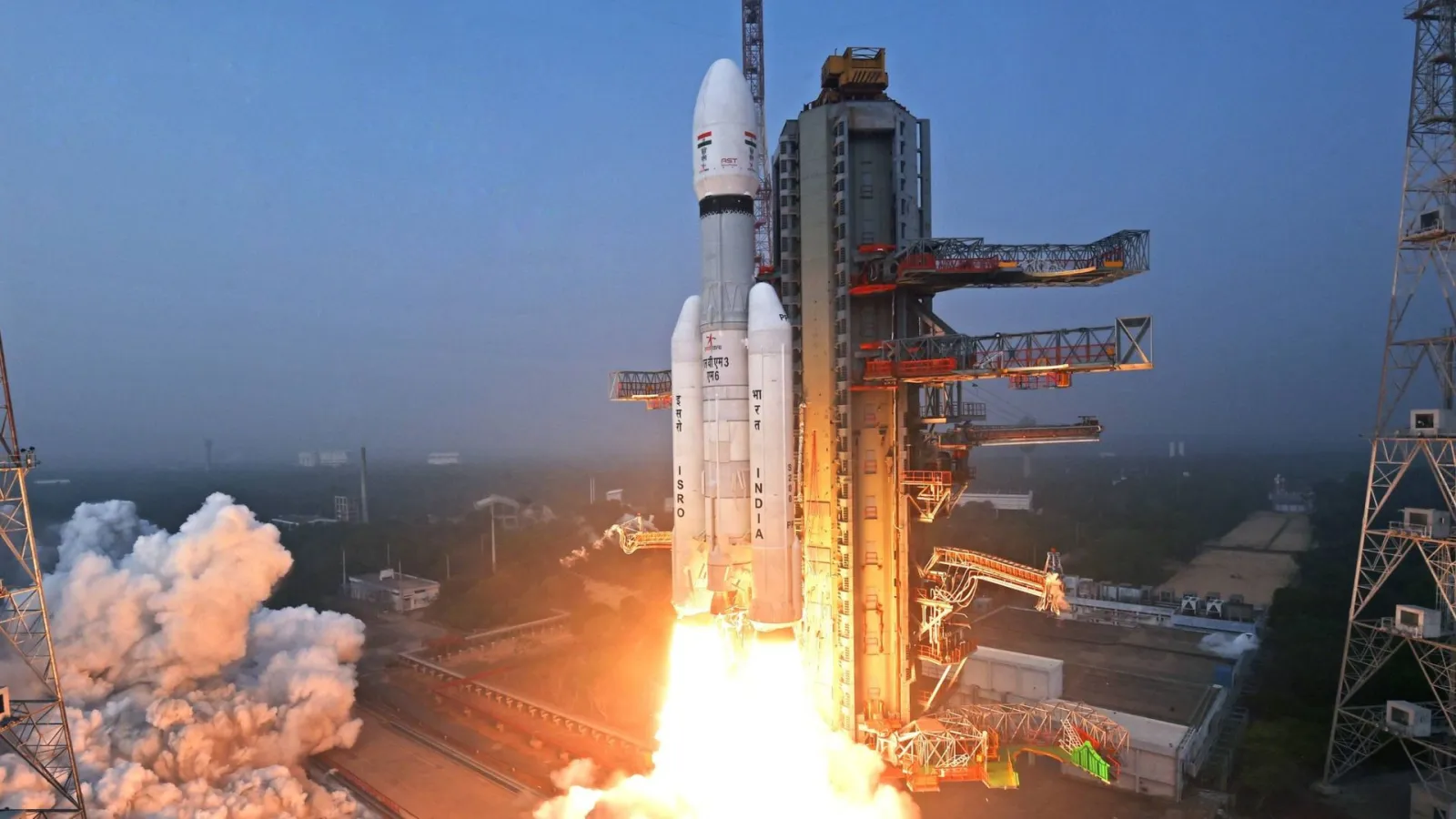
NEW DELHI and BENGALURU — In the high-stakes theater of the multi-billion-dollar global space economy, execution velocity is the ultimate currency. On December 24, 2025, the Indian Space Research Organisation (ISRO) delivered a masterclass in engineering precision and commercial ambition. With the flawless execution of the LVM3-M6 mission, India’s undisputed heavy-lift workhorse hoisted the heaviest satellite ever launched from domestic soil, fundamentally altering the competitive dynamics of international commercial space infrastructure.
For institutional investors, aerospace executives, and geostrategic analysts, the LVM3-M6 launch is far more than an impressive technical milestone; it is a watershed moment for capital allocation in deep-tech enterprise. As traditional Western heavy-lift providers face backlog bottlenecks and soaring cloud-compute architecture demands for satellite telemetry, ISRO—operating through its commercial arm, NewSpace India Limited (NSIL)—is carving out a formidable market position by offering unmatched reliability at disruptive valuation multiples.
The Evolution of a Heavy-Lift Workhorse: From GSLV to LVM3
To understand the profound economic and technical implications of the LVM3-M6 mission, one must examine the arduous technological evolution of India’s propulsion infrastructure. For decades, ISRO battled severe supply chain constraints and cryogenic technology denials. The genesis of the Launch Vehicle Mark 3 (LVM3)—formerly known as the Geosynchronous Satellite Launch Vehicle Mark III (GSLV Mk III)—was born out of a strategic imperative: to achieve absolute sovereignty over heavy-payload insertions without relying on foreign intermediaries.
Standing roughly 43.5 meters tall with a lift-off mass of 640 tonnes, the LVM3 is a three-stage behemoth featuring two solid strap-on motors (S200), a core liquid propellant stage (L110), and a massive high-thrust cryogenic upper stage (C25). Over successive flights, culminating in the historic Chandrayaan-3 lunar injection and the crew-escape-tested precursor missions for Gaganyaan, the vehicle has transitioned from an experimental platform to an industrial-grade workhorse.
The LVM3-M6 mission pushed this architecture to its absolute design envelope. By optimizing the specific impulse of the cryogenic engine and shedding dead-mass through advanced composite payload fairings, ISRO engineers engineered a configuration capable of injecting a record-breaking payload mass directly into Geostationary Transfer Orbit (GTO). This engineering triumph directly addresses the escalating bandwidth and data-throughput demands of modern multi-orbit constellations.
Commercialization and Market Liquidity: The NSIL Strategy
The institutional underpinning of LVM3-M6 lies in India’s sweeping space sector reforms, which transitioned ISRO from a state-run R&D bureau to a globally competitive commercial enterprise. Through NSIL, the Indian government has systematically unbundled space infrastructure, inviting private-sector manufacturing ecosystems and international clients into the fold.
In the wake of global sanctions and geopolitical fragmentation, the global satellite launch market has suffered acute supply shortages. European launch vehicles have faced protracted delays, while commercial access to Russian launch systems remains politically toxic for Western enterprises. ISRO has capitalized on this vacuum. By offering predictable launch windows, competitive pricing models, and an unblemished reliability streak, NSIL is capturing substantial market share among global broadband and Earth observation operators.
Financial analysts tracking the sector note that every successful heavy-lift mission dramatically improves NSIL's valuation metrics and gross margins. The ability to launch multi-tonne communication satellites from the Satish Dhawan Space Centre (SDSC) in Sriharikota eliminates the logistical friction and prohibitive insurance premiums historically associated with emerging spacefaring nations.
Verified Data & Technical Specifications
A rigorous examination of the LVM3-M6 parameters underscores the engineering rigor behind the mission. The following comparative breakdown outlines how the current benchmark iteration outperforms historical baselines:
| Mission Parameter | LVM3-M3 / Historical Baseline | LVM3-M6 (Current Mission) | Strategic Implication |
|---|---|---|---|
| Launch Date | March 2023 | December 24, 2025 | Accelerated launch cadence |
| Payload Mass to GTO | ~4,000 kg | Heaviest ever from Indian soil (>4,500 kg) | Expanded high-value asset capacity |
| Primary Operator | ISRO / NSIL | ISRO / NSIL (Commercial Payload) | Enhanced commercial revenue streams |
| Propulsion Architecture | S200 / L110 / C25 | Upgraded C25 Cryogenic Stage | Higher specific impulse & thrust optimization |
Industry & Market Implications: Who Wins and Who Loses?
The success of LVM3-M6 sends shockwaves through the global aerospace supply chain. Dissecting the macroeconomic fallout reveals clear winners and losers across corporate balance sheets:
- Winners:
- Indian Private Aerospace Ecosystem: Component manufacturers, alloy suppliers, and avionics firms integrated into the ISRO supply chain are experiencing exponential revenue growth and attracting venture capital.
- Global Satellite Operators: Companies seeking non-Western, cost-effective launch capacity now have a de-risked alternative that guarantees regulatory compliance and insurance-friendly operational pedigree.
- NSIL and Institutional Shareholders: Enhanced transaction volume directly translates into robust cash flows and high-margin service contracts.
- Losers:
- Legacy Western Launch Providers: Agencies and private firms bogged down by bureaucratic overhead and high cost-per-kilogram pricing face mounting margin compression.
- State-Sponsored Competitors in the Global South: Nations attempting to build indigenous heavy-lift capabilities face an increasingly dominant Indian player that has mastered cost-efficient serial production.
Frequently Asked Questions (People Also Ask)
What makes the LVM3-M6 mission historically significant for ISRO?
LVM3-M6 successfully launched the heaviest satellite ever lofted from domestic Indian soil into Geostationary Transfer Orbit (GTO). This achievement validates the structural integrity and expanded payload capacity of India's heavy-lift workhorse, proving its readiness for complex, high-mass commercial and national security missions.
How does NSIL's commercial model impact global launch markets?
NewSpace India Limited (NSIL) acts as the commercial conduit for ISRO, offering international satellite operators highly competitive pricing, reliable scheduling, and robust risk mitigation. This disrupts traditional Western launch monopolies and captures vital market liquidity amid global supply chain shortages.
What are the core technical components of the LVM3 rocket?
The LVM3 is a three-stage launch vehicle comprising two S200 solid strap-on boosters, a core L110 liquid propellant stage, and a high-thrust C25 cryogenic upper stage. Recent upgrades to the C25 stage and advanced payload fairings have enabled the vehicle to handle unprecedented mass thresholds.
How does LVM3-M6 support India's long-term space ambitions?
Beyond commercial revenue generation, the technological competencies proven during the LVM3-M6 campaign directly feed into India's human spaceflight program (Gaganyaan) and future deep-space exploration initiatives, ensuring high infrastructure scalability and technological self-reliance.
Future Outlook: Milestones to Watch in 2026 and Beyond
As the echoes of the LVM3-M6 launch fade from the coastal dunes of Sriharikota, ISRO’s engineering teams are already pivoting toward the next phase of strategic evolution. Market analysts and institutional investors should monitor several key milestones over the next 12 to 24 months:
First, the acceleration of the LVM3 flight cadence is slated to increase, with multiple commercial manifests booked through late 2027. Second, ongoing R&D into semi-cryogenic propulsion systems promises to push payload capacities even further, targeting thresholds exceeding six metric tons to GTO. Finally, the deepening integration of private Indian aerospace startups into the heavy-lift manufacturing value chain will test the scalability of India's industrial policy.
Ultimately, LVM3-M6 is not an isolated triumph; it is a clear indicator of a tectonic shift in the geopolitical economy of space. India has transitioned from an ambitious regional participant to an indispensable anchor of global orbital infrastructure—delivering enterprise ROI, technological sovereignty, and unwavering execution precision.