Executive Takeaways
- The Anti-Cyclical Transformation: NVIDIA Corporation (NASDAQ: NVDA) is systematically converting one-off Blackwell (GB200/B200) rack-scale hardware sales into high-margin, usage-linked software and capacity contracts via its full-stack AI Factory architecture.
- The Enterprise ROI Bridge: By integrating NVIDIA AI Enterprise (NVAIE) licensing, NIM (NVIDIA Inference Microservices), and DGX Cloud capacity-sharing frameworks, the company extracts recurring software rents of $4,500 per GPU annually—or an equivalent usage-linked micro-fee on every inference token processed.
- Defending Valuation Multiples: As Wall Street worries about a mid-2026 hyperscaler capex plateau, shifting the revenue mix toward recurring, software-defined monetization allows NVIDIA to defend its premium price-to-earnings (P/E) multiple against historic semiconductor cyclicality.
- Neocloud & Sovereign Intermediaries: Tier-2 cloud infrastructure providers and sovereign data centers are serving as capital partners, absorbing balance-sheet risk while agreeing to software-tethered operational models that lock end-users exclusively into the CUDA-NIM software ecosystem.
The Capex Cliff Myth vs. The Industrial Utility Model
For six quarters, institutional desks across London, New York, and Hong Kong have debated the inevitable arrival of the "hyperscaler capex cliff." The thesis was classic semiconductor orthodoxy: once Microsoft, Alphabet, Amazon, and Meta finished populating gigawatt-scale data center footprints with tens of thousands of liquid-cooled accelerators, hardware acquisition budgets would compress, triggering the brutal inventory write-downs that have plagued chipmakers for five decades.
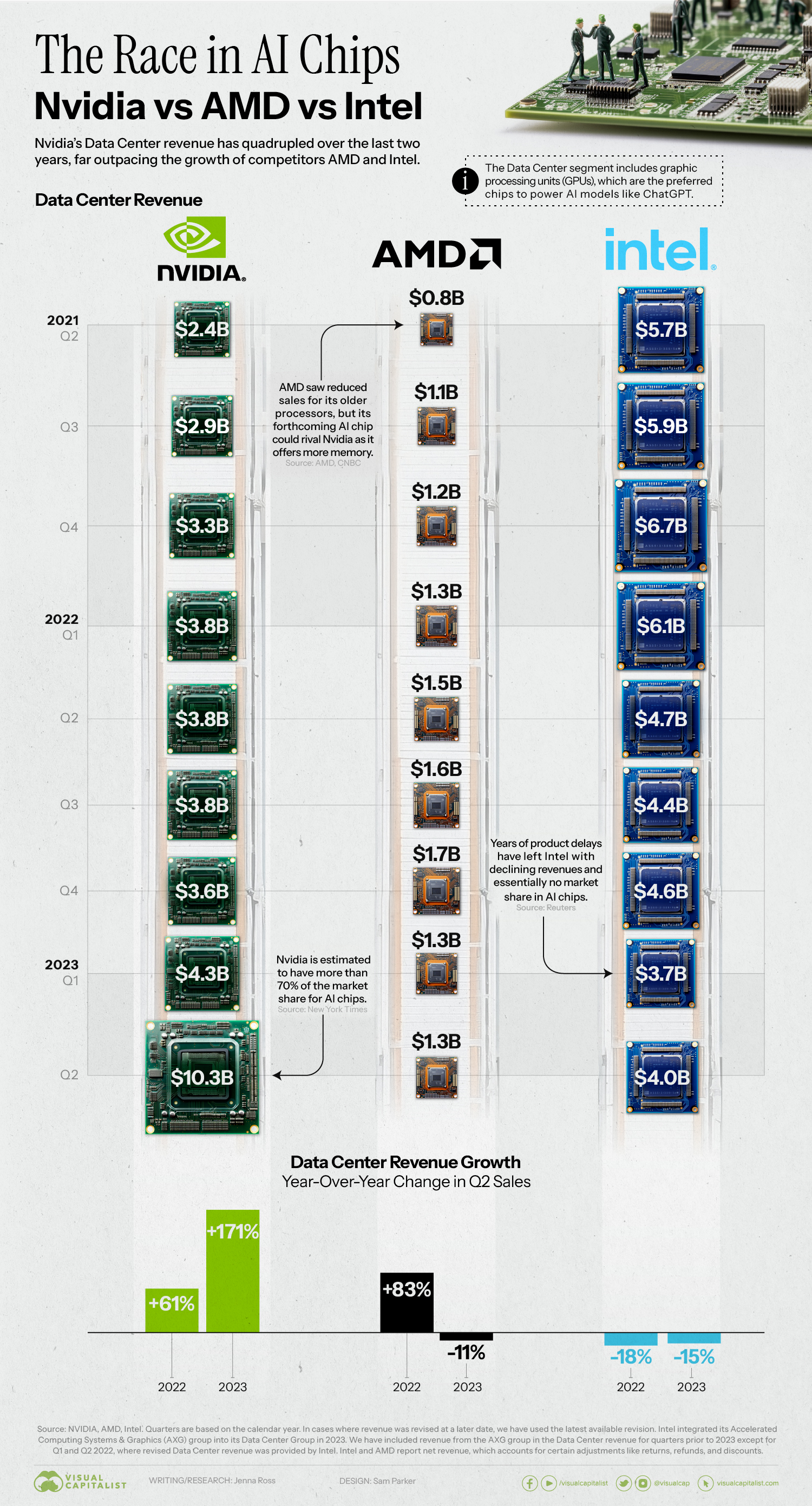
Yet, by mid-2026, NVIDIA’s financial prints continue to defy cyclical gravity. The catalyst behind this durability is not merely sustained demand for the Blackwell architecture, but CEO Jensen Huang’s deliberate architectural pivot: transforming NVIDIA from a merchant silicon merchant into the sole provider of the modern "AI Factory"—a standardized, modular industrial utility where hardware sales serve merely as the gateway to long-tail, usage-linked monetization.
Rather than selling isolated server blades, NVIDIA delivers complete, integrated computing topologies—typified by the flagship NVL72 platform, which links 72 Blackwell GPUs via a massive, liquid-cooled, 130-terabyte-per-second NVLink switch spine. By delivering compute as a single coherent supercomputing fabric rather than disparate accelerators, NVIDIA secures architectural control over the underlying runtime environment, transforming raw hardware capacity into a platform-as-a-service distribution channel.
The Mechanics of Token-Linked Monetization
To understand how Blackwell demand converts into operational, usage-linked cash flows, enterprise capital allocators must look beyond traditional invoice structures. NVIDIA is executing a multi-tiered monetization stack that ties top-line performance to enterprise runtime execution and token inference volume.
1. NVIDIA Inference Microservices (NIM) and Runtime Surcharges
The foundational layer of this model is NVIDIA AI Enterprise (NVAIE). Packaged as an enterprise runtime OS, NVAIE is increasingly tied directly to physical hardware deployments. Hyperscalers and on-premises enterprise clients face a stark operational choice: run open-source stacks requiring costly in-house kernel optimization, or adopt NVIDIA’s pre-optimized NIM containers, which double per-watt inference throughput instantly.
NVIDIA charges an annual license fee of $4,500 per GPU for this layer, or an equivalent consumption-based fee of $1.00 per GPU-hour when consumed through cloud partners. As billions of parameter-heavy reasoning models deploy across enterprise workstreams, NVIDIA effectively collects an architectural toll on the global volume of processed tokens, insulating its income statement from physical shipment interruptions.
2. The DGX Cloud Hybrid Revenue Share
Under its DGX Cloud initiative, NVIDIA does not compete directly with hyperscalers by laying concrete or acquiring power substations. Instead, it leases back its own advanced clusters hosted inside partner data centers—such as Oracle Cloud Infrastructure (OCI), Microsoft Azure, and specialized neoclouds like CoreWeave—and resells that unified capacity directly to Fortune 500 enterprises through a unified software portal.
This operational structure achieves two balance-sheet objectives. First, it offloads heavy physical depreciation and civil infrastructure capital expenditure to real estate and hosting partners. Second, it allows NVIDIA to sell complete, curated AI development suites at enterprise SaaS margins (exceeding 80%), capturing both the original hardware margin on the initial Blackwell cluster sale and recurring subscription margins on monthly compute usage.
3. Sovereign Wealth and Infrastructure Off-Take Guarantees
Beyond commercial hyperscalers, sovereign nations—including the United Arab Emirates, Saudi Arabia, Japan, and European consortiums—have emerged as major institutional buyers of the AI Factory framework. To bypass internal engineering constraints, these entities increasingly sign multi-year master service agreements that bundle physical Blackwell deliveries with mandatory managed operations, ongoing firmware-level optimization, and continuous software modernization pipelines.
Data Architecture & Financial Evolution: Hopper vs. Blackwell Generations
The strategic shift from point-in-time silicon delivery to recurring, full-stack monetization is evidenced in the evolving performance and commercial specifications of NVIDIA’s platform architecture:
| Metric / Operational Dimension | Hopper Generation (H100/H200) | Blackwell Generation (B200/GB200 NVL72) | Strategic Enterprise Impact |
|---|---|---|---|
| Primary Commercial Delivery Unit | Individual HGX 8-GPU boards / PCIe cards | Full rack-scale systems (NVL36 / NVL72 factories) | Elevates average selling price (ASP) from ~$30K to >$2.5M per integrated rack unit. |
| Interconnect Architecture | InfiniBand / PCIe Gen 5 external switches | Unified NVLink spine (1.8 TB/s per GPU bidirectional) | Locks enterprise clusters exclusively to proprietary NVIDIA silicon and runtime drivers. |
| Software Monetization Engine | Discretionary CUDA libraries; nascent NVAIE | Mandatory/Standardized NIM containers; DGX Cloud hybrid runtime | Establishes predictable Annual Recurring Revenue (ARR) overlay on top of physical footprint. |
| Inference Energy Efficiency | Baseline 4nm FP8 execution standard | 25x-30x lower energy cost per token via FP4 precision engines | Lowers enterprise Total Cost of Ownership (TCO), freeing up client capex for software add-ons. |
| Revenue Model Profile | 85% Non-recurring Hardware Capex / 15% Support | 65% Hardware Capex / 35% Recurring Software, Services, and Hybrid Cloud usage | Compresses earnings volatility and justifies higher enterprise valuation multiples. |
Macro Implications: Winners, Losers, and Capital Allocation Dynamics
This monetization shift creates distinct operational fault lines across enterprise technology and global equity markets:
The Structural Winners
- Specialized Neocloud Providers: Tier-2 compute operators (e.g., CoreWeave, Lambda Labs) operating as dedicated NVIDIA deployment engines benefit from prioritized allocation and joint enterprise go-to-market motions, gaining structural liquidity advantages over generic commodity hosts.
- Enterprise Software Integrators: Global system integrators and consultancies deploy multi-million-dollar modernization practices built specifically around fine-tuning models within the secure boundary of NVIDIA’s proprietary NIM runtime environments.
- NVIDIA Equity Investors: The transition from cyclical semiconductor hardware cyclicality to high-margin recurring software visibility mitigates the multiple compression that typically plagues hardware firms at the zenith of an investment cycle.
The Structural Losers
- Commodity Server White-Box Assemblers: As NVIDIA takes end-to-end control of mechanical, thermal, electrical, and network design in the NVL72 platform, traditional Original Design Manufacturers (ODMs) see value capture shifted upward to NVIDIA and downward to physical facility operators, compressing contract assembly margins.
- Bespoke Silicon Accelerators: Proprietary in-house Application-Specific Integrated Circuits (ASICs) developed by hyperscalers struggle to match the fast deployment velocity of NIM software optimizations, slowing enterprise adoption of internal silicon alternatives for production-tier workloads.
- Capital-Constrained Mid-Tier Enterprises: Smaller tech firms unable to finance high-density liquid-cooled installations find themselves forced into expensive usage-linked cloud pricing tiers, paying high operational rents to access frontier compute capacity.
Frequently Asked Questions (People Also Ask)
What is NVIDIA's "AI Factory" model and how does it generate revenue?
The AI Factory model conceptualizes data centers not as passive storage and compute environments, but as industrial manufacturing plants that take raw inputs (electricity and raw data) and continuously output commercial products (tokens, intelligence, and predictive models). NVIDIA monetizes this paradigm through an end-to-end commercial stack: selling the underlying physical infrastructure (GB200 NVL72 compute engines, Quantum-X switches), charging ongoing software runtime fees through NVIDIA AI Enterprise ($4,500/GPU/year), and generating usage-based fees via DGX Cloud co-location agreements.
How does the Blackwell architecture transition NVIDIA away from reliance on hardware sales?
While Blackwell represents an advance in raw FP4 floating-point execution and liquid-cooled interconnect bandwidth, its true commercial purpose is operational standardization. By packaging compute into massive, unified rack-scale fabrics running the CUDA-X runtime layer, NVIDIA ensures that enterprise customers require its proprietary orchestration tools—such as NIM microservices—to achieve advertised operational efficiencies. This operational dependence allows NVIDIA to bill customers continuously on licensing, monitoring, optimization, and API utilization long after physical hardware deployment.
Can NVIDIA maintain high gross margins if hyperscalers slow their capital expenditures?
NVIDIA’s gross margins (hovering above 70%) have historically been vulnerable to semiconductor supply-demand imbalances. By expanding high-margin software subscriptions, software-as-a-service overlays, and inference token revenue-shares, the company stabilizes its gross margin profile against capex volatility. Software-linked sales carry gross margins exceeding 85%, counteracting price compression on older silicon and diversifying revenue streams across non-hyperscaler enterprise budgets.
What role does NVIDIA AI Enterprise (NVAIE) play in enterprise IT infrastructure?
NVIDIA AI Enterprise operates as the commercial production operating system for generative AI. While open-source frameworks (such as PyTorch or standard vLLM) run on NVIDIA chips, NVAIE integrates specialized execution libraries, deterministic latency drivers, and security-hardened enterprise APIs. As regulated financial institutions, healthcare providers, and defense contractors deploy production models, regulatory compliance and operational uptime requirements mandate certified runtime platforms, making NVAIE a mandatory software surcharge on physical compute deployments.
Future Outlook: Strategic Milestones to Watch (2026–2028)
As the initial wave of Blackwell deployments reaches capacity, Wall Street's attention will shift to three operational metrics that will confirm whether NVIDIA's usage-linked model can fully insulate the business from hardware market saturation:
- The NIM Penetration Ratio: The percentage of active Blackwell clusters running certified NVIDIA runtime software versus independent, bare-metal open-source stacks. If enterprise adoption of NIM reaches the 40% threshold, recurring ARR will become a primary driver of quarterly earnings surprises.
- Sovereign Token Off-Take Agreements: The expansion of long-term compute contracts backed by state-sponsored investment vehicles. These contracts mirror traditional energy power-purchase agreements (PPAs), providing guaranteed baseline utilization of deployed capacity regardless of macroeconomic trends.
- Thermal and Grid Interconnection Constraints: The primary bottleneck for Blackwell AI Factories is no longer silicon wafer availability at TSMC, but access to utility-scale electrical power and cooling infrastructure. NVIDIA's ability to drive per-token power consumption down via extreme low-precision FP4 processing will determine whether clients can afford to keep AI factories running at full capacity, directly impacting usage-linked cash flows.
By decoupling its long-term financial destiny from the simple count of physical silicon wafers shipped, NVIDIA is constructing an enterprise utility engine that monetizes intelligence generation at the foundational layer. If this execution continues, the narrative of NVIDIA as a cyclical hardware manufacturer will be obsolete, replaced by its reality as the permanent, toll-collecting architect of the global algorithmic economy.