Executive Takeaways
- Infrastructure Autonomy: Microsoft is methodically reducing its reliance on third-party cloud compute architecture as its proprietary Azure data center footprint expands globally.
- Capital Allocation & Margin Protection: Transitioning workloads away from rented Oracle Cloud Infrastructure (OCI) capacity mitigates margin compression and optimizes enterprise ROI.
- Evolving Big Tech Partnerships: While the operational partnership between Microsoft and Oracle remains intact for enterprise database integration, the high-cost AI rental arrangement has reached its strategic lifecycle end.
- Market Valuation & Wall Street Impact: Institutional investors are closely monitoring how capital expenditure adjustments in hyperscale infrastructure will impact near-term free cash flow and valuation multiples.
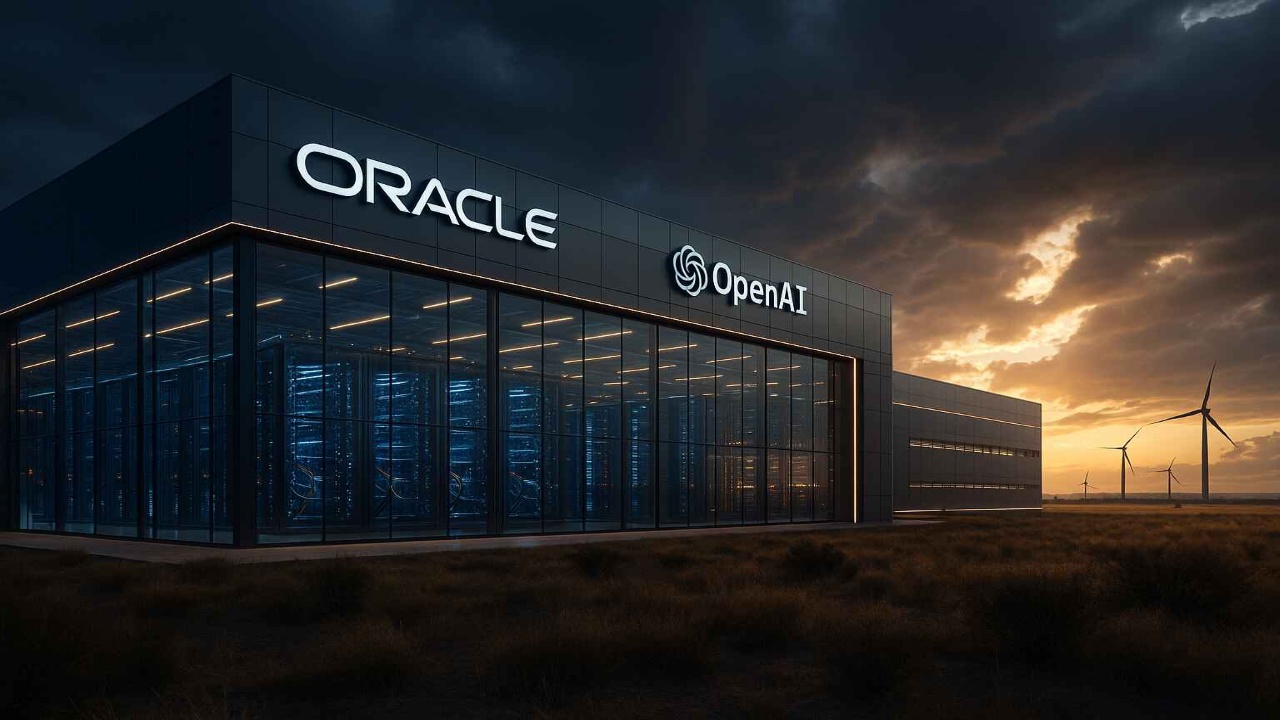
NEW YORK — In the high-stakes, capital-intensive arena of artificial intelligence infrastructure, alliances are forged out of immediate necessity and dissolved when strategic imperatives shift. Microsoft Corporation, the dominant backer of OpenAI and a titan in enterprise cloud services, is quietly winding down its significant commercial arrangement to rent artificial intelligence cloud capacity from Oracle Corporation. According to proprietary industry sources and supply-chain intelligence, the landmark interoperability agreement—once heralded as a bridge across the enterprise software divide—is entering a structured phase-out as Microsoft brings massive internal data center expansions online.
For financial markets, enterprise tech analysts, and institutional investors, this transition marks a pivotal moment in the ongoing race for computational dominance. As hyperscalers face relentless scrutiny regarding capital expenditure (CapEx) discipline and infrastructure scalability, Microsoft’s decision to internalize its AI workloads signals a profound recalibration of how Big Tech manages risk, optimizes cloud compute architecture, and protects operating margins in a maturing generative AI market.
The Genesis and Mechanics of the Microsoft-Oracle Partnership
Test Our Free AI & Tech Utilities Suite
Calculate LLM API token costs, analyze article dwell-time, or simulate tech DCA returns.
To understand the magnitude of this wind-down, one must revisit the strategic landscape of 2023. As generative AI models scaled exponentially following the debut of OpenAI’s GPT-4, global demand for specialized graphical processing units (GPUs)—specifically NVIDIA’s H100 clusters—far outstripped the immediate supply within Microsoft’s Azure cloud infrastructure. To maintain its first-mover advantage and satisfy insatiable enterprise demand, Microsoft executed a pragmatic maneuver: it rented massive blocks of cloud compute capacity from Oracle Cloud Infrastructure (OCI), which had aggressively provisioned high-performance computing (HPC) clusters and high-speed networking.
The arrangement was mutually beneficial. Oracle cemented its credibility as a premier enterprise-grade cloud provider capable of hosting frontier AI workloads, while Microsoft gained crucial breathing room, ensuring that developer ecosystems and enterprise clients experienced zero latency or capacity bottlenecks. However, renting infrastructure at scale comes with inherent economic friction. High-throughput data rentals introduce recurring operational expenses that can weigh heavily on gross margins, particularly when amortization schedules and data egress costs are factored into long-term financial modeling.
Over the past eighteen months, however, Microsoft’s internal infrastructure engineering teams have worked at a blistering pace. Backed by multi-billion-dollar capital allocation programs, the Redmond-based tech giant has brought vast proprietary data center campuses online across North America, Europe, and Asia. Equipped with next-generation custom silicon and direct allocations of advanced NVIDIA and AMD hardware, Azure’s internal capacity has grown to a point where relying on external OCI rentals is no longer economically or operationally necessary.
Financial Engineering, Margins, and Capital Allocation
From the perspective of Wall Street analysts and financial institutions, the winding down of the Oracle AI rental deal is a masterclass in risk mitigation and cost discipline. As public markets demand a clearer path to profitability from generative AI investments, enterprise ROI has become the primary metric by which technology leaders are judged.
| Strategic Metric | Phase 1: Peak Rental Era (2023–2024) | Phase 2: Internalized Capacity (2025 & Beyond) |
|---|---|---|
| Primary Infrastructure Source | Hybrid Azure + Third-Party OCI Rented Clusters | Proprietary Azure Hyperscale Data Centers |
| Gross Margin Impact | Compressed due to third-party wholesale markup | Optimized through internal economies of scale |
| CapEx Strategy | Accelerated short-term capacity leasing | Long-term physical asset ownership & custom silicon |
| Regulatory & Compliance Control | Shared responsibility across multi-cloud boundaries | End-to-end sovereign control and compliance |
By migrating workloads off rented OCI architecture and onto proprietary Azure hardware, Microsoft effectively insulates its cloud gross margins. When a hyperscaler rents capacity from a competitor or partner, the wholesale markup is absorbed into the cost of goods sold (COGS), diluting the long-term profitability of high-value AI software subscriptions like Microsoft 365 Copilot and Azure OpenAI Service. Internalizing these workloads allows Microsoft to capture the full economic value of every floating-point operation executed across its network.
Simultaneously, this shift reflects sophisticated capital allocation. Rather than continuing to pour capital into recurring lease payments for external infrastructure, Microsoft is channeling its financial resources into owned physical assets—power purchase agreements for green energy, proprietary data center construction, and custom AI accelerator development. This strategy protects valuation multiples by demonstrating to institutional investors that exponential AI spending is directly translating into durable, proprietary infrastructure assets rather than transitory operational expenses.
Industry & Market Implications: Who Wins, Who Loses?
The unraveling of this specific high-profile cloud rental agreement reverberates across the broader enterprise software and cloud computing ecosystem, altering competitive dynamics between the major cloud service providers.
Oracle: While losing Microsoft as a massive wholesale tenant is a notable headline event, Oracle’s cloud business remains insulated by its aggressive expansion into multi-cloud database partnerships (such as Oracle Database@Azure) and a robust pipeline of independent enterprise AI customers. Oracle CEO Safra Catz and Chairman Larry Ellison have successfully positioned OCI as a high-performance, cost-effective alternative for companies training foundational models. However, the loss of Microsoft’s volume requires Oracle to pivot its sales force toward capturing direct enterprise workloads to maintain its ambitious cloud growth targets.
Microsoft: For Microsoft, the transition is an unmitigated operational victory born of successful supply-chain execution. By proving that it can rapidly scale its own data center footprint to absorb massive AI workloads, Microsoft reasserts its technological independence. Furthermore, the move minimizes potential latency and security friction points associated with multi-cloud data orchestration, ensuring that enterprise clients enjoy a seamless, tightly integrated Azure ecosystem.
The Broader Cloud Market: The development underscores a broader industry truth: while coopetition defines the early stages of a technological revolution, long-term economics dictate that hyperscalers will always favor proprietary infrastructure. As supply chains for advanced semiconductors normalize and specialized data center construction catches up with demand, the era of wholesale cloud leasing for AI workloads is steadily giving way to vertical integration.
Frequently Asked Questions (People Also Ask)
Why is Microsoft winding down its Oracle cloud rental agreement?
Microsoft is winding down the deal because its proprietary Azure data center footprint has expanded significantly over the past year. With massive new facilities coming online globally, equipped with advanced GPUs and custom networking, Microsoft no longer needs to rent external third-party capacity from Oracle Cloud Infrastructure (OCI) to meet enterprise AI demand.
Does this mean the entire partnership between Microsoft and Oracle is ending?
No. The strategic partnership—most notably the Oracle Database@Azure integration, which allows joint enterprise customers to run Oracle databases directly within Microsoft Azure data centers—remains fully intact. The wind-down is strictly limited to the temporary arrangement where Microsoft rented OCI compute capacity to power AI workloads.
How will this transition impact Microsoft’s profit margins?
Moving workloads from rented third-party infrastructure to proprietary Azure data centers is expected to improve gross margins over the long term. Renting capacity incurs wholesale supplier markups, whereas operating owned assets maximizes the financial return on high-demand AI software and cloud services.
What does this signal for the broader AI cloud infrastructure market?
It signals a maturation of the generative AI infrastructure market. As supply constraints ease and hyperscalers build out their own massive physical footprints, the industry is shifting away from short-term capacity leasing toward long-term asset ownership, vertical integration, and strict capital expenditure discipline.
Future Outlook: Milestones to Watch
As Microsoft completes the structured phase-out of its Oracle cloud rental arrangement, market observers and financial analysts will be tracking several key operational and financial milestones over the coming quarters:
- Azure CapEx and Depreciation Disclosures: Earnings calls will provide granular detail on how internal data center buildouts are impacting capital expenditures and long-term asset depreciation schedules.
- OCI Enterprise Growth Metrics: Oracle’s upcoming quarterly financial reports will be scrutinized to assess how effectively the company backfills the capacity previously utilized by Microsoft with direct enterprise AI and database clients.
- Power and Energy Procurement: With physical data center expansion driving hyperscaler strategy, Microsoft’s ability to secure reliable, sustainable long-term power purchase agreements (PPAs)—including nuclear and renewable energy sources—will remain the ultimate bottleneck and indicator of scale.
- Software-Level Integration: Watch for deeper software-level optimization within Azure OpenAI Service as Microsoft leverages its fully internalized infrastructure to roll out advanced agentic AI capabilities and reduced inference pricing for enterprise subscribers.
Ultimately, Microsoft’s pivot away from rented OCI capacity is not a retreat, but a graduation. Having bridged the critical infrastructure gap during the initial explosion of generative AI, Microsoft is now exercising its formidable scale to control the underlying economics of the artificial intelligence revolution.