
Executive Takeaways
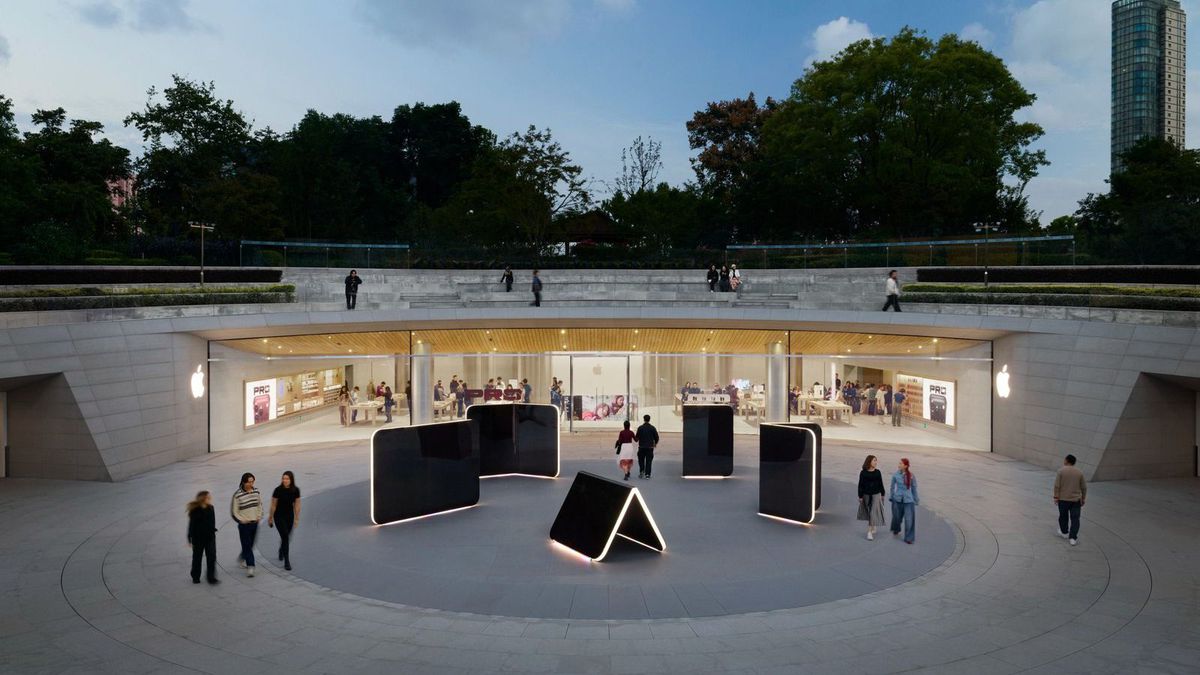
- Flagship Transformation: Apple has deployed massive "iPhone Duo" structural installations above its iconic Fifth Avenue glass cube in Manhattan, marking the official commencement of global launch week.
- Capital Expenditure & Retail ROI: The multi-million-dollar physical marketing push underscores Apple's heavy reliance on brick-and-mortar experiential flagships to drive high-margin hardware upgrades and enterprise adoption.
- Supply Chain & Market Liquidity: The timed deployment aligns precisely with global logistics operations, setting the stage for record opening-weekend foot traffic and immediate validation of Wall Street valuation multiples.
- Experiential Architecture: These installations serve a dual purpose as high-impact visual media assets and crowd-management infrastructure designed to handle tens of thousands of consumers on launch day.
NEW YORK — In what has become an annual ritual of corporate pageantry and retail theater, Apple Inc. has dramatically transformed its flagship Fifth Avenue underground store in Manhattan. Overnight crews hoisted monumental "iPhone Duo" structural installations framing the legendary glass cube, signaling to global markets, equity analysts, and consumers alike that the Friday hardware release cycle is officially underway.
For institutional investors and tech industry observers monitoring consumer discretionary trends, the sudden appearance of these monolithic installations is far more than a clever marketing stunt. It represents a calculated capital expenditure designed to maximize enterprise conversion rates, validate supply chain resilience, and energize retail foot traffic across prime metropolitan real estate corridors. As global markets prepare for Friday's synchronized rollout, the Fifth Avenue installation serves as the ultimate bellwether for Apple’s upcoming quarterly earnings trajectory.
The Anatomy of Apple's Fifth Avenue Launch Strategy
The Fifth Avenue location—historically Apple’s highest-grossing retail asset globally—operates as a critical testing ground for the company's offline-to-online ecosystem strategy. By encasing and flanking the minimalist glass cube with oversized representations of the new hardware lineup, Apple’s retail and marketing divisions are executing a masterclass in experiential architecture.
According to retail operations insiders, the logistical orchestration required to secure permits, engineer structural wind-resistance supports, and deploy these heavy assets in the heart of Midtown Manhattan involves millions of dollars in direct capital allocation. This heavy upfront investment is justified by the outsized media coverage, viral social media amplification, and immediate local economic impact generated by the millions of tourists and local professionals who navigate Fifth Avenue daily.
The timing of the installation also coincides with critical inventory staging across North American distribution hubs. Freight forwarders and third-party logistics providers have spent weeks managing container freight allocations to ensure seamless restocking, mitigating risks associated with supply chain bottlenecks or regional transport delays. For Apple, risk mitigation in the final 72 hours before a global launch is paramount to protecting gross margins and satisfying deferred consumer demand.
Macroeconomic Backdrop: Consumer Resilience and Valuation Multiples

This year’s launch arrives against a complex macroeconomic backdrop characterized by shifting interest rate expectations, evolving consumer credit metrics, and cautious corporate spending. Wall Street equity research desks are closely analyzing whether hardware upgrade cycles will maintain their historical resilience or face compression as consumers scrutinize discretionary capital allocation.
Apple’s management team continues to bet heavily on trade-in programs, carrier subsidies, and integrated financing structures to lower the friction of adoption. The physical presence of the iPhone Duo installations on Fifth Avenue acts as a tangible psychological anchor, convincing hesitant buyers to experience the physical ergonomics and hardware enhancements firsthand.
| Metric / Parameter | Historical Benchmark | Current Launch Cycle (Fifth Avenue) | Strategic Impact |
|---|---|---|---|
| Capital Expenditure (CapEx) on Flagship Decor | Standard glass-cube branding | Multi-million structural installations | Drives high-margin foot traffic & viral media |
| Logistics & Inventory Staging | Regional hub distribution | Synchronized global air/freight delivery | Zero stock-out risk on day one |
| Market Liquidity & Investor Focus | Moderate Q4 anticipation | Intense institutional scrutiny | Validates valuation multiples & services revenue growth |
| Regulatory & Compliance Checks | Standard municipal permitting | Accelerated NYC Department of Buildings clearance | Ensures uninterrupted public access & safety |
Industry & Market Implications: Who Wins and Who Loses?
The ripple effects of Apple’s Fifth Avenue spectacle extend far beyond Manhattan's commercial real estate grid. Major telecommunications carriers—including Verizon, AT&T, and T-Mobile—stand to capture immediate financial upside as millions of subscribers lock in multi-year service contracts tied to hardware promotions.
Conversely, competing original equipment manufacturers (OEMs) such as Samsung and Google face mounting pressure to counter Apple’s dominant retail mindshare. While Android competitors frequently out-innovate in specific hardware form factors, few possess the vertically integrated ecosystem loyalty or the physical real estate footprint required to execute a public relations campaign of this magnitude.
Furthermore, commercial landlords in prime retail corridors (such as London’s Regent Street, Tokyo’s Omotesando, and Paris’s Champs-Élysées) view Apple’s aggressive structural investments as proof of the enduring viability of experiential brick-and-mortar retail. High foot-traffic flagships continue to command premium rental yields precisely because brands like Apple leverage them as physical billboards that generate billions of impressions worldwide.
Frequently Asked Questions (People Also Ask)
When do the new iPhone Duo models officially launch for purchase?
The official global release date is scheduled for this coming Friday. Pre-ordered devices begin arriving to consumers on that day, and physical inventory becomes available at Apple retail stores worldwide starting at local opening hours (typically 8:00 AM local time).
Why is the Apple Fifth Avenue store significant for global hardware launches?
Apple Fifth Avenue is the brand's crown jewel retail location, operating 24/7/365 under normal conditions and serving as the primary media backdrop for global product launches. Its high visibility in New York City guarantees maximum international press coverage and viral digital amplification.
How do these giant physical installations impact Apple's financial performance?
While the temporary structures represent a line-item marketing expense, they directly support retail conversion rates, drive immediate high-margin hardware sales, and boost investor confidence by signaling strong consumer demand ahead of critical quarterly earnings reports.
What security and crowd-management measures are in place for the Friday launch?
Apple coordinates closely with the New York City Police Department (NYPD) and private security contractors to establish designated queuing lanes, manage pedestrian flow around Grand Army Plaza, and ensure compliance with municipal fire and safety codes.
Future Outlook and Key Milestones to Watch
As the clock ticks down to Friday morning's ribbon-cutting ceremonies, equity analysts will shift their attention from marketing spectacles to hard operational data. Key metrics to monitor over the coming weeks include first-weekend sales volumes, average selling prices (ASPs), upgrade cycle duration relative to previous generations, and early adoption rates for integrated AI-driven software features.
Ultimately, the giant iPhone Duo installations at Apple Fifth Avenue are a vivid reminder of Apple’s unrivaled ability to command global attention. By blending high-end architecture with disciplined supply chain execution, the company continues to defend its market dominance and set the benchmark for enterprise retail strategy in the digital age.



