Executive Takeaways
- Historic Milestone: SpaceX successfully launched the "Starfall" return capsule for only the second time in corporate history aboard the Bandwagon-5 rideshare mission on October 20.
- र्थिक Paradigm Shift: The operational reuse of orbital return capsules dramatically compresses payload recovery timelines, setting a new benchmark for capital allocation and infrastructure scalability in commercial spaceflight.
- Valuation & Market Liquidity: With reusable return infrastructure scaling rapidly, SpaceX continues to distance itself from traditional aerospace contractors, commanding private market valuation multiples that rewrite industry standards.
- Enterprise ROI: Commercial payload providers leveraging rapid-turnaround orbital return vehicles anticipate substantial risk mitigation and lower cost-per-kilogram metrics for high-value manufacturing and sensitive research.
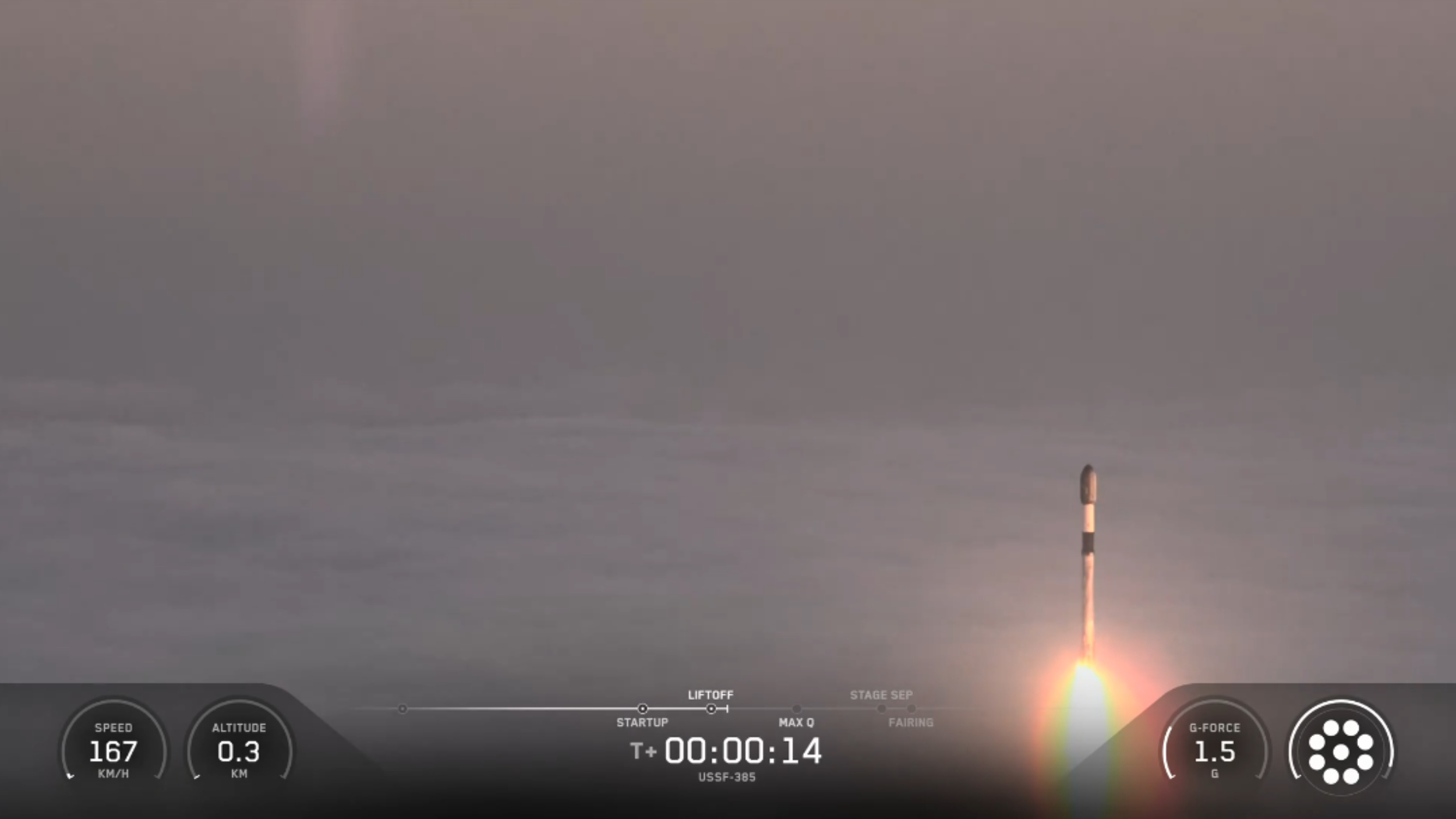
WASHINGTON & CAPE CANAVERAL — In the predawn hours of October 20, a brilliant white streak pierced the darkness above the launch site as a SpaceX Falcon 9 vehicle thundered aloft. Tucked away on this specialized Bandwagon-5 rideshare mission was a cargo of profound commercial and engineering significance: the "Starfall" return capsule, embarking on its second-ever orbital flight. For aerospace strategists, institutional investors, and defense analysts, this launch was far more than a routine orbital insertion. It represented a critical stress-test of next-generation reusability economics, signaling an aggressive push to transform orbital delivery and retrieval into a high-frequency, low-friction logistical pipeline.
As the commercial space race transitions from a speculative frontier into a mature, capital-intensive industrial sector, the ability to repeatedly launch, retrieve, and refurbish orbital hardware serves as the ultimate litmus test for enterprise viability. SpaceX’s successful redeployment of the Starfall capsule underscores a relentless corporate mandate: collapsing operational latency and driving down the cost of access to space. Below, we break down the mechanics of the Bandwagon-5 mission, the underlying valuation and market implications, and what this milestone portends for the global aerospace complex.
The Anatomy of the Bandwagon-5 Launch and Starfall’s Second Flight
The mission profile for Bandwagon-5 was meticulously optimized for mid-inclination orbits, offering a distinct operational corridor compared to SpaceX’s traditional Polar Express rideshare lines. Liftoff occurred under optimal telemetry conditions, with the Falcon 9 first-stage booster executing a nominal ascent before separating and returning to land, preserving capital assets as has become standard operating procedure for the aerospace giant.
Nested within the payload fairing, the Starfall return capsule stood as the technological centerpiece of the manifest. Designed to withstand the punishing thermal and mechanical stresses of atmospheric reentry, Starfall bridges the operational gap between unmanned orbital deployment and precise terrestrial recovery. Achieving a second successful flight with a flight-proven return vehicle requires navigating complex materials science hurdles—ranging from ablative thermal protection system (TPS) inspections to the meticulous overhaul of avionics, parachutes, and structural load-bearing frames.
Historically, orbital return capsules were treated as single-use, high-cost artifacts of government-funded space programs. By proving that a commercial return vehicle can be safely recovered, recertified, and dispatched on a secondary orbital mission, SpaceX is dismantling the traditional cost structures of space-based manufacturing, pharmaceutical synthesis, and classified national security payloads. The operational cadence demonstrated by Starfall suggests that the company is systematically expanding its reusable portfolio beyond launch vehicles into the realm of end-to-end orbital logistics.
Verified Data & Metrics Breakdown
| Metric / Parameter | Mission Specification | Strategic Industry Impact |
|---|---|---|
| Mission Identifier | Bandwagon-5 Rideshare | Optimized mid-inclination orbital delivery corridor. |
| Launch Date | October 20 | Maintains aggressive quarterly flight-rate momentum. |
| Payload Asset | 'Starfall' Return Capsule (2nd Flight) | Validates orbital return asset reusability and refurbishment. |
| Primary Technological Focus | Thermal Protection System & Avionics Recertification | Reduces per-mission capital expenditure and turnaround times. |
Industry & Market Implications: Capital Allocation and Competitive Moats
In the high-stakes theater of commercial space infrastructure, valuation multiples are increasingly tied to defensible technological moats and capital efficiency. Legacy aerospace contractors and emerging startup competitors alike are grappling with the harsh economic realities of SpaceX’s market dominance. When an enterprise can amortize the manufacturing cost of a return capsule across multiple missions, its unit economics become virtually unassailable for traditional competitors.
This development sends shockwaves through multiple sectors:
- Commercial Payload Providers: Companies developing microgravity-manufactured fiber optics, semiconductor wafers, and biological therapeutics require reliable downward transportation. Starfall’s proven reusability guarantees higher flight frequency and more predictable supply chain logistics.
- Venture Capital & Private Equity: Institutional investors deploying capital into the space economy are recalibrating risk models. Startups that rely on single-use architectures are facing severe capital allocation headwinds as investors pivot toward infrastructure providers capable of rapid asset recycling.
- Defense & Intelligence Agencies: The ability to rapidly launch and recover sensitive payloads aligns directly with the Pentagon’s resilient space architecture initiatives, emphasizing disaggregated, responsive space capabilities over monolithic, vulnerable satellite systems.
Furthermore, regulatory compliance and insurance underwriting standards are evolving in tandem with these operational breakthroughs. As flight-proven return vehicles accumulate statistical reliability data, premium costs for orbital asset insurance are expected to compress, further enhancing enterprise ROI for commercial operators utilizing the Bandwagon-5 architecture.
Frequently Asked Questions (People Also Ask)
What is the 'Starfall' capsule, and why is its second flight significant?
The Starfall capsule is an advanced orbital return vehicle designed to transport payloads safely from space back to Earth. Its second successful flight is a major milestone because it proves the technical feasibility of reusing atmospheric reentry capsules, drastically reducing manufacturing costs and turnaround times for orbital logistics.
What was the primary objective of the Bandwagon-5 mission?
Bandwagon-5 is a specialized SpaceX rideshare mission dedicated to placing payloads into specific mid-inclination orbits. It provides commercial and institutional customers with frequent, cost-effective access to orbital slots outside traditional sun-synchronous or equatorial trajectories.
How does reusability impact SpaceX's market valuation and competitive advantage?
By reusing both launch vehicles (like Falcon 9 boosters) and return capsules (like Starfall), SpaceX significantly lowers its marginal cost of operations. This superior cost structure allows the company to capture immense market share, command dominant valuation multiples, and price out legacy aerospace competitors.
What industries stand to benefit most from rapid orbital return capabilities?
Sectors engaged in microgravity research, advanced materials manufacturing (such as zBLAN optical fibers and protein crystal growth), semiconductor development, and national security surveillance stand to gain the most from high-frequency, reliable orbital return logistics.
Future Outlook: Milestones on the Horizon
Looking ahead, the successful deployment and recovery of the Starfall capsule on the Bandwagon-5 mission marks a foundational step toward fully closed-loop orbital commerce. As SpaceX refines its rapid refurbishment protocols, industry watchers will be monitoring several critical performance indicators over the coming quarters.
Key milestones to watch include the average turnaround time between Starfall flights, potential scaling of the vehicle class to accommodate heavier commercial payloads, and the integration of these return logistics with next-generation heavy-lift architectures like Starship. For enterprise clients and financial markets alike, the message is unmistakably clear: the era of disposable orbital hardware is rapidly drawing to a close, replaced by an unforgiving, highly efficient paradigm of industrial reusability.