Executive Takeaways
- The Hexa-Chip Architecture: NVIDIA’s Vera Rubin platform pivots away from monolithic designs, integrating six distinct specialized silicon components into a single coherent AI supercomputing node.
- Enterprise CapEx Realignment: Chief Information Officers (CIOs) and Chief Technology Officers (CTOs) face massive capital allocation decisions as Rubin accelerates infrastructure obsolescence cycles.
- Supply Chain and Fabrication Realities: Production runs leverage advanced 3nm process nodes and CoWoS packaging variants, testing the limits of global semiconductor foundry capacity.
- Wall Street Valuation Multiples: Sustained dominance in high-performance computing (HPC) underpins aggressive market capitalization targets, though power grid and cooling constraints introduce distinct risk mitigation challenges.
SAN FRANCISCO & NEW YORK — In the high-stakes arena of enterprise artificial intelligence, technological obsolescence is measured not in years, but in quarters. Barely had hyperscale data centers finished absorbing the operational shockwaves of the Blackwell architecture when NVIDIA unveiled its next generational leap: the Vera Rubin platform. Debuting via technical disclosures from the NVIDIA Developer network and corroborated by field reports from premier industry intelligence desks, the Rubin platform represents a fundamental restructuring of how compute, networking, and memory converge inside modern AI factories.
For institutional investors, corporate treasurers, and cloud infrastructure architects, the arrival of the Vera Rubin platform is not merely a product refresh. It is a seismic event carrying profound implications for enterprise ROI, data center power grid consumption, and corporate capital expenditure budgets. As organizations worldwide race to deploy autonomous agents and trillion-parameter foundation models, understanding the engineering mechanics and financial gravity of Rubin's six-chip blueprint is paramount for navigating the next phase of the digital economy.
The Catalytic Shift: Moving Beyond Monolithic Scaling
The historical trajectory of accelerated computing was defined by scaling up individual processors. However, physical limitations in lithography, thermal dissipation limits, and yield economics have forced a structural pivot toward disaggregated, multi-die architectures. Named after pioneering American astronomer Vera Rubin—whose work on galaxy rotation curves fundamentally changed our understanding of unseen mass—the platform bearing her name tackles the invisible bottlenecks plaguing modern data centers: memory bandwidth starvation and interconnect latency.
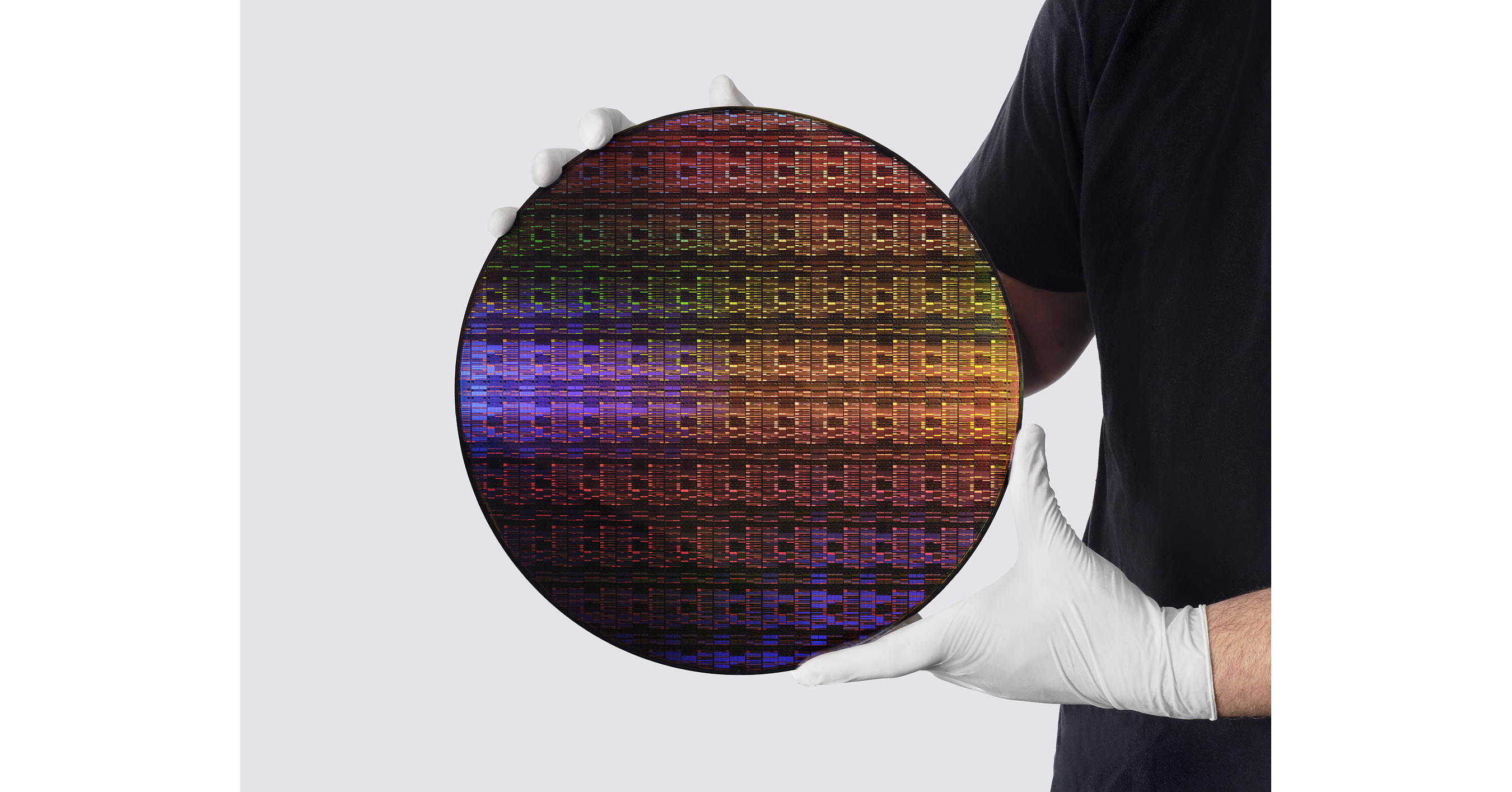
According to technical deep-dives released by NVIDIA engineering teams, the Rubin platform abandons the traditional paradigm of coupling a single massive GPU with a companion CPU. Instead, it orchestrates six new specialized chips into a tightly synchronized, unified supercomputing fabric. This multi-chip strategy enables hyper-specialization, allowing silicon real estate to be optimized strictly for distinct computational workloads—ranging from matrix multiplication and vector processing to high-speed packet routing and optical switching.
This architectural overhaul arrives at a critical juncture. Enterprise clients are no longer satisfied with marginal efficiency gains; they demand radical improvements in inference throughput and training convergence times to justify multi-billion-dollar cloud compute budgets. By fusing six bespoke processors into a singular rack-scale deployment, NVIDIA aims to deliver an exponential leap in performance-per-watt, directly addressing the mounting sustainability and energy cost crises facing global hyperscalers.
Anatomy of the Supercomputer: The Six-Chip Ecosystem

To fully grasp the disruptive potential of the Vera Rubin platform, analysts and system architects must dissect the individual silicon pillars that comprise the node. Each chip plays a vital, non-interchangeable role in the overarching data flow of enterprise AI training and real-time inference engines.
- The Rubin GPU (R100): The computational heavyweight of the platform, built on cutting-edge 3nm-class fabrication nodes. It features next-generation Tensor Cores engineered specifically to accelerate FP4 and mixed-precision arithmetic without sacrificing numerical stability.
- The Vera CPU: Designed to replace legacy host processors, the Vera CPU handles control-plane operations, data pre-processing, and orchestration tasks with vastly superior memory-side cache coherence and reduced instruction latency.
- The Advanced ConnectX-8 SuperNIC: Network interface cards capable of bleeding-edge throughput speeds, ensuring that multi-node cluster communication matches the internal compute velocity of the GPUs, eliminating tail latency during distributed training runs.
- The Quantum-4 InfiniBand Switch: The connective tissue of the rack, routing tensor data at terabit-scale speeds with hardware-accelerated congestion management and adaptive routing protocols.
- The NVLink 6 Switch Chip: Expanding GPU-to-GPU bandwidth far beyond previous generations, enabling thousands of Rubin processors to function logically as a single, monstrous monolithic accelerator.
- The Dedicated Cryptographic & Security Engine: An integrated silicon subsystem providing zero-trust security guarantees, hardware-level memory encryption, and secure multi-tenancy isolation essential for regulated financial and healthcare cloud environments.
When deployed in tandem, these six components dissolve the traditional boundaries between compute, storage, and networking. The result is an AI supercomputer optimized for deterministic low latency and maximum cluster utilization—two metrics that directly dictate bottom-line profitability for cloud service providers (CSPs).
| Platform Generation | Primary Lithography Node | Key Interconnect Technology | Target Workload Focus |
|---|---|---|---|
| Hopper (H100) | 4N (Custom TSMC) | NVLink 4 / InfiniBand HDR | Large Language Model Training |
| Blackwell (B200) | 4NP / CoWoS-L | NVLink 5 / Quantum-2 | Trillion-Parameter Dense Models |
| Vera Rubin (R100) | Advanced 3nm Variants | NVLink 6 / Quantum-4 / ConnectX-8 | Autonomous Agents & Real-Time Reasoning |
Industry & Market Implications: Winners, Losers, and Capital Allocation
The introduction of the Vera Rubin platform triggers immediate strategic recalculations across global technology markets. As enterprise CIOs evaluate their three-to-five-year infrastructure roadmaps, capital allocation must balance the imperative to avoid technical obsolescence against the steep upfront cost of next-generation hardware adoption.
The Winners: Hyperscale cloud operators (such as Microsoft Azure, AWS, and Google Cloud) that secure early allocation of Rubin clusters will dominate the market for high-margin enterprise AI services. Furthermore, specialized data center real estate investment trusts (REITs) capable of supplying the high-density liquid cooling and robust power infrastructure required by Rubin racks will command premium lease rates.
The Pressured: Enterprises relying exclusively on legacy CPU architectures or disparate, unoptimized GPU clusters face a widening competitive disadvantage. The performance delta between traditional enterprise datacenters and Rubin-powered AI factories will render older legacy models economically unviable for high-throughput reasoning workloads.
From a macroeconomic perspective, NVIDIA’s ability to execute on this complex six-chip roadmap reinforces its pricing power and operating margins. However, supply chain dependencies—particularly on foundry giants like TSMC for advanced 3nm wafer fabrication and packaging capacity—remain critical risk factors that institutional risk managers monitor continuously.
Frequently Asked Questions (People Also Ask)
What makes the NVIDIA Vera Rubin platform different from previous architectures like Blackwell?
While Blackwell focused on dense multi-die GPU integration and FP4 inference scaling, the Vera Rubin platform represents a total systems-level redesign. It introduces a hexa-chip architecture that tightly couples six distinct specialized processors—including the Rubin GPU, Vera CPU, NVLink 6 switches, and Quantum-4 InfiniBand networking—to eliminate memory and interconnect bottlenecks at the rack scale.
How does the Rubin platform impact enterprise data center power and cooling requirements?
Because the Rubin platform packs unprecedented compute density into standard rack footprints, air cooling is rendered largely insufficient. Enterprise data centers deploying Rubin must transition to advanced direct-to-chip liquid cooling systems and secure high-capacity power purchase agreements, as power consumption per rack scales significantly higher than previous generations.
What are the primary financial and valuation implications for corporate technology budgets?
The transition to Rubin requires significant upfront capital expenditure (CapEx) from hyperscalers and Fortune 500 enterprises. However, the dramatic improvement in token-generation economics and inference throughput promises a faster return on investment (ROI) for organizations deploying large-scale autonomous agent workflows and reasoning models.
Future Outlook: Milestones on the Horizon
As the semiconductor industry gears up for full-scale production runs of the Vera Rubin platform, market observers are closely tracking several key operational milestones. Engineering sample validations, initial tape-out yield reports from foundry partners, and early benchmark disclosures from tier-1 cloud service providers will serve as the definitive barometers of success.
For executive leadership teams, the mandate is clear: strategic planning can no longer treat AI infrastructure as an isolated IT expenditure. It is the core operational machinery of the modern enterprise. Navigating the Vera Rubin era requires disciplined risk mitigation, proactive engagement with power utilities, and agile financial structuring to harness the next wave of computational dominance without compromising fiscal health.