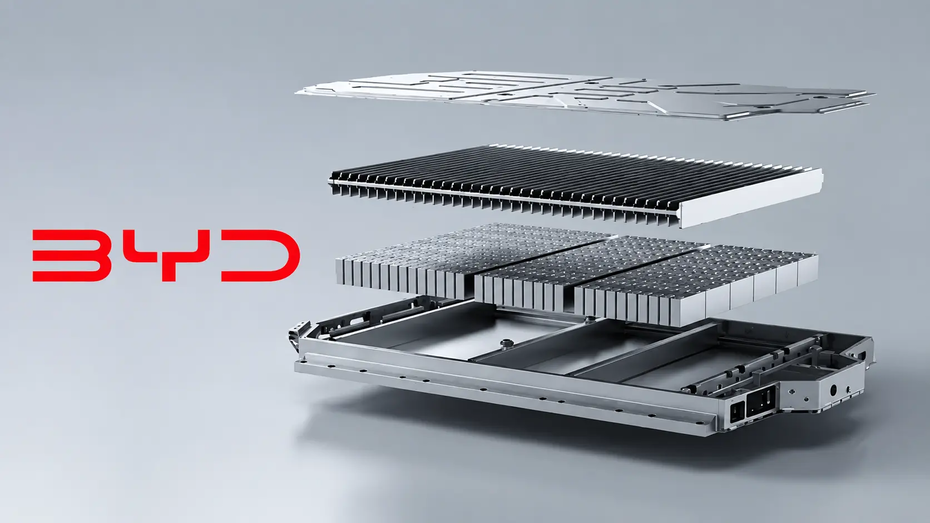
SHENZHEN / TOKYO / FRANKFURT — In a strategic disclosure that has instantly upended long-term enterprise valuation multiples across the global automotive and energy storage sectors, Chinese clean-energy titan BYD Co. has confirmed a hard timeline for the commercialization of its next-generation solid-state batteries. According to proprietary intelligence and industry disclosures first tracked by automotive sector monitors, BYD is slated to launch production-ready solid-state battery technology by 2027. This aggressive acceleration of advanced chemistry deployment directly challenges legacy Western, Japanese, and Korean incumbents, threatening to rewrite the competitive balance of power in the multi-trillion-dollar electrification market.
For institutional investors, supply chain executives, and regulatory compliance bodies, the announcement represents a pivotal inflection point in capital allocation strategies. The transition from liquid organic electrolyte lithium-ion cells to solid-state architecture has long been regarded as the holy grail of electrochemical energy storage. By establishing a firm 2027 commercialization window, BYD is signaling that it has successfully navigated the notoriously difficult material science bottlenecks—specifically dendrite formation, interfacial resistance, and mass-manufacturing scalability—that have stymied competitors for over a decade.
Executive Takeaways
- Definitive Timeline: BYD has locked in a commercial rollout for solid-state battery technology by 2027, compressing industry adoption curves by years and pressuring rivals to accelerate their own research and development expenditures.
- Capital Allocation Shockwave: The announcement forces an immediate re-evaluation of enterprise ROI and capital allocation strategies for legacy automakers currently pouring billions into conventional lithium-ion infrastructure.
- Ecosystem Dominance: By controlling the vertically integrated supply chain—from raw lithium refining to final pack assembly—BYD possesses unique risk mitigation capabilities that protect its margins against raw material volatility.
- Global Market Realignments: Japanese giants like Toyota, which has earmarked its own solid-state roadmaps, and European luxury marques face intense margin pressure as BYD positions itself to capture high-end performance and long-range market segments.
The Catalytic Shift: Dismantling the Lithium-Ion Status Quo

To understand the profound market liquidity and valuation impacts of BYD’s 2027 roadmap, one must examine the fundamental limitations of contemporary liquid electrolyte lithium-ion batteries. While current chemistries—such as Lithium Iron Phosphate (LFP) and Nickel Manganese Cobalt (NMC)—have powered the exponential growth of the electric vehicle market over the past decade, they face hard thermodynamic and physical ceilings. Thermal runaway risks, volumetric energy density plateaus, and cold-weather performance degradation remain persistent engineering challenges.
Solid-state batteries replace the volatile organic liquid electrolyte with a solid ion-conductive medium, typically utilizing sulfide, oxide, or polymer-based compounds. This structural evolution unlocks staggering performance metrics: energy densities nearly double those of conventional cells, charging times reduced to a fraction of current benchmarks, and an almost total elimination of fire risk caused by short-circuiting dendrites.
However, the journey from laboratory-scale synthesis to mass-market manufacturing has historically been plagued by prohibitive unit economics and insurmountable interfacial degradation over repeated charge-discharge cycles. BYD’s announcement suggests that its massive, sustained research and development outlays—backed by deep cash flows from its domestic market dominance—have yielded proprietary breakthroughs in material processing and continuous roll-to-roll manufacturing. By securing this technological high ground, BYD is effectively setting the benchmark for next-generation cloud compute architecture monitoring, battery management systems (BMS), and thermal regulation infrastructure required to manage high-density solid-state arrays.
Comparative Analysis: BYD vs. Global Competitors in Solid-State Development
The race to commercialize solid-state batteries is no longer a theoretical academic exercise; it is an existential race for global automotive supremacy. The competitive landscape involves a high-stakes chess match between Chinese vertical integrators, Japanese industrial conglomerates, and European legacy luxury brands.
| Automaker / Entity | Target Commercialization Year | Electrolyte Chemistry Focus | Strategic Advantage & Risk Mitigation |
|---|---|---|---|
| BYD Co. | 2027 | Proprietary Solid-State Composite | Full vertical integration; aggressive cost control; massive domestic volume to absorb initial scaling capex. |
| Toyota Motor Corp. | 2027 – 2028 | Sulfide-based | Vast intellectual property portfolio (thousands of patents); vulnerability to slow operational pivot. |
| Mercedes-Benz / Factorial | Late 2020s | Semi-solid / Solid Polymer | Focus on premium EQS integration; high-margin positioning but lower volume throughput. |
| Solid Power / BMW | 2028+ | Sulfide-based solid electrolyte | Joint development model; reliance on multi-party coordination introduces execution friction. |
Industry & Market Implications: Winners, Losers, and Economic Realities
The ripple effects of BYD’s 2027 timeline will be felt across multiple tiers of the global economy. As institutional portfolio managers reassess risk exposure, several distinct structural trends are emerging:
1. The Margin Squeeze on Legacy Automakers
Traditional original equipment manufacturers (OEMs) in Europe, North America, and Japan are currently caught in a multi-front financial war. They must continue funding legacy internal combustion engine (ICE) maintenance, ramp up production of transitional lithium-ion EVs, and simultaneously allocate massive capital expenditures toward next-generation solid-state research to avoid technological obsolescence. BYD’s ability to bring solid-state tech to market by 2027 threatens to render current multi-billion-dollar investments in standard battery gigafactories obsolete years ahead of schedule, devastating enterprise ROI calculations for Western automakers.
2. Supply Chain Evolution and Geopolitical Friction
The shift to solid-state chemistry will dramatically alter raw material demand vectors. While lithium remains a foundational component, the specific structural compounds required for solid electrolytes—such as specialized sulfides, high-purity silicon, and advanced coating materials—will create entirely new commodity supply chains. Regulatory compliance frameworks, including the United States Inflation Reduction Act (IRA) and European critical raw materials acts, will face severe stress tests as Western nations struggle to secure sovereign supply chains insulated from Chinese processing dominance.
3. Consumer Adoption Inflection Points
Range anxiety and charging infrastructure bottlenecks have been the primary psychological and structural barriers to mass EV adoption. A commercial solid-state battery boasting a 1,000-kilometer-plus range and sub-10-minute charging capabilities effectively neutralizes the remaining advantages of internal combustion vehicles. BYD’s 2027 rollout will likely trigger a massive acceleration in replacement cycles, forcing secondary market valuations of standard ICE and early-generation EV fleets to plummet.
Frequently Asked Questions (People Also Ask)
What makes BYD’s 2027 solid-state battery timeline significant for the automotive industry?
BYD’s 2027 target compresses the projected industry transition timeline by several years. Because BYD controls a deeply integrated supply chain and massive manufacturing footprint, its ability to commercialize solid-state cells forces global competitors—including Toyota, Volkswagen, and Tesla—to accelerate their own R&D and capital expenditure programs, or risk structural obsolescence in high-performance vehicle segments.
How do solid-state batteries differ fundamentally from standard lithium-ion batteries?
Standard lithium-ion batteries utilize a liquid organic electrolyte solution to facilitate the movement of lithium ions between the anode and cathode. Solid-state batteries replace this flammable liquid with a solid ion-conductive material. This eliminates fire risks, allows for significantly higher energy density (resulting in much greater driving range), and dramatically reduces charging times.
What are the primary engineering hurdles BYD must overcome to achieve mass production by 2027?
The primary obstacles in solid-state battery manufacturing include managing interfacial resistance between the solid electrolyte and electrodes, preventing lithium dendrite penetration that causes short circuits, and developing scalable, cost-effective roll-to-roll manufacturing processes capable of high yields at industrial scale.
How will the introduction of solid-state batteries impact existing EV charging infrastructure and asset valuations?
The introduction of solid-state batteries with ultra-fast charging capabilities will reduce the strain on high-power DC fast-charging networks over the long term by enabling rapid, highly efficient energy transfer. Concurrently, it threatens to accelerate depreciation rates for first- and second-generation electric vehicles utilizing liquid-electrolyte LFP and NMC cells, altering residual value models across global leasing and fleet management sectors.
Future Outlook and Strategic Milestones to Watch
As the industry approaches the 2027 horizon, stakeholders must monitor several critical leading indicators to gauge the true execution velocity of BYD’s solid-state initiative:
- Pilot Line Yield Rates: Institutional analysts should track disclosures regarding BYD’s pre-production pilot facilities in Shenzhen and Chongqing, specifically focusing on defect density and manufacturing yield rates.
- Patent Filings and Intellectual Property Expansion: An surge in international patent applications related to solid electrolyte synthesis, interfacial coatings, and dry-electrode manufacturing will serve as a proxy for technical maturity.
- Capital Expenditure Adjustments in Competitor Earnings: Subsequent quarterly earnings calls from global automotive heavyweights will reveal whether legacy OEMs are forced to write down conventional battery investments to fund emergency solid-state pivots.
- Regulatory and Safety Certifications: Official testing data submitted to Chinese and international regulatory bodies regarding thermal stability, nail-penetration tests, and cycle-life retention will provide empirical verification of commercial viability.
In summary, BYD’s confirmation of a 2027 solid-state battery launch is not merely a product milestone; it is a tectonic shift in the global industrial landscape. Organizations that fail to adjust their strategic roadmaps, infrastructure investments, and risk mitigation frameworks in alignment with this compressed timeline risk permanent displacement in the next era of clean energy transportation.