LONDON, NEW YORK, AND SINGAPORE — In a high-stakes compromise forged behind closed doors in Vienna and Riyadh, the Organization of the Petroleum Exporting Countries and its allies (OPEC+) have formally agreed to hold December oil output targets steady. For immediate market liquidity, the decision offers a temporary shield against severe price volatility. Yet, beneath the surface of this diplomatic truce lies a growing structural crisis. Energy ministers are quietly preparing for a far more contentious battle over the 2027 structural allocation framework—a regulatory and production hurdle that threatens to fracture the coalition as non-member supply surges and structural demand shifts accelerate.
For institutional investors, corporate treasurers, and global energy traders, this announcement represents a critical inflection point. As capital allocation strategies shift toward risk mitigation and long-term infrastructure scalability, navigating the complex interplay between cartel politics, non-OPEC supply elasticity, and shifting macroeconomic valuation multiples requires a sophisticated, data-driven approach. This investigative report breaks down the mechanics of the latest OPEC+ agreement, evaluates the impending 2027 crisis, and analyzes the profound implications for global market liquidity and industrial supply chains.
Executive Takeaways
Test Our Free AI & Tech Utilities Suite
Calculate LLM API token costs, analyze article dwell-time, or simulate tech DCA returns.
- The December Freeze: OPEC+ ministers have opted to maintain current production quotas through the end of the year, prioritizing price stability over aggressive market share acquisition.
- The 2027 Structural Horizon: The true battleground centers on baseline adjustments and individual quota capacities for 2027, where African producers and the United Arab Emirates are demanding higher baselines.
- Non-OPEC Supply Pressure: Aggressive production out of the Americas—specifically US shale, Guyana, and Brazil—continues to erode the cartel's collective pricing power and market share dominance.
- Capital Allocation Implications: Energy sector valuation multiples face downward pressure as institutional investors price in regulatory compliance costs and long-term demand plateau risks.
The Anatomy of the December Stalemate: Balancing Deficits and Debt
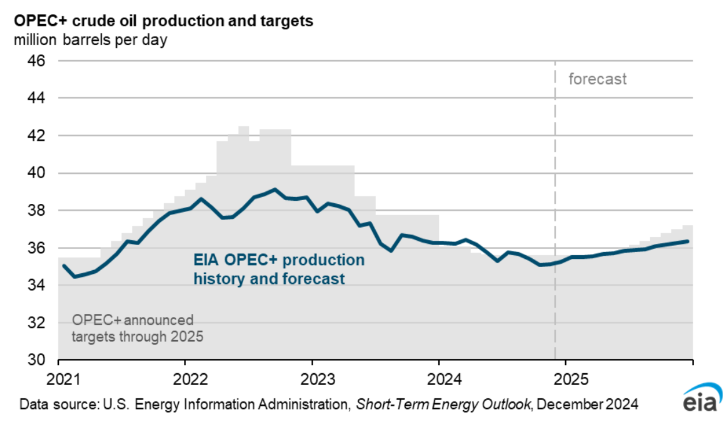
The decision to keep December oil output targets steady was not reached easily. Prolonged negotiations underscored the widening fissures within the 22-nation alliance. On one side, core Middle Eastern heavyweights advocated for strict adherence to existing quotas to defend physical market pricing floors against a sluggish macroeconomic backdrop in Europe and mainland China. On the other side, peripheral members facing domestic fiscal pressures argued passionately for accelerated output restoration to protect government balance sheets and fund ambitious economic diversification programs.
From an enterprise risk perspective, the cartel's primary objective is risk mitigation. Uncontrolled production increases risk triggering a steep downward correction in Brent and WTI benchmarks, severely compressing operating margins for upstream producers and undermining capital expenditure plans. Conversely, prolonged supply restraint creates an open invitation for non-OPEC producers to capture incremental market share, accelerating a long-term erosion of the cartel's collective pricing leverage.
This delicate balancing act directly influences broader corporate finance strategies. Global energy corporations must now recalibrate their enterprise ROI expectations, factoring in artificial supply floors set by political decree rather than pure market economics. As cloud compute architecture and AI-driven predictive analytics become standard tools for trading desks, real-time tracking of tanker movements and floating storage levels has revealed a fragile equilibrium—one that could easily be upended by unexpected geopolitical shocks or macroeconomic revisions.
The 2027 Horizon: A High-Stakes Clash Over Baselines and Quotas
While the December target freeze has successfully pacified short-term market jitters, it is widely viewed by industry insiders as merely kicking the can down the road. The defining trial for OPEC+ leadership will arrive with the comprehensive framework review for 2027. Unlike short-term tactical adjustments, the 2027 roadmap requires a fundamental redrawing of production baselines—the foundational metrics from which individual member cuts or increases are calculated.
For years, several member states have argued that their official baselines do not reflect their true production capacities, which have expanded significantly following multi-billion-dollar investments in upstream infrastructure scalability and enhanced oil recovery (EOR) technologies. The United Arab Emirates, for instance, has invested heavily to boost its maximum sustainable capacity, and token allowance increases in past agreements have done little to satisfy Abu Dhabi’s long-term commercial ambitions.
At the same time, African members such as Angola (which famously exited the group over quota disputes) and Nigeria face structural decline in mature fields, making rigid quota compliance increasingly untenable without massive foreign capital injections. Negotiating a unified consensus for 2027 will test the diplomatic agility of Saudi Arabia’s energy ministry, requiring concessions that could alienate key allies or risk an uncontrolled unwinding of the pact.
Verified Data & Metrics Breakdown
| Metric / Parameter | Current Status (Q4) | Projected 2027 Framework | Strategic Market Impact |
|---|---|---|---|
| OPEC+ Output Quota | Unchanged through Dec | Subject to baseline overhaul | Short-term price defense vs. long-term market share erosion |
| Non-OPEC Supply Growth | ~1.4 million bpd (Americas) | Expected to peak near decade-end | Neutralizes cartel pricing power; compresses valuation multiples |
| Global Demand Growth | Sluggish (~900k - 1.1m bpd) | Plateau risks accelerating | Increases regulatory compliance scrutiny and capital discipline |
| Compliance Monitoring | Independent secondary sources | Automated real-time satellite telemetry | Reduces cheating; enforces tighter internal market liquidity |
Industry & Market Implications: Winners, Losers, and Macroeconomic Realities
The ongoing OPEC+ maneuvering creates a complex chessboard for global financial markets. Understanding who wins and who loses requires looking beyond simple barrel counts to examine corporate balance sheets, debt-servicing capacities, and capital allocation frameworks.
The Winners
- Non-OPEC Independent Producers: Operators in the US Permian Basin, offshore Guyana, and the Brazilian pre-salt enjoy an advantageous market position. Protected by OPEC+'s artificial price floor, they can generate robust free cash flow, fund shareholder distributions, and optimize operational efficiency without risking catastrophic price crashes.
- Energy Trading Houses & Midstream Operators: Volatility driven by cartel announcements, quota compliance disputes, and geopolitical tensions provides elite trading desks with lucrative arbitrage opportunities across physical and financial derivatives markets.
The Losers
- Fiscal-Dependent Member States: Oil-dependent economies requiring high breakeven oil prices to balance national budgets find themselves squeezed between volume restrictions and flat-to-declining price trajectories.
- Energy-Intensive Downstream Industries: Petrochemical manufacturers, airlines, and heavy logistics firms face persistent cost pressures, complicating long-term operational planning and margin expansion initiatives.
Frequently Asked Questions (People Also Ask)
Why did OPEC+ decide to keep December oil output targets steady?
OPEC+ chose to maintain its current production quotas through December primarily to defend physical market price stability amid sluggish global demand growth and rising non-OPEC supply. By avoiding premature output increases, the alliance aims to prevent inventory buildups and protect upstream capital investment returns across member nations.
What makes the upcoming 2027 OPEC+ framework agreement so contentious?
The 2027 framework involves a comprehensive review and potential redrawing of individual country production baselines. Several member states, particularly the UAE and various African producers, argue that their official baselines fail to reflect their actual production capacities and recent upstream investments. Reconciling these competing demands threatens to destabilize internal group cohesion.
How does non-OPEC supply impact OPEC+ pricing power?
Aggressive production growth from non-OPEC nations—led by US shale, Guyana, and Brazil—dilutes the market share controlled by the cartel. When OPEC+ cuts production to support prices, non-OPEC producers frequently step in to fill the gap, effectively limiting the cartel's ability to dictate long-term market pricing without sacrificing significant volume.
What are the implications for institutional investors and energy equities?
For institutional investors, the ongoing supply management strategy necessitates a heightened focus on capital discipline, free cash flow generation, and balance sheet resilience. With valuation multiples constrained by long-term demand plateau concerns and regulatory compliance mandates, energy sector investments require rigorous risk mitigation and selective stock picking.
Future Outlook: Milestones and Strategic Watchpoints
As global energy markets transition away from the immediate implications of the December output freeze, executive leadership teams must maintain vigilant oversight of several key macroeconomic and geopolitical milestones over the next 12 to 36 months:
- The Pre-2027 Ministerial Summits: Early ministerial committee meetings will signal whether member states are moving toward a cooperative consensus on baseline adjustments or drifting toward fractious quota disputes.
- Non-OPEC Production Trajectories: High-frequency rig count data, capital expenditure reports, and deepwater project completions in the Western Hemisphere will dictate the speed at which non-OPEC supply challenges cartel dominance.
- Macroeconomic Demand Indicators: Industrial output metrics, manufacturing PMI readings, and fiscal stimulus efficacy in major economies will determine whether baseline demand can absorb prospective volume increases without triggering a supply glut.
Ultimately, the December target freeze is a tactical band-aid on a strategic wound. As the 2027 regulatory and structural deadline approaches, OPEC+ faces an existential test: evolve its operational architecture to accommodate a shifting global energy matrix, or risk a fracture that could fundamentally rewrite the rules of international petroleum economics.