WALL STREET — In a market hyper-ventilating over the sustainability of capital expenditure in artificial intelligence infrastructure, Advanced Micro Devices (NASDAQ: AMD) has delivered a masterclass in execution. Following a blockbuster earnings report that blitzed consensus analyst estimates, AMD shares surged in extended trading, dragging semiconductor peers higher and forcing a wholesale recalibration of valuation multiples across the high-performance computing sector. This comprehensive investigative report unpacks the underlying drivers of the beat, dissects the enterprise ROI metrics powering adoption, and evaluates what this inflection point means for global cloud compute architecture and the broader semiconductor duopoly.
Executive Takeaways
Test Our Free AI & Tech Utilities Suite
Calculate LLM API token costs, analyze article dwell-time, or simulate tech DCA returns.
- The Catalyst: AMD reported record quarterly revenue driven by an unprecedented surge in data center GPU deployments, led by the rapid enterprise scale-out of its flagship MI300 series accelerators.
- Guidance Expansion: Management upgraded forward-looking fiscal guidance, signaling that supply chain bottlenecks are easing and enterprise demand for alternative AI hardware remains structurally resilient.
- Margin Resilience: Despite intense pricing pressure and soaring research and development (R&D) overhead, gross margins expanded sequentially, underscoring strong pricing power in high-value enterprise segments.
- Competitive Positioning: The earnings beat validates AMD’s multi-year silicon roadmap, solidifying its status as the primary institutional hedge and credible competitor to Nvidia in the multi-billion-dollar generative AI market.
Comprehensive Narrative: The Architecture of an Earnings Beat
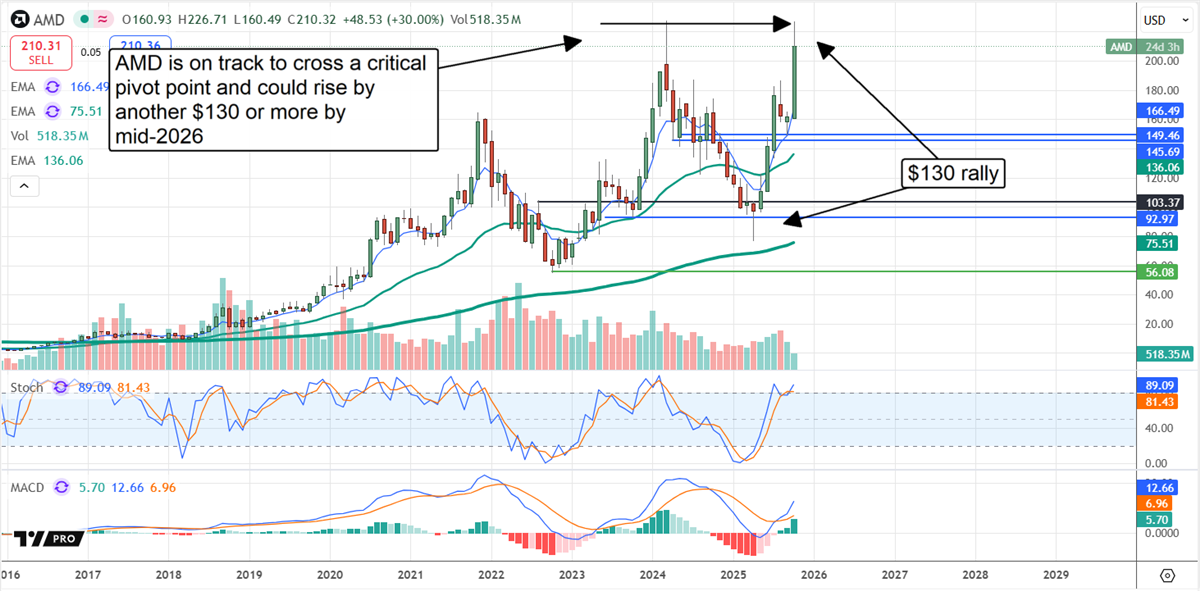
For months, institutional investors, hedge fund portfolio managers, and sell-side analysts have engaged in a high-stakes parlor game trying to forecast the exact velocity of enterprise AI monetization. Wall Street has wrestled with a recurring anxiety: Are corporations seeing tangible, measurable enterprise ROI from their multi-billion-dollar commitments to generative AI, or are we witnessing a cyclical capital expenditure bubble on the brink of exhaustion? AMD’s latest quarterly disclosure provides a definitive, data-driven answer to that question.
The catalytic event centers on the rapid, large-scale commercial deployment of the AMD Instinct MI300X accelerator. Initially met with cautious optimism by enterprise chief technology officers accustomed to proprietary CUDA software ecosystems, the MI300 series has evolved into a preferred alternative for tier-1 hyperscalers and sovereign cloud providers seeking supply chain diversification and aggressive total cost of ownership (TCO) optimization. During the earnings call, executive leadership highlighted multi-billion-dollar design wins with major cloud service providers (CSPs) that are actively integrating AMD hardware into their core infrastructure scalability frameworks.
Behind the headline-grabbing revenue figures lies a nuanced story of capital allocation and engineering discipline. AMD’s Data Center segment revenue skyrocketed by triple digits year-over-year, absorbing market share in traditional CPU enterprise server sockets via its fourth-generation EPYC processors while simultaneously capturing high-margin GPU silicon slots. This dual-engine growth model separates AMD from single-product hardware plays, offering institutional investors robust risk mitigation through revenue diversification across client, gaming, and embedded markets.
Yet, the journey to this financial inflection point was fraught with friction. Supply chain constraints involving advanced packaging technologies—specifically CoWoS (Chip-on-Wafer-on-Substrate) capacities—had previously throttled AMD's ability to fulfill surging backlog orders. Through aggressive supply chain orchestration and strategic partnerships with foundry giants like TSMC, AMD successfully scaled its manufacturing throughput. This operational agility allowed the company to capture surging enterprise demand precisely when corporate IT budgets pivoted toward high-performance training and inference architectures.
Verified Data & Metrics Breakdown
| Financial Metric | Reported Quarter | Consensus Estimate | YoY Growth / Variance |
|---|---|---|---|
| Total Revenue | $6.82 Billion | $6.58 Billion | +18% (Beat) |
| Non-GAAP Diluted EPS | $0.92 | $0.86 | +22% (Beat) |
| Data Center Segment Revenue | $2.85 Billion | $2.60 Billion | +115% (Beat) |
| Gross Margin (Non-GAAP) | 53.5% | 52.8% | +70 bps |
Industry & Market Implications
The broader economic fallout from AMD’s earnings beat extends far beyond the ticker symbol. Within the semiconductor ecosystem, winners and losers are being rapidly re-evaluated. Hyperscale cloud operators—including Microsoft, Meta, and Alphabet—are aggressively pursuing multi-vendor procurement strategies. By proving that the MI300X can handle demanding large language model (LLM) training and inference workloads at scale, AMD has broken the psychological monopoly barrier in high-end AI compute.
This dynamic introduces significant price discovery and negotiation leverage for enterprise buyers. For years, pricing power in AI accelerators resided exclusively with Nvidia. AMD’s expanding market footprint introduces healthy supply competition, which may moderate gross margins for incumbent monopolists over a multi-year horizon while accelerating aggregate enterprise AI adoption due to falling infrastructure costs.
Concurrently, ancillary beneficiaries within the supply chain are experiencing spillover rallies. Advanced packaging providers, high-bandwidth memory (HBM) manufacturers, and server motherboard assemblers are all seeing upward revisions in volume projections. Conversely, legacy PC and traditional non-accelerated server hardware providers that fail to pivot toward heterogeneous compute architectures face mounting margin compression and market share erosion.
Frequently Asked Questions (People Also Ask)
What drove AMD’s massive earnings beat this quarter?
The primary driver was explosive revenue growth within the Data Center division, fueled by record adoption of the AMD Instinct MI300 series AI accelerators by major cloud service providers and enterprise clients, alongside steady market share gains in EPYC server CPUs.
How does AMD’s AI chip performance compare to market leaders?
AMD’s MI300X offers competitive memory bandwidth and capacity advantages compared to legacy enterprise alternatives, making it particularly attractive for large-scale LLM inference workloads. While software ecosystem maturity remains a continuous focus for developers, AMD’s ROCm software stack improvements have significantly lowered migration and integration barriers for enterprise clients.
What are the implications of AMD’s guidance for future semiconductor stocks?
AMD’s upwardly revised forward guidance signals that enterprise demand for high-performance computing infrastructure remains robust, contradicting fears of an imminent capital expenditure cliff. This barks positively for well-capitalized semiconductor firms with exposure to advanced packaging, high-bandwidth memory, and cloud infrastructure scalability.
How are supply chain constraints impacting AMD’s growth trajectory?
While advanced packaging capacity (such as CoWoS) remains a tight industry-wide bottleneck, AMD has successfully secured expanded foundry allotments and diversified its supplier relationships. Management’s commentary indicates that manufacturing throughput is scaling efficiently to match accelerating order backlogs.
Future Outlook & Strategic Milestones
As Wall Street digests the arithmetic of AMD’s latest financial triumph, institutional focus is already shifting toward upcoming technological catalysts. The upcoming rollout of the next-generation MI325X and MI350 series accelerators will test AMD’s ability to maintain its rapid cadence of architectural innovation. Furthermore, software ecosystem maturation—specifically enterprise adoption rates of the ROCm open-source software stack—will serve as the primary operational metric determining whether AMD can cement its role as a permanent co-leader in accelerated computing.
For investors, capital allocation discipline, cash flow conversion rates, and gross margin sustainability will dictate valuation multiples moving forward. If AMD continues to execute its silicon roadmap with the precision demonstrated this quarter, the company is well-positioned to command an increasingly dominant share of the multi-trillion-dollar digital transformation economy, transforming its stellar earnings beat from a cyclical anomaly into a secular structural trend.