As the Chief Technology Editor and Principal Systems Architect at Prime Media, I've witnessed firsthand the transformative power of technological shifts. The current AI revolution isn't just another cycle; it's a foundational re-architecture of our digital world. This seismic shift presents unprecedented opportunities for investors, but also unique challenges. Navigating the volatility and discerning true value amidst the hype requires a disciplined, strategic approach. This masterclass guide provides a comprehensive playbook for leveraging Dollar-Cost Averaging (DCA) to build wealth in megacap AI equities and semiconductor ETFs through 2026 and beyond, focusing on compound returns and robust risk mitigation.
Executive Summary
Test Our Free AI & Tech Utilities Suite
Calculate LLM API token costs, analyze article dwell-time, or simulate tech DCA returns.
- Strategic Entry into Volatile Markets: Dollar-Cost Averaging systematically reduces average purchase price volatility, enabling investors to build positions in high-growth AI megacaps (Nvidia, Microsoft, Apple, Alphabet, Amazon, Meta) and foundational semiconductor ETFs without attempting to time the market.
- Compounding Wealth with AI Tailwinds: Consistent investment in companies at the forefront of AI, cloud computing, and advanced silicon ensures exposure to powerful compound growth drivers, significantly enhancing long-term portfolio value even after accounting for inflation.
- Robust Risk Mitigation: DCA inherently buffers against significant market drawdowns, while diversification across individual AI leaders and broader semiconductor indices, combined with a long-term horizon, forms a critical framework for capital preservation.
- Optimized Portfolio Allocation: Implementing a quantitative portfolio allocation strategy, informed by historical performance, risk tolerance, and the strategic importance of key technologies like GPU memory allocation and enterprise scalability, is paramount for maximizing returns.
In-Depth Technical Guide: Navigating the AI Investment Landscape
Dollar-Cost Averaging (DCA) is a disciplined investment strategy where an investor invests a fixed amount of money at regular intervals, regardless of the asset's price. This approach automatically leads to buying more shares when prices are low and fewer shares when prices are high, ultimately lowering the average cost per share over time. In the context of the rapidly evolving AI sector, where valuations can swing wildly, DCA is not just a tactic; it's a strategic imperative.
Why AI Megacaps and Semiconductor ETFs?
The AI revolution is multifaceted, driven by advancements in algorithms, data, and, crucially, computing power. Megacap tech giants like Nvidia, Microsoft, Apple, Alphabet, Amazon, and Meta are not merely participants; they are the architects and beneficiaries of this new era:
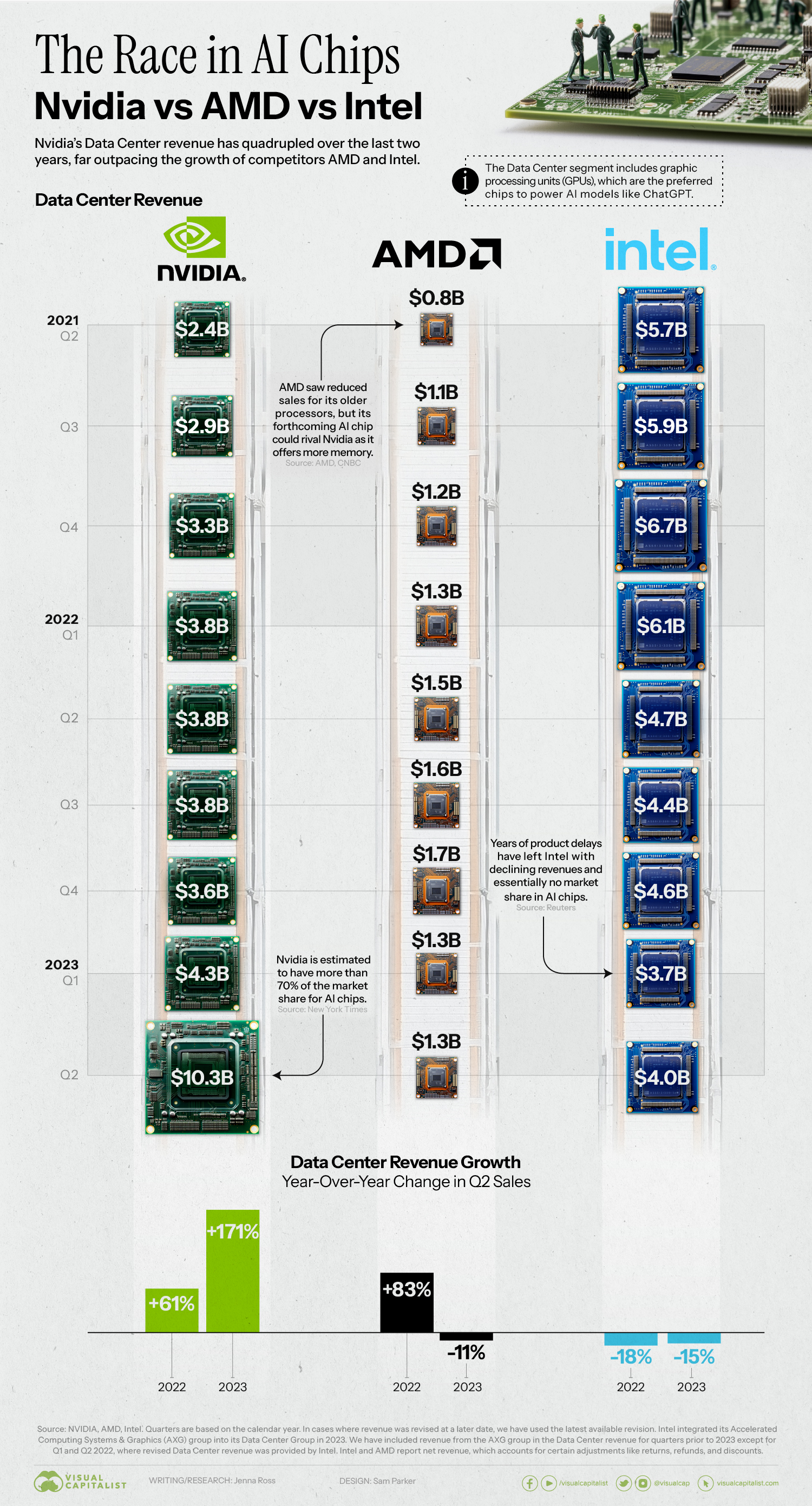
- Nvidia: Dominates the AI chip market, providing the foundational GPUs essential for training and inference in large language models and other complex AI applications. Their CUDA platform is a de facto standard, creating a powerful ecosystem moat.
- Microsoft & Amazon (AWS): Leaders in cloud computing, providing the global infrastructure (Azure, AWS) where AI models are developed, deployed, and scaled. Their extensive cloud compute instances are the backbone of enterprise AI adoption, fueling massive demand for underlying hardware and software services.
- Alphabet (Google): A pioneer in AI research and deployment across search, cloud (Google Cloud), and autonomous driving (Waymo). Their Tensor Processing Units (TPUs) offer specialized AI acceleration.
- Apple: Integrating AI deeply into hardware and software, from on-device inference for privacy to advanced computational photography and personal assistants. Their proprietary silicon designs are increasingly optimized for AI workloads.
- Meta: Investing heavily in AI for content recommendation, metaverse development, and foundational research (e.g., Llama models). Their demand for AI compute resources is immense.
Semiconductor ETFs (e.g., SMH, SOXX) offer diversified exposure to the entire value chain—chip designers, manufacturers, and equipment providers—mitigating single-stock risk while still capturing the sector's growth. These ETFs include not only the obvious AI chip leaders but also companies providing memory, logic, and fabrication services critical for all advanced computing.
Quantitative Frameworks for DCA
Historical Drawdown Simulations (Conceptual)
While we cannot predict future market movements, historical data consistently demonstrates DCA's efficacy during periods of volatility. Consider a hypothetical scenario: an investor commits $1,000 monthly to a tech index over a 20-year period, including the Dot-Com bust, the 2008 financial crisis, and the COVID-19 downturn. During drawdowns, the fixed monthly investment purchases significantly more shares at depressed prices. When the market recovers, these "discounted" shares amplify returns, substantially outperforming a lump-sum investment made just before a downturn. This strategy effectively turns market corrections into opportunities for accelerated accumulation, mitigating the psychological and financial impact of volatility.
Compound Annual Growth Rate (CAGR) Projections
The power of compounding is magnified with DCA in growth sectors. Even if an AI megacap experiences periods of flat or modest growth, consistent investment ensures that any subsequent surge in value applies to a larger base of accumulated shares. For instance, a stock growing at a 15% CAGR over 10 years will turn $10,000 into ~$40,456. With DCA, however, the continuous investment means that each dollar invested earlier benefits from more compounding periods. The key is allowing time for the underlying business growth (e.g., expansion of SaaS subscription models, increased demand for GPU memory allocation, enterprise scalability of AI solutions) to translate into equity appreciation across a growing share base.
Inflation Adjustment Models
Understanding real returns is crucial. A nominal 10% annual return might only be a 7% real return if inflation is 3%. For long-term DCA strategies, especially in a sector like AI where innovation can drive down the cost of computing over time (but increase demand for *more* computing), it's vital to consider inflation. Investors should target assets with growth potential significantly exceeding the prevailing inflation rate to ensure their purchasing power increases. AI megacaps, with their strong pricing power and global reach, are generally well-positioned to outpace inflation, but regular review of real returns is a key component of prudent financial planning.
Risk Mitigation Frameworks
- Diversification: Do not put all your capital into a single AI stock. A balanced approach includes a mix of leading individual AI equities and diversified semiconductor ETFs. This mitigates company-specific risks.
- Long-Term Horizon: DCA is not a short-term trading strategy. A commitment of 5-10+ years allows sufficient time for market cycles to play out and for the underlying value of AI innovations to materialize.
- Automated Investing: Set up automated transfers and purchases through your brokerage. This removes emotion from the investment process and ensures consistency.
- Regular Rebalancing: Periodically (e.g., annually) review your portfolio. If one asset has significantly outgrown others, you might trim some profits and reallocate to underperforming (but still fundamentally strong) assets to maintain your target quantitative portfolio allocation.
Comprehensive Investment Comparison Table: AI Megacaps & Semiconductor ETFs
This table provides a high-level comparison of key investment vehicles within the AI space, aiding in informed DCA allocation decisions.
| Asset Class | Primary AI Driver | Risk Profile | DCA Suitability | Key Advantage |
|---|---|---|---|---|
| Nvidia (NVDA) | GPU & AI Platform Dominance (CUDA, Tensor Cores) | High (Single-company specific) | Excellent (High growth, high volatility) | Unrivaled AI compute infrastructure leadership, strong ecosystem moat. |
| Microsoft (MSFT) | Azure Cloud AI, Enterprise AI Integration, SaaS subscription models | Moderate (Diversified business segments) | Excellent (Stable growth, broad market reach) | Enterprise scalability of AI solutions, deeply integrated across business. |
| Alphabet (GOOGL) | Google Cloud AI, Search AI, Research (DeepMind), TPUs | Moderate (Diversified ad, cloud, and hardware) | Excellent (Consistent innovation, vast data assets) | Pioneering AI research, vast data for model training, strong cloud presence. |
| Amazon (AMZN) | AWS Cloud AI, E-commerce Personalization, Robotics | Moderate (AWS growth, e-commerce scale) | Excellent (Strong cash flow, continuous innovation) | Dominant cloud compute instances, massive scale for AI application. |
| Apple (AAPL) | On-device AI, Custom Silicon (Neural Engine), Ecosystem Integration | Moderate (Strong brand, services growth) | Good (Less direct AI pure-play, but strong integration) | Massive user base for AI feature deployment, proprietary hardware optimization. |
| Meta Platforms (META) | AI for Social Media, Metaverse R&D, Open-source AI Models | High (Advertising reliance, metaverse investment) | Good (High growth potential, significant AI investment) | Extensive AI application in core business, major contributor to open AI research. |
| Semiconductor ETFs (e.g., SMH, SOXX) | Broad exposure to chip design, manufacturing, equipment | Low-Moderate (Diversified sector exposure) | Excellent (Sector-wide growth, reduced single-stock risk) | Diversified access to the foundational technology powering all AI. |
Step-by-Step Implementation Strategy for 2026 DCA
1. Define Your Investment Goals and Risk Tolerance
Before allocating a single dollar, clarify your objectives: Is this for retirement, a down payment, or long-term wealth accumulation? Your time horizon (e.g., 5, 10, 20+ years) and comfort level with market fluctuations will dictate your asset allocation. A younger investor with a longer horizon might lean more heavily into individual AI megacaps, while someone closer to retirement might favor a higher percentage in semiconductor ETFs for diversified stability.
2. Determine Your Budget and Frequency
Commit to a fixed dollar amount you can comfortably invest without impacting your daily finances. This could be weekly, bi-weekly, or monthly. Consistency is far more important than the absolute amount. For instance, committing $500/month is more effective than sporadic $2,000 investments.
3. Select Your Investment Vehicles
Based on your risk tolerance and research, decide on the specific AI megacaps (e.g., NVDA, MSFT, GOOGL) and semiconductor ETFs (e.g., SMH, SOXX) you wish to include. A common approach for a quantitative portfolio allocation might be 60% individual AI leaders and 40% semiconductor ETFs, or vice-versa, adjusted to your conviction and risk profile.
4. Choose a Reputable Brokerage Platform
Select a brokerage that offers low-cost or commission-free trading, supports fractional shares (if you're investing smaller amounts into high-priced stocks), and has robust automation features. Many platforms allow you to set up recurring investments directly into chosen stocks and ETFs.
5. Automate Your Investments
This is the cornerstone of effective DCA. Set up automatic transfers from your bank account to your brokerage account, and then automate the purchase of your selected equities and ETFs on a fixed schedule. This removes emotion and ensures discipline, preventing you from trying to "time" the market.
6. Monitor and Rebalance Periodically
While DCA is passive in execution, it requires active monitoring. Review your portfolio annually. If one asset has grown disproportionately, consider rebalancing to maintain your target allocation percentages. This might involve selling a small portion of an overperforming asset to reinvest in an underperforming one, or simply directing new DCA funds towards the latter. Pay attention to ETF expense ratios to ensure they remain competitive.
People Also Ask (FAQ)
Q1: Is DCA still effective if AI megacaps are already trading at high valuations?
A: Absolutely. DCA's primary benefit is mitigating the risk of investing a lump sum at a market peak. While current valuations for some AI megacaps are indeed elevated, the long-term growth trajectory driven by AI's foundational shift suggests continued appreciation. DCA ensures you're buying into these companies regardless of short-term price fluctuations. You might buy fewer shares when prices are high, but you'll accumulate more during inevitable dips. The focus shifts from market timing to "time in the market," allowing the compounding effect of innovation (e.g., growth in cloud compute instances, expanding enterprise scalability for AI solutions) to work in your favor over years, not months.
Q2: How much should I allocate to individual stocks versus semiconductor ETFs in my DCA strategy?
A: This depends heavily on your risk tolerance and conviction. A common strategy for aggressive investors might be 70% individual AI megacaps (e.g., Nvidia, Microsoft, Alphabet) and 30% semiconductor ETFs (e.g., SOXX, SMH). A more conservative approach might reverse this, opting for 60-70% in diversified ETFs and 30-40% in a select few individual stocks. Individual stocks offer higher potential returns but come with higher idiosyncratic risk. ETFs provide broader market exposure, reducing single-company risk while still capturing sector growth. Your quantitative portfolio allocation should reflect your comfort level with volatility and your belief in specific companies versus the broader industry trend.
Q3: What specific metrics should I monitor for AI megacaps beyond traditional financials?
A: For AI megacaps, look beyond just revenue and EPS. Key performance indicators include:
- Cloud Revenue Growth: (Microsoft Azure, Amazon AWS, Google Cloud) Indicates demand for AI infrastructure and cloud compute instances.
- R&D Investment: High and consistent R&D spend signals commitment to innovation, crucial for staying ahead in AI.
- Market Share in AI Segments: (e.g., Nvidia's GPU market share, Microsoft's enterprise AI adoption).
- Ecosystem Strength: (e.g., Nvidia's CUDA developer base, Apple's proprietary silicon and software integration, Meta's open-source AI contributions).
- GPU Memory Allocation & Processing Power: For chipmakers, advancements in these areas directly translate to AI performance gains.
- SaaS Subscription Models: Growth in recurring revenue from AI-powered software and platforms.
Q4: How does inflation affect my DCA strategy for tech stocks, and should I adjust for it?
A: Inflation erodes the purchasing power of future money, meaning your nominal investment returns need to be higher than the inflation rate to achieve real growth. For tech stocks, especially AI megacaps, the impact can be dual-natured:
- Negative: Higher inflation can lead to increased interest rates, making future earnings less valuable and potentially compressing valuations. It also raises operational costs.
- Positive (for strong companies): Leading tech companies often have pricing power and can pass on increased costs, or their innovative products and services create such high demand that they can grow revenues faster than inflation.
Future Outlook / Key Takeaways
The trajectory of AI innovation is steep and accelerating. From autonomous systems and advanced robotics to personalized medicine and hyper-efficient data centers leveraging cutting-edge cloud compute instances, AI is poised to redefine every industry. The companies leading this charge, particularly the megacaps, are positioned for sustained growth, but not without volatility.
The 2026 Playbook for Tech Stock Dollar-Cost Averaging is not about chasing the next hot tip; it's about disciplined, strategic participation in a transformative technological shift. By consistently investing in the foundational pillars of the AI economy—the chipmakers providing the raw processing power and the cloud giants offering the scalable infrastructure—investors can harness the power of compound returns while mitigating significant market risks. Remember to scrutinize ETF expense ratios, understand the implications of GPU memory allocation advancements, and prioritize enterprise scalability in your analysis.
The key takeaways are discipline, diversification, and a long-term perspective. Automate your investments, stay informed about the underlying technological advancements, and resist the urge to react to short-term market noise. The future of wealth creation lies at the intersection of technology and patient capital. Embrace the power of DCA, and position your portfolio to thrive in the AI-driven economy of tomorrow.