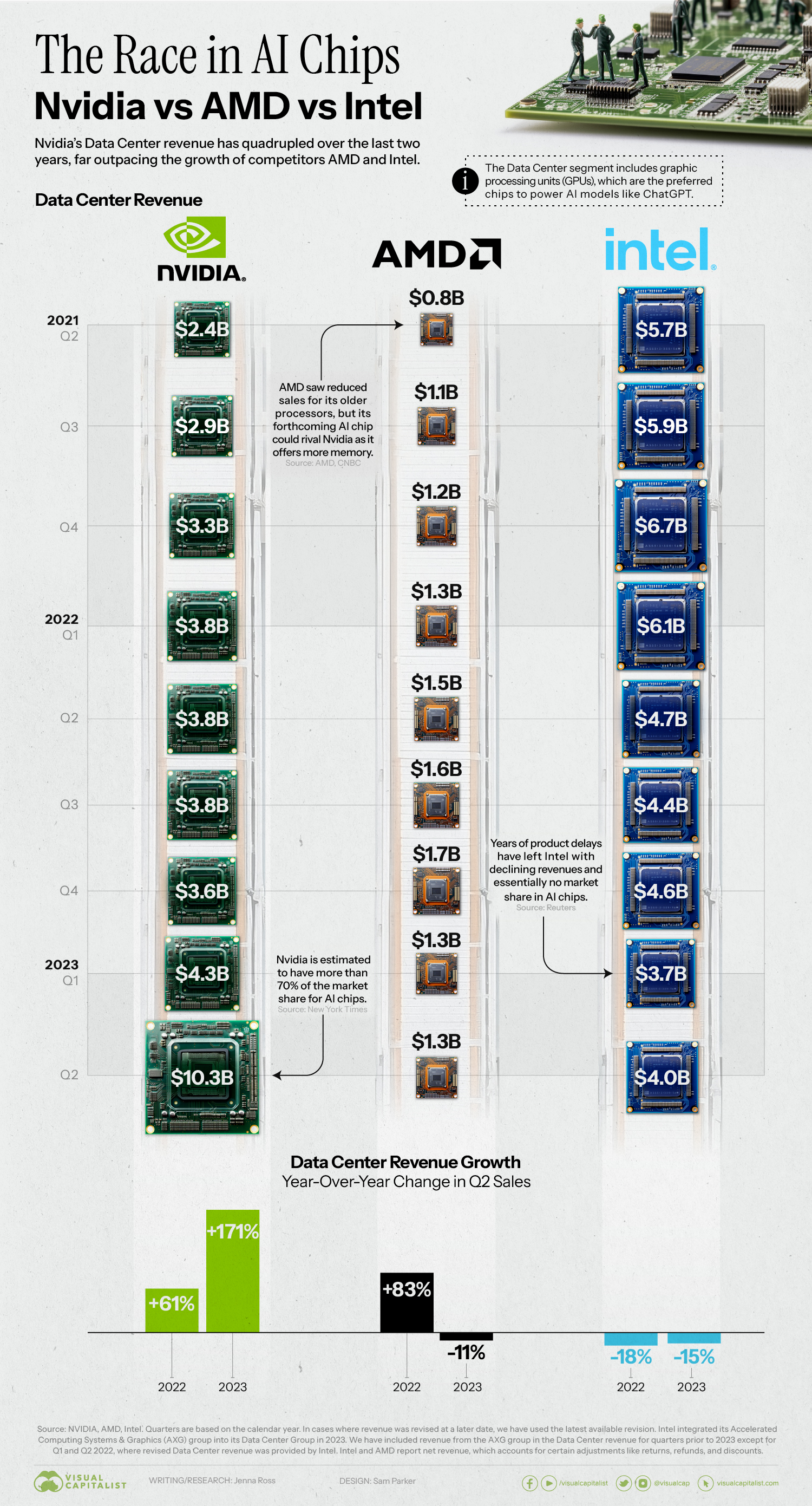
For decades, the semiconductor industry operated on predictable cyclical cadences dictated by consumer PC upgrades, smartphone refresh cycles, and enterprise server replacements. Today, that conventional capital allocation model has been entirely upended. The meteoric rise of generative artificial intelligence has catalyzed a historic structural shift, turning advanced AI accelerators into the single most critical and fiercely contested geopolitical and economic asset on the planet. At the epicenter of this tectonic shift stands NVIDIA, a corporate titan that has successfully translated decades of pioneering parallel computing research into an unprecedented market monopoly, commanding upwards of 80% of the artificial intelligence hardware market.
Yet, the sheer scale of the enterprise AI boom—projected by top-tier financial institutions to drive hundreds of billions in capital expenditure over the next five years—has triggered a gold rush. Hyperscale cloud providers, well-funded venture-backed startups, and legacy silicon giants are aggressively pivoting their research and development budgets to break NVIDIA’s stranglehold. As institutional investors scrutinize enterprise ROI, infrastructure scalability, and supply chain bottlenecks, understanding the broader landscape of over 30 global AI chipmakers is no longer optional for tech executives; it is essential for risk mitigation and strategic positioning.
Executive Takeaways
- NVIDIA’s Unrivaled Moat: Beyond raw hardware performance, NVIDIA’s insurmountable advantage lies in CUDA—its proprietary software ecosystem that locks developers into its hardware architecture, creating massive switching costs and a nearly impenetrable defensive moat.
- The Hyperscaler Counter-Offensive: Cloud giants including Microsoft, Amazon (AWS), Google, and Meta are aggressively deploying custom application-specific integrated circuits (ASICs) to slash inference costs, optimize cloud compute architecture, and reduce margin erosion caused by relying solely on third-party silicon.
- The 30+ Competitor Ecosystem: While NVIDIA dominates training workloads, a fragmented cohort of more than 30 specialized fabless semiconductor companies, legacy giants like AMD and Intel, and sovereign chip initiatives are carving out lucrative niches in edge computing, high-performance inference, and cost-sensitive enterprise deployments.
The Catalytic Shift: From Graphics Processing to the AI Super-Cycle
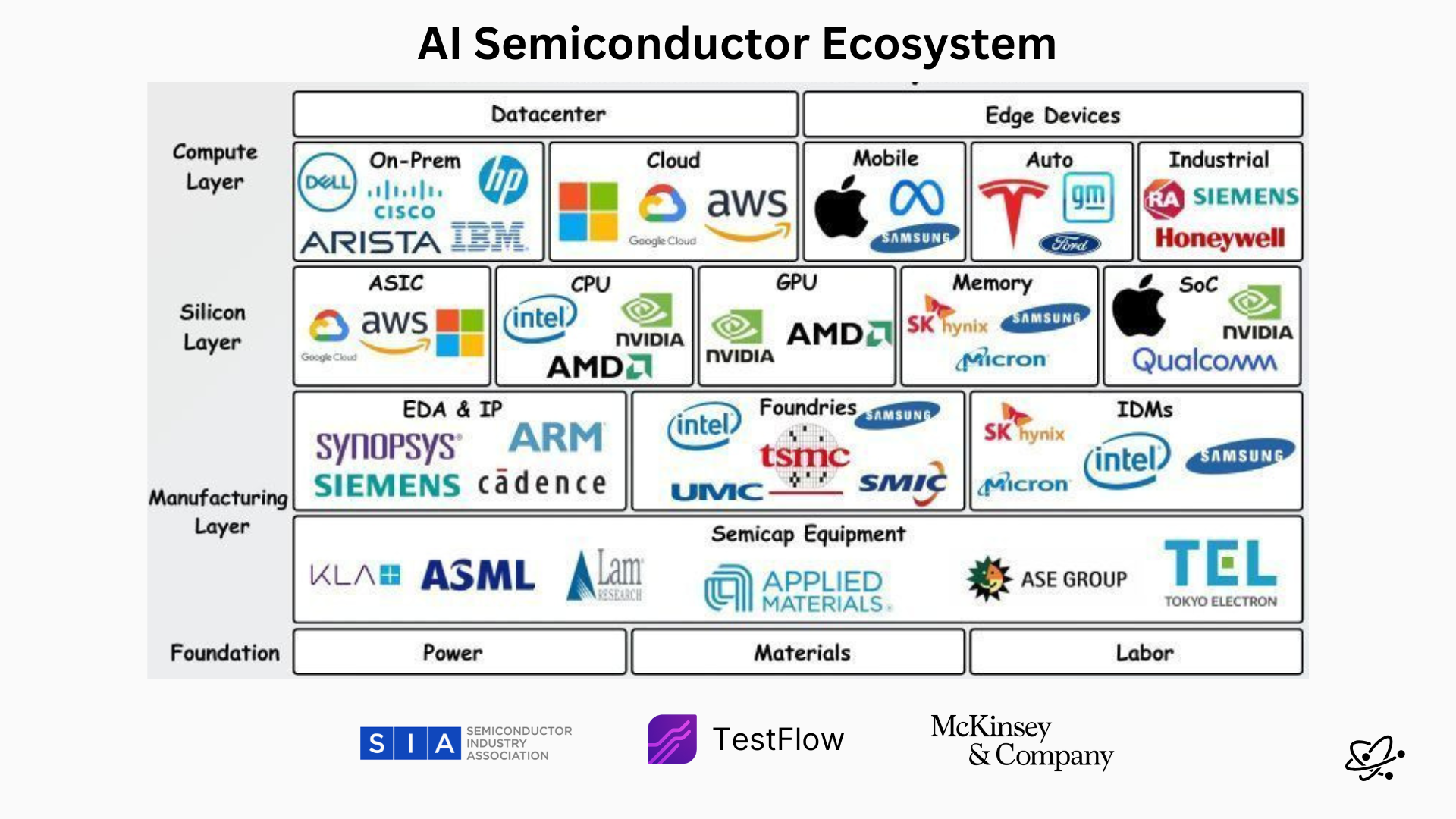
The genesis of the modern AI chip boom can be traced back to a fundamental architectural divergence. Traditional central processing units (CPUs) are engineered for sequential processing—handling complex, multi-threaded tasks one after another. Artificial intelligence, particularly deep learning and large language models (LLMs), relies fundamentally on matrix multiplication and massive parallel processing. Recognizing this decades ago, NVIDIA optimized its Graphics Processing Units (GPUs) to execute thousands of calculations simultaneously.
However, the inflection point occurred in late 2022 with the public deployment of generative AI models. As enterprises rushed to train billions of parameter models, the demand for high-bandwidth memory (HBM) and low-latency interconnects skyrocketed. NVIDIA’s timely release of the Hopper architecture (H100) and subsequent roadmaps positioned the company as the definitive tollbooth for the generative AI revolution. Corporate balance sheets were rapidly restructured; capital allocation strategies shifted overnight from discretionary tech spending to immediate, multi-billion-dollar clusters of AI accelerators.
This unprecedented demand shock exposed acute vulnerabilities across the global technology supply chain, thrusting contract manufacturers like Taiwan Semiconductor Manufacturing Company (TSMC) and advanced packaging specialists into the geopolitical spotlight. For institutional investors and enterprise leaders, navigating this landscape requires a granular examination of how market liquidity, regulatory compliance (such as U.S. export controls targeting advanced semiconductor shipments), and chip architecture intersect.
Deconstructing the Competitive Landscape: NVIDIA vs. The Challengers
While NVIDIA continues to set the benchmark with its Blackwell architecture, the broader ecosystem of over 30 AI chip makers is bifurcating into distinct strategic tiers. To comprehend the trajectory of market valuations and competitive disruption, industry analysts divide the market into three primary categories: Hyperscaler ASICs, Traditional Silicon Rivals, and Specialized Edge/Inference Innovators.
1. The Hyperscalers: Building Proprietary Moats
The largest buyers of NVIDIA hardware are simultaneously its most formidable long-term threats. Alphabet (Google) pioneered custom AI silicon with its Tensor Processing Unit (TPU), utilizing it extensively to train foundational models like Gemini. Amazon Web Services (AWS) has scaled its Trainium and Inferentia chips to offer cost-effective alternatives to enterprise clients seeking optimized cloud compute architecture. Meanwhile, Microsoft and Meta have unveiled custom silicon initiatives designed specifically to handle internal inference workloads, thereby preserving margin health and insulating themselves against future supply chain shocks or pricing power abuses.
2. The Traditional Rivals: AMD and Intel
Advanced Micro Devices (AMD) has emerged as the most credible merchant-silicon alternative to NVIDIA, spearheaded by its Instinct MI300 series. By combining high-density packaging with competitive memory bandwidth, AMD has secured design wins with major cloud providers. Intel, undergoing a historic corporate turnaround and fab-separation strategy, is positioning its Gaudi accelerators as cost-effective training and inference alternatives, betting heavily on open standards to undermine the proprietary CUDA lock-in.
3. The Specialized Innovators and Edge Pioneers
Beyond the headline-grabbing giants, a robust ecosystem of over 30 specialized firms—including SambaNova Systems, Cerebras Systems (known for its massive wafer-scale engine), Groq (pioneering deterministic tensor streaming processors), and Graphcore—are targeting specialized niches. These companies focus on ultra-low latency inference, energy-efficient edge computing for autonomous vehicles and IoT devices, and novel architectures designed to circumvent the memory wall inherent in traditional von Neumann computer designs.
Verified Data & Metrics Breakdown
| Chip Architecture / Series | Primary Manufacturer | Target Workload | Key Architectural Advantage | Market Positioning |
|---|---|---|---|---|
| NVIDIA Hopper / Blackwell | NVIDIA (TSMC Fab) | Training & Large-Scale Inference | Massive FP8 precision acceleration, NVLink interconnect, CUDA software ecosystem. | Definitive Market Leader (~80%+ Share) |
| AMD Instinct MI300X | AMD (TSMC Fab) | Generative AI Training & Inference | High memory capacity (192GB HBM3) and competitive memory bandwidth. | Primary Merchant Silicon Challenger |
| Google TPU v5p | Google / Broadcom | Large-Scale Transformer Training | Deep integration with Google Cloud infrastructure and custom systolic array design. | Leading Hyperscaler Proprietary ASIC |
| AWS Trainium2 / Inferentia2 | Amazon Web Services | Cloud-Scale Inference & Cost-Optimized Training | Optimized for AWS EC2 integration, delivering high price-to-performance ratios. | Cloud-Native Cost Disruption |
| Cerebras Wafer-Scale Engine (WSE-3) | Cerebras Systems (TSMC) | Extreme-Scale Neural Network Training | Single monolithic wafer integrating 4 trillion transistors and massive on-chip SRAM. | Specialized High-Performance Ultra-Scale |
Industry & Market Implications: Winners, Losers, and Economic Realities
The capital reallocation toward AI infrastructure is triggering profound ripple effects across global financial markets. The primary beneficiaries of this structural shift are semiconductor fabrication monopolies, advanced packaging providers (such as ASE Group and Amkor), and high-bandwidth memory suppliers like SK Hynix, Micron, and Samsung. These entities enjoy immense pricing power and expanding valuation multiples as enterprise demand outstrips physical production capacity.
Conversely, the losers in this paradigm include traditional enterprise hardware vendors slow to pivot their product portfolios toward accelerated computing, as well as corporate buyers suffering from capital expenditure fatigue. As Chief Information Officers demand demonstrable enterprise ROI, organizations that over-invest in idle or sub-optimized AI compute infrastructure face severe margin compression. Furthermore, geopolitical tensions surrounding semiconductor manufacturing hubs introduce continuous regulatory compliance risks, forcing multinational firms to diversify their supply chains and embrace multi-sourced hardware strategies.
Frequently Asked Questions (People Also Ask)
1. Why is NVIDIA’s CUDA software ecosystem considered a bigger moat than its hardware?
While NVIDIA’s GPUs offer industry-leading raw computational performance, the CUDA (Compute Unified Device Architecture) platform—released in 2006—provides a comprehensive software development kit that allows developers to program GPUs for general-purpose parallel computing. Because millions of developers and virtually all major deep learning frameworks (PyTorch, TensorFlow) have been optimized for CUDA over nearly two decades, switching to rival hardware creates substantial friction, retraining costs, and performance risks. This software lock-in forms an exceptionally powerful economic moat.
2. How do custom hyperscaler ASICs differ from general-purpose GPUs?
General-purpose GPUs (like those produced by NVIDIA and AMD) are designed to handle a wide variety of parallel workloads, ranging from computer graphics and scientific simulation to complex machine learning training. In contrast, Application-Specific Integrated Circuits (ASICs), such as Google’s TPU or Amazon’s Trainium, are hardwired to execute specific algorithms or machine learning frameworks with maximum efficiency. While ASICs offer superior power efficiency and lower cost per query for specific, predictable workloads, they lack the broad flexibility of GPUs if model architectures undergo radical structural changes.
3. Can startups and smaller chipmakers realistically challenge NVIDIA’s market dominance?
Challenging NVIDIA directly in foundational model training is exceedingly difficult due to the massive capital requirements, fab access constraints, and the entrenchment of the CUDA ecosystem. However, numerous specialized startups are carving out highly profitable niches in high-performance inference, ultra-low-power edge computing, and domain-specific hardware. By focusing on cost optimization, specific architectural bottlenecks (such as memory bandwidth), and open-source software stacks, select innovators are successfully capturing market share among enterprises seeking alternatives to high-priced NVIDIA hardware.
4. What role do geopolitical factors and export controls play in the AI chip market?
Geopolitical friction—particularly between the United States and China—has transformed advanced semiconductors into strategic national security assets. U.S. export controls restrict the sale of high-performance AI accelerators to certain jurisdictions, compelling major chipmakers to develop lower-performance variants for restricted markets. Simultaneously, sovereign nations across Europe, the Middle East, and Asia are subsidizing domestic semiconductor manufacturing and sovereign AI cloud infrastructure to reduce strategic dependency on foreign technology monopolies.
Future Outlook: What Comes Next in the Silicon Arms Race?
As the artificial intelligence market matures from speculative experimentation to deeply integrated enterprise automation, the semiconductor industry is poised for the next phase of evolution. The coming 24 to 36 months will likely witness a consolidation among the 30+ emerging AI chip makers. Companies lacking robust software ecosystems, secure foundry allocations, or clear differentiation in energy efficiency will struggle to secure venture funding or enterprise adoption.
Key technological milestones to monitor include the commercial deployment of optical computing interconnects to eliminate data transfer bottlenecks, the scaling of backside power delivery networks in advanced nodes, and the maturation of open-source compiler frameworks like MLIR (Multi-Level Intermediate Representation) designed to break CUDA's hegemony. For institutional investors, venture capitalists, and corporate strategists, maintaining a disciplined focus on infrastructure scalability, software interoperability, and total cost of ownership will remain the ultimate determinant of success in the trillion-dollar AI chip economy.