Executive Takeaways
- Unprecedented Valuation Compression: Intel shares suffered a catastrophic intraday collapse, shedding nearly 30% of their market capitalization following a disastrous earnings report and weak forward guidance.
- Foundry Strategy Under Fire: Massive capital expenditure requirements for the Intel Foundry Services (IFS) division are severely pressuring free cash flow, dampening near-term enterprise ROI expectations.
- Artificial Intelligence Deficit: The company’s lag in capturing high-margin generative AI workloads has left it dangerously exposed as hyperscalers divert capital expenditure toward accelerated computing architectures.
- -Macroeconomic & Geopolitical Fallout: The sell-off triggers a major reassessment of domestic semiconductor manufacturing, CHIPS Act dependency, and global supply chain risk mitigation.
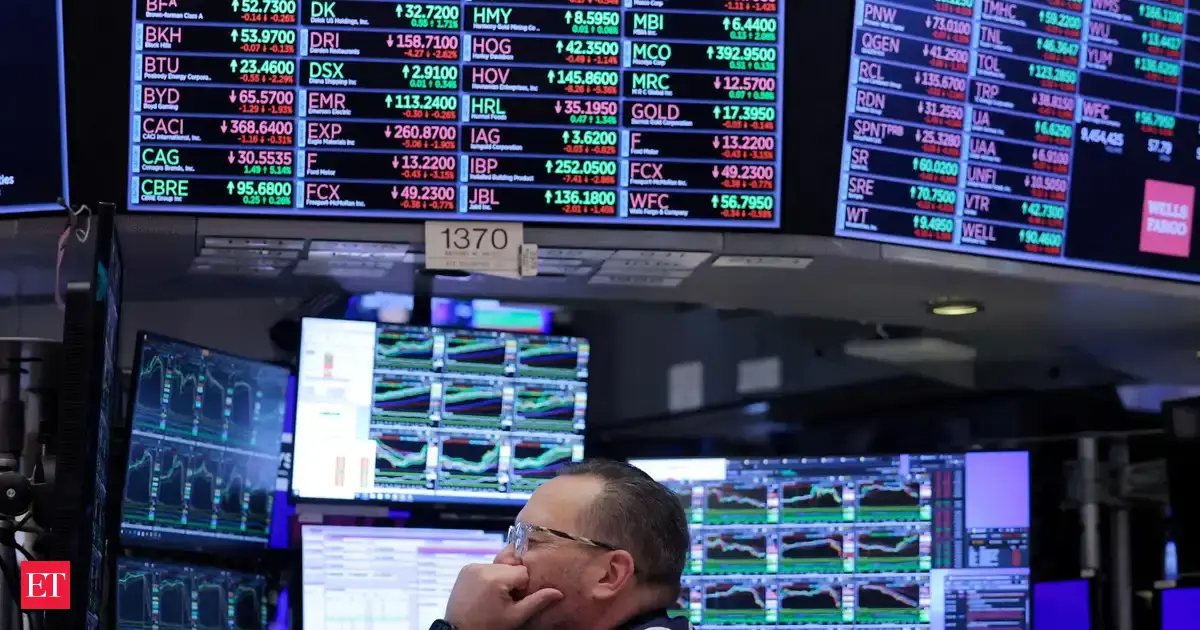
In the high-stakes theater of global semiconductor manufacturing, few days match the sheer structural devastation witnessed as Intel Corporation shares crashed in a historic market rout. Erasing tens of billions of dollars in enterprise value in a single trading session, the nearly 30% plunge stands as one of the most violent valuation adjustments in corporate technology history. For decades, Intel was synonymous with computing supremacy, anchoring the personal computer revolution and dictating the pace of enterprise infrastructure scalability. Today, that legacy is being violently repriced by Wall Street.
As senior financial editors tracking the pulse of global capital markets, our investigation reveals that this is not merely a cyclical earnings miss. Instead, it is the painful convergence of structural strategic miscalculations, aggressive and expensive pivot timelines, and a profound secular shift in cloud compute architecture that left America's premier chipmaker flat-footed against an unprecedented artificial intelligence boom. Below is the comprehensive, authoritative breakdown of how Intel’s house of cards faced its reckoning, the hard metrics behind the sell-off, and what this means for the future of the global technology landscape.
The Catalyst: A Masterclass in Forward Guidance Disappointment
Test Our Free AI & Tech Utilities Suite
Calculate LLM API token costs, analyze article dwell-time, or simulate tech DCA returns.
Markets are forward-looking mechanisms, and what triggered the catastrophic drop was not just backward-looking historical performance, but a grim, unvarnished look into the immediate future. Intel’s executive leadership delivered quarterly guidance that severely missed consensus Wall Street expectations, exposing structural margin degradation.
For institutional investors and portfolio managers monitoring risk mitigation strategies, the erosion of gross margins was the central alarm bell. Historically accustomed to gross margins hovering comfortably above 50%—the lifeblood required to fund heavy research and development (R&D)—investors watched in horror as management projected margins contracting toward historic lows. This margin compression is driven by an unholy trinity: the expensive ramp-up of next-generation fabrication nodes, lower utilization rates in legacy wafer fabs, and a fierce price war in the client PC and traditional server CPU markets where rival Advanced Micro Devices (AMD) and ARM-based architectures continue to capture secular market share.
Furthermore, the capital allocation strategy championed by the C-suite has come under intense scrutiny. To rebuild American semiconductor independence, Intel committed to an aggressive, multi-year fab-building spree across the United States and Europe. While politically strategic and aligned with federal legislative initiatives like the CHIPS Act, this capital-intensive model has proven toxic to short-term free cash flow. In an era where institutional allocators demand high capital efficiency and immediate enterprise ROI, Intel’s balance sheet looks increasingly overburdened.
The AI Blind Spot: Missing the Generative Compute Wave

The structural root of Intel’s crisis lies in its catastrophic misjudgment of the generative AI inflection point. While hyperscale cloud providers and enterprise buyers radically reallocated billions of dollars toward accelerated computing and graphics processing units (GPUs) optimized for large language model (LLM) training and inference, Intel remained tethered to its traditional CPU-centric roadmap.
Despite belated efforts to scale accelerators such as its Gaudi AI hardware portfolio, Intel has failed to capture meaningful market share in the booming AI data center ecosystem. Competitors have entrenched themselves as the undisputed picks-and-shovels providers of the artificial intelligence gold rush. Consequently, as enterprise IT budgets consolidate around accelerated computing infrastructure, Intel’s legacy Xeon server processors have experienced margin-crushing commoditization.
This dynamic has created a severe valuation multiple decoupling. While peers trade at premium multiples justified by explosive AI-driven top-line growth, Intel is now being valued as a distressed industrial manufacturer burdened by cyclical headwinds and structural execution risk.
Verified Data & Metrics Breakdown
To contextualize the scale of the collapse, the following data table outlines the core financial, operational, and market metrics driving the current crisis:
| Metric / Indicator | Pre-Crisis Baseline | Current Status / Guidance | Market Impact & Implication |
|---|---|---|---|
| Intraday Share Price Drop | Stable Trading Range | Down ~30% in Single Session | Historic destruction of market liquidity and equity value. |
| Gross Margin Percentage | ~40% - 45% (Historical) | Substantial Compression Projected | Eliminates financial cushion needed for high R&D spending. |
| Foundry (IFS) Operating Loss | Multi-billion dollar deficit | Losses widening near-term | Delays timeline to operational break-even and profitability. |
| AI Accelerator Market Share | Marginal / Nascent | Failing to dent dominant rivals | Missed high-margin enterprise AI infrastructure boom. |
Industry & Market Implications: Who Wins, Who Loses
The ramifications of Intel’s historic sell-off extend far beyond its own shareholder base, sending shockwaves across the global technology supply chain, sovereign economic policy, and competitive market dynamics.
The Winners
- Rival Semiconductor Designers: Companies like AMD and ARM-based silicon designers stand to pick up significant enterprise client and server market share as corporate IT buyers seek reliable, high-performance alternatives to Intel’s product roadmap.
- Pure-Play Foundries: Competitors specializing in advanced node contract manufacturing stand to capture fabless design houses that may lose confidence in Intel Foundry Services (IFS) as a viable second-source alternative to Taiwan Semiconductor Manufacturing Company (TSMC).
The Losers
- Long-Term Institutional Shareholders: Pension funds, index funds, and retail investors heavily exposed to legacy tech portfolios face severe capital degradation and dividend sustainability concerns.
- U.S. Semiconductor Geopolitical Strategy: Policymakers banking on Intel as the primary domestic champion to secure the American microelectronics supply chain now face uncomfortable questions regarding execution timelines and financial viability.
Frequently Asked Questions (People Also Ask)
Why did Intel stock drop almost 30% in a single day?
The dramatic sell-off was triggered by a combination of disastrous forward guidance, steep projected gross margin compression, widening operating losses in its foundry division, and a pervasive lack of confidence in the company's ability to capture high-margin artificial intelligence workloads.
Is Intel’s foundry strategy failing?
While not entirely failed, Intel Foundry Services (IFS) is under extreme financial pressure. The immense capital expenditure required to build and tool modern fabrication plants has severely strained free cash flow, and convincing external enterprise customers to manufacture chips on Intel's nodes has proven slower and more difficult than projected.
Can Intel recover from this historical crash?
Recovery is possible, but it requires a painful, multi-year operational turnaround. Management must successfully execute its next-generation process node roadmap (such as 18A), drastically optimize cost structures, and find a viable strategic path to monetize AI hardware without burning through remaining cash reserves.
What does this mean for the future of PCs and servers?
In the short term, enterprise IT buyers and PC original equipment manufacturers (OEMs) are closely monitoring supply chain stability and diversification. While Intel remains a massive volume producer, competitors are rapidly seizing technological and performance leadership in high-end segments.
Future Outlook: Critical Milestones and What to Watch
As the dust settles on one of the most tumultuous trading sessions in modern financial history, the road ahead for Intel is fraught with high-stakes operational checkpoints. For institutional analysts, credit rating agencies, and technology strategists, several forward-looking milestones will dictate whether this crash represents a terminal secular decline or a painful cyclical bottoming out:
- Execution on 18A Node: The commercial success and yield stability of Intel's upcoming manufacturing nodes will determine if external foundry customers sign on in meaningful volume.
- Capital Expenditure Rationalization: Investors will demand strict capital discipline. Any signal from management that capex is being scaled back to protect liquidity will be viewed favorably by the market.
- Strategic Structural Actions: Wall Street will continue to pressure leadership regarding potential corporate restructuring, including the radical option of completely spinning off the foundry business from the product design division.
Ultimately, Intel’s crisis serves as a brutal reminder of the unforgiving nature of modern technology markets. In an era defined by lightning-fast paradigm shifts, historical dominance and legacy prestige provide no immunity against structural disruption. The coming quarters will test whether an American corporate titan can successfully reinvent itself under the unforgiving glare of global financial markets.