Executive Takeaways
- Landmark Milestone: NASA astronauts successfully executed the historic 100th US-designated spacewalk from the International Space Station (ISS), reinforcing decades of human spaceflight operational capability.
- Critical Infrastructure Upgrade: The Extravehicular Activity (EVA) focused on deploying an advanced Roll-Out Solar Array (iROSA), directly addressing declining baseline power output and boosting station energy capacity to 120 kilowatts.
- Commercial & Economic Ripple Effects: The mission underscores the heavy capital expenditure required to maintain low-Earth orbit (LEO) operational assets, directly impacting aerospace prime contractors, supply chain logistics, and the valuation multiples of emerging commercial space platforms.
- Meticulous risk mitigation and engineering protocols governed the high-stakes operation, ensuring minimal exposure to micro-meteoroid debris and thermal management fluctuations.
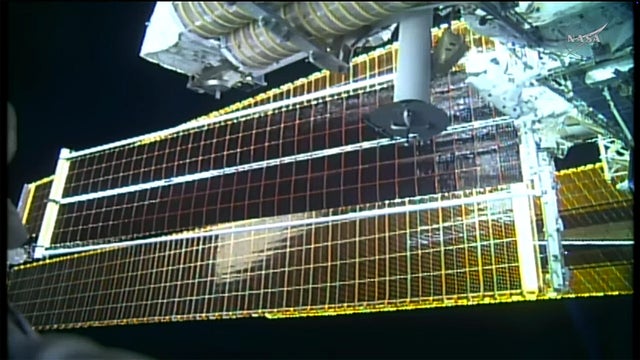
WASHINGTON & HOUSTON — In an industry where operational longevity is measured in decades and capital expenditure runs into the tens of billions of dollars, the International Space Station (ISS) has achieved another monumental milestone. NASA astronauts ventured outside the confines of the orbiting laboratory to execute the 100th United States-segment spacewalk in the station’s quarter-century history. Beyond the symbolic weight of the centennial Extravehicular Activity (EVA), the mission delivered a vital technical imperative: the deployment of a heavy-duty Roll-Out Solar Array (iROSA) designed to upgrade the aging outpost's power generation infrastructure and secure its electrical throughput for future commercial and scientific endeavors.
For institutional investors, aerospace analysts, and policy-makers, this landmark EVA serves as a real-time stress test of orbital asset management. As the global space economy transitions from government-monopsony models to complex, multi-stakeholder public-private partnerships, the physical infrastructure of the ISS remains the foundational bedrock. Maintaining uninterrupted cloud compute architecture, life support systems, and microgravity manufacturing payloads relies entirely on robust capital allocation toward power distribution and system resilience.
The Catalytic Need for Power: Upgrading LEO Architecture
Test Our Free AI & Tech Utilities Suite
Calculate LLM API token costs, analyze article dwell-time, or simulate tech DCA returns.
Launched in phases beginning in late 2000, the ISS power grid was originally designed with an operational lifespan of roughly 15 years. Today, well past its intended expiration date, the station’s original photovoltaic arrays have degraded, losing efficiency due to years of atomic oxygen exposure, thermal cycling, and micro-meteoroid impacts. This gradual decay threatened to bottleneck on-board research, commercial leasing by private enterprises, and critical life support redundancy.
To preemptively mitigate this looming infrastructural deficit, NASA and its prime aerospace contractors engineered the iROSA solution. Unlike rigid solar panels of the past, these modern arrays are rolled up tightly for transit inside cargo spacecraft and then unfurled dynamically in orbit using stored strain energy. The deployment executed during the 100th US spacewalk represents a core component of a multi-mission campaign to install six new arrays, boosting the station's total power generation capacity from a degraded 160 kilowatts back to an augmented 215 kilowatts.
From an enterprise risk mitigation perspective, the success of this deployment is non-negotiable. A power deficit aboard the ISS would immediately compress operating margins for commercial payloads, interrupt proprietary pharmaceutical and materials science research, and force a contraction of crew size. Consequently, mission planners approached the 100th EVA with exhaustive regulatory compliance checks, meticulous telemetry simulations, and rigorous safety protocols.
Inside the Landmark EVA: Engineering Precision in a Vacuum
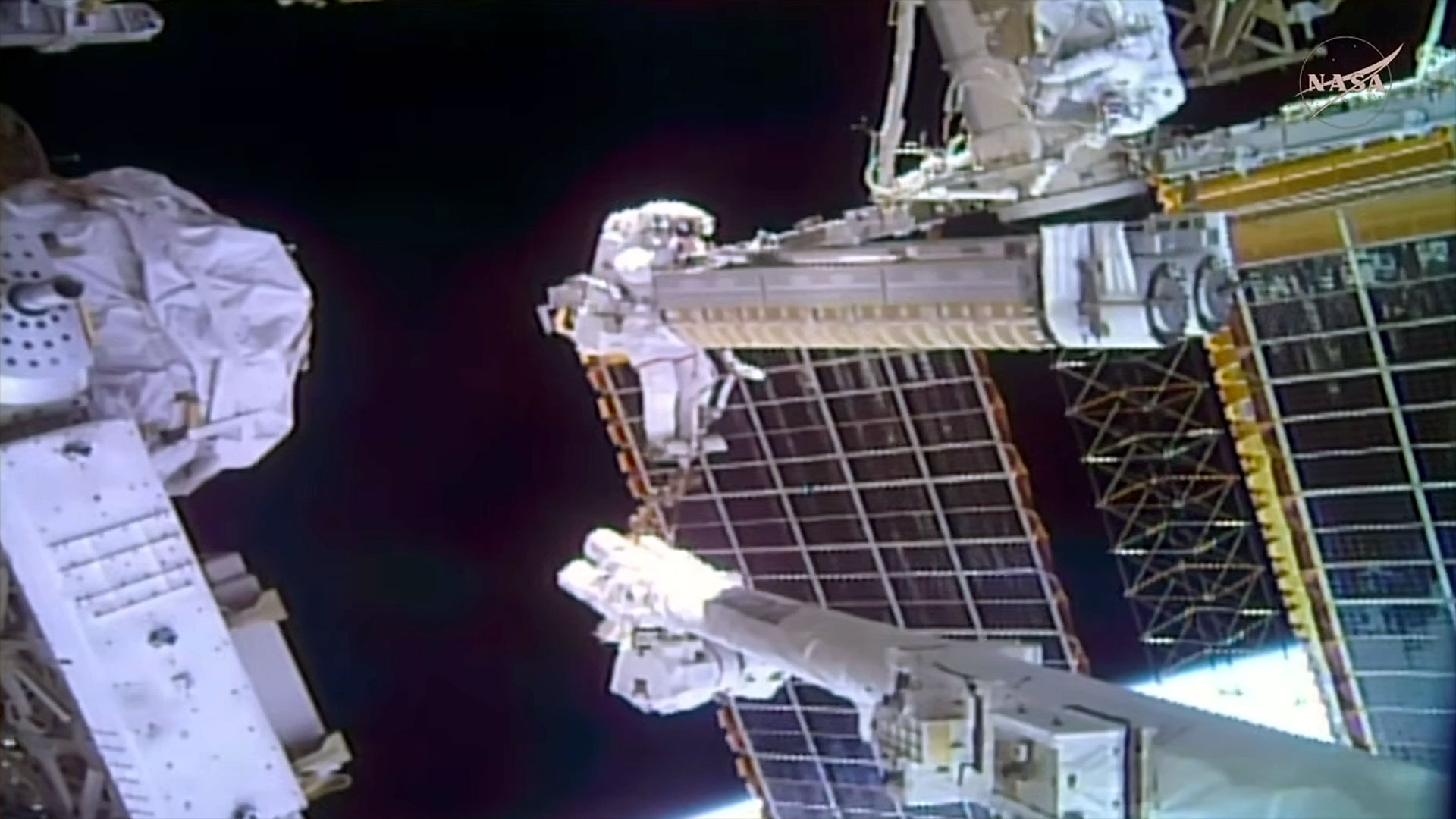
Executing a spacewalk requires surgical coordination between astronauts working in pressurized suits and flight controllers monitoring telemetry from Mission Control in Houston. During the landmark 100th EVA, the spacewalkers confronted the unforgiving environment of low-Earth orbit: temperatures swinging by hundreds of degrees, orbital velocities exceeding 17,500 miles per hour, and the perpetual hazard of orbital debris.
The operational sequence required the crew to release launch-lock mechanisms, maneuver the bulky, high-tension solar blanket into position along the station's starboard truss structure, and secure electrical connections to integrate the new power channel into the existing grid. The deployment mechanics demanded exact torque application and fault-tolerant hardware handling, highlighting the supreme proficiency required of modern flight crews.
This operational milestone also invites reflection on the historical arc of US spacewalks. From the pioneering days of the Space Shuttle program and early ISS assembly missions—where astronauts constructed the structural skeleton of the station piece by piece—to today’s sophisticated maintenance and life-extension operations, the evolution of EVA protocols has transformed high-risk space exploration into a disciplined, repeatable industrial process.
Verified Data & Metrics Breakdown
| Metric / Specification | Historical Baseline (Early ISS) | Current Status / Modern Upgrade (iROSA) |
|---|---|---|
| Total US-Segment Spacewalks | 1 (December 1998, STS-88) | 100 (Landmark Milestone Achieved) |
| Total Station Power Output | ~160 kW (Peak nominal design) | Restoring & expanding toward 215 kW capacity |
| Solar Array Technology | Rigid, hinged metallic panels | Flexible Roll-Out Solar Arrays (iROSA) |
| Orbital Altitude & Speed | ~250 miles at 17,500 mph | ~250 miles at 17,500 mph |
Industry & Market Implications: Who Wins and Who Loses
The successful execution of the 100th US spacewalk carries significant ripple effects across the aerospace, defense, and commercial space sectors. As governments and private enterprises recalibrate their capital expenditure strategies for low-Earth orbit, several clear economic dynamics emerge:
- Aerospace Prime Contractors & Hardware Suppliers: Companies specializing in advanced materials, photovoltaic cells, and precision actuation mechanisms are primary beneficiaries. The proven reliability of the iROSA system solidifies long-term procurement contracts with NASA and commercial station developers.
- Commercial Station Developers: Emerging entities planning private orbital destinations (such as Axiom Space, Orbital Reef, and Blue Origin) are closely watching these infrastructure upgrades. The operational data gathered from maintaining and upgrading the ISS provides an invaluable baseline for designing maintainable, long-life commercial habitats.
- Legacy Infrastructure vs. New Entrants: While the ISS remains a marvel of engineering, the massive ongoing capital allocation required to sustain it underscores the financial burden facing public space agencies. As the ISS nears its planned deorbit timeline in the early 2030s, market liquidity and private equity investment are shifting toward leaner, commercially-operated platforms designed for lower operating overheads.
- Insurance and Risk Mitigation Markets: Underwriters evaluating space asset risks view successful complex EVAs as proof of robust engineering mitigation, which could eventually translate into more favorable valuation multiples and premium structures for commercial satellite and station operators.
Frequently Asked Questions (People Also Ask)
What is the primary purpose of the new iROSA solar arrays on the ISS?
The Roll-Out Solar Arrays (iROSA) are designed to supplement and upgrade the aging original power generation system of the International Space Station. Over years of operation, the original photovoltaic panels have degraded. The new arrays increase total electrical power capacity to 215 kilowatts, ensuring sufficient energy for life support systems, scientific experiments, and growing commercial payloads.
How many total US spacewalks have been conducted, and why is the 100th significant?
With this mission, NASA astronauts have officially completed 100 US-segment spacewalks dedicated to the assembly, maintenance, and upgrade of the space station since construction began in 1998. This centennial mark highlights decades of cumulative engineering expertise, refined EVA safety protocols, and the ongoing viability of human operations in low-Earth orbit.
How do astronauts deploy the roll-out solar arrays in microgravity?
Unlike rigid solar panels that require complex mechanical hinges, iROSA units utilize flexible photovoltaic blankets rolled tightly for transport inside cargo spacecraft. During a spacewalk, astronauts extract the rolls, mount them onto structural brackets along the station's truss, and release restraint mechanisms that allow the blankets to automatically unfurl using stored strain energy.
What are the economic implications of maintaining aging orbital infrastructure?
Maintaining the ISS requires substantial ongoing capital expenditure from government agencies and participating international partners. However, these investments yield vital operational data, technology validation, and risk mitigation strategies that directly inform the design of future commercial space stations, private manufacturing platforms, and deep-space exploration initiatives.
Future Outlook: Next Milestones in Orbital Infrastructure
As the international community digests the technical success of the 100th US spacewalk, attention quickly turns to the remaining horizon of low-Earth orbit operations. The immediate roadmap demands the installation of the remaining iROSA units over the coming fiscal quarters, ensuring peak power stability through the remainder of the station's operational lifecycle.
Concurrently, aerospace executives and financial markets are pivoting toward the post-ISS era. The transition from a government-owned laboratory to a robust ecosystem of commercial space stations will require unprecedented levels of capital allocation, supply chain optimization, and regulatory harmonization. Milestones such as this 100th spacewalk prove that humanity possesses the engineering rigor necessary to conquer orbital maintenance; the ultimate test moving forward will be scaling those capabilities profitably within a burgeoning commercial marketplace.