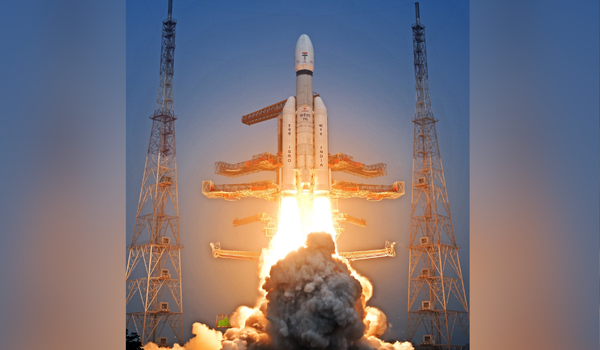
Space Race Disrupted: Inside ISRO’s High-Stakes Launch of US BlueBird Satellites to End Cellular Dead Zones
BENGALURU & NEW YORK — In a move that fundamentally reshapes the global commercial space race, the Indian Space Research Organisation (ISRO) has successfully launched the United States-based AST SpaceMobile’s highly anticipated BlueBird Block-2 communication satellite into Low Earth Orbit (LEO). Executed through ISRO’s commercial arm, NewSpace India Limited (NSIL), the launch marks a massive geopolitical and economic victory for both India's space program and the US-backed telecom venture aiming to eliminate global cellular dead zones.
The successful deployment cements ISRO's position as the premier, high-reliability alternative to Western launch providers like SpaceX. For AST SpaceMobile, backed by telecom giants AT&T, Verizon, and Vodafone, the launch of the BlueBird Block-2 represents the critical scaling phase of the world’s first space-based cellular broadband network designed to connect directly to standard, unmodified smartphones.
Executive Summary: The Launch at a Glance
- The Payload: AST SpaceMobile’s next-generation BlueBird Block-2 satellite, featuring the largest commercial communication arrays ever deployed in Low Earth Orbit.
- The Launcher: ISRO’s heaviest and most reliable commercial launch vehicle, deployed from the Satish Dhawan Space Centre (SDSC) in Sriharikota, India.
- The Mission Objective: Accelerating the deployment of direct-to-cell (D2C) orbital infrastructure to provide seamless 5G broadband connectivity to standard smartphones globally.
- Strategic Impact: Solidifies the US-India defense and space cooperation framework (iCET) while offering commercial satellite operators a viable, cost-effective counterweight to SpaceX’s Falcon 9 monopoly.
Why the BlueBird Block-2 Matters to Wall Street and Silicon Valley
The successful injection of the BlueBird Block-2 satellite into LEO is not merely a technical milestone; it is a market-defining event. Unlike traditional satellite internet services like Starlink, which require specialized ground terminals (dishes), AST SpaceMobile’s technology bypasses intermediate hardware. The BlueBird satellites act as cellular towers in space, transmitting broadband signals directly to the standard cellular chips already inside billions of smartphones worldwide.
For investors, this launch is the ultimate proof of concept for scaling commercial operations. The BlueBird Block-2 satellites feature massive aperture arrays that dramatically increase data throughput, lowering latency and providing true 5G speeds from orbit. This capability is critical for unlocking lucrative government, military, and consumer contracts in regions where traditional terrestrial infrastructure is non-existent or economically unviable.
Key Launch Parameters & Mission Profile
The precision launch by ISRO placed the massive BlueBird payload into its targeted inclination, ensuring optimal orbital passes over key telecommunication markets in North America, Europe, and Asia. Below are the verified metrics of this historic joint mission:
| Parameter | Mission Specifications |
|---|---|
| Launch Operator | Indian Space Research Organisation (ISRO) / NSIL |
| Primary Payload | AST SpaceMobile BlueBird Block-2 |
| Launch Site | Satish Dhawan Space Centre (SDSC), Sriharikota, India |
| Target Orbit | Low Earth Orbit (LEO) |
| Primary Telecom Partners | AT&T, Verizon, Vodafone, Google, Rakuten |
| Technology Focus | Direct-to-Cell (D2C) 5G Satellite Broadband |
Geopolitical Synergy: The US-India Space Corridor Strengthens
As Western satellite operators grow increasingly wary of over-reliance on single-source launch providers, India’s ISRO has aggressively positioned itself to capture market share. Under the US-India Initiative on Critical and Emerging Technology (iCET), Washington and New Delhi have actively encouraged joint ventures in the aerospace sector to counter geopolitical rivals.
Industry analysts point out that ISRO’s competitive pricing, combined with an unblemished reliability record for its heavy-lift vehicles, makes it an attractive partner for American high-tech firms. For AST SpaceMobile, utilizing ISRO’s capabilities mitigates the regulatory and logistical bottlenecks currently plaguing Western launch manifests, where commercial operators often find themselves waiting in long queues behind proprietary or military payloads.
What the Leadership Says
Commenting on the successful orbit injection, senior representatives highlighted the deep technical integration required to execute a launch of this scale. The BlueBird Block-2 is notoriously complex due to its massive, deployable antenna structure, which requires highly precise thermal and structural management during launch and fairing separation.
"This successful mission represents a milestone not just for ISRO and NSIL, but for the global telecommunications ecosystem," noted a senior official associated with the launch program. "By successfully orbiting US-designed, next-generation commercial payloads, we have demonstrated India's capability to serve as a reliable, highly efficient launch partner for the most sophisticated aerospace companies in the world."
In a statement tracking the progress of the BlueBird constellation, AST SpaceMobile executives emphasized that this launch brings the company significantly closer to continuous, nationwide coverage in the United States and selected global corridors, transforming how emergency services, rural communities, and logistics networks operate.
Future Outlook: The Direct-to-Cell Market War
With the BlueBird Block-2 successfully deployed, the race for orbital spectrum dominance enters its most aggressive phase yet. AST SpaceMobile is locked in a high-profile race against SpaceX’s Starlink direct-to-cell service and Lynk Global. However, AST’s strategy of utilizing existing, premium cellular spectrum in partnership with local mobile network operators (MNOs) gives it a distinct regulatory and commercial advantage.
For ISRO, this launch paves the way for a steady pipeline of commercial contracts. As the demand for mega-constellations grows, NSIL is actively scaling up its launch cadences, aiming to double its heavy commercial launch frequency over the next three years. This partnership signals to the global market that India is no longer just an regional space player, but a dominant commercial powerhouse capable of carrying the future of global telecommunications.
Frequently Asked Questions (FAQ)
1. What makes the BlueBird Block-2 satellite different from regular communication satellites?
Traditional communication satellites require users to have large, specialized ground equipment or satellite phones. BlueBird Block-2 is a Direct-to-Cell (D2C) satellite. It features incredibly large antennas designed to connect directly to standard, off-the-shelf smartphones utilizing standard cellular frequencies, allowing users to access 5G internet in areas with absolutely no cell towers.
2. Why did US-based AST SpaceMobile choose India's ISRO for this critical launch?
ISRO, through its commercial arm NSIL, offers highly competitive launch economics, superb orbital precision, and an exceptionally reliable launch track record. Choosing ISRO allows US space firms to diversify their launch risk, bypass domestic launch backlogs, and strengthen strategic commercial ties under the growing US-India aerospace defense agreements.