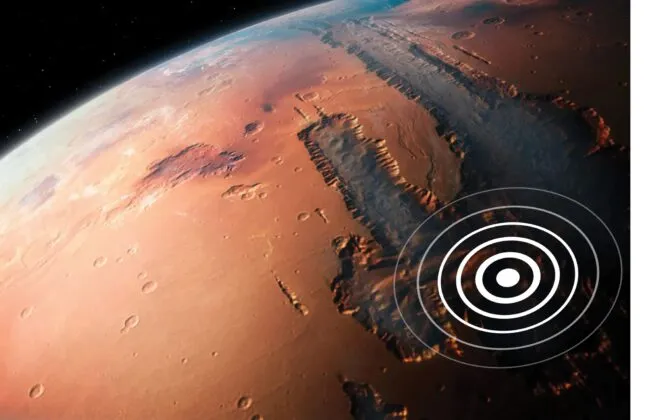
Executive Takeaways
- Pioneering Orbital Logistics: The Japan Aerospace Exploration Agency (JAXA), in tandem with premier international space agencies, has launched the landmark Martian Moons eXploration (MMX) mission, aimed at executing the world’s first physical sample retrieval from Mars's inner moon, Phobos.
- Unmatched Cost-Efficiency: By leveraging Mitsubishi Heavy Industries’ (MHI) upgraded H3 launch platform and modular payload architecture, JAXA has constrained total mission CapEx to a fraction of NASA’s parallel $11 billion Mars Sample Return (MSR) initiative.
- Supply Chain & Industrial Acceleration: The mission serves as an operational proving ground for Japan’s precision aerospace ecosystem, accelerating commercialization across rad-hardened electronics, high-efficiency chemical-electric propulsion, and autonomous guidance, navigation, and control (GNC) algorithms.
- Geopolitical Stature: Success establishes Tokyo as a frontrunner in deep-space sovereign capability, disrupting the strategic dynamic traditionally dominated by Washington and Beijing while providing critical data on early solar system evolution and planetary defense mechanisms.
1. The New Frontier of Planetary Exploration: Japan’s Strategic Leap
The global space economy—now rapidly scaling toward a projected $1.8 trillion market valuation by 2035—is witnessing a major shift in deep-space exploration dynamics. While historical interplanetary missions focused primarily on atmospheric flybys and remote orbital remote sensing, JAXA has carved a distinct competitive moat in high-precision, low-gravity sample return operations. Following the success of its Hayabusa and Hayabusa2 missions, which successfully returned surface regolith from near-Earth asteroids Itokawa and Ryugu, Japan has elevated its strategic ambitions to the Martian gravity well.
The Martian Moons eXploration (MMX) mission represents a multi-hundred-million-dollar deployment of deep-space architecture designed to resolve a fundamental planetological debate: whether Mars’s moons—Phobos and Deimos—are captured carbonaceous asteroids or the debris products of an ancient, catastrophic protoplanetary impact. Unlocking this origin narrative provides structural baseline data for planetary formation models, solar nebula dynamics, and volatile distribution across the inner Solar System.
Beyond the pure scientific baseline, MMX carries profound geopolitical and commercial weight. As planetary exploration transitions from national prestige projects to dual-use infrastructure and resource mapping, the ability to land on, sample, and launch from low-gravity bodies in deep space represents a foundational core competency for future orbital logistics, asteroid mining, and sovereign interplanetary operations.
2. Engineering & Payload Economics: Architecture of the MMX Spacecraft
The MMX mission architecture is built on a high-reliability three-module spacecraft stack with a gross liftoff mass of approximately 4,000 kilograms. Designed to navigate complex gravitational perturbations between Mars and its moons, the spacecraft integrates advanced, redundant propulsion and operational systems tailored to maximize scientific return while mitigating mission-critical failure modes.
Propulsion & Delta-V Management
Navigating to Mars, inserting into a highly elliptical Martian orbit, transitioning to a Quasi-Satellite Orbit (QSO) around Phobos, and subsequently executing a Earth-return trajectory requires an extraordinarily precise Delta-V budget. MMX utilizes a hybrid propulsion strategy, combining high-thrust bipropellant chemical engines for rapid orbital maneuvers with precision reaction control systems (RCS) for low-gravity proximity operations and touchdown. The primary propulsion stack delivers the required velocity changes to overcome Mars’s substantial gravity well, a task far more demanding than previous asteroid missions.
Scientific Instrument Suite & Micro-Rover Operations
The payload stack contains ten advanced scientific instruments, backed by international co-funding and risk-sharing agreements with foreign space agencies:
- IDEFIX Micro-Rover: Developed in a joint partnership between the French space agency (CNES) and the German Aerospace Center (DLR), this 25-kilogram autonomous rover will be deployed ahead of the main lander to conduct zero-risk surface reconnaissance, analyzing regolith mechanical properties to ensure safe touchdown of the primary spacecraft.
- Pneumatic & Coring Samplers: JAXA has engineered dual redundant sampling systems. The primary mechanism employs a pneumatic sampler that utilizes compressed gas to agitate and collect surface regolith, while a core sampler is designed to extract subsurface material up to 10 centimeters deep, securing at least 10 grams of pristine material.
- MEGANE (Gamma-Ray and Neutron Spectrometer): Contributed by NASA, this instrument will map the elemental composition of Phobos by measuring emitted gamma rays and neutrons, providing critical constraints on elemental ratios (such as Iron to Silicon and Magnesium to Silicon).
- RAX (Raman Spectrometer) & MacrOmeter: Near-infrared and Raman spectroscopy suites designed to map mineralogical variations, water ice distribution, and organic molecules across the target sites.
3. Launch System Integration: The H3 Rocket Validation
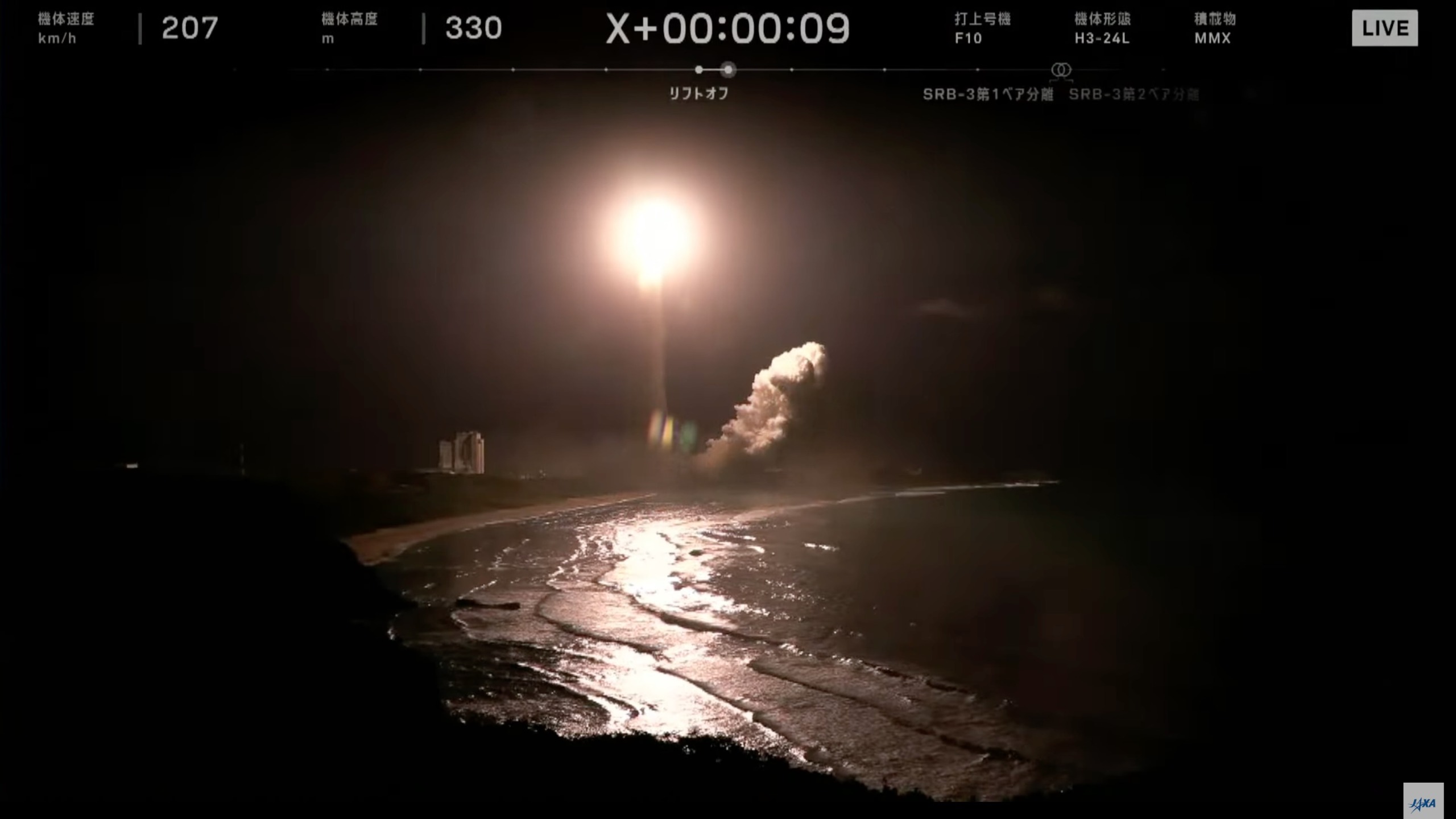
Central to the execution of the MMX mission is Japan’s next-generation heavy-lift launch vehicle, the H3 Rocket, manufactured by Mitsubishi Heavy Industries (MHI). Following initial development challenges and subsequent orbital flight successes, the H3-24L configuration provides the primary boost capability required to inject the heavy MMX payload into a Mars Transfer Orbit (MTO).
The deployment of the H3 launcher reduces per-kilogram launch costs by roughly 50% compared to its predecessor, the H-IIA, primarily through automated assembly processes, additive manufacturing of rocket engines (such as the main expander-bleed cycle LE-9 engine), and commercial off-the-shelf (COTS) electronic components where applicable. This unit-economic optimization is essential for JAXA as it seeks to maintain cost competitiveness against commercial launch providers like SpaceX and Rocket Lab in the expanding institutional payload market.
4. Quantitative Mission Metrics Breakdown
The following table outlines the key technical, financial, and operational parameters defining the MMX mission architecture:
| Metric / Specification | Operational Parameters | Strategic Impact / Notes |
|---|---|---|
| Total Mission Budget | ~¥46 Billion ($300M+ JAXA direct baseline) | Highly cost-efficient compared to NASA's $11B MSR initiative. |
| Spacecraft Wet Mass | ~4,000 kg (including propellants) | Heavy class deep-space architecture designed for multi-stage separation. |
| Launch Vehicle | Mitsubishi Heavy Industries H3-24L | Validates Japan’s primary sovereign heavy-lift commercial launcher. |
| Target Mass Sample Retrieval | ≥ 10 grams (surface & subsurface) | Guarantees sufficient mass for high-precision laboratory isotope analysis. |
| Transit Duration | ~1 year outbound; ~1 year return | Optimized interplanetary Hohmann transfer trajectory. |
| International Partners | CNES (France), DLR (Germany), NASA (US), ESA | Mitigates sovereign financial risk via direct CapEx and instrument contribution. |
| Earth Return Mechanism | Dedicated Earth Return Capsule (ERC) | Employs high-speed atmospheric entry thermal protection systems (TPS). |
5. Industry, Financial & Geopolitical Implications
Aerospace Defense Primes & Valuation Multiples
The execution of MMX acts as an enterprise-level showcase for Japan’s industrial defense and space technology sector. Primary contractor Mitsubishi Heavy Industries, alongside subsystems vendors such as NEC Corporation (satellite bus architecture and high-rate communication telemetry), IHI Aerospace (thrusters and propulsion hardware), and Fujitsu (data processing and trajectory computing), stand to gain significant commercial tailwinds.
As sovereign defense budgets surge across the Asia-Pacific region, capabilities developed under JAXA's scientific banner—such as precision terminal guidance, autonomous collision avoidance, deep-space optical communication, and extreme-environment material science—translate directly into dual-use missile defense, satellite servicing, and space domain awareness (SDA) applications. Institutional investors are watching these technical developments closely, as high-margin defense and space contracts drive expanding valuation multiples across Japanese industrial primes.
Disrupting the Global Sample Return Paradigm
The international space community is currently experiencing a critical timeline bottleneck. NASA’s Mars Sample Return (MSR) program, intended to retrieve cores collected by the Perseverance rover, has encountered massive budget overruns, pushing anticipated sample return dates into the late 2030s and forcing a complete structural architecture review. Meanwhile, China's National Space Administration (CNSA) is aggressively pursuing its Tianwen-3 mission to return Martian samples around 2031.
JAXA’s MMX mission bypasses the deep gravity well of the Martian surface by targeting Phobos. Because Phobos has been continually bombarded by Martian impact ejecta over billions of years, its surface regolith contains transported fragments of ancient Mars itself. By collecting Phobos samples, JAXA achieves a dual objective: sampling a moon of unknown origin while simultaneously securing fragments of early Mars at a fraction of the cost and technical complexity of a traditional Martian surface-ascent mission. This agile positioning underscores JAXA’s return-on-investment efficiency in planetary science.
Frequently Asked Questions (People Also Ask)
What is the main objective of JAXA’s MMX mission to Mars's moons?
The primary scientific objective of the Martian Moons eXploration (MMX) mission is to determine the origin of Mars's moons, Phobos and Deimos—specifically whether they are captured asteroids or the result of a giant impact on Mars—and to retrieve a physical sample of at least 10 grams from Phobos to return to Earth for detailed laboratory analysis.
How does JAXA collect samples from Phobos without landing permanently?
MMX uses a combination of proximity Quasi-Satellite Orbits (QSO) and a short-duration, high-precision landing mechanism. The spacecraft deploys a combination of a pneumatic sampler and a mechanical coring tool to rapidly capture surface regolith and subsurface core samples during a brief period on the surface before ascending back into orbit.
Why is collecting samples from Phobos cheaper than returning samples from Mars's surface?
Phobos has a microgravity environment with an escape velocity of only about 11 meters per second (roughly 25 mph), compared to Mars’s significant escape velocity of over 5 kilometers per second. Launching a sample return vehicle off Phobos requires negligible propellant mass compared to the massive multi-stage rocket system required to escape Mars’s surface gravity, dramatically reducing overall spacecraft size, launch complexity, and total capital expenditure.
Which international agencies are collaborating with Japan on the MMX mission?
JAXA collaborates closely with NASA (providing the MEGANE neutron/gamma-ray spectrometer and sample pneumatic collection support), France’s CNES and Germany’s DLR (jointly building and providing the IDEFIX micro-rover and Raman spectrometer), and the European Space Agency (ESA, providing deep-space tracking network support and flight dynamics expertise).
6. Future Outlook & Strategic Milestones to Watch
As the MMX mission progresses, the global space and defense sectors will track several operational phase gates over the multi-year mission lifecycle:
- Interplanetary Transit & Insertion (Year 1): Successful execution of the Mars Transfer Orbit burn, followed by Mars Orbit Insertion (MOI) and transition into the stable Quasi-Satellite Orbit surrounding Phobos.
- Rover Deployment & Reconnaissance (Year 2-3): High-precision release of the IDEFIX micro-rover to conduct surface strength profiling, thermal mapping, and hazard identification ahead of main lander touchdown.
- Regolith Acquisition Operations: Automated precision landing, surface sampling, and transfer of regolith into the Earth Return Capsule (ERC) containment unit under strict planetary protection protocols.
- Trans-Earth Injection & Earth Re-entry (Year 5): Re-ignition of the propulsion stage for the homebound trajectory, culminating in the high-speed ballistic entry and recovery of the capsule at the Woomera Proving Ground in South Australia.
Should JAXA successfully complete the MMX flight plan, Japan will not only cement its technical leadership in deep-space logistics and sample recovery, but will also establish a new blueprint for efficient, multi-agency planetary exploration in an increasingly budget-conscious commercial space industry.