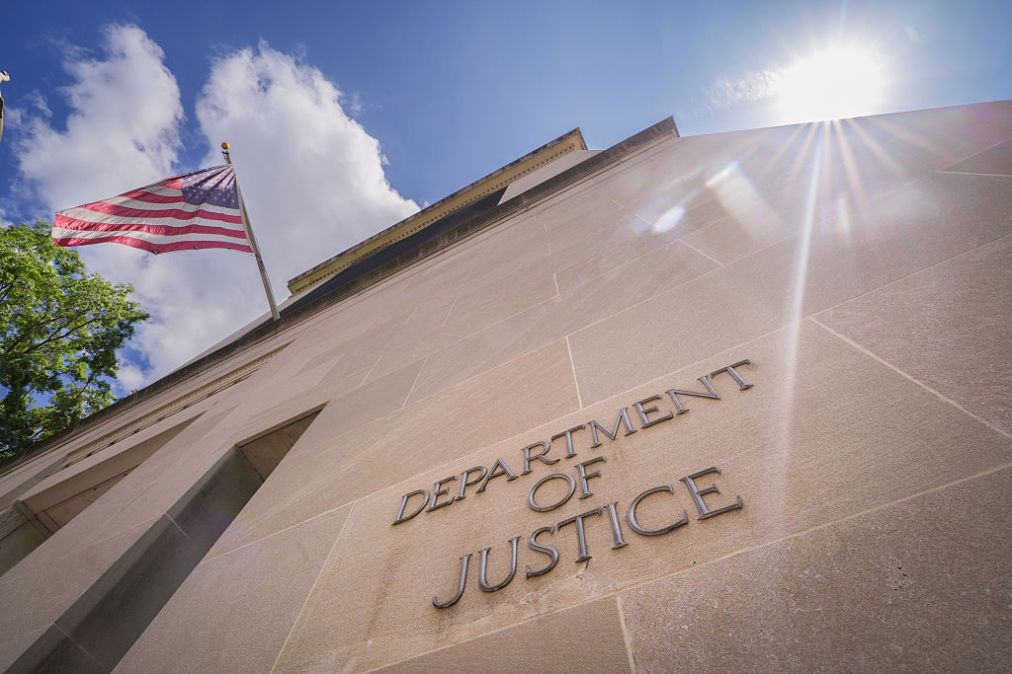
WASHINGTON, D.C. — In a decisive move to fortify the nation’s legal, intelligence, and law enforcement digital perimeters, the United States Department of Justice (DOJ) has formally requested $110.3 million in dedicated funding for Fiscal Year 2027 to accelerate its transition to a comprehensive zero-trust cybersecurity architecture. This capital allocation, revealed in recent federal budget filings and first reported by FedScoop on April 9, 2026, represents a critical escalation in the federal government’s multi-year campaign to dismantle obsolete "castle-and-moat" security frameworks in favor of continuous, real-time cryptographic verification.
As sophisticated, nation-state cyber actors deploy highly advanced generative AI-driven exploits and zero-day vulnerabilities against federal networks, the DOJ's massive funding request highlights a critical reality: the legacy systems protecting the nation's most sensitive prosecutorial, judicial, and investigative assets are no longer viable. The requested $110.3 million is not merely a defensive upgrade; it is an aggressive modernization initiative designed to fundamentally reshape the agency's cloud compute architecture, data management pipelines, and identity verification protocols across all branches, including the FBI, DEA, and ATF.
Executive Takeaways
- The Financial Blueprint: The DOJ is seeking $110.3 million in FY 2027 to fund the next phase of zero-trust modernization, representing one of the largest single-agency cyber requests of the upcoming fiscal cycle.
- Strategic Technical Pivots: The capital will be concentrated on identity, credential, and access management (ICAM), cryptographic transition to post-quantum standards, and automated, continuous micro-segmentation.
- Federal Procurement Windfalls: This allocation signals a massive high-margin opportunity for Tier-1 enterprise SaaS, identity threat detection and response (ITDR), and cloud-native security vendors.
- Macroeconomic Impact: Increased federal regulatory compliance demands are driving venture capital inflows and elevating valuation multiples across the defensive cybersecurity sector.
The Catalyst: Geopolitical Escalation and Legacy Vulnerabilities

The DOJ’s aggressive push for $110.3 million in fiscal 2027 is the direct result of intensifying cyber warfare and highly coordinated operations from state-sponsored threat groups based in China, Russia, Iran, and North Korea. Incidents targeting federal agencies over the past several years have underscored the ease with which sophisticated adversaries can execute lateral movements once they breach a traditional perimeter. In the era of hybrid work and distributed cloud compute architecture, the "inside vs. outside" network paradigm has entirely collapsed.
For the Department of Justice, the stakes are uniquely high. Compromised access within its systems could expose ongoing criminal investigations, the identities of confidential informants, sensitive macroeconomic litigation strategies, and classified national security intelligence. The proposed budget reflects an urgent need to transition from reactive threat mitigation to active, automated defense. Under the zero-trust paradigm, every user, device, application, and data flow must be continuously authenticated, authorized, and validated, regardless of their location on the network.
This initiative directly aligns with the Office of Management and Budget (OMB) Memorandum M-22-09 and the long-standing requirements of Executive Order 14028. While previous fiscal cycles focused on initial assessments and preliminary software-defined perimeter (SDP) rollouts, Fiscal Year 2027 is positioned as the year of deep infrastructure scalability and operational execution.
The Technical Architecture of the DOJ's Zero-Trust Blueprint
To understand where the $110.3 million will be deployed, it is necessary to examine the core pillars of the DOJ's zero-trust implementation roadmap. The agency's plan focuses on five interconnected security pillars, optimized for secure cloud compute architecture and enterprise scalability:
1. Advanced Identity Credential and Access Management (ICAM)
A significant portion of the capital allocation will fund the overhaul of the DOJ’s identity management systems. Legacy multi-factor authentication (MFA) methods, such as SMS codes and basic push notifications, have proven highly vulnerable to adversary bypass via social engineering and "MFA fatigue" attacks. The DOJ is transitioning to phishing-resistant MFA, utilizing FIDO2-compliant hardware security keys and biometric verification systems. This technical shift requires deep integration into existing directory services, necessitating custom API orchestrations and complex federated identity architectures across diverse sub-agencies.
2. Continuous Micro-Segmentation and Software-Defined Networks
In traditional networks, once an attacker gains access, they can move laterally to other systems. The DOJ’s zero-trust strategy utilizes micro-segmentation to break the network down into isolated, secure zones. By enforcing strict access policies at the individual workload level, the department can contain breaches instantly. If an endpoint in a regional DEA office is compromised, software-defined perimeters will automatically isolate that specific node, preventing any lateral transmission to central FBI databases.
3. Data-Centric Security and Post-Quantum Cryptography
Data protection is the ultimate objective of zero-trust. The FY 2027 budget prioritizes automated data discovery, tagging, and classification systems driven by machine learning. This ensures that sensitive, unclassified, and classified data are protected by real-time access controls. Furthermore, looking ahead to the threat posed by quantum computing, a portion of the funding is earmarked for evaluating and deploying post-quantum cryptographic (PQC) algorithms, protecting encrypted federal communication from future decryption vectors.
Justice Department Zero-Trust Budget Allocations (FY 2025 - FY 2027)
The following table details the estimated and requested capital allocations for the Department of Justice’s zero-trust transition initiatives, demonstrating the accelerating financial commitment to cyber defense:
| Zero-Trust Security Pillar / Line Item | FY 2025 Actuals ($M) | FY 2026 Enacted ($M) | FY 2027 Requested ($M) | Year-over-Year Growth (FY26 to FY27) |
|---|---|---|---|---|
| Identity, Credential & Access Management (ICAM) | $28.5 | $32.1 | $39.4 | +22.7% |
| Endpoint Detection & Network Micro-Segmentation | $22.0 | $26.4 | $31.2 | +18.2% |
| Cloud Compute Security & Data Cryptography | $15.2 | $18.9 | $24.5 | +29.6% |
| Continuous Monitoring & Security Analytics (SOAR) | $11.3 | $12.5 | $15.2 | +21.6% |
| Total Programmatic Funding | $77.0 | $89.9 | $110.3 | +22.7% |
Industry & Market Implications: Who Wins in the Enterprise Cybersecurity Sector?
The DOJ's $110.3 million budget request is not just a public-sector milestone; it is a powerful market signal that will reverberate throughout the private enterprise software ecosystem. This significant federal spend acts as a catalyst, driving enterprise ROI and elevating growth trajectories for specialized defense tech and enterprise SaaS vendors.
Valuation Multiples and Market Liquidity in Cybersecurity
The modern cybersecurity sector is highly responsive to federal spending mandates. When the DOJ commits to a $110.3 million zero-trust modernization, it establishes a reliable revenue stream for defense-tech contractors and software-as-a-service (SaaS) providers. Companies specializing in Identity Threat Detection and Response (ITDR), Cloud Access Security Brokers (CASBs), and Extended Detection and Response (XDR) platforms will see increased demand. This stable, long-term federal contract pipeline reduces risk profiles, driving up valuation multiples for public and private cyber firms alike.
For venture capital and private equity firms, the federal government's zero-trust mandate represents an incredibly durable investment thesis. Cybersecurity startups that secure FedRAMP High authorizations—a rigorous regulatory compliance certification required to handle the federal government's most sensitive unclassified data—are commanding premium valuation multiples in M&A cycles and private funding rounds, insulated from broader macroeconomic volatility.
The Enterprise SaaS and Security Vendor Landscape
The primary beneficiaries of this capital allocation will be enterprise cyber vendors with mature, FedRAMP-certified zero-trust offerings. Industry leaders like Palo Alto Networks, CrowdStrike, Zscaler, Okta, and Microsoft are well-positioned to capture significant portions of this $110.3 million spend. The federal procurement cycle heavily favors platforms capable of delivering unified, cross-domain security orchestration, reducing the operational overhead of managing fragmented point-solution security architectures.
Conversely, legacy network hardware vendors who fail to pivot toward software-defined perimeters and cloud-native security models risk losing market share. The federal government’s transition away from traditional on-premise hardware appliances to agile, cloud-delivered security services is fundamentally altering the margins and competitive dynamics of the global tech industry.
People Also Ask (FAQ)
Why is the DOJ requesting $110.3 million specifically for zero-trust in FY 2027?
The request is driven by the mandate to achieve full compliance with Executive Order 14028 and OMB M-22-09, which require federal agencies to transition to a zero-trust architecture. The $110.3 million represents the funding necessary to scale advanced identity management, data classification, and continuous micro-segmentation across all DOJ divisions, including the FBI, DEA, and ATF, to defend against highly sophisticated nation-state cyber incursions.
What is zero-trust, and how does it differ from traditional cyber security?
Traditional cybersecurity relies on a perimeter defense model, assuming that anyone inside the network is trustworthy. Zero-trust operates on the fundamental assumption that a breach is inevitable or has already occurred. It enforces continuous verification, requiring every user, device, and application to prove their identity, authorization, and posture at every stage of network interaction, regardless of whether they are logging in from inside the office or a remote location.
How does federal cybersecurity spending impact private sector tech companies?
Federal mandates act as a massive driver for private sector technology adoption and investment. The strict standards set by federal agencies, such as FedRAMP compliance and phishing-resistant MFA, quickly become the gold standard for enterprise security. This creates a highly lucrative market for cybersecurity vendors, raising valuation multiples, boosting market liquidity, and driving mergers, acquisitions, and venture capital allocations in the sector.
How does zero-trust cybersecurity improve enterprise ROI for government contractors?
For government contractors and private enterprises, adopting zero-trust architectures significantly reduces the frequency and impact of data breaches. By limiting lateral movement within networks, organizations can mitigate operational downtime, protect valuable intellectual property, and streamline their regulatory compliance workloads. Ultimately, this proactive risk mitigation delivers a much higher long-term enterprise ROI compared to legacy security models.
Future Outlook: What Comes Next on the Road to Fiscal 2027
As the DOJ’s budget request winds its way through the congressional appropriations process, the focus will turn to procurement efficiency and execution. Over the coming months, the department will draft detailed Requests for Proposals (RFPs) and Requests for Information (RFIs), outlining specific technical integrations for identity, network, and data pillars.
The road to fiscal 2027 will also serve as a crucial test of the federal government’s ability to execute massive, complex IT modernization projects. The sheer scale of the DOJ—encompassing tens of thousands of federal agents, legal professionals, and support staff across the globe—means that integrating seamless, phishing-resistant MFA and micro-segmentation without interrupting daily law enforcement and judicial operations will require flawless project management and deep collaboration with private sector partners.
Furthermore, this $110.3 million request is likely just the beginning. As artificial intelligence continues to lower the barrier of entry for launching sophisticated cyberattacks, the DOJ and its peer agencies will have to continually refine their zero-trust posture. Security architectures will need to become increasingly autonomous, leveraging machine learning to detect anomalous behavior in real-time and instantly isolate threats before they can impact critical operations. For global investors, enterprise software vendors, and cyber professionals, the DOJ's FY 2027 budget request is a clear sign that the era of modern, identity-centric defense is here to stay.