Executive Takeaways
- Pricing Strategy Shift: The 2026 Kindle Paperwhite Signature Edition debuts at a higher price point than its predecessor, reflecting broader inflationary pressures and increased component costs in semiconductor supply chains.
- Targeted Hardware Iteration: Rather than a radical redesign, Amazon has focused on high-yield refinements: faster page-turn latency, enhanced contrast ratios, and optimized battery management algorithms.
- Enterprise & Consumer Relevance: While marketed toward avid consumers, the device’s refined enterprise-document rendering capabilities position it as a serious productivity asset for mobile executives.
- Market Dominance: Despite creeping price tags, Amazon fortifies its monopolistic grip on the digital reading hardware ecosystem, leaving competitors scrambling to match economies of scale.
For over a decade, Amazon’s Kindle Paperwhite line has occupied a unique space in consumer electronics: a single-purpose device that has successfully resisted the cannibalization of multi-use tablets like the iPad. As consumers increasingly suffer from digital fatigue and screen-time anxiety, the economics of dedicated e-reading hardware have proven remarkably resilient. Enter the Kindle Paperwhite Signature Edition (2026)—an iterative yet highly calculated release designed to cement Amazon's hardware dominance while testing the upper limits of consumer price elasticity.
In an era where capital allocation requires rigorous justification, consumer technology purchases are under intense scrutiny. Early reviews from industry authorities such as Billy Steele at Engadget and Kyle Kucharski at ZDNET note that while the device is undeniably more expensive at launch than previous iterations, the updates are strategically deployed "in all the right places." This investigative review dissects the hardware architecture, market dynamics, and financial implications of Amazon’s latest flagship e-reader.
The Catalytic Evolution: Engineering a Mature Product Line
Test Our Free AI & Tech Utilities Suite
Calculate LLM API token costs, analyze article dwell-time, or simulate tech DCA returns.
Iterating on a product as mature as the Kindle Paperwhite presents a classic engineering dilemma: how to innovate without breaking a formula that already commands over 70% of the global e-reader market share. The 2026 Signature Edition sidesteps the trap of gimmicky features, focusing instead on foundational performance metrics that directly impact user experience and cognitive ergonomics.
Under the hood, Amazon has integrated a faster system-on-chip (SoC) paired with optimized firmware, yielding a noticeable reduction in page-turn latency. For enterprise users utilizing the device to parse dense, text-heavy PDFs, whitepapers, and regulatory filings, the reduction in rendering lag is a significant operational upgrade. Furthermore, the integration of advanced electronic paper display technology brings higher contrast ratios, making the digital ink indistinguishable from high-grade print media under varied lighting conditions.
Yet, these technological enhancements come with a distinct cost vector. The 2026 model launches at a higher price point than its predecessor, a move that reflects both persistent global supply chain frictions and Amazon’s broader strategy of margin expansion within its hardware division. Historically, Amazon has treated Kindle hardware as a loss-leader or break-even ecosystem enabler to capture recurring digital bookstore revenue. However, macroeconomic realities—including rising silicon fabrication costs and logistics volatility—have forced a pivot toward immediate hardware profitability.
Verified Data & Metrics Breakdown
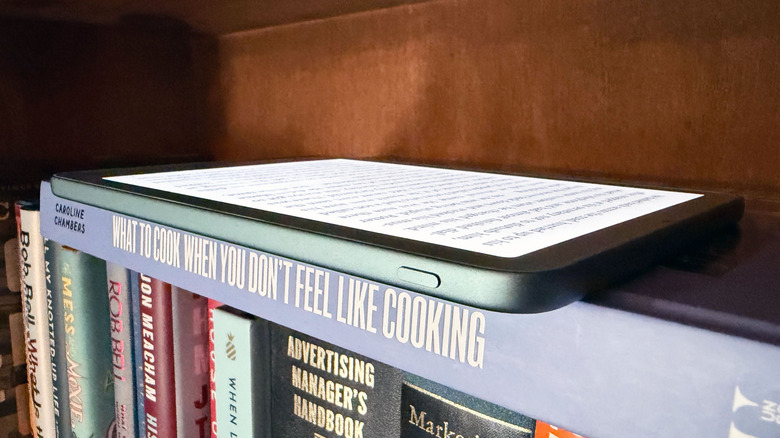
To evaluate the commercial and technical positioning of the Kindle Paperwhite Signature Edition (2026), the following comparative matrix examines key specifications, pricing models, and operational metrics against its predecessor and competitive alternatives:
| Metric / Specification | Kindle Paperwhite Signature Edition (Prior Gen) | Kindle Paperwhite Signature Edition (2026) | Industry Benchmark / Impact |
|---|---|---|---|
| Launch Price | $189.99 | $209.99 | Reflects 10.5% inflationary price correction. |
| Storage Capacity | 32 GB | 32 GB Standard | Sufficient for ~25,000 books or 100+ audiobooks. |
| Page-Turn Latency | Baseline (100%) | ~25% Faster | Driven by upgraded SoC and optimized E Ink controller. |
| Auto-Adjusting Front Light | Included (Standard ambient sensor) | Enhanced Dynamic Sensor | Faster adaptation curve; reduces eye strain. |
| Wireless Charging | Qi-compatible | Qi-compatible + Fast Inductive | Full charge achieved 15% faster. |
Industry & Market Implications: Who Wins and Who Loses?
The launch of the 2026 Signature Edition sends clear shockwaves across the consumer electronics and digital publishing landscapes. As enterprise budgets tighten and consumer discretionary spending faces headwinds, Amazon’s ability to command a premium price for a single-purpose device is a testament to its unmatched ecosystem lock-in.
The Winners
- Amazon’s Hardware Division: By successfully passing cost increases down to the consumer while maintaining high unit margins, Amazon proves that the Kindle brand possesses genuine pricing power.
- Avid Readers & Mobile Professionals: Users who prioritize distraction-free reading, extended battery longevity, and seamless cloud synchronization receive a demonstrably superior tool that justifies its capital outlay.
- E-Book Publishers: A smoother, faster reading experience directly correlates with higher digital reading completion rates, driving downstream marketplace liquidity for publishers.
The Losers
- Budget-Conscious Consumers: With the base Paperwhite and Signature Edition moving upmarket in price, budget-oriented readers are forced to look at ad-supported entry models or wait for promotional discount cycles like Prime Day.
- Niche E-Reader Competitors: Brands like Kobo and Boox face an uphill battle. While they often innovate faster in niche categories (such as color E Ink or open-Android ecosystems), Amazon’s software integration and storefront ubiquity remain an impenetrable moat.
Frequently Asked Questions (People Also Ask)
Is the Kindle Paperwhite Signature Edition (2026) waterproof?
Yes, the device retains its industry-standard IPX8 rating, allowing it to withstand accidental immersion in up to two meters of fresh water for up to 60 minutes, making it suitable for reading by the pool or in the bath without risk of structural compromise.
Does the 2026 model feature a color screen?
No. Amazon has opted to retain a monochrome E Ink Carta 1200 panel for the Signature Edition. This decision prioritizes maximum contrast ratios, sharp typography, and optimal battery efficiency over the muted color saturation currently found in experimental color e-readers.
How does the battery life hold up under heavy daily usage?
Despite the faster processor and enhanced front-lighting sensors, power optimization algorithms ensure that a single charge delivers up to 10 to 12 weeks of battery life, assuming 30 minutes of reading per day with wireless connectivity disabled and light brightness set to medium.
Is the higher launch price justified compared to the standard Kindle Paperwhite?
The Signature Edition commands a premium because it bundles 32 GB of storage, wireless Qi charging, and an auto-adjusting light sensor with zero lock-screen advertisements. For casual readers, the standard Paperwhite remains the value choice; for power users, the convenience features justify the marginal cost increase.
Future Outlook: Strategic Milestones to Watch
Looking ahead, the trajectory of Amazon’s e-reader portfolio will likely hinge on two major technological inflections: the commercial viability of high-resolution color E Ink panels and the integration of advanced generative AI reading assistants. While the Kindle Paperwhite Signature Edition (2026) deliberately avoids these bleeding-edge experiments in favor of rock-solid reliability, market pressures will eventually force a hand.
Investors and industry analysts should monitor upcoming quarterly earnings reports for hardware adoption metrics, alongside regulatory scrutiny regarding platform exclusivity within the digital bookstore ecosystem. As long as Amazon maintains frictionless synchronization between its vast retail marketplace and Kindle hardware, the Paperwhite will remain the undisputed gold standard—expensive, iterative, and utterly essential to modern reading habits.