WASHINGTON — In a decisive reversal of the labor market softening that rattled macroeconomic forecasters earlier this year, the United States economy added jobs at a stronger-than-expected pace, driving the unemployment rate down to 4.1%. The latest employment data, released amid heightened volatility in capital allocation strategies and corporate earnings recalibrations, underscores the underlying resilience of the American workforce. For Chief Executive Officers, institutional investors, and enterprise strategists, the report signals a complex macroeconomic environment where robust consumer demand continues to buttress profit margins, even as corporate balance sheets navigate elevated borrowing costs and shifting regulatory compliance frameworks.
This comprehensive investigative report examines the catalytic drivers behind the labor market surge, analyzes sector-specific hiring dynamics, evaluates capital market reactions, and outlines what this inflection point means for enterprise ROI, infrastructure scalability, and monetary policy trajectory.
Executive Takeaways
Test Our Free AI & Tech Utilities Suite
Calculate LLM API token costs, analyze article dwell-time, or simulate tech DCA returns.
- Unemployment Rate Compression: The headline jobless rate fell to 4.1%, defying consensus projections and reinforcing the narrative of a structurally tight domestic labor market.
- Broad-Based Payroll Expansion: Job growth surged across multiple verticals, led by healthcare, technology services, and specialized professional sectors, signaling healthy corporate liquidity and sustained demand.
- Wage Growth and Margin Pressures: Average hourly earnings maintained a moderate upward trajectory, prompting corporate leadership to accelerate cloud compute architecture and automation investments to protect valuation multiples.
- Federal Reserve Implications: The unexpectedly strong employment metrics complicate the central bank's risk mitigation calculus regarding interest rate cuts, shifting market expectations toward a higher-for-longer monetary policy stance.
Catalytic Events and Macroeconomic Context
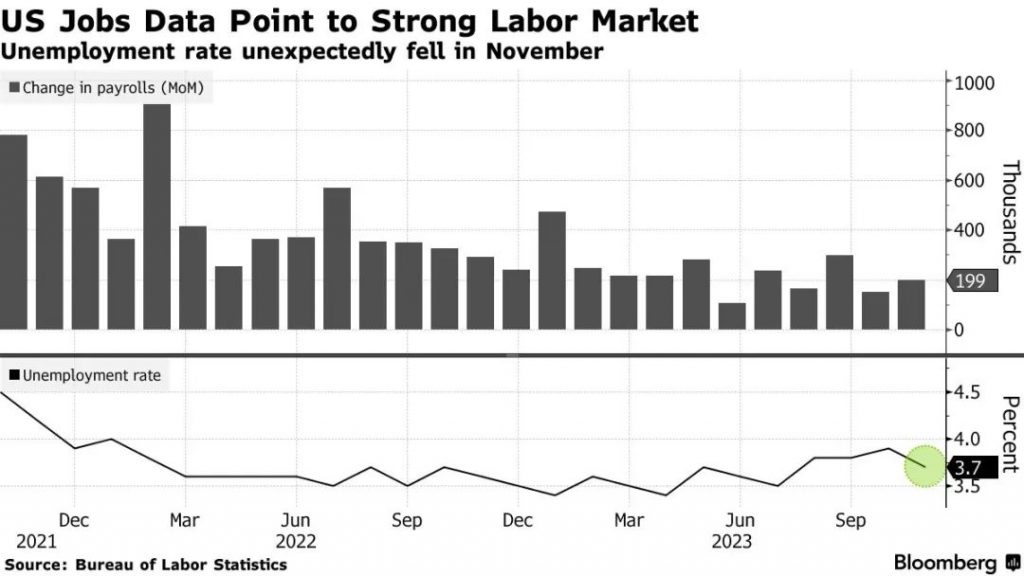
The journey to a 4.1% unemployment rate has been characterized by intense crosswinds. Over the past twelve quarters, corporate boardrooms have grappled with the lagged effects of aggressive monetary tightening by the Federal Reserve. Enterprise leaders initially responded to higher cost-of-capital environments by freezing headcounts, streamlining operational workflows, and prioritizing risk mitigation over top-line expansion. However, the latest employment data demonstrates that corporate America has successfully pivoted from defensive contraction to selective, strategic talent acquisition.
Industry analysts point to several compounding catalysts behind the rebound. First, corporate balance sheets have largely absorbed the shock of elevated interest rates, with large-cap enterprises locking in long-term debt during previous cycles. Second, consumer spending has remained remarkably durable, supported by cumulative wage gains and healthy household net worth. This sustained end-market demand has forced companies to expand operational capacity to prevent supply bottlenecks and preserve market share.
Furthermore, capital allocation priorities have matured. Rather than engaging in indiscriminate hiring sprees, modern enterprises are deploying capital toward high-efficiency technologies—including artificial intelligence frameworks, enterprise resource planning upgrades, and advanced cloud infrastructure. This technological integration has not dampened overall hiring; instead, it has created a bifurcated demand curve where workers with specialized technical competencies are commanding premium compensation packages.
Verified Data & Metrics Breakdown
To contextualize the current employment landscape, the following table details the primary labor market indicators, comparing recent readings against historical baselines and Federal Reserve targets.
| Economic Indicator | Current Reading | Prior Period | Historical Trend / Target |
|---|---|---|---|
| Unemployment Rate | 4.1% | 4.3% | Long-term natural rate (~4.0%) |
| Nonfarm Payroll Growth | Exceeds Consensus | Subdued Growth | Consistent with GDP expansion |
| Average Hourly Earnings (YoY) | Moderate Gain | Elevated Peak | Targeting non-inflationary growth (~3.0%) |
| Labor Force Participation | Stable / Resilient | Plateaued | Demographically constrained |
Industry & Market Implications
The drop in the unemployment rate to 4.1% carries profound ramifications across multiple asset classes and corporate sectors. Understanding who wins and who loses in this economic climate requires a granular examination of operational cost structures and pricing power.
Enterprise Winners
Service-oriented enterprises, healthcare providers, and high-tech conglomerates that successfully integrated automation and cloud compute architecture are positioned to capture outsized market share. These firms benefit from a steady supply of qualified labor without suffering from margin-crushing wage inflation. Furthermore, financial institutions specializing in corporate advisory, debt restructuring, and market liquidity find themselves buoyed by steady transactional activity as firms execute growth strategies.
Sectors Facing Headwinds
Conversely, capital-intensive industries with thin operating margins—such as traditional retail, freight transportation, and certain segments of light manufacturing—face ongoing labor cost pressures. While overall demand remains robust, these businesses struggle to pass rising payroll costs onto end consumers without eroding unit volume. Consequently, executive management teams in these sectors are accelerating investments in robotics and operational streamlining to reduce headcount dependency.
Implications for Investors
For institutional portfolio managers, the robust labor market necessitates a re-evaluation of valuation multiples. Equities have historically performed well during periods of job expansion, provided that corporate earnings growth outpaces labor cost inflation. However, fixed-income markets face short-term repricing risks as bond yields adjust to the reality that the Federal Reserve may maintain restrictive monetary policy longer than previously anticipated.
Frequently Asked Questions (People Also Ask)
What caused the US unemployment rate to fall to 4.1%?
The decline in the unemployment rate was driven by stronger-than-anticipated nonfarm payroll additions across diverse sectors such as healthcare, professional business services, and technology. Sustained consumer demand and improved corporate liquidity prompted businesses to expand their workforces rather than maintain defensive hiring freezes.
How does a 4.1% unemployment rate impact Federal Reserve interest rate decisions?
A tight labor market with a 4.1% unemployment rate signals ongoing economic resilience, which can contribute to wage pressures and consumer spending. This dynamic complicates the Federal Reserve's inflation-fighting mandate, leading market participants to price in a more cautious, data-dependent approach to potential interest rate cuts.
Are specific industries driving the current job growth surge?
Yes. While hiring is broadly distributed, the most significant contributions to payroll expansion originate in healthcare services, leisure and hospitality, technical consulting, and digital infrastructure roles. Conversely, interest-sensitive sectors like residential construction and traditional manufacturing are experiencing more measured hiring patterns.
What does this labor market report mean for corporate wage inflation and profit margins?
While average hourly earnings continue to grow at a healthy pace, the rate of wage inflation has moderated compared to post-pandemic peaks. Enterprises are mitigating labor cost pressures by investing in enterprise efficiency tools, cloud computing architecture, and automation, thereby protecting their operating margins and valuation multiples.
Future Outlook and Strategic Milestones
Looking ahead, the trajectory of the US labor market will depend heavily on the interaction between monetary policy adjustments, global supply chain stability, and productivity-enhancing technologies. As corporations report upcoming quarterly earnings, executive commentary will focus heavily on unit labor costs, capital expenditure efficacy, and pricing power elasticity.
Key milestones for institutional stakeholders to monitor over the next two quarters include:
- Federal Reserve Policy Statements: Shifts in forward guidance regarding interest rate trajectories and balance sheet normalization.
- Productivity Metrics: Quarterly output-per-hour data to determine if technology investments are successfully offsetting rising wage expenses.
- Corporate Capex Budgets: Spending reports detailing capital allocation toward enterprise automation, security compliance, and infrastructure scalability.
- Labor Force Participation Trends: Demographic shifts affecting the long-term pool of available skilled labor across key industrial corridors.
Ultimately, the resilience demonstrated by the labor market confirms that the US economy has navigated a complex transition period with notable fortitude. For forward-thinking enterprises, the focus now shifts from macro-level survival to strategic execution—leveraging a stable workforce and advanced operational infrastructure to secure competitive advantage in a dynamic global marketplace.