August 20, 2026 — LONDON / NEW YORK / SAN FRANCISCO — The artificial intelligence landscape has crossed a definitive threshold. The frenzied capital expenditure cycle of 2023–2025 has yielded to a ruthless era of commercial accountability, enterprise integration, and structural reorganization. As Netguru’s latest telemetry and global CIO surveys reveal, the narrative has shifted away from raw parameter counts toward autonomous enterprise deployment, extreme cloud compute optimization, and a sobering reckoning with infrastructural bottlenecks and security vulnerabilities.
Executive Takeaways
- Agentic AI in Production: Autonomous, multi-step agentic systems have graduated from experimental sandboxes to core enterprise workflows, driving measurable labor substitution and operational velocity.
- Infrastructure Bottlenecks & Power Scarcity: Grid capacity, liquid-cooling retrofits, and next-generation silicon availability are dictating valuation multiples and corporate expansion strategies across the hyperscaler ecosystem.
- Security and Governance: The surge in automated agent interactions has triggered unprecedented systemic vulnerabilities, forcing Chief Information Security Officers (CISOs) to overhaul zero-trust architectures.
- Capital Allocation Discipline: Enterprise ROI expectations have compressed; boards are strictly auditing capital expenditures, demanding immediate margin expansion rather than speculative technological demonstrations.
The Architectural Shift: From Static Chatbots to Multi-Agent Workflows
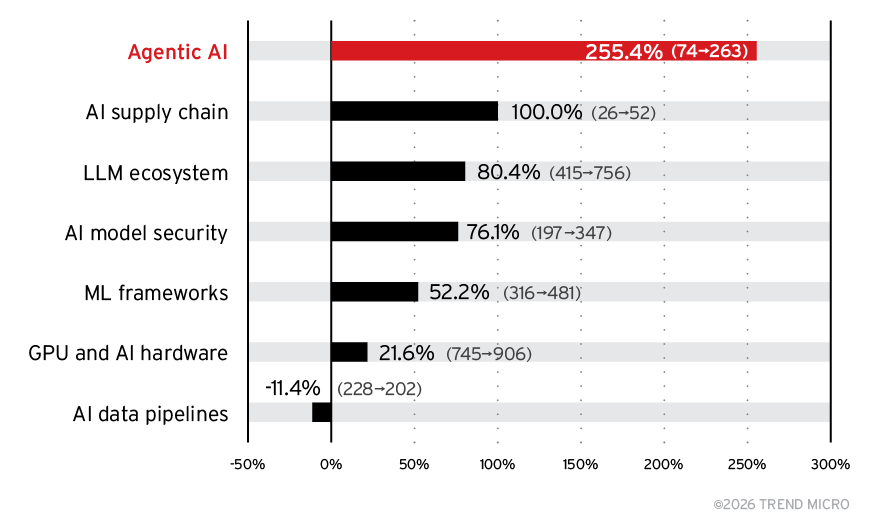
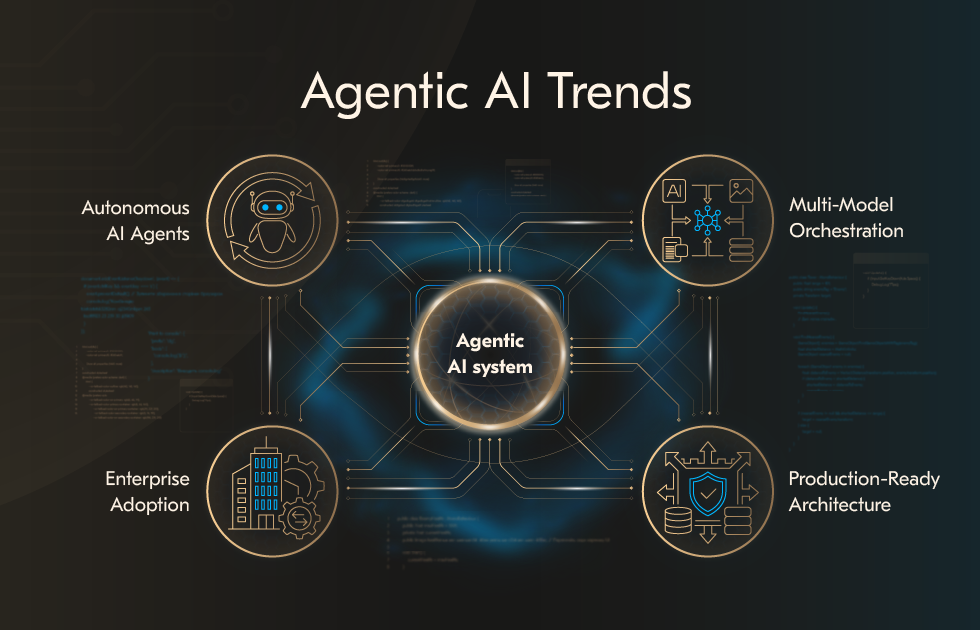
The defining technological hallmark of 2026 is the ubiquitous adoption of agentic AI. While the previous two years were dominated by large language models (LLMs) acting primarily as passive oracle engines—responding to isolated prompts with static text—the current operational paradigm is defined by persistent, goal-directed autonomy. These agents orchestrate complex, multi-step operations across disparate software environments without constant human intervention.
According to comprehensive data compiled by Netguru, over 64% of Fortune 500 enterprises have integrated production-grade agentic frameworks into mission-critical pipelines ranging from supply-chain optimization to dynamic financial auditing. This transition has fundamentally altered enterprise software procurement. Legacy software-as-a-service (SaaS) vendors are facing an existential crisis as businesses bypass traditional seat-based licensing models in favor of outcome-based pricing driven by autonomous computational agents.
However, this transition has not been friction-free. Autonomous agents require rigorous guardrails, deterministic state management, and reliable fallback mechanisms to prevent "hallucination cascades"—scenarios where a single errant machine decision triggers hundreds of automated downstream API calls, resulting in catastrophic operational failures or multi-million-dollar financial transactions executed in error.
Infrastructure Realities: The Silicon, Power, and Grid Convergence
Underpinning the 2026 AI boom is a massive, capital-intensive restructuring of global infrastructure. The historical constraint on artificial intelligence development is no longer purely algorithmic; it is thermodynamic and geopolitical. Hyperscalers—including Microsoft, Amazon Web Services, Google Cloud, and Oracle—have committed hundreds of billions of dollars to capital expenditures aimed at securing next-generation accelerated computing hardware.
Despite significant manufacturing capacity expansions by TSMC and advanced packaging foundries, high-bandwidth memory (HBM4) and specialized inference chips remain subject to acute supply chain friction. Simultaneously, data center power density requirements have skyrocketed. Modern clusters running advanced reasoning models demand megawatt-scale power pods that push municipal electrical grids to their absolute breaking point.
This power deficit has catalyzed a profound transformation in corporate strategy:
- Direct Energy Partnerships: Major technology conglomerates are directly financing and co-locating data centers adjacent to nuclear, geothermal, and renewable energy installations to circumvent public grid congestion.
- Liquid Cooling Mandates: Air-cooled data centers are rapidly becoming obsolete. Advanced server architectures running continuous reinforcement learning loops require direct-to-chip liquid cooling to maintain optimal operating temperatures.
- Edge Inference Shifts: To mitigate latency and cloud bandwidth costs, enterprises are increasingly deploying optimized small-to-midsize frontier models directly on local edge hardware and specialized enterprise-grade on-premise appliances.
Verified Data & Metrics Breakdown
To contextualize the scale and trajectory of the 2026 artificial intelligence ecosystem, the following comparative matrix outlines key macroeconomic, infrastructural, and operational metrics tracked across major enterprise deployments.
| Metric Category | 2024 Baseline | 2026 Current State | Strategic Implication |
|---|---|---|---|
| Enterprise Agentic Deployment | < 8% of Fortune 500 | 64% in Production | Shift from experimental pilots to core operational labor substitution. |
| Average Data Center Power Density | 10 kW – 15 kW per rack | 60 kW – 100+ kW per rack | Forces widespread adoption of direct liquid cooling and nuclear power PPAs. |
| Enterprise ROI Timeline Expectation | 18 – 36 Months (Speculative) | < 6 Months (Measurable) | Rigorous board-level governance replacing blind capital expenditure. |
| Inference vs. Training Cost Ratio | 80% Training / 20% Inference | 25% Training / 75% Inference | Economic focus shifts entirely toward real-time query efficiency and cost-per-token. |
Security Vulnerabilities and Regulatory Compliance
As autonomous agents gain the capacity to execute external API calls, write production code, and transfer funds, the cybersecurity surface area has expanded exponentially. In 2026, traditional perimeter defense is obsolete. CISOs are grappling with sophisticated prompt-injection vectors, indirect data poisoning, and unauthorized agent privilege escalation.
Regulators across the European Union, the United States, and Asia-Pacific have transitioned from consultative frameworks to strict enforcement regimes. The EU Artificial Intelligence Act’s phased implementation has introduced severe financial penalties for non-compliance, particularly regarding systemic risk models and autonomous financial systems. Financial institutions utilizing agentic AI for automated credit scoring, algorithmic trading, or fraud detection must maintain absolute auditability and explainability, creating a thriving compliance-tech subsector.
Industry & Market Implications: Winners and Losers
The economic fallout of the 2026 technological landscape is reshaping global market capitalization:
- The Winners: Vertically integrated silicon designers, specialized cloud providers with proprietary power access, and enterprise software firms successfully pivoting to agent-native business models. Cybersecurity firms specializing in AI-agent monitoring and zero-trust verification are seeing unprecedented revenue growth.
- The Losers: Traditional IT outsourcers reliant on offshore human labor for routine coding and data entry face severe margin compression. Furthermore, hardware-restricted data center operators unable to fund liquid cooling retrofits or secure reliable multi-megawatt energy contracts are being consolidated or squeezed out of Tier-1 markets.
Frequently Asked Questions (People Also Ask)
What is agentic AI and how does it differ from traditional LLMs?
Agentic AI refers to artificial intelligence systems capable of autonomous planning, tool use, and multi-step execution to achieve complex goals. While traditional LLMs require human prompts for every individual task and respond with static text, agentic systems can break down a high-level objective into sub-tasks, execute code, query databases, make API calls, and self-correct based on intermediate results without ongoing human intervention.
How are enterprises solving the data center power and infrastructure shortage in 2026?
Hyperscalers and large enterprises are addressing power constraints through direct investments in clean energy sources—including nuclear power purchase agreements (PPAs), geothermal projects, and co-located microgrids. Simultaneously, data center architectures are undergoing massive retrofitting to support high-density liquid cooling, which is mandatory for next-generation accelerated computing clusters.
What are the primary security risks associated with production AI agents?
The foremost security risks include indirect prompt injection (where malicious data hidden in web pages or documents hijacks an agent's instructions), privilege escalation, and hallucination cascades that trigger unintended automated financial transactions or data deletions. Mitigating these risks requires strict runtime guardrails, deterministic state verification, and zero-trust API access controls.
What is the typical enterprise ROI timeline for AI deployments in 2026?
Unlike the speculative, long-horizon investments characteristic of 2023 and 2024, modern enterprise boards demand rapid accountability. Current benchmarks indicate that successful agentic deployments and workflow automation initiatives target and achieve measurable operational cost reduction and productivity gains within a window of less than six months.
Future Outlook: Milestones to Watch
As the industry looks toward the horizon of 2027, several pivotal developments will dictate the trajectory of global technological leadership. Market participants must monitor the commercial viability of fully autonomous software engineering teams, the potential breakthroughs in neuromorphic and optical computing architectures designed to bypass silicon scaling limits, and the evolution of international regulatory harmonization. Corporations that successfully balance aggressive innovation with rigorous infrastructure planning and risk mitigation will define the next decade of economic dominance.