Executive Takeaways
- Consumer Video Scaling: Meta has officially activated real-time conversational video chat with customizable Muse AI avatars for all U.S. users across Instagram, Messenger, and WhatsApp, marking a dramatic leap from text-based LLM interactions to synchronous synthetic visual media.
- Infrastructure Architecture: Powered by Meta’s proprietary Muse generative visual rendering pipeline paired with fine-tuned Llama 3 models, the system achieves sub-400-millisecond latency using low-precision dynamic inference engine optimization on massive Nvidia H100 and H200 GPU clusters.
- Strategic Monetization Pivot: The deployment serves as a direct monetization driver to elevate Average Revenue Per User (ARPU) and user dwell time, opening new digital sponsorship channels and immersive advertorial placement inside synthetic conversational environments.
- Regulatory & Risk Exposure: The feature launches amid intense FTC and global scrutiny regarding deepfake capabilities, biometric data capture, explicit content filtering, and consent protocols for voice and visual digital twins.
The Synthetic Frontier: Meta’s Real-Time Conversational Breakthrough
Test Our Free AI & Tech Utilities Suite
Calculate LLM API token costs, analyze article dwell-time, or simulate tech DCA returns.
In a decisive move to consolidate its dominance across the consumer artificial intelligence ecosystem, Meta Platforms Inc. has initiated a full-scale U.S. rollout allowing users to engage in real-time, two-way video calls with personalized "Muse" AI avatars. The initiative, revealed by CEO Mark Zuckerberg during an internal product showcase and launched across Meta's family of apps—Instagram, Messenger, and WhatsApp—represents the commercial convergence of large-scale generative vision models and sub-second speech processing.
Where previous consumer AI tools relied on text interfaces or asynchronous voice notes, Meta’s Muse framework renders high-fidelity, photorealistic or stylized avatars that react dynamically to user expressions, vocal inflections, and conversational prompts in real time. For Meta, this deployment is not merely a social novelty; it is an aggressive defensive and offensive operational strategy designed to lock in user attention share as rival technology behemoths—including OpenAI, Google, and Microsoft—scramble to monetize their proprietary foundation models.
By bringing live video avatars directly to its 3.2 billion daily active users (DAUs), Meta aims to establish an unassailable infrastructure moat. The technology transforms consumer interactions from passive feed scrolling into active, synthetic relationship building, unlocking high- dwell-time metrics that directly impact digital advertising yields and platform valuation multiples.
Inside the Stack: Compute Architecture and Latency Optimization
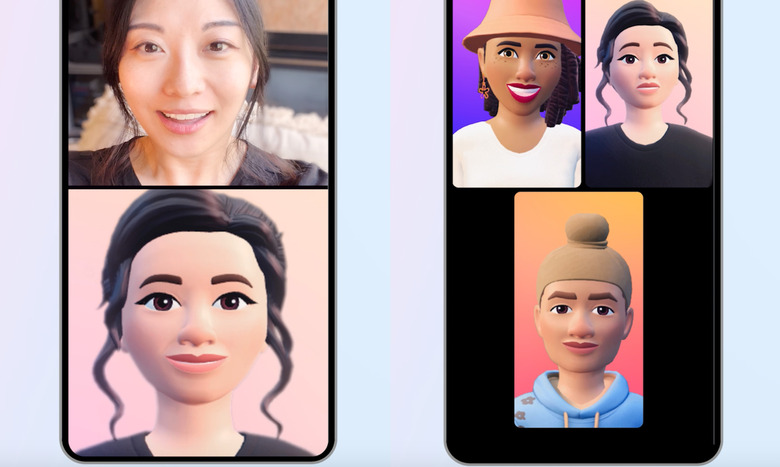
Achieving live, interactive video chat with a generative AI agent requires resolving one of the most stubborn engineering bottlenecks in computer science: low-latency multi-modal inference. Traditional text-to-video diffusion pipelines often require minutes to render a single frame of high-resolution video. Meta’s Muse engine bypasses these processing limitations through a multi-tiered compute architecture engineered specifically for edge-to-cloud synchronization.
At the foundation of this system sits a compressed, highly optimized variant of the Llama model family tailored for dialogue state management, sentiment analysis, and context tracking. Concurrently, a lightweight neural audio-to-expressive-motion model converts incoming user voice data into spatial facial landmark vectors. These vectors are fed into the Muse rendering model, which synthesizes synchronized visual frames on the fly.
Architectural Workflow: User Input (Audio/Video Stream) → Ultra-Low-Latency VAD & Direct Speech Parser → Llama Dynamic Inference & Muse Motion Synthesis → Edge-Accelerated Frame Generation → Sub-400ms Streaming Display.
To deliver an experience that feels natural to human eyes and ears, Meta engineers targeted a total pipeline latency ceiling of under 400 milliseconds. To hit this threshold, Meta’s capital expenditure (CapEx) strategy—which ballooned to over $38 billion in 2024—was directly leveraged. Compute workloads are distributed across specialized infrastructure clusters utilizing proprietary PyTorch performance libraries, FP8 quantization, and custom silicon (Meta Training and Inference Accelerator, or MTIA) alongside enterprise Nvidia hardware. The system continuously predicts conversational pauses, pre-rendering non-verbal micro-expressions such as nods, blinks, and subtle shifts in gaze to maintain visual continuity even during temporary network jitter.
Comparative Infrastructure & Capability Blueprint
The transition from static text interfaces to real-time synthetic video represents a generational shift in infrastructure requirements and unit economics. The table below outlines how Meta's Muse video architecture compares to current market benchmarks across the synthetic media landscape.
| Platform & Architectural Tier | Target Latency (End-to-End) | Primary Hardware Infrastructure | Primary Revenue / Monetization Model | Safety & Identity Framework |
|---|---|---|---|---|
| Meta Muse AI Video Chat | 350ms – 450ms | Nvidia H100/H200 + Custom MTIA Clusters | Ad-supported engagement, branded avatars, ARPU expansion | Biometric hashing, real-time visual watermarking, fine-tuned safety filters |
| OpenAI Realtime API (Voice/Vision) | 300ms – 500ms | Microsoft Azure Supercomputing H100/B200 Clusters | Enterprise API usage fees (per-token / per-minute billing) | Automated voice input filtering, system prompt guardrails |
| Synthesia / HeyGen Enterprise | 2,000ms – 10,000ms (Asynchronous) | AWS / GCP Cloud GPU Instances | SaaS subscription tiers ($29-$499+/month per seats) | Actor consent verification, enterprise identity matching |
| Meta Horizon Legacy Avatars (2022) | <100ms (Rule-based, Non-Generative) | On-device mobile & Quest VR chipsets | Virtual Goods, Horizon Marketplace microtransactions | Basic platform user safety rules, avatar customization caps |
Capital Allocation and Strategic Business Implications
Meta's roll-out of Muse AI video avatars represents a calculated deployment of compute capital aimed at altering the macro-economics of social networks. Wall Street analysts have closely monitored Meta's escalating capital expenditure, questioning when generative AI investments would yield tangible returns. The launch of live video AI directly addresses these investor queries by targeting three core operational metrics: time spent per session, user retention among younger demographics, and synthetic media ad inventory expansion.
1. ARPU Acceleration and Virtual Sponsored Avatars
By introducing interactive personas—ranging from celebrity-licensed digital twins to customized personal AI companions—Meta creates an unprecedented surface area for native advertising. Commercial partners can sponsor specific AI personas, integrate product placements directly into real-time dynamic conversational backdrops, or fund branded avatar capabilities. This provides Meta with a high-margin monetization channel that bypasses traditional banner ads and sponsored feed posts, boosting Average Revenue Per User across key Western regions.
2. Defensive Positioning Against Autonomous AI Startups
The consumer AI land grab has seen specialized startups gain significant momentum in niche areas such as AI companions, automated customer service, and digital avatar generation. By packaging real-time video avatars directly into established apps like WhatsApp and Instagram without requiring separate subscriptions or third-party software downloads, Meta effectively neutralizes early-stage competitors through sheer distribution scale and zero-cost consumer access.
3. Infrastructure Amortization and Compute Efficiency
Deploying real-time video AI at scale acts as a practical stress test for Meta's multi-billion-dollar compute centers. By dynamically scaling inference workloads between peak usage hours across different global time zones, Meta optimizes its data center utilization rates, maximizing the return on investment (ROI) of its heavy capital outlay in high-performance silicon and custom liquid-cooled data facilities.
Regulatory Scrutiny, Biometric Security, and Safety Guardrails
The ability to synthesize photorealistic human video and voice streams instantaneously presents significant regulatory challenges. Regulatory bodies, including the U.S. Federal Trade Commission (FTC), the European Data Protection Board (EDPB), and state-level attorneys general, are increasingly focused on the risks associated with synthetic impersonation, deepfakes, and automated emotional manipulation.
To mitigate compliance risks under emerging legal frameworks such as the EU AI Act and state-level privacy statutes in California and Texas, Meta has embedded multi-layered safety mechanisms into the Muse video streaming architecture:
- Invisible Cryptographic Watermarking: Every video frame generated by the Muse engine includes an embedded, tamper-resistant C2PA-compliant watermark, allowing third-party detectors to instantly verify the media as synthetic.
- Biometric Consent Protocols: Users attempting to create digital twin avatars modeled on their own likeness must undergo a multi-step biometric verification process to prevent non-consensual deepfake generation.
- Real-Time Semantic Safety Filters: A parallel moderation microservice continuously scans the conversational transcript and video outputs for self-harm, explicit content, hate speech, and fraud, terminating the video stream automatically if safety thresholds are breached.
Despite these technical protections, civil rights advocates and policy experts caution that conversational AI video avatars could exacerbate issues surrounding digital addiction and privacy. The continuous collection of user vocal tones, facial expressions, and personal preferences during live video sessions creates a rich dataset that demands rigorous governance to prevent unauthorized profiling or data leaks.
Frequently Asked Questions (People Also Ask)
How does Meta’s Muse AI video chat differ from traditional video calling?
Traditional video calling streams live raw video and audio data recorded directly by a device camera from one human participant to another. Meta’s Muse AI video chat uses generative AI foundation models to synthesize an interactive digital avatar in real time. The AI avatar processes the user's voice and text inputs, generates contextual responses using large language models, and dynamically renders realistic facial expressions, eye contact, and vocal responses with sub-second latency.
Is Meta Muse AI video chat available globally, and is it free to use?
At launch, Meta has prioritized U.S.-based users across its core consumer platforms—Instagram, Messenger, and WhatsApp. The core features are integrated free of charge within the existing messaging apps, supported by Meta's broad ad-supported business model. Global expansion across Europe, Latin America, and Asia-Pacific is expected to follow subject to regional regulatory approvals and local data compliance verification.
What prevents users from using Muse AI to create convincing deepfakes of public figures?
Meta employs strict identity verification and biometric safety protocols within the avatar creation workflow. Users cannot generate custom avatars using photos or audio recordings of third parties without explicit authorization. Furthermore, Meta uses proprietary alignment techniques on its Llama and Muse foundation models to block the generation of restricted political, celebrity, or non-consensual likenesses, backing the system with continuous automated stream monitoring.
What compute hardware is Meta using to run real-time video inference at scale?
Meta relies on an advanced hybrid infrastructure strategy combining tens of thousands of Nvidia H100 and H200 Tensor Core GPUs with its custom-designed MTIA (Meta Training and Inference Accelerator) silicon. Processing is handled through edge-optimized cloud computing nodes that prioritize raw processing speed, dynamic model quantization (FP8 precision), and advanced frame-extrapolation algorithms to maintain real-time performance.
Future Outlook: The Roadmap to Spatial Media and Autonomous Agents
The U.S. launch of live video chat with Muse AI avatars marks an incremental step toward Mark Zuckerberg's broader long-term vision: the convergence of social media, generative AI, and spatial computing. As edge-computing hardware improves and on-device neural processing units (NPUs) become standard across mobile devices and smart eyewear, the compute burden of real-time video rendering will gradually transition from cloud data centers directly to client devices.
This technical evolution paves the way for direct integration with Meta’s hardware portfolio, specifically the Ray-Ban Meta smart glasses and the Meta Quest head-mounted displays. In future iterations, users will be able to project high-definition Muse AI avatars directly into their physical environment via augmented reality, moving synthetic interaction out of two-dimensional smartphone screens and into three-dimensional space.
Over the next 12 to 24 months, market watchers expect Meta to open API access for the Muse video framework to enterprise developers. This shift will allow corporations, e-commerce platforms, and customer service teams to deploy customized, 24/7 autonomous video support agents. By building the fundamental platform layer for real-time visual AI, Meta is establishing the primary digital real estate for human-to-computer communication in the decade ahead.