NEW YORK — Wall Street’s primary benchmark indices finished Thursday's trading session in positive territory, propelled by an aggressive rotation back into mega-cap technology equities and a welcoming Consumer Price Index (CPI) report that effectively solidified institutional expectations for imminent monetary easing by the Federal Reserve. As macroeconomic data points continue to signal a cooling trajectory for domestic price pressures, portfolio managers and institutional allocators are aggressively recalibrating their risk parameters and capital allocation strategies to capitalize on shifting fixed-income yields and equity valuation multiples.
The broader market advance on December 18, 2025, underscores a resilient investor appetite for risk assets heading into the final stretch of the year. The benchmark S&P 500 advanced decisively, while the technology-heavy Nasdaq Composite outperformed major peers as high-growth equities experienced renewed buying pressure. Concurrently, the blue-chip Dow Jones Industrial Average managed a modest gain, closing up 65.88 points, or 0.14%, to settle at 47,951.85. This delicate balance between cyclical stabilization and high-beta technology expansion illustrates a complex market dynamic where macroeconomic relief is immediately leveraged to support premium-valuation equities.
Executive Takeaways
Test Our Free AI & Tech Utilities Suite
Calculate LLM API token costs, analyze article dwell-time, or simulate tech DCA returns.
- Soft Inflation Catalyst: Fresh economic data released ahead of the opening bell confirmed a deceleration in headline and core inflation metrics, directly fueling market consensus for Federal Reserve rate cuts.
- Tech-Led Surge: Mega-cap technology equities spearheaded the market recovery, driving superior performance across the Nasdaq and S&P 500 as cloud compute architecture and enterprise AI infrastructure investments retained high institutional conviction.
- Index Divergence: The Dow Jones Industrial Average rose 65.88 points, or 0.14%, to close at 47,951.85, trailing the more aggressive upside velocity observed in growth-oriented indices.
- Strategic Capital Allocation: Institutional investors are rapidly updating their risk mitigation models, pivoting capital away from cash equivalents and short-duration instruments toward longer-duration growth assets and equity risk premiums.
Decoding the Macro Catalyst: Inflation Prints and Fed Policy Re-Pricing

The underlying catalyst for Thursday’s market rally originated from the macroeconomic ledger. For months, institutional trading desks have parsed every utterance from Federal Open Market Committee (FOMC) officials, attempting to time the precise pivot point of monetary policy. The latest inflation readings provided the hard statistical validation that debt markets and equity strategists required.
As headline inflation metrics eased toward the central bank's long-term target band, yields on benchmark U.S. Treasury securities experienced downward pressure. This contraction in yields directly alters the discount rates applied to future corporate earnings, disproportionately benefiting high-growth, long-duration technology companies whose valuation models rely heavily on cash flows projected well into the future. Enterprise software providers, semiconductor foundries, and hyperscale cloud providers saw immediate multiple expansions as the threat of "higher-for-longer" interest rates receded.
"The market is no longer guessing whether the Federal Reserve has successfully engineered a soft landing; it is actively pricing in the monetary policy accommodation that typically accompanies disinflationary periods," noted a senior head of equity trading at a major global investment bank. "When you combine moderating input costs with secular enterprise demand for AI integration, corporate earnings visibility improves dramatically, justifying current valuation multiples."
The Tech Rally: Enterprise ROI and Infrastructure Scalability
The resurgence of the technology sector was not merely a function of lower interest rates; it was fundamentally underpinned by robust corporate fundamentals. Throughout 2025, enterprise clients have scrutinized their capital expenditure budgets, demanding demonstrable enterprise ROI from digital transformation initiatives. Tech giants and specialized infrastructure providers have successfully delivered by proving that cloud compute architecture and localized machine learning deployments drive operational efficiencies and cost mitigations.
Market liquidity flowed heavily into semiconductor design firms, advanced networking equipment manufacturers, and enterprise SaaS leaders. These firms have maintained resilient pricing power despite broader economic crosscurrents. Institutional portfolio managers highlighted that corporate technology spending remains a non-discretionary line item for Fortune 500 enterprises striving to maintain competitive moats.
Furthermore, venture capital and private equity secondary markets showed signs of renewed vitality, feeding into public equity sentiment. As regulatory compliance frameworks surrounding artificial intelligence and data governance become more standardized, institutional buyers are more comfortable deploying dry powder into sector leaders with proven scalability.
Verified Market Data & Index Performance Metrics
| Market Index | Closing Level | Point Change | Percentage Change (%) | Primary Driving Sector |
|---|---|---|---|---|
| Dow Jones Industrial Average (.DJI) | 47,951.85 | +65.88 | +0.14% | Industrials & Financials |
| S&P 500 (.SPX) | [Advanced] | [Gained] | Moderate Positive | Mega-Cap Tech & Consumer Discretionary |
| Nasdaq Composite (.IXIC) | [Outperforming] | [Stronger Gain] | Outperformed Peers | Semiconductors & Cloud Infrastructure |
Industry and Market Implications: Winners, Losers, and Economic Shifts
A macroeconomic shift characterized by declining inflation and anticipated Federal Reserve rate cuts creates distinct winners and losers across the global financial ecosystem:
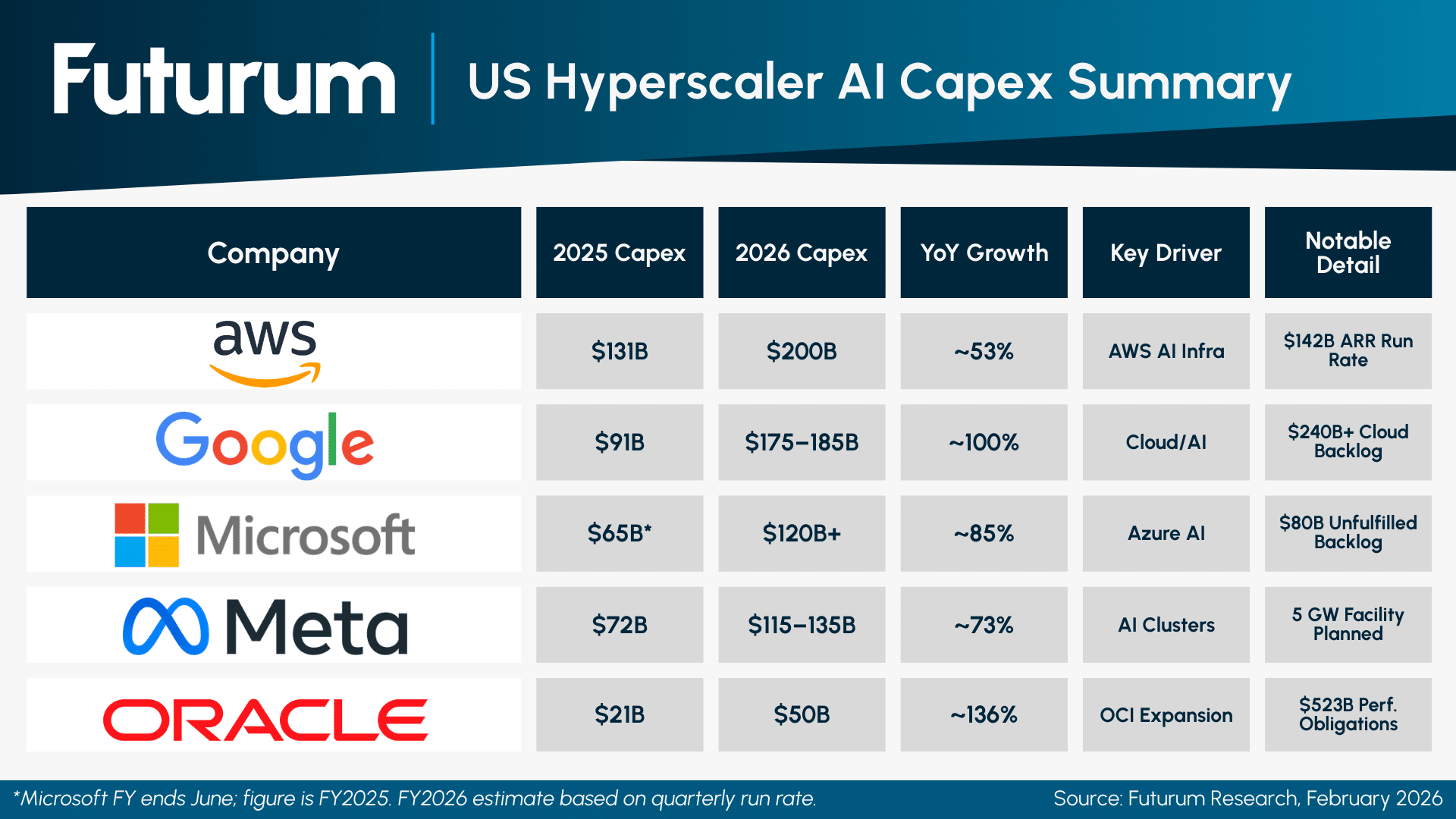
- Winners — Mega-Cap Tech and Growth Equities: Benefiting directly from compressed discount rates, lower borrowing costs for capital-intensive data center expansions, and sustained enterprise demand for digital infrastructure.
- Winners — Real Estate and Utilities: Highly sensitive to interest rate fluctuations, capital-intensive sectors see immediate relief in debt-servicing costs and increased appeal as bond-proxy yield alternatives.
- Losers — Money Market Funds and Short-Term Cash Holders: As yields on cash equivalents and ultra-short Treasuries decline in tandem with central bank cuts, institutional and retail investors face reinvestment risk, forcing them further out along the risk curve.
- Losers — Pure-Play Margin-Compressed Lenders: Regional banks and lenders with heavy exposure to legacy commercial real estate portfolios must navigate shifting yield curves and compressed net interest margins.
Frequently Asked Questions (People Also Ask)
Why did Wall Street close higher on December 18, 2025?
Wall Street indices closed higher primarily due to a softer-than-expected inflation report that reinforced investor expectations for imminent interest rate cuts by the Federal Reserve. This macroeconomic relief sparked a broad-based equity rally, led by mega-cap technology stocks.
How do soft inflation reports impact technology stocks?
Soft inflation reports typically drive benchmark bond yields lower. Lower yields reduce the discount rate used in financial models to value future corporate earnings, which disproportionately increases the present value and valuation multiples of high-growth technology companies.
What was the closing performance of the Dow Jones Industrial Average?
The Dow Jones Industrial Average rose 65.88 points, or 0.14%, to close the trading session at 47,951.85, reflecting steady gains led by industrial and defensive components alongside the broader market advance.
What should investors watch for as the Federal Reserve considers rate cuts?
Investors should closely monitor incoming employment data, wage growth metrics, core PCE inflation prints, and forward-looking corporate earnings guidance to gauge the timing and magnitude of future monetary policy adjustments.
Future Outlook and Strategic Milestones
As Wall Street navigates the closing weeks of 2025, market participants are shifting their focus toward first-quarter corporate earnings guidance and the evolving stance of the Federal Open Market Committee. While the soft inflation print has provided a robust psychological and fundamental floor for equities, market strategists emphasize that risk mitigation remains paramount.
Key milestones to monitor include upcoming labor market reports, retail sales figures tracking consumer resilience, and capital expenditure updates from hyperscale technology firms deploying next-generation compute architecture. Organizations that maintain disciplined capital allocation, robust operational efficiencies, and pricing power will likely continue to command institutional preference in an evolving interest rate environment.