Executive Takeaways
- Unprecedented Cadence: SpaceX capped October off by executing its 700th historical Falcon 9 launch, cementing an industrial tempo previously thought impossible in aerospace engineering.
- Compression of Capital Expenditure: The relentless reuse of first-stage boosters and fairings has fundamentally altered enterprise ROI for satellite deployment, driving down launch costs per kilogram and compressing valuation multiples for legacy aerospace competitors.
- Infrastructure Scalability: The operational architecture powering this launch rate relies on automated launch sequences, rapid turnaround times, and robust cloud compute integration for real-time telemetry risk mitigation.
- Market Disruption: With 700 flights in the logbook, Falcon 9 has transitioned from an experimental disruptor into the foundational infrastructure layer of the modern orbital economy.
WASHINGTON & HAWTHORNE — In the high-stakes theater of commercial aerospace, inflection points are rarely announced with fanfare; they are measured in cadence, margins, and the relentless accumulation of flight heritage. As the calendar closed on October, SpaceX accomplished a quiet industrial miracle that fundamentally rewires the global economy: the successful liftoff of its 700th Falcon 9 rocket. This milestone is not merely a vanity metric for a Silicon Valley-born titan; it represents a seismic shift in capital allocation, orbital infrastructure scalability, and regulatory compliance within a sector historically hamstrung by prohibitive cost structures and glacial bureaucratic inertia.
For institutional investors, macroeconomic analysts, and defense strategists, the 700th flight serves as empirical proof of an economic moat that widens with every passing week. While legacy aerospace contractors wrestle with supply chain friction, fixed-price contract overruns, and sluggish production lines, SpaceX has operationalized rocket manufacturing and launch execution into a repeatable, assembly-line commodity. To understand the true magnitude of this milestone, one must examine how Falcon 9 evolved from a high-risk venture into the undisputed workhorse of the 21st-century space economy.
The Genesis of a Workhorse: From Experimental Disruptor to Industrial Hegemony
Test Our Free AI & Tech Utilities Suite
Calculate LLM API token costs, analyze article dwell-time, or simulate tech DCA returns.
When the Falcon 9 first cleared the pad at Cape Canaveral Air Force Station in June 2010, traditional aerospace incumbents viewed the vehicle through a lens of skepticism. The prevailing wisdom among defense primes and sovereign space agencies dictated that orbital-class rocketry was an inherently bespoke, single-use endeavor where high unit costs were simply the price of admission. Capital expenditure cycles spanned decades, and risk mitigation strategies prioritized redundancy over cost efficiency.
SpaceX systematically dismantled that paradigm. By internalizing component manufacturing, leveraging commercial-off-the-shelf (COTS) computing architectures, and relentlessly pursuing vertical integration, the company engineered a cost structure that fundamentally broke traditional market liquidity models. However, the true inflection point arrived not with the rocket's initial debut, but with the mastery of propulsive vertical landing and booster reuse—a technological breakthrough that transformed the Falcon 9 from an expensive disposable asset into a high-yield, reusable transport system.
Achieving 700 launches requires a staggering operational discipline. It demands that supply chain bottlenecks be ruthlessly eliminated, that software-driven launch autonomy be refined through iterative failure, and that regulatory compliance frameworks with the Federal Aviation Administration (FAA) and the Federal Communications Commission (FCC) evolve in tandem with flight frequencies. October's historic threshold demonstrates that SpaceX has successfully scaled its manufacturing throughput to match its insatiable appetite for orbital insertion—a dynamic that continues to reshape enterprise strategies across telecommunications, national security, and scientific research.
Deconstructing the Economic Moat: Capital Allocation and Enterprise ROI
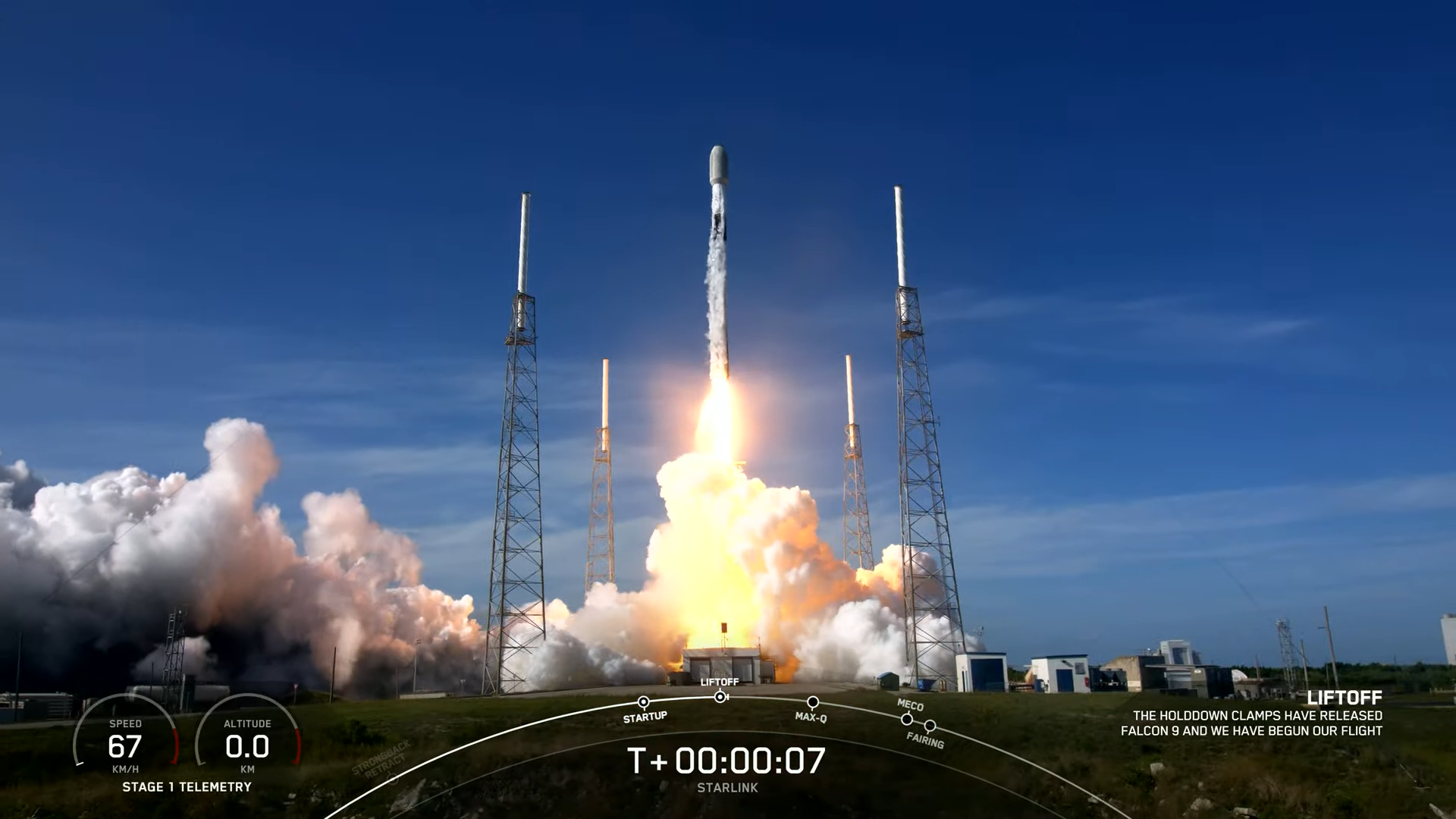
In financial circles, the conversation surrounding SpaceX increasingly centers on unit economics and market valuation. With private market valuations soaring past historical benchmarks, skeptics frequently question whether high-growth multiples are sustainable. However, the 700th Falcon 9 flight provides concrete justification for these valuations by highlighting an unassailable competitive advantage in cost-per-kilogram-to-orbit.
Consider the financial mechanics of orbital deployment. For decades, commercial satellite operators factored launch costs as a primary capital expenditure risk, often amortizing payloads over multi-year financing structures. The advent of frequent Falcon 9 flights—and specifically, boosters flying upward of 20 to 25 times—has compressed these costs exponentially. By amortizing the initial research and development capital across hundreds of missions, SpaceX commands operating margins that leave legacy launch providers scrambling to restructure their portfolios.
Furthermore, this infrastructure scalability directly impacts adjacent markets. The rapid deployment cadence provides the necessary delivery mechanism for proprietary constellations like Starlink, converting raw cloud compute architecture into a globally accessible, high-margin subscription service. This vertical integration—from rocket manufacturing to orbital delivery and end-user broadband distribution—creates a closed-loop economic ecosystem that traditional aerospace conglomerates are ill-equipped to replicate.
Verified Data and Metrics Breakdown
A rigorous examination of the Falcon 9 program requires analyzing the hard numbers that define its operational velocity and historical trajectory. The following data breakdown illustrates the scaling velocity of the platform:
| Metric / Parameter | Historical Baseline (2010) | Current Milestone Status (October) | Strategic Implications |
|---|---|---|---|
| Total Falcon 9 Launches | 1 Flight | 700 Flights | Unprecedented statistical reliability and flight heritage. |
| Booster Reuse Record | 0 (Expendable) | Up to 25+ Flights per Single Booster | Dramatic reduction in marginal production costs and improved gross margins. |
| Average Launch Cadence | 1–2 Flights per Year | Multiple Launches per Week | Ensures steady cash flow generation and rapid payload clearing. |
| Payload Capacity to LEO | ~10,400 kg (Expendable) | Up to 22,800 kg (Optimized Reuse) | Greater mass allocation per flight supports heavier enterprise payloads. |
Industry and Market Implications: Winners, Losers, and Geopolitical Shifts
The institutional ramifications of SpaceX hitting 700 Falcon 9 launches extend far beyond corporate boardrooms; they redraw the geopolitical and defense posture of Western allies. As near-peer adversaries accelerate investments in counter-space capabilities and hypersonic delivery systems, the United States Department of Defense relies increasingly on SpaceX’s resilient launch infrastructure to maintain strategic superiority in low Earth orbit (LEO).
Who Wins: Commercial satellite operators, global telecom providers, and national security agencies emerge as the primary beneficiaries of this industrial scale. With reliable, high-frequency access to orbit, enterprises can deploy next-generation Earth observation, secure communications, and deep-space telemetry payloads with unprecedented speed to market. Furthermore, suppliers specializing in high-grade avionics, specialized metallurgy, and automated ground-support equipment continue to capture lucrative enterprise contracts.
Who Loses: Traditional aerospace primes and sovereign space programs that rely on cost-plus contracting models face an existential reckoning. Legacy launch providers in Europe, Asia, and the United States find themselves caught in a high-cost trap, struggling to match the price-per-pound metrics of a rocket that has flown 700 times. Without radical structural overhauls and a pivot toward full-scale reusability, these entities risk irrelevance in a market governed by commercial velocity rather than political patronage.
Frequently Asked Questions (People Also Ask)
What is the significance of SpaceX reaching 700 Falcon 9 launches?
Reaching 700 flights cements the Falcon 9 as the most prolific orbital-class rocket in human history. It demonstrates unparalleled manufacturing repeatability, statistically proven safety margins, and an insurmountable economic lead over global competitors through booster reuse.
How many times can a single Falcon 9 first-stage booster be reused?
SpaceX has routinely flown individual first-stage boosters 20 to 25 times. Through rigorous engineering inspections, refurbishment protocols, and software updates, the company continues to push the structural fatigue limits of its hardware to maximize enterprise ROI.
How does Falcon 9’s launch cadence impact global satellite markets?
The high-frequency launch schedule eliminates historical bottlenecks that previously delayed commercial and government missions for years. This rapid cadence allows organizations to deploy constellations, upgrade in-orbit assets, and execute risk mitigation strategies with unprecedented agility.
What are the primary financial drivers behind SpaceX’s market dominance?
Vertical integration, high-volume manufacturing, proprietary component design, and reusable booster technology are the core pillars driving SpaceX's financial advantage. By reducing marginal costs per flight, the company maintains superior operating margins while undercutting legacy industry pricing.
Future Outlook: What Comes Next and Key Milestones to Watch
As the ink dries on the record books for October's 700th Falcon 9 mission, SpaceX shows no signs of decelerating. The operational roadmap ahead involves balancing the mature, high-reliability cadence of the Falcon fleet with the aggressive scaling of Starship—the fully reusable, super-heavy-lift transport system designed to eventually supersede both Falcon 9 and Falcon Heavy for deep-space missions to the Moon and Mars.
For market analysts and industry stakeholders, the coming quarters will hinge on several critical milestones:
- Cadence Acceleration: Monitoring whether SpaceX can safely scale annual launch totals past the 150-to-200 flight mark without encountering regulatory or logistical friction.
- Booster Lifecycle Limits: Observing how far engineers can push individual Falcon 9 boosters beyond the current 25-flight benchmark before retirement protocols are triggered.
- Starship Integration: Assessing how the operational maturation of Starship begins to cannibalize or complement Falcon 9 payload manifests, particularly for heavy commercial and national security architectures.
Ultimately, the 700th Falcon 9 launch is not a destination, but a waypoint. It stands as a definitive testament to what is possible when engineering ambition is paired with relentless capital efficiency. In reshaping the economics of Earth's orbital threshold, SpaceX has permanently altered the trajectory of global commerce, proving that the future of aerospace belongs entirely to those who master the art of the repeat.