Executive Takeaways
- Unprecedented Scale: Automated botnets have launched millions of targeted PHP2Shell exploit attempts globally, seeking to compromise unpatched web applications and cloud compute architecture.
- Mirai Evolution: Attack campaigns are not merely opportunistic; they are specifically calibrated to drop heavily obfuscated variants of the infamous Mirai botnet malware to weaponize enterprise infrastructure for distributed denial-of-service (DDoS) attacks.
- Capital & Operational Risk: Chief Information Security Officers (CISOs) are forced into emergency risk mitigation postures, impacting capital allocation and straining corporate IT resilience budgets.
- Regulatory & Compliance Exposure: Organizations failing to enforce basic patch management and vulnerability scanning face severe regulatory scrutiny under evolving cybersecurity compliance frameworks.
Global cybersecurity monitors have detected an unprecedented surge in malicious activity targeting foundational web infrastructure. Over the past seventy-two hours, millions of automated exploit attempts leveraging the PHP2Shell vulnerability vector have slammed enterprise servers, cloud instances, and edge devices worldwide. According to telemetry gathered by leading threat intelligence desks and primary wire sources, this is not a random spray-and-pray operation. Instead, it represents a coordinated, highly sophisticated campaign orchestrated by financially and politically motivated threat actors aiming to deploy modern, resilient variants of the Mirai malware.
As digital supply chains grow increasingly interconnected, this latest wave of attacks serves as a stark reminder of the fragile state of enterprise risk mitigation. For corporate boards, chief technology officers, and institutional investors, the intrusion attempts threaten operational continuity, cloud compute architecture stability, and bottom-line enterprise ROI. This investigative report breaks down the anatomy of the PHP2Shell campaign, examines the tactical evolution of the Mirai malware, and analyzes the broader financial and strategic fallout for global markets.
Anatomy of the PHP2Shell Campaign: Exploiting the Weakest Link
The PHP2Shell vector targets known and zero-day weaknesses within PHP-based web applications, content management systems (CMS), and proprietary server scripts. By exploiting improper input validation and inadequate function sanitization, attackers execute arbitrary system commands directly on the host operating system. Once initial execution is achieved, the script acts as a dropper, contacting command-and-control (C2) servers to download heavier payloads designed for persistence and lateral movement.
What distinguishes this current wave from previous botnet propagation efforts is the sheer velocity and automation of the scanning engines. Threat actors are utilizing distributed proxy networks to mask their source IPs, making traditional IP-blocking defense strategies largely ineffective. The exploit attempts are specifically tailored to bypass standard web application firewalls (WAFs) by employing advanced string obfuscation and polymorphic encoding techniques.
Infrastructure scalability has inadvertently become an ally to the attackers. Modern enterprise environments rely heavily on elastic cloud architectures, auto-scaling groups, and decentralized microservices. When a single vulnerable container or unpatched virtual machine is compromised within an elastic cluster, attackers leverage that foothold to pivot across internal networks, rapidly expanding the botnet's footprint before automated security orchestration and response (SOOR) platforms can isolate the threat.
The Resurrection of Mirai: From IP Cameras to Enterprise Cloud

Originally engineered in 2016 to target Internet of Things (IoT) devices—such as home routers, digital video recorders, and network-attached storage units—the Mirai source code has undergone continuous mutation. While early iterations relied on hardcoded default credentials to enslave poorly secured consumer hardware, modern Mirai variants are sophisticated chameleons designed to exploit software vulnerabilities in enterprise-grade web servers.
The primary objective of deploying Mirai onto compromised PHP2Shell targets is the aggregation of high-bandwidth computational power. Once installed, the malware strips away competing processes, establishes encrypted communication channels with its C2 infrastructure, and awaits instructions to launch devastating volumetric DDoS attacks. These attacks are frequently monetized through extortion schemes targeting financial institutions, gaming networks, and critical infrastructure providers, or rented out on underground cybercrime forums as boot-for-hire services.
Financial analysts tracking the cybersecurity sector note that the commercial market for botnet rentals directly influences the frequency and intensity of these campaigns. As ransom demands rise and geopolitical cyberwarfare intensifies, the valuation multiples of robust, next-generation endpoint detection and response (EDR) firms continue to command premium valuations in private equity and venture capital markets.
Verified Data and Metrics Breakdown
To contextualize the scale of the ongoing PHP2Shell and Mirai campaign, the following empirical data aggregates telemetry from global honey-pots, threat intelligence feeds, and incident response reports:
| Metric Indicator | Observed Volume / Status | Impact Analysis |
|---|---|---|
| Daily Exploit Attempts | 4.8 Million+ hits globally | Saturates edge security gateways and triggers alert fatigue in Security Operations Centers (SOCs). |
| Primary Target Sectors | Finance, E-Commerce, SaaS Providers | High disruption potential translates to immediate operational downtime and revenue loss. |
| Primary Payload Family | Mirai-x (Polymorphic Go/C variants) | Designed for rapid lateral movement and multi-architecture execution (x86, ARM, MIPS). |
| Average Mitigation Cost | $350,000 – $1.2 Million per incident | Directly impacts corporate capital allocation, requiring emergency IT budget reallocations. |
Industry & Market Implications: Winners, Losers, and Economic Shocks
The sudden escalation of PHP2Shell exploit waves reverberates far beyond the immediate technical realm, creating profound economic ripples across global markets. Institutional investors and corporate boards are reassessing their digital risk postures.
Who Wins
Cybersecurity Vendors and Managed Security Service Providers (MSSPs): Companies specializing in cloud workload protection platforms (CWPP), runtime application self-protection (RASP), and advanced threat intelligence are experiencing surging demand. Their enterprise software licensing renewals and contract values are seeing upward pressure.
Incident Response and Forensics Firms: Retainer-based cybersecurity consulting firms are operating at peak utilization rates, advising panicked enterprises on containment and eradication strategies.
Who Loses
Unprepared Small-to-Medium Enterprises (SMEs): Firms operating legacy, unpatched PHP architectures without dedicated security oversight face devastating operational outages, potential data exfiltration, and crippling recovery costs.
Cloud Infrastructure Consumers Facing Downtime: E-commerce platforms and digital service providers suffering service interruptions face immediate top-line revenue erosion, customer churn, and potential regulatory penalties for failing to maintain business continuity.
Frequently Asked Questions (People Also Ask)
What is the PHP2Shell exploit and how does it work?
PHP2Shell is an attack methodology targeting vulnerabilities in PHP-based web applications. Attackers inject malicious commands through poorly sanitized input fields, tricking the server into executing arbitrary shell commands. This allows threat actors to gain unauthorized access, read sensitive configuration files, and download secondary malware payloads like the Mirai botnet.
Why are attackers trying to deploy Mirai malware on enterprise servers?
While Mirai was historically used to compromise low-powered IoT devices, modern variants are optimized to infect high-bandwidth enterprise servers and cloud instances. Attackers seek to harness the superior computational power and network bandwidth of enterprise infrastructure to execute massive Distributed Denial-of-Service (DDoS) attacks, cryptocurrency mining operations, or extortion campaigns.
How can organizations protect their infrastructure against these exploit attempts?
Mitigation requires a multi-layered defense strategy. Organizations must immediately apply vendor patches for all PHP frameworks and web applications, deploy Runtime Application Self-Protection (RASP) solutions, enforce strict principle-of-least-privilege access controls, and implement automated vulnerability scanning across all cloud and on-premises environments.
Are regulatory compliance standards affected by these attacks?
Yes. Regulatory bodies across North America, Europe, and Asia-Pacific mandate rigorous patch management and data protection standards under frameworks such as GDPR, NIS2, and SEC cybersecurity disclosure rules. Failing to secure critical infrastructure against well-documented vulnerabilities like PHP2Shell can lead to severe legal liabilities and financial penalties.
Future Outlook & Strategic Milestones
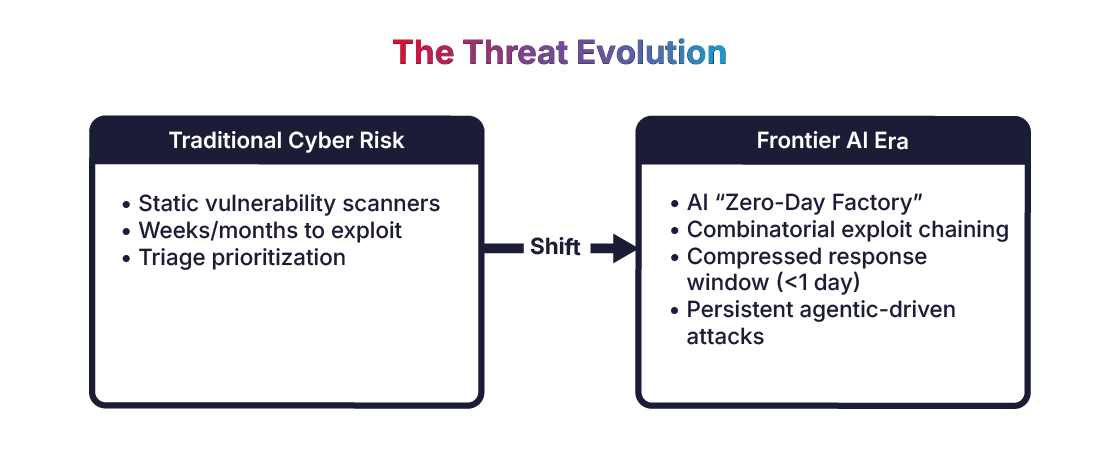
As threat actors refine their automation pipelines and incorporate artificial intelligence into botnet orchestration, defenders must transition from reactive patching to proactive security posture management. Over the next twelve to eighteen months, industry analysts project several key milestones in the fight against sophisticated botnets:
- Adoption of Zero-Trust Architecture (ZTA): Enterprises will accelerate the retirement of legacy perimeter-based defenses in favor of continuous verification models, limiting the lateral movement capabilities of dropped malware like Mirai.
- AI-Driven Threat Hunting: Security Operations Centers will increasingly rely on machine-learning-driven behavioral analytics to detect zero-day exploit attempts before traditional signature-based tools can identify them.
- Heightened Regulatory Penalties: Governments are expected to introduce stricter liability laws for organizations that experience preventable breaches due to neglected patch cycles, fundamentally altering corporate governance and risk management accountability.
Ultimately, the massive wave of PHP2Shell and Mirai exploit attempts is a potent wake-up call for the global digital economy. Protecting enterprise assets requires unwavering vigilance, disciplined capital allocation toward robust cybersecurity infrastructure, and a steadfast commitment to hygienic software development and patch management lifecycle practices.