Executive Takeaways
- Mission Termination: Starfish Space has officially confirmed the permanent loss of telemetry and command signals with its flagship Otter spacecraft, terminating the pioneering satellite inspection mission prematurely.
- Infrastructure Risk: The incident underscores the severe engineering challenges and risk mitigation hurdles facing the burgeoning commercial orbital servicing and in-space logistics market.
- Capital Allocation Impact: Institutional venture capital, institutional underwriters, and aerospace stakeholders are reassessing valuation multiples, capital deployment strategies, and technical risk exposure across emerging space-tech startups.
- Regulatory Scrutiny: The sudden loss of an active asset in low-Earth orbit heightens regulatory compliance pressures concerning space debris mitigation and end-of-life orbital disposal protocols.
In the high-stakes theater of commercial aerospace, the margin for error is measured in milliseconds and millimeters. Starfish Space, an ambitious Seattle-based startup pioneering satellite servicing and orbital logistics, has suffered a critical operational blow. Industry insiders and regulatory filings confirmed today that the company has officially lost contact with its Otter spacecraft, effectively terminating a high-profile mission designed to demonstrate proximity operations and satellite inspection capabilities.
For an industry transitioning from government-funded exploration to commercial infrastructure scalability, this development serves as a sobering reminder of the hazards inherent in low-Earth orbit (LEO). As institutional investors, defense contractors, and private equity funds pour billions into the new space economy, the sudden blackout of the Otter vehicle sends shockwaves through venture capital boardrooms and enterprise risk management committees worldwide.
Background and Catalytic Events: The Road to the Otter Launch
Test Our Free AI & Tech Utilities Suite
Calculate LLM API token costs, analyze article dwell-time, or simulate tech DCA returns.
The genesis of Starfish Space traces back to a shared vision among aerospace engineers seeking to solve one of the space industry's most intractable problems: orbital debris and the finite lifespan of geostationary and low-Earth orbit satellites. Traditional satellite architecture operates on a terminal utility model—once propellant is exhausted or hardware fails, multi-million-dollar assets become high-velocity space junk.
Starfish Space positioned itself as a critical enabler of orbital sustainability. By developing the Otter—a versatile, modular servicing vehicle equipped with advanced propulsion systems, autonomous navigation software, and proprietary docking mechanisms—the company aimed to unlock lucrative revenue streams in life-extension, orbital relocation, and active debris removal. Enterprise ROI models relied heavily on the successful demonstration of these capabilities to secure long-term service contracts with major commercial constellation operators and defense agencies.
The mission, heavily anticipated across aerospace circles, was designed to test the Otter’s electro-static docking technology and proximity operations under real-world orbital dynamics. However, telemetry data received prior to the blackout indicated anomalous behavior within the spacecraft's power and communication subsystems. Despite exhaustive troubleshooting efforts by mission controllers on the ground—utilizing backup command pathways and adjusting cloud compute architecture for real-time telemetry processing—signals ceased entirely, closing the window for recovery.
Technical Breakdown and Operational Post-Mortem
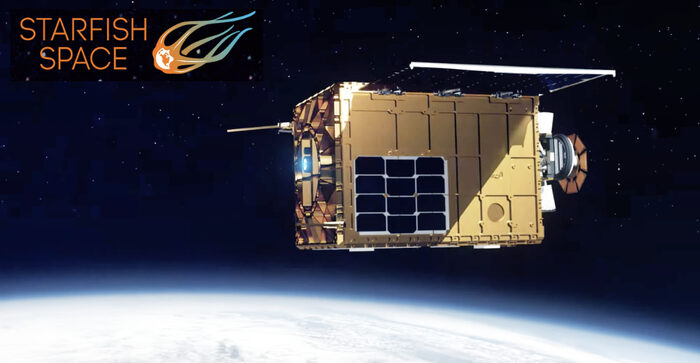
While forensic analysis of an orbital anomaly is inherently constrained by the lack of physical hardware recovery, initial telemetry logs point to a cascading failure within the spacecraft’s power distribution or attitude determination and control systems (ADCS). Operating in the harsh thermal and radiation environment of low-Earth orbit places unprecedented strain on commercial-off-the-shelf (COTS) components.
Engineers note that proximity operations require extreme precision. The Otter’s onboard software relied on complex algorithms to calculate relative velocity, lighting angles, and distance vectors. When unexpected power fluctuations occurred, the spacecraft likely entered a protective safe mode, failing to reacquire solar orientation, subsequently depleting its battery reserves before ground stations could re-establish contact.
This technical setback highlights the acute difficulties of scaling complex autonomous systems in space. Unlike terrestrial cloud infrastructure where nodes can be instantly rebooted or patched remotely, orbital assets demand fault-tolerant hardware redundancy that balances strict payload mass limits with rigorous safety margins.
Verified Data and Mission Metrics Breakdown
| Metric / Parameter | Mission Specification | Operational Impact |
|---|---|---|
| Spacecraft Designation | Otter (Servicer Vehicle) | Flagship tech demonstrator for inspection and docking. |
| Primary Objective | Proximity Operations & Rendezvous | Validation of autonomous navigation and rendezvous tech. |
| Failure Mode | Complete Telemetry Blackout | Loss of command-and-control uplink/downlink. |
| Market Segment | In-Space Servicing, Assembly, and Manufacturing (ISAM) | Near-term capital caution; long-term demand remains intact. |
| Regulatory Status | Passive Orbital Decay Tracked | Monitored under standard space traffic management guidelines. |
Industry and Market Implications: Capital Allocation and Risk Mitigation
The termination of the Otter mission reverberates far beyond Starfish Space’s corporate headquarters. The in-space servicing, assembly, and manufacturing (ISAM) sector has been a darling of venture capital and aerospace institutional investors, attracting substantial capital allocation on the premise that orbital maintenance will become a multi-billion-dollar market by the end of the decade.
However, venture capitalists and insurance underwriters are recalibrating their risk models. Key economic impacts include:
Frequently Asked Questions (People Also Ask)
What caused the loss of contact with the Starfish Space Otter spacecraft?
While a definitive root cause analysis is ongoing, preliminary data indicates a critical failure within the spacecraft’s power distribution or attitude control systems. This anomaly triggered a communication blackout, preventing ground stations from sending recovery commands or receiving telemetry data before onboard battery reserves were exhausted.
Does the loss of the Otter spacecraft pose a debris hazard in low-Earth orbit?
Starfish Space designed the mission with standard orbital safety protocols in mind. The spacecraft is operating in an orbit where atmospheric drag will naturally cause the defunct vehicle to re-enter and burn up safely over time, adhering to international space debris mitigation guidelines.
How will this mission failure impact the broader in-space servicing market?
The incident serves as a sharp reminder of the technical complexities inherent in orbital rendezvous and docking. While it may temporarily tighten venture capital financing and increase insurance underwriting standards, the long-term economic demand for satellite life-extension and active debris removal remains robust.
Will Starfish Space build and launch a replacement vehicle?
Starfish Space has not yet formally announced specific manufacturing timelines for a successor mission. Executive leadership is currently focused on completing the technical post-mortem, preserving liquidity, and engaging with commercial partners and investors regarding their go-forward roadmap.
Future Outlook: Strategic Milestones to Watch
The road ahead for Starfish Space—and the wider commercial ISAM ecosystem—hinges on how effectively engineering teams can diagnose the Otter anomaly and transparently communicate corrective measures to stakeholders. In high-tech industries, failure is frequently the crucible in which reliable engineering is forged, provided capital reserves remain sufficient to sustain operations through the development cycle.
Key indicators to monitor in the coming quarters include:
- Regulatory Filings and Post-Mortem Transparency: Official disclosures regarding the exact engineering failure point will dictate how quickly industry confidence rebounds.
- Capital Preservation and Funding Rounds: Whether Starfish Space secures bridge financing or strategic partnership injections from major defense or aerospace primes to fund its next iteration.
- Broader Regulatory Frameworks: Potential tightening of Federal Communications Commission (FCC) and Office of Space Commerce rules regarding active satellite proximity operations and liability frameworks.
As commercial activity in low-Earth orbit accelerates, the lessons learned from the Otter mission will inevitably shape the safety, regulatory, and financial architectures of the next generation of space infrastructure.