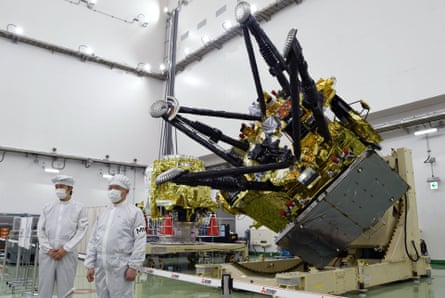
Executive Takeaways
- Uncontrolled Orbital Decay: Launched in 2004, NASA’s Neil Gehrels Swift Observatory is rapidly losing altitude due to uncorrected atmospheric drag driven by heightened solar activity cycles.
- Infrastructure and Asset Risk Management: Aerospace insurers, private satellite operators, and global defense contractors are closely monitoring the re-entry window for risk mitigation and capital allocation strategies regarding low-Earth orbit (LEO) congestion.
- Valuation and Tech Obsolescence: The demise of Swift highlights the pressing need for scalable cloud compute architecture, automated collision avoidance, and sustainable asset retirement protocols within the commercial space economy.
- Regulatory Compliance: The event underscores tightening global regulatory frameworks governing space debris, corporate liability, and orbital asset valuation.
The countdown has begun for one of NASA’s most enduring astronomical workhorses. The Neil Gehrels Swift Observatory, a spacecraft that revolutionized our understanding of gamma-ray bursts, black holes, and the early universe, is locked in an irreversible downward spiral toward Earth. As the satellite’s orbit degrades beneath the friction of a swelling upper atmosphere, aerospace engineers, risk mitigation analysts, and global policymakers are confronting a stark reality: the era of laissez-faire orbital management is over.
For institutional investors, defense contractors, and technology leaders, the impending re-entry of the Swift Observatory is far more than a sentimental farewell to a venerable scientific instrument. It serves as a high-stakes case study in asset lifecycle management, the economics of space infrastructure scalability, and the mounting regulatory compliance pressures facing both public agencies and private space enterprises in increasingly crowded orbital corridors.
The Catalytic Descent: Physics, Solar Cycles, and Fiscal Realities
Test Our Free AI & Tech Utilities Suite
Calculate LLM API token costs, analyze article dwell-time, or simulate tech DCA returns.
Deployed in November 2004, the Swift Observatory was engineered with a primary mission profile of just two years. Yet, through exceptional engineering and adaptive software updates, the spacecraft operated for two decades, delivering unprecedented data streams that transformed high-energy astrophysics. However, longevity in low-Earth orbit (LEO) carries a compounding operational cost.
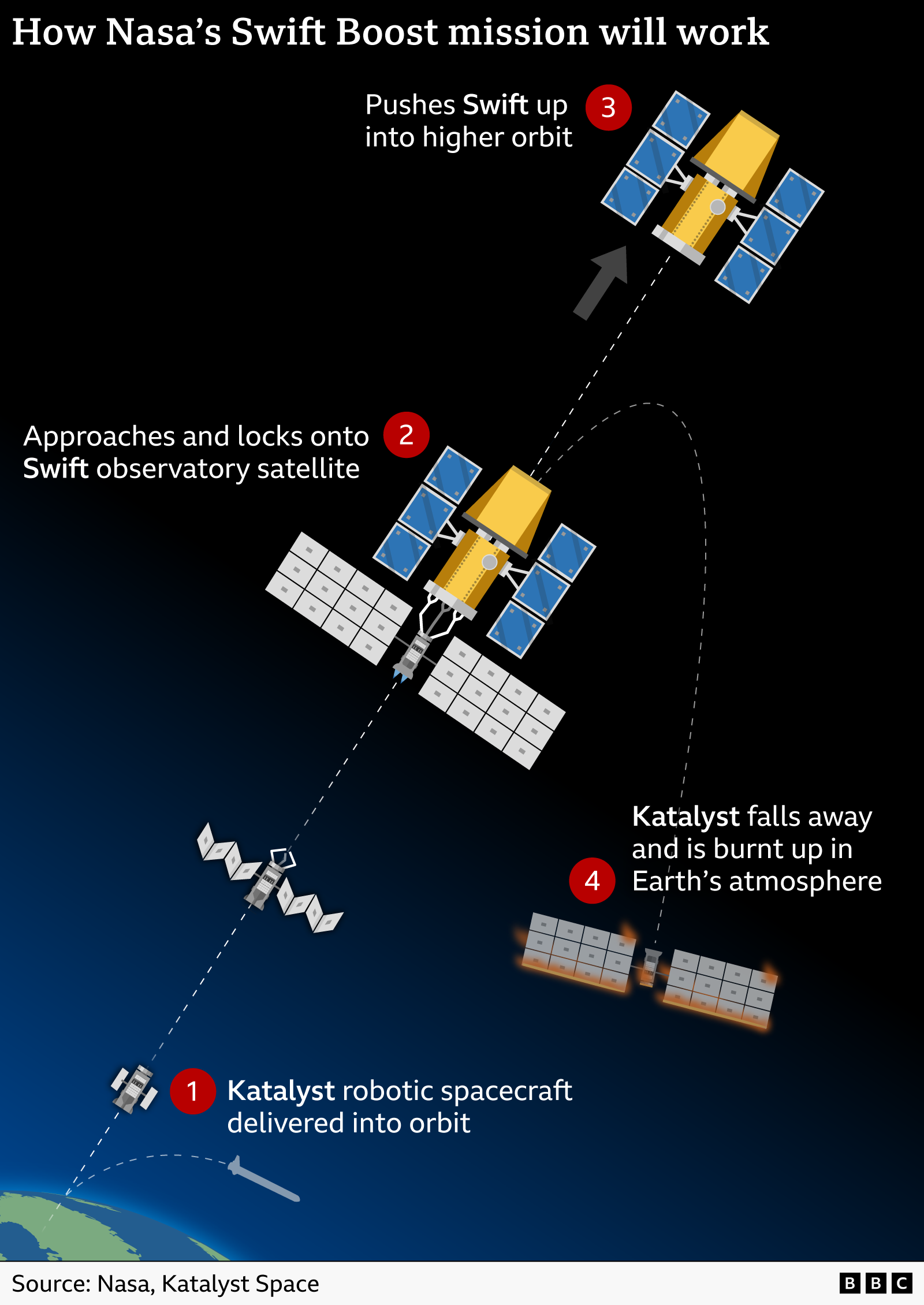
Swift operates without a functional propulsion system capable of executing a controlled de-orbit maneuver. Consequently, its altitude is entirely subservient to external environmental variables—most notably, solar flux. Recent peaks in the 11-year solar cycle have heated and expanded Earth's outer atmosphere, dramatically increasing atmospheric drag on satellites operating below 600 kilometers. Lacking the propellant reserves to counteract this drag, Swift’s orbital decay has accelerated exponentially over the past 24 months.
This dynamic forces a rigorous re-evaluation of capital allocation within federal space programs and commercial ventures alike. When legacy infrastructure reaches end-of-life without built-in propulsion redundancies, the resultant uncontrolled re-entry introduces latent liabilities that reverberate across insurance markets, corporate balance sheets, and sovereign risk portfolios.
Verified Data and Technical Specifications Breakdown
| Metric / Specification | Operational Value | Implication for Re-Entry & Market |
|---|---|---|
| Launch Date | November 20, 2004 | Exceeded initial 2-year design lifespan by 18 years, demonstrating exceptional initial ROI. |
| Dry Mass | ~1,470 kg (3,240 lbs) | Substantial structural mass; dense components (such as telescope mirrors) carry survival potential through atmospheric heating. |
| Propulsion Capability | None (Uncontrolled) | Highlights historic design paradigms lacking mandatory end-of-life active de-orbit systems. |
| Estimated Re-Entry Window | Late 2026 – 2027 (Subject to solar activity) | Demands continuous tracking, market risk monitoring, and emergency preparedness coordination. |
| Insurance & Liability Exposure | Sovereign Backed / NASA Risk Pool | Shifts focus toward private sector underwriting requirements for commercial LEO constellations. |
Industry & Market Implications: Risk Mitigation and Valuation Multiples
The impending demise of the Swift Observatory is far more than an academic footnote; it acts as a stress test for the commercial aerospace ecosystem. As valuation multiples for NewSpace startups, satellite manufacturing firms, and data analytics providers face increasing scrutiny from institutional investors, regulatory compliance regarding orbital debris has become a primary valuation driver.
1. Aerospace Insurance and Underwriting: Traditional marine and aviation insurers expanding into space assets are recalibrating risk models. Uncontrolled re-entries of legacy hardware elevate the perceived hazard profile of low-Earth orbit, translating directly into higher premium costs and stricter underwriting covenants for active commercial satellite constellations.
2. Technological Innovation and Cloud Compute Architecture: Managing tens of thousands of active objects in LEO requires sophisticated, real-time tracking systems. Aerospace primes and defense contractors are aggressively deploying advanced cloud compute architecture and AI-driven telemetry analytics to predict orbital decay patterns with pinpoint accuracy, protecting both high-value corporate assets and ground infrastructure.
3. Corporate Governance and ESG Integration: Institutional asset managers emphasizing Environmental, Social, and Governance (ESG) mandates are increasingly applying sustainability metrics to outer space. Companies that fail to incorporate sustainable design practices—such as built-in propulsion for active de-orbiting—risk capital flight as institutional investors penalize poor orbital hygiene.
Frequently Asked Questions (People Also Ask)
When is the Swift Observatory expected to re-enter Earth's atmosphere?
Current orbital models project that the Swift Observatory will make an uncontrolled re-entry between late 2026 and 2027. However, the exact timeline remains volatile, highly dependent on solar flux fluctuations and geomagnetic storms that directly influence atmospheric density and drag rates.
What are the ground impact risks associated with Swift’s re-entry?
While portions of the spacecraft—specifically heavier structural elements and telescope mirrors constructed from durable materials—will survive the intense heat of atmospheric re-entry, the vast majority of the satellite will disintegrate. Statistically, the risk to human life or property on the ground remains exceedingly low, given that over 70% of Earth's surface is covered by oceans, and landmasses feature vast unpopulated regions.
Why didn’t NASA equip Swift with an active de-orbit propulsion system?
Swift was conceptualized and procured in the late 1990s and launched in 2004 under operational paradigms and budgetary frameworks common to that era. At the time, mandatory post-mission disposal regulations and active collision avoidance standards were far less rigorous than the stringent federal and international guidelines enforced across the aerospace industry today.
How does Swift’s decay impact commercial satellite operators and insurers?
High-profile uncontrolled re-entries draw intense regulatory and public scrutiny, driving up insurance premiums for commercial operators. Insurers are increasingly pricing in the systemic risks of orbital congestion, compelling private enterprises to demonstrate bulletproof risk mitigation strategies and guaranteed de-orbit capabilities to secure favorable financing and market liquidity.
Future Outlook: Milestones and Strategic Imperatives
As the Swift Observatory ticks down its final orbits, industry executives, policymakers, and scientists must look past the immediate re-entry event to the broader structural evolution of orbital economics. Over the next 12 to 24 months, key milestones will dictate market sentiment and regulatory enforcement:
- Codification of LEO Standards: Expect international space agencies and regulatory bodies, including the FCC and ESA, to tighten mandates regarding maximum permissible orbital residency for defunct hardware.
- Market Liquidity for Active De-Orbit Tech: Venture capital and corporate venture arms will likely direct heightened capital allocation toward propulsion startups and active debris removal (ADR) technologies.
- Enhanced Situational Awareness: Integration of advanced ground-based radar and space-based optical sensors will become standard operational procedure, reducing uncertainty in re-entry impact corridors.
Ultimately, the story of NASA’s Swift Observatory is a narrative of technological triumph shadowed by the physical constraints of our cosmic neighborhood. How governments and private enterprise manage its final descent will establish the regulatory and financial playbook for generations of orbital commerce to come.