For the past thirty-six months, Wall Street has aggressively pitched a singular, unifying thesis to institutional investors, sovereign wealth funds, and retail syndicates alike: digital real estate is the new sovereign debt. Driven by an unprecedented generative artificial intelligence (AI) boom, cloud computing expansion, and enterprise data localization mandates, alternative asset managers—led by titans such as Blackstone, Brookfield Asset Management, and Digital Realty—have funneled hundreds of billions of dollars into sprawling server farms. These facilities are marketed as impenetrable, cash-flowing digital fortresses, insulated from traditional commercial real estate volatility by long-term, triple-net lease structures.
However, behind the polished investor decks and surging valuation multiples, a sobering operational reality is taking root. A comprehensive investigation reveals that the structural risks underpinning this digital land rush are accelerating faster than both capital allocators and utility grids can adapt. From acute power generation deficits and severe water stress in arid sub-markets to looming technological obsolescence and tightening regulatory compliance, the liabilities of the data center asset class are piling up at an alarming rate. As capital allocation models collide with physical resource boundaries, the question facing global financial markets is no longer whether this sector will expand, but whether its structural leverage and environmental dependencies will trigger a systemic correction.
Executive Takeaways
Test Our Free AI & Tech Utilities Suite
Calculate LLM API token costs, analyze article dwell-time, or simulate tech DCA returns.
- The Capital Squeeze: Wall Street asset managers have deployed record capital into data center real estate investment trusts (REITs) and private vehicles, valuing facilities on projected future cash flows that assume uninterrupted, cheap power.
- The Power and Water Wall: Major Tier-1 data center hubs—including Northern Virginia, Silicon Valley, and Phoenix—are actively confronting grid capacity exhaustion and extreme water stress driven by intensive server cooling requirements.
- Valuation Disconnect: While long-term enterprise leases provide initial downside protection, rapidly evolving cloud compute architecture and AI chip iterations threaten to render current physical infrastructure obsolete much faster than historical depreciation schedules allow.
- Systemic Risk Exposure: Regional utilities and municipal governments are increasingly pushing back against the immense resource demands of hyperscale operators, introducing regulatory friction that threatens infrastructure scalability and expected enterprise ROI.
The Anatomy of a Digital Gold Rush: Catalytic Capital and Hyperscale Ambitions
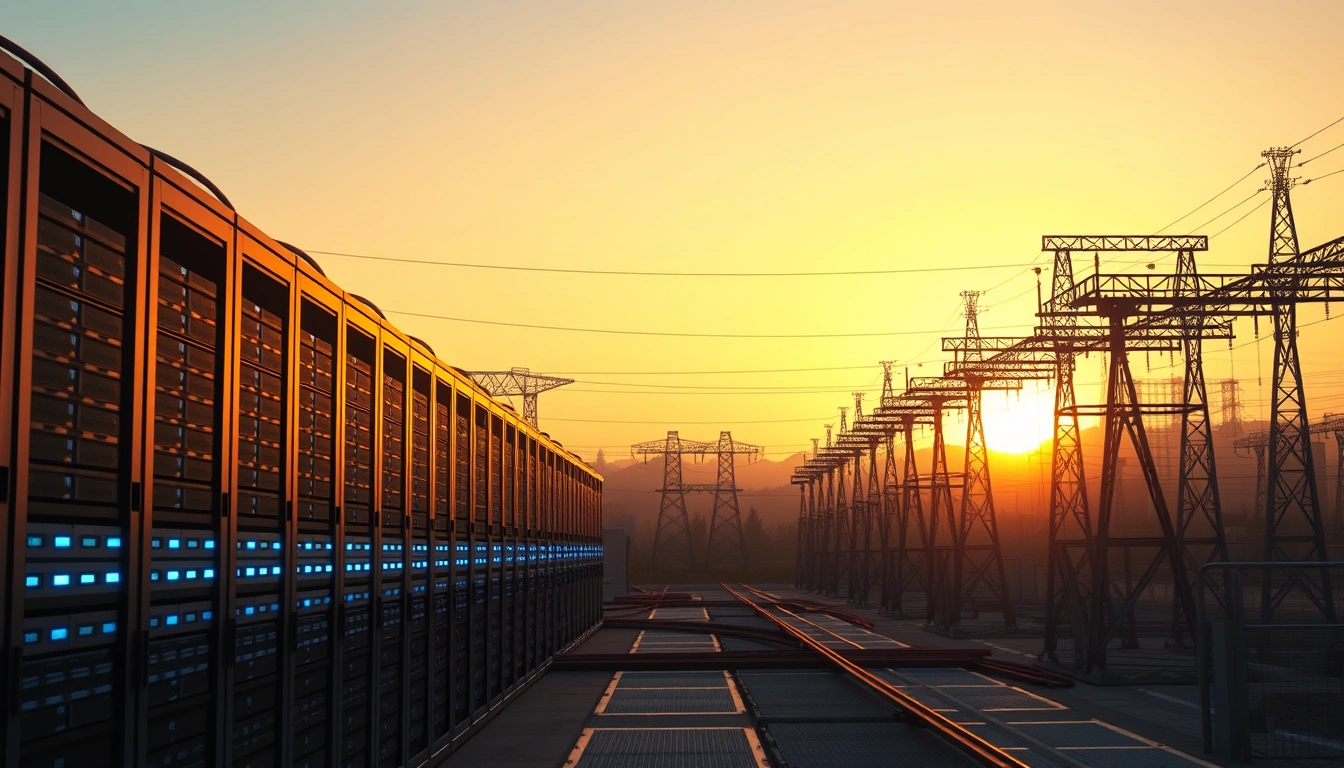
The contemporary data center boom is not merely an evolution of traditional commercial real estate; it is a fundamental convergence of high-performance computing and heavy industrial infrastructure. Historically, data centers were treated as specialized alternative assets—niche industrial properties leased to telecommunications firms and regional enterprises. However, the maturation of cloud infrastructure providers (such as Amazon Web Services, Microsoft Azure, and Google Cloud) and the sudden explosion of large language models transformed these facilities into indispensable nodes of the global economy.
Sensing a secular shift away from traditional office and retail spaces, Wall Street capitalized on this momentum. Private equity giants leveraged dry powder reserves to acquire existing operators, take data center REITs private, and finance greenfield developments across secondary and tertiary markets. The pitch to limited partners (LPs) was compelling: shelter capital from inflationary pressures using real assets backed by credit-worthy investment-grade tenants locked into 10- to 15-year leases with annual escalators.
Yet, this rapid financialization has created an aggressive disconnect between financial engineering and physical engineering. While financial analysts model stable capitalization rates and predictable net operating income (NOI), the underlying assets require unprecedented inputs of electricity and water. A single hyperscale campus can consume as much electricity as a mid-sized American city, putting immense strain on electrical grids that were constructed decades before the advent of accelerated machine learning workloads.
Resource Deficits and Environmental Pressures: The Physical Bottleneck
The most immediate and critical vulnerability facing Wall Street’s digital real estate bet is resource scarcity. Power generation and transmission infrastructure have failed to keep pace with the exponential trajectory of demand. In Northern Virginia’s "Data Center Alley"—which accounts for a massive share of global internet traffic—local utilities have warned of transmission bottlenecks that threaten to delay new facility connections for years. Regional grid operators are scrambling to secure baseload power, occasionally forcing operators to consider on-site fossil-fuel generation or delayed energization schedules.
Compounding the power crisis is an equally severe water stress crisis. Traditional air-cooling systems are insufficient for high-density AI clusters packed with power-hungry graphics processing units (GPUs). Consequently, operators rely heavily on evaporative cooling towers, consuming millions of gallons of municipal water daily. In drought-prone markets across the American Southwest, municipal water boards and environmental regulators are pushing back. Facilities sited in regions already facing high levels of water stress are encountering fierce local opposition, zoning freezes, and escalating water utility tariffs that erode projected operating margins.
Furthermore, this dynamic introduces profound environmental, social, and governance (ESG) liabilities. Institutional investors who face strict carbon-reduction mandates find themselves exposed to portfolios whose carbon footprints are expanding rather than contracting, complicating portfolio-level risk mitigation and threatening long-term market liquidity.
Verified Data & Metrics Breakdown
To contextualize the scale of capital deployment against physical constraints, the following comparative matrix outlines the operational realities and financial metrics defining the current data center landscape:
| Metric / Parameter | Traditional Enterprise Data Center (2018) | Modern Hyperscale AI Facility (2026) | Underlying Operational Risk |
|---|---|---|---|
| Power Density per Rack | 5 to 10 kilowatts (kW) | 40 to 100+ kilowatts (kW) | Extreme thermal output; requires specialized liquid cooling retrofits. |
| Average Campus Water Consumption | 100,000 to 300,000 gallons/day | 1 to 5+ million gallons/day | Severe depletion in water-stressed municipalities; regulatory pushback. |
| Grid Interconnection Lead Time | 12 to 24 months | 4 to 7+ years | Delayed revenue realization; trapped capital and carrying costs. |
| Asset Depreciation & Obsolescence | 15 to 20 years | 5 to 8 years | Rapid technological shifts risk rendering physical shell and power architecture obsolete. |
Industry & Market Implications: Winners and Losers
As the structural cracks in the data center thesis widen, the economic fallout will not be distributed evenly across the financial ecosystem. Understanding who stands to gain and who absorbs the downside is critical for institutional market participants.
The Winners
The Losers
Frequently Asked Questions (People Also Ask)
Why is Wall Street heavily investing in data centers right now?
Wall Street views data centers as high-yield, recession-resistant real estate assets driven by the explosive growth of cloud computing, enterprise digitization, and generative artificial intelligence. Long-term triple-net leases with investment-grade tenants provide predictable cash flows that appeal to institutional investors seeking reliable yield amid macroeconomic volatility.
What are the primary operational risks facing data center real estate?
The primary risks include acute electrical grid capacity constraints, severe water scarcity in key geographic markets, prolonged utility interconnection delays, and rapid technological obsolescence. High-density AI workloads require unprecedented power and cooling inputs, straining both local infrastructure and operating budgets.
How do power and water shortages impact data center valuations?
Resource bottlenecks delay the operational start dates of newly constructed facilities, locking up capital without generating revenue. Additionally, higher utility tariffs, expensive liquid-cooling retrofits, and potential regulatory restrictions compress net operating income, challenging the aggressive valuation multiples currently assigned by private equity and REIT markets.
Are data center leases truly insulated from economic downturns?
While long-term leases provide strong downside protection against short-term economic recessions, they do not insulate operators from structural resource inflation, sudden regulatory changes, or technological shifts that could render specific physical footprints obsolete before leases expire.
Future Outlook: Critical Milestones and What Comes Next
The trajectory of Wall Street’s digital real estate bet over the next 24 to 36 months will hinge on how asset managers navigate the physical and regulatory bottlenecks currently confronting the industry. Capital allocation strategies must pivot away from speculative land banking toward rigorous infrastructural due diligence.
Key milestones to watch include:
- Utility Regulatory Rulings: State public utility commissions are increasingly establishing stricter priority frameworks for industrial power consumers. Decisions regarding cost-allocation for grid upgrades will directly impact developer margins.
- Innovations in cooling technology—such as direct-to-chip liquid cooling and immersion cooling—will determine whether existing facilities can be retrofitted cost-effectively or if they face premature functional obsolescence.
- On-Site Power Integration: Watch for a surge in alternative energy integration, including corporate PPAs with small modular nuclear reactors (SMRs) and advanced hydrogen fuel cells, as hyperscalers attempt to bypass congested public grids entirely.
Ultimately, data centers will remain a cornerstone of the modern digital economy. However, the era of frictionless, high-multiple speculation is drawing to a close. As physical reality reasserts itself over financial engineering, market discipline will separate prudent infrastructure operators from over-leveraged speculators.