Executive Takeaways
- Pioneering Planetary Architecture: The Japan Aerospace Exploration Agency (JAXA) is preparing a world-first sample-return mission targeting Phobos, the largest moon of Mars.
- Capital Allocation & Industrial Synergy: Backed by heavy public-private investments, the mission leverages advanced robotics and deep-space infrastructure to secure crucial geological data on Martian system formation.
- Geopolitical & Commercial Stakes: As global superpowers race for space dominance, this endeavor redefines the valuation multiples and technological moats of aerospace engineering firms operating in the burgeoning interplanetary economy.
- Risk Mitigation & Precision Engineering: Overcoming unprecedented gravitational challenges, the mission sets a new technical benchmark for orbital rendezvous and surface sample extraction.
TOKYO — In an era where sovereign balance sheets are increasingly leveraged for extraterrestrial dominance, the Japan Aerospace Exploration Agency (JAXA) is preparing to execute one of the most audacious capital and scientific commitments in the history of aerospace engineering. As global intelligence agencies and venture-backed private enterprises alike pivot toward interplanetary infrastructure, Japan is formally stepping into the vanguard of deep-space resource acquisition. The objective: execute the world's first-ever sample-return mission targeting a Martian moon, unlocking geological secrets that could rewrite our understanding of planetary system evolution.
This landmark initiative—epitomizing high-stakes technical risk mitigation and long-term strategic positioning—arrives at a critical inflection point for the global space economy. While commercial actors focus heavily on low-Earth orbit (LEO) constellations and lunar tourism, state-backed programs like JAXA’s are securing the high-margin, high-prestige intellectual property associated with deep-space science. For institutional investors, aerospace conglomerates, and geopolitical strategists, the upcoming launch represents far more than an academic exercise; it is a live stress test of next-generation propulsion, autonomous navigation, and robotic sampling architecture.
The Genesis of a Martian Moon Mission: Bridging Science and Engineering
For decades, Mars has served as the primary focal point for astrobiological exploration. Yet, its two diminutive, potato-shaped moons—Phobos and Deimos—have largely remained celestial bystanders, overshadowed by the red dust and canyon networks of the Martian mainland. However, planetary scientists increasingly view Phobos not merely as a moon, but as a pristine archive of the early solar system. Hypothesized to be either a captured asteroid from the outer reaches of the solar system or a coalesced disk of debris blasted into orbit by a colossal impact on Mars, Phobos holds the master key to unlocking Martian chronology.
JAXA’s upcoming mission, meticulously planned over the past decade, aims to resolve this scientific debate once and for all. By landing a specialized spacecraft on the rugged, crater-scarred surface of Phobos, extracting pristine subsurface regolith, and successfully executing a return flight to Earth, Japan seeks to replicate its historic triumphs with the Hayabusa asteroid-sampling missions on a vastly more complex inter-planetary scale.
The engineering hurdles are staggering. Operating millions of miles from Earth introduces crippling communication latency, rendering real-time human telemetry impossible. Consequently, the mission demands fully autonomous surface-sampling protocols, advanced optical navigation systems, and ultra-reliable power infrastructure capable of withstanding the punishing radiation environment of deep space. Every subsystem represents a masterclass in risk management, where a single point of failure could jeopardize billions of dollars in sunk capital and decades of institutional research.
Comparative Mission Metrics & Technical Specifications

| Mission Parameter | JAXA Martian Moon Mission | Previous Hayabusa2 Asteroid Mission | Standard LEO Commercial Payload |
|---|---|---|---|
| Target Body | Phobos (Martian Moon) | Asteroid Ryugu | Low-Earth Orbit Stations |
| Distance from Earth | Variable (up to 400M+ km) | Approx. 300 million km | 160 to 2,000 km |
| Round-Trip Duration | Estimated 3 to 5 years | Approx. 6 years | Days to Months |
| Primary Technical Challenge | Martian gravitational pull & autonomous touchdown | Low gravity anchoring & explosive cratering | Orbital debris & atmospheric drag |
| Sample Target Weight | Minimum 10 grams (subsurface core) | 5.4 grams | N/A (Cargo / Satellites) |
Macroeconomic Impact: Capital Allocation, Defense, and Tech Valuations
While the mission is ostensibly driven by pure scientific inquiry, the secondary and tertiary economic implications are profound. In the modern global economy, space is no longer the exclusive domain of geopolitical prestige; it is a critical asset class underpinning telecommunications, earth observation, resource security, and advanced materials research.
As nations vie for technological supremacy, the valuation multiples of domestic aerospace primes and specialized defense contractors are increasingly tied to their ability to execute complex, high-reliability deep-space programs. When JAXA awards contracts for guidance systems, thermal protection, and autonomous robotics, it distributes capital across a specialized industrial supply chain. This public-private partnership model acts as a powerful economic catalyst, stimulating research and development (R&D) that routinely spills over into commercial enterprise sectors—from precision manufacturing to artificial intelligence and cloud compute architecture.
Furthermore, mastering deep-space sample return establishes regulatory and technological precedents. As commercial entities eye the eventual extraction of space resources—such as water ice, rare earth metals, and volatiles on celestial bodies—the operational frameworks pioneered by state agencies like JAXA will serve as the de facto industry standard for regulatory compliance, environmental stewardship, and planetary protection protocols.
Frequently Asked Questions (People Also Ask)
Why is JAXA targeting Phobos instead of landing directly on Mars?
Landing directly on Mars requires overcoming a thick atmosphere through complex atmospheric entry, descent, and landing (EDL) systems—often referred to as the "seven minutes of terror"—along with massive propulsive fuel requirements to launch back off the Martian surface. Phobos possesses almost negligible gravity, making the landing, sampling, and return trajectory vastly more energy-efficient while still providing indirect geological samples of the Martian system.
What makes sample-return missions superior to in-situ robotic analysis?
While robotic rovers carry sophisticated laboratory equipment, they are constrained by weight, power, and environmental limitations on foreign bodies. Bringing physical samples back to Earth allows the world's most advanced, multi-ton analytical laboratories to examine the material using state-of-the-art mass spectrometers, electron microscopes, and particle accelerators without degradation risks.
How does this mission impact the commercial aerospace sector?
The mission drives rigorous advancements in autonomous navigation, thermal shielding, and high-reliability ion propulsion. The intellectual property and engineering competencies developed for this interplanetary endeavor directly enhance the technological moats of participating contractors, boosting long-term enterprise value and opening new avenues for commercial deep-space logistics.
What are the primary risk factors associated with the mission timeline?
Key vulnerabilities include deep-space radiation degradation of sensitive onboard electronics, precision orbital insertion mechanics within the complex gravitational well shared by Mars and its moons, and the absolute requirement for fault-tolerant autonomous machinery during the critical surface-sampling phase.
Future Outlook: Strategic Milestones and the Interplanetary Horizon
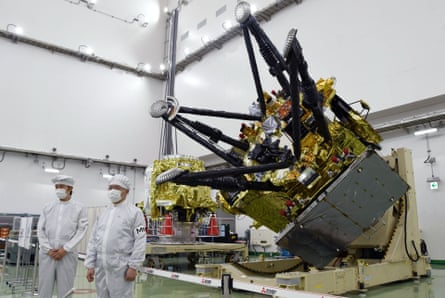
As JAXA finalizes integration and rigorous pre-flight environmental testing, the international scientific community watches with bated breath. The success of this mission will cement Japan’s status as an undisputed titan of planetary exploration, matching the deep-space capabilities historically dominated by NASA and the European Space Agency.
Looking ahead, market analysts and aerospace executives will monitor three critical milestones:
- Successful Launch and Deep-Space Trajectory Insertion: Validating the heavy-lift launch vehicle performance and early-stage telemetry.
- Mars Orbital Insertion and Phobos Mapping: Executing complex braking maneuvers to establish a stable operational orbit around the Martian system.
- Autonomous Touchdown and Core Extraction: Proving that robotic systems can successfully anchor to a low-gravity body, harvest pristine regolith, and execute a flawless launch sequence back toward Earth.
Ultimately, Japan's bold venture to the moons of Mars transcends national borders and academic boundaries. It is a calculated leap into the next frontier of human enterprise—proving that precision engineering, disciplined capital allocation, and relentless innovation remain the ultimate drivers of progress in the modern geopolitical economy.